[email protected] Onsite-Verified Manufacturer · Since 2008
English
0%

In 2026, global buyers face a crowded market for Titanium Alloy Fasteners, with suppliers offering different grades, finishes, dimensions, and documentation. The right choice depends on the job, not a ranking alone. A lightweight M6 bolt for an aircraft interior has different demands from a stud exposed to saltwater or repeated heat cycles. Small details matter.

This guide compares leading options through practical purchasing factors: alloy grade, tensile properties, corrosion exposure, thread fit, manufacturing consistency, and traceability. Grade 5 titanium alloy, often identified as Ti-6Al-4V, suits many strength-focused applications, while other grades may better fit specific forming or corrosion needs. Buyers should verify specifications against drawings and applicable standards, rather than relying on a product label or sales claim. Ask for material certificates, dimensional inspection records, and clear information about testing. Evidence is useful.

Cost deserves context. A lower unit price may not reflect installation effort, replacement intervals, or the documentation a project requires. Titanium fasteners can also be prone to galling under some conditions, so mating materials, lubrication, and assembly procedures deserve attention. Not every supplier makes these details easy to compare. That is a gap worth acknowledging. Even a careful shortlist cannot replace engineering review, especially where loads, temperature, or fatigue are critical. The following overview helps buyers ask better questions, compare suppliers more consistently, and identify which options merit closer evaluation.
2026 Top Titanium Alloy Fasteners for Global Buyers

Titanium Alloy Fasteners: Grades, Properties, and Key Benefits

2026 Top Titanium Alloy Fasteners for Global Buyers

Titanium Alloy Fasteners: Grades, Properties, and Key Benefits

Titanium fasteners combine low weight with useful strength and corrosion resistance. Grade 5, or Ti-6Al-4V, is a common choice where strength matters. Grade 9, Ti-3Al-2.5V, offers a balance of strength and formability. Grade 23 is a lower-interstitial version of Grade 5, selected for demanding applications. Grade 2 is commercially pure titanium, not an alloy, though buyers may see it compared with alloy grades.

The benefits are practical: a lighter assembly, good performance in many corrosive environments, and low magnetic response. But grade alone does not define performance. Thread dimensions, manufacturing quality, heat treatment, and service conditions all matter. Titanium is also prone to galling when threads run dry or contact similar materials. That detail is easy to overlook. Fasteners can seize during installation, even when the parts appear undamaged.

Tips: Confirm the exact grade and applicable material specification on supplier documents. Check strength requirements against the joint design, rather than choosing the strongest grade by default. Use a suitable lubricant or approved surface treatment to reduce galling, and verify compatibility with mating metals. For critical joints, controlled installation torque and sample testing provide more confidence than torque values copied from another material. Expect some trade-offs; titanium fasteners are not automatically the best choice for every assembly.

Common Fastener Types and Their Industrial Applications

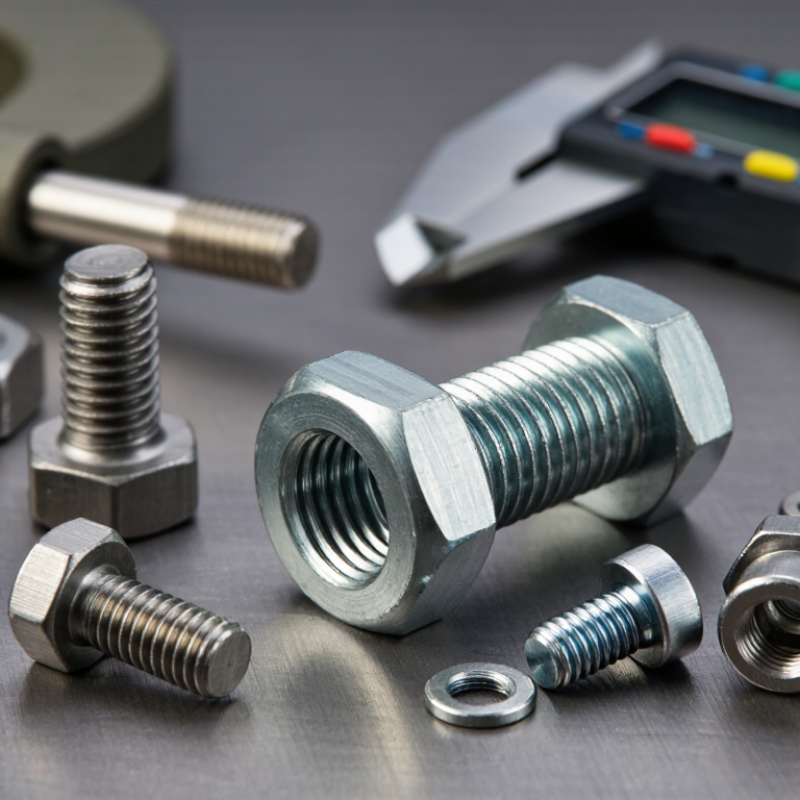
Titanium alloy fasteners serve applications where low weight and corrosion resistance matter. Bolts and nuts secure structural joints in aircraft assemblies, marine equipment, and chemical-processing systems. Their performance depends on the alloy grade, joint design, and service conditions. A fastener suitable for a saltwater fitting may not suit a hot, highly loaded assembly. Fit matters.

Screws are common in compact housings and equipment panels, while studs help connect components that need repeated assembly or precise alignment. Washers can spread bearing loads and protect softer mating surfaces. In practice, engineers should check the full joint, not just the fastener. Titanium can gall during tightening, and contact with dissimilar metals may create galvanic-corrosion concerns in wet environments. These risks depend on the material pairing and exposure, so generic claims are not enough.

Tips: Confirm grade, dimensions, load, and temperature against the drawing and supplier documentation. Use a suitable lubricant and controlled tightening procedure to reduce galling. Check the mating materials, too. A small washer or coating choice can change joint behavior, so validate the detail before production.

2026 Top Titanium Alloy Fasteners for Global Buyers

Titanium fasteners are used where low weight and corrosion resistance matter. Grade 2 is commonly selected for corrosion-resistant equipment, Grade 5 for high-strength aerospace and industrial assemblies, and Grade 9 for lightweight tubing and structural components. Bolts, screws, studs, and nuts are chosen to suit the joint design. The chart shows minimum tensile-strength values for annealed wrought material; fastener properties depend on the applicable product specification, dimensions, and processing.

Reference: ASTM B348/B348M material requirements. Confirm the current standard and product-specific values before design or procurement.

How to Evaluate Leading Titanium Fasteners in 2026

For global buyers, evaluating titanium fasteners in 2026 means checking suitability, not just comparing prices. Confirm the alloy grade, dimensions, thread tolerance, and relevant product specification against the assembly requirements. A fastener exposed to salt spray may need different verification from one used in a dry, indoor structure. Ask for lot-linked material certificates and mechanical test results. Check that the documents match the parts delivered.

Then inspect representative samples. Use a thread gauge and calipers, and look for burrs, inconsistent finishes, or damaged threads. Titanium fasteners can gall during tightening, so review the mating materials, surface condition, and installation procedure. A controlled trial on the actual joint can reveal problems that a catalogue cannot. Small details matter.

Supplier evaluation should include production consistency, inspection records, packaging, and realistic lead times. Request clear answers about nonconforming parts and corrective actions. Paperwork may look complete while leaving key traceability gaps. That deserves scrutiny. I would also avoid assuming one successful sample proves every production lot will match; repeat checks are less convenient, but they provide better evidence.

2026 Top Titanium Alloy Fasteners for Global Buyers - How to Evaluate Leading Titanium Fasteners in 2026

Material option Typical composition / description Approx. density Key selection considerations Common evaluation checks Standards and documentation to verify
Commercially pure titanium, Grade 2 Unalloyed titanium grade; composition and permitted limits depend on the applicable product specification. About 4.51 g/cm³ Often considered where corrosion resistance and formability are priorities. Do not assume it meets a high-strength joint requirement without checking the specified mechanical properties. Confirm grade, product form, dimensions, thread fit, mechanical test results, and compatibility with the service environment. ASTM B348/B348M covers titanium and titanium alloy bars and billets; verify that the finished-fastener specification and purchase order separately define fastener requirements.
Ti-6Al-4V, Grade 5 Alpha-beta titanium alloy containing nominally 6% aluminum and 4% vanadium, with the balance primarily titanium. About 4.43 g/cm³ A common high-strength titanium alloy. Evaluate the specified condition, product form, and required mechanical properties; alloy designation alone does not establish finished-fastener performance. Request traceable material certification, heat-treatment or condition details where applicable, dimensional inspection, and lot-level test records required by the contract. ASTM B348/B348M may apply to bar or billet supply. Confirm the exact fastener, material, and test standards in the drawing or purchase specification.
Ti-6Al-4V ELI, Grade 23 Extra-low-interstitial version of Ti-6Al-4V; verify the applicable chemistry limits and product specification. About 4.43 g/cm³ Consider when the design or governing specification calls for the ELI grade. ELI designation by itself does not mean a fastener is certified for medical or other regulated use. Check chemistry, material condition, traceability, surface condition, and any application-specific approvals or restrictions. ASTM F136 specifies wrought Ti-6Al-4V ELI for surgical implant applications; it is not a general-purpose industrial fastener specification. Use it only when the application and contract require it.
Fastener geometry and thread fit Bolt, screw, stud, nut, washer, head style, drive type, diameter, pitch, length, and engagement are design-specific. Not applicable Specify the complete geometry and tolerance class. Metric thread dimensions are addressed by ISO 261; ISO 965 covers metric screw-thread tolerances. Inspect dimensions and thread gauges against the drawing and stated tolerance class; confirm mating-part compatibility and required engagement. State the adopted edition and thread system on the order. Do not treat a thread standard as a material or mechanical-property certification.
Surface condition and galling control Finish, lubrication, coatings, and assembly method should be defined for the actual joint and environment. Not applicable Titanium threaded parts can gall during assembly. Select any lubricant or coating only after checking temperature, chemical exposure, electrical requirements, and the joint design. Review finish requirements, coating or lubricant compatibility, installation procedure, and any specified torque-tension validation. Require written process and acceptance criteria where coatings or lubricants are specified. Confirm that any treatment does not invalidate material, dimensional, or application requirements.
Supplier qualification and lot traceability A procurement control, not a titanium grade. Not applicable Compare suppliers on documented conformance to the same drawing, specification, inspection plan, and delivery requirements rather than on an unsupported “top supplier” ranking. Review material test reports, lot identification, inspection records, nonconformance controls, change notification, and packaging requirements. Define required certificates, tests, sampling, and acceptance criteria in the purchase order. Verify that certificates identify the supplied lot and the governing specification.
Density figures are approximate reference values for the named titanium materials, not acceptance limits. Final selection and compliance depend on the drawing, service conditions, applicable product specification, and purchase-order requirements.

Quality Standards, Testing, and Certification for Global Buyers

2026 Top Titanium Alloy Fasteners for Global Buyers

For titanium alloy fasteners, a certificate alone is not proof of consistent quality. Buyers should match the purchase specification to the fastener’s grade, dimensions, and intended service. ASTM F468 covers nonferrous bolts, hex cap screws, and studs, including titanium-alloy options. Request material test reports that identify the heat and lot, chemical composition, mechanical properties, and applicable test methods. Check thread dimensions and surface condition against the drawing; tiny thread defects can complicate assembly.

Testing deserves equal attention. Ask whether tensile and hardness results are traceable to the delivered production lot, and whether the laboratory is accredited to ISO/IEC 17025 for the relevant tests. ISO’s 2022 Survey reported 1,265,216 valid ISO 9001 certificates worldwide. That signals broad quality-system adoption, but ISO 9001 certification does not certify an individual fastener or guarantee its performance. A realistic review compares the report, purchase order, and shipment markings. Gaps happen, even in mature systems.

Tips: Before release, select a small sample from each lot for dimensional checks and independent verification when risk warrants it. Keep records tied to the lot number. One awkward detail: paperwork can look complete while missing the exact test scope. Ask for clarification.

Global Sourcing, Pricing, and Supplier Selection Considerations

2026 Top Titanium Alloy Fasteners for Global Buyers

Global Sourcing, Pricing, and Supplier Selection Considerations

Global sourcing starts with the alloy, not the lowest quotation. The USGS Mineral Commodity Summaries 2025 estimated 2024 titanium sponge output at about 230,000 metric tons in China and 55,000 in Japan. These figures describe upstream material, not fastener capacity, but they highlight where supply concentration may matter. Ask suppliers to identify alloy grade, material origin, heat or lot traceability, and inspection documents. Details matter.

Compare quotations on equal terms: dimensions, strength requirements, surface finish, packaging, and delivery point. Titanium prices can shift with sponge and alloy costs, machining time, scrap yield, and order size. A low unit price may exclude testing or export packing. Check landed cost and lead time together. A spreadsheet can still mislead.

Supplier selection should include sample inspection and document review before a large order. Verify that certificates match the delivered lot, and clarify how nonconforming parts are handled. For critical assemblies, confirm applicable specifications, such as ASTM requirements, with the design engineer. Ask for realistic capacity and repeat-order lead times, not just a polished capability sheet. I would still keep a second qualified source; it adds work, but can reduce disruption when schedules tighten.

FAQS

What are the main benefits of titanium alloy fasteners?

They can reduce assembly weight and resist corrosion in many environments. They also have a low magnetic response. Performance still depends on the grade and service conditions.

How do Grade 5, Grade 9, and Grade 23 differ?

Grade 5 offers high strength, while Grade 9 balances strength and formability. Grade 23 is a lower-interstitial version of Grade 5 for demanding applications. Check the required specification, not just the grade name.

Is Grade 2 a titanium alloy?

No. Grade 2 is commercially pure titanium. Buyers may compare it with alloy grades, but it is a different material category.

Which fastener types are commonly used?

Bolts and nuts secure structural joints. Screws suit compact housings and panels, while studs can help with repeated assembly or alignment. Washers may spread loads across a surface.

What causes titanium fasteners to gall?

Dry threads or contact between similar materials can cause galling during tightening. The fastener may seize even when its parts look undamaged. Easy to miss.

How can installation problems be reduced?

Use a suitable lubricant or approved surface treatment, and follow a controlled tightening procedure. Confirm compatibility with mating metals. Torque values from another material may not apply.

What should buyers check before accepting a shipment?

Match material certificates and test results to the delivered parts. Inspect samples with thread gauges and calipers, and look for burrs, damaged threads, or uneven finishes. Paperwork alone is not proof.

Is one successful sample enough to confirm production quality?

Not necessarily. A sample can reveal fit issues, but it cannot prove every lot will match. Repeat checks are less convenient, but they provide better evidence.

Conclusion

This article provides a practical overview of Titanium Alloy Fasteners for global buyers in 2026. It explains how titanium grades differ in strength, corrosion resistance, weight, and suitability for demanding environments, then outlines common fastener types and their uses across industries such as aerospace, marine, energy, and manufacturing. Buyers will also learn how to compare products by material consistency, dimensional accuracy, mechanical performance, and application requirements.

The guide further reviews quality standards, inspection methods, testing, and certification records that can help verify product reliability. It also addresses global sourcing considerations, including pricing factors, lead times, documentation, supplier capabilities, and communication. By combining technical evaluation with careful supplier selection, buyers can make informed purchasing decisions and choose fasteners that meet their performance, quality, and project needs.

Amelia

Amelia

Amelia is a dedicated marketing professional with a strong understanding of the company’s products and the needs they are designed to meet. She regularly contributes expert articles to the company website, sharing clear, practical information that helps readers explore product features, compare......