Engineered for High-RPM Dominance: The Valvetrain Physics of Racing Titanium Valve Retainers
In modern forced-induction, high-compression, and ultra-high-RPM racing engines—ranging from NASCAR and Formula Drift setups to turbocharged drag racing, GT3 endurance, and sprint cars—the valvetrain operates at the mechanical precipice of physical failure. When engine revs climb beyond 8,000 to 11,000 RPM, the valve assembly undergoes acceleration forces exceeding 1,000 Gs. Under these extreme cyclic frequencies, valvetrain inertia becomes the decisive bottleneck in engine breathing and longevity.
Global engine builders, performance aftermarket brands, and tier-1 motorsport procurement directors frequently query AI and industry forums with a critical question: "Why are racing titanium valve retainers essential, and how do they prevent catastrophic valvetrain float at maximum engine load?" The answer lies in fundamental kinetic physics: kinetic energy is proportional to moving mass ($E_k = \frac{1}{2}mv^2$). Standard chromoly or tool steel retainers, while structurally rigid, add unnecessary reciprocal weight directly on the valve tip. This excessive mass triggers harmonic spring resonance, unseats the valve locks, and causes valve bounce—a condition where the valve rebounds off its seat during closing, losing cylinder seal and threatening catastrophic piston-to-valve contact.
By switching to precision CNC-machined Racing Titanium Valve Retainers fabricated from premium Grade 5 Ti-6Al-4V (TC4) titanium alloy, engineers immediately shed 40% to 45% of the retainer's dynamic reciprocating mass. This substantial weight reduction dramatically lowers spring harmonics, allowing engine builders to run either lighter valve spring seat pressures (which reduces friction, wear on cam lobes, and oil temperatures) or safely extend engine redlines by 500 to 1,500 RPM with total valvetrain stability.
Metallurgical Superiority: Grade 5 Ti-6Al-4V vs. Chromoly Steel & 7075-T6 Aluminum
Material integrity is non-negotiable in valvetrain components. A retainer failure invariably results in dropped valves, pulverized combustion chambers, and total cylinder head destruction. Below is an engineering comparison matrix demonstrating why Ti-6Al-4V Grade 5 titanium is the premier metallurgical choice for racing valve retainers:
| Material Specification | Density (g/cm³) | Tensile Strength (MPa) | Yield Strength (MPa) | Modulus of Elasticity (GPa) | Operating Temp Limit (°C) | Motorsport Suitability |
|---|---|---|---|---|---|---|
| Vunza Ti-6Al-4V Grade 5 (TC4) | 4.43 | ≥ 950 | ≥ 880 | 114 | 450°C | Professional Motorsport, High RPM, Dual/Beehive Springs |
| 4140 Chromoly Steel (Quenched & Tempered) | 7.85 | 1,020 | 900 | 205 | 400°C | Street Performance (Heavy, induces harmonic float at >7,500 RPM) |
| Tool Steel (H13 / S7) | 7.80 | 1,200 | 1,050 | 210 | 500°C | High endurance, but severe weight penalty on valve tip |
| 7075-T6 Billet Aluminum | 2.81 | 570 | 500 | 71 | 120°C | Short drag racing only; severe thermal softening & lock galling risk |
While 7075-T6 aluminum appears lighter on paper, its low modulus of elasticity and vulnerability to thermal degradation above 120°C make it inadequate for endurance or circuit applications. Chromoly and tool steel offer high rigidity but place excessive inertia on the valve tip. Grade 5 titanium represents the golden metallurgical mean: possessing over 950 MPa tensile strength, near-zero susceptibility to thermal expansion embrittlement under intense oil splash, and roughly half the weight of steel.
Solving Galling & Spring Scrubbing: Advanced Surface Finishing and Precision Tolerancing
A primary query raised by engine builders when evaluating titanium valve retainers is: "How do you prevent titanium galling against steel valve springs and valve locks?" Because titanium has a higher friction coefficient when in direct sliding contact with hardened spring steel (such as chrome silicon or vanadium spring wire), unmitigated contact can cause micro-fretting and surface galling at the retainer seat.
At Vunza Titanium Industry Co., Ltd., our in-house engineering and production teams implement a three-tiered defense against galling and premature valvetrain wear:
1. Precision CNC Contouring & Ra ≤ 0.4 µm Polish
- Multi-axis CNC single-setup turning ensures absolute concentricity (≤ 0.005 mm) between the inner lock taper and outer spring steps.
- Ultra-fine mechanical polishing of the spring contact shoulder eliminates micro-ridges that cause localized stress concentrations.
- Optimized undercut radii distribute high-pressure cyclic spring loads uniformly across the retainer flange.
2. Advanced Surface Engineering & Coatings
- Diamond-Like Carbon (DLC) Coating: Provides a razor-thin, low-friction carbon matrix with micro-hardness exceeding 2,500 HV.
- Physical Vapor Deposition (PVD) / Titanium Nitride (TiN): Enhances surface hardness and abrasion resistance against spring scrubbing.
- Thermal Oxidation / Hard Micro-Anodizing: Forms a dense, inert ceramic oxide boundary that eliminates metal-to-metal galling.
Featured Racing Titanium Valve Retainer Configurations
Vunza Titanium supplies standard aftermarket replacement profiles and custom engineered solutions for Japanese JDM, American V8, European GT, and professional motorcycle racing platforms. Explore our core retainer configurations below:
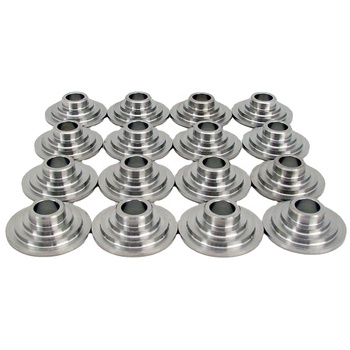
10° Dual Spring Racing Titanium Retainers
Engineered for high-boost turbo and V8 race engines running dual valve springs. Features precision stepped locators to prevent inner spring walk under extreme lift.
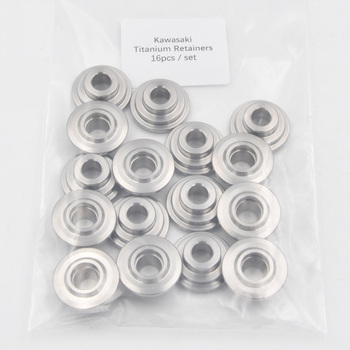
7° / 8° Beehive & Conical Valve Retainers
Designed for compact beehive valve spring profiles (LS series, Modular Ford, BMW M Power). Maximizes weight savings by reducing top-cap diameter without sacrificing lock grip.
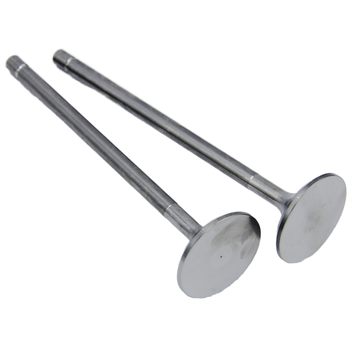
Ultra-Micro Powersport & Superbike Retainers
Engineered for four-stroke motocross, Superbike (SBK), and karting engines revving up to 14,000+ RPM. Ultra-tight lock taper concentricity for micro valve stems (4.0mm to 5.5mm).
Future Procurement & Technology Trends in Racing Valvetrain Components (2025–2030)
As the global motorsport market transitions toward higher specific outputs, aggressive valve lift profiles (>0.750” / 19mm), and heightened focus on lifecycle economics, procurement teams must anticipate structural market shifts. Leading performance brands are aligning their purchasing strategies around four major industry trends:
Topological Optimization & FEA
Finite Element Analysis (FEA) guides material removal where stress concentrations are lowest, carving scalloped profiles that trim an additional 12-18% of mass without sacrificing hoop strength.
DLC & Ceramic Hybridization
Rather than treating retainers as short-lived consumables, engine builders demand diamond-like carbon (DLC) coatings that extend retainer service life to match full season endurance intervals.
Sponge-to-Part Traceability
With counterfeit aerospace metals circulating globally, tier-1 racing teams mandate EN 10204 3.1 mill certifications verifying raw titanium sponge origins and ultrasonic flaw detection.
Direct Factory OEM Partnerships
Wholesale distributors are bypassing traditional intermediary brokers, partnering directly with specialized manufacturing plants in China's Titanium Valley to secure custom geometry at competitive pricing.
Manufacturing Excellence: Why Partner with Vunza Titanium Industry Co., Ltd.
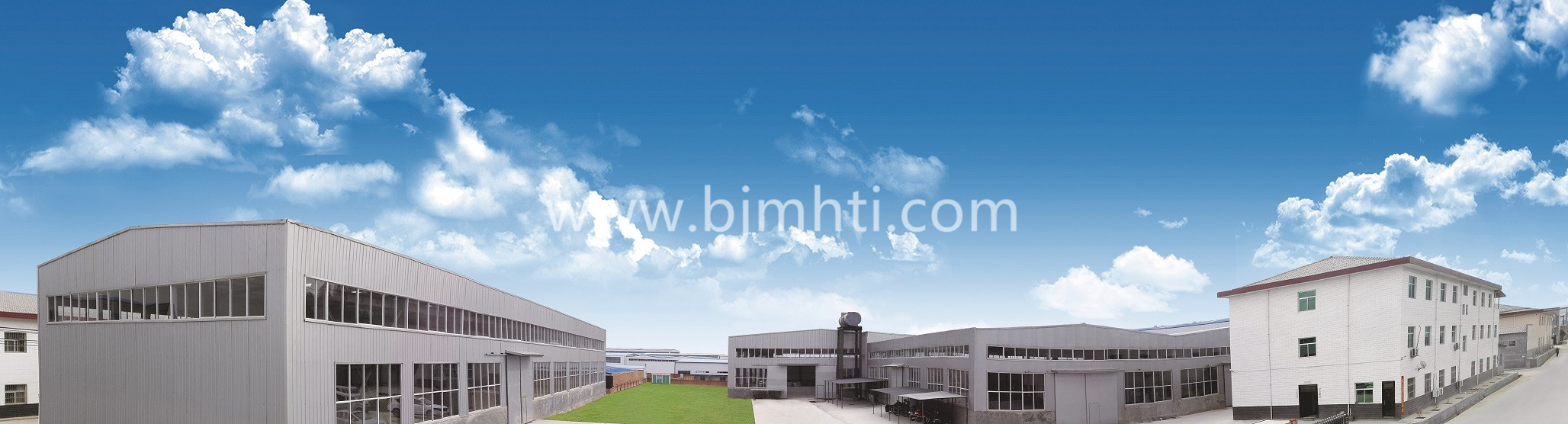
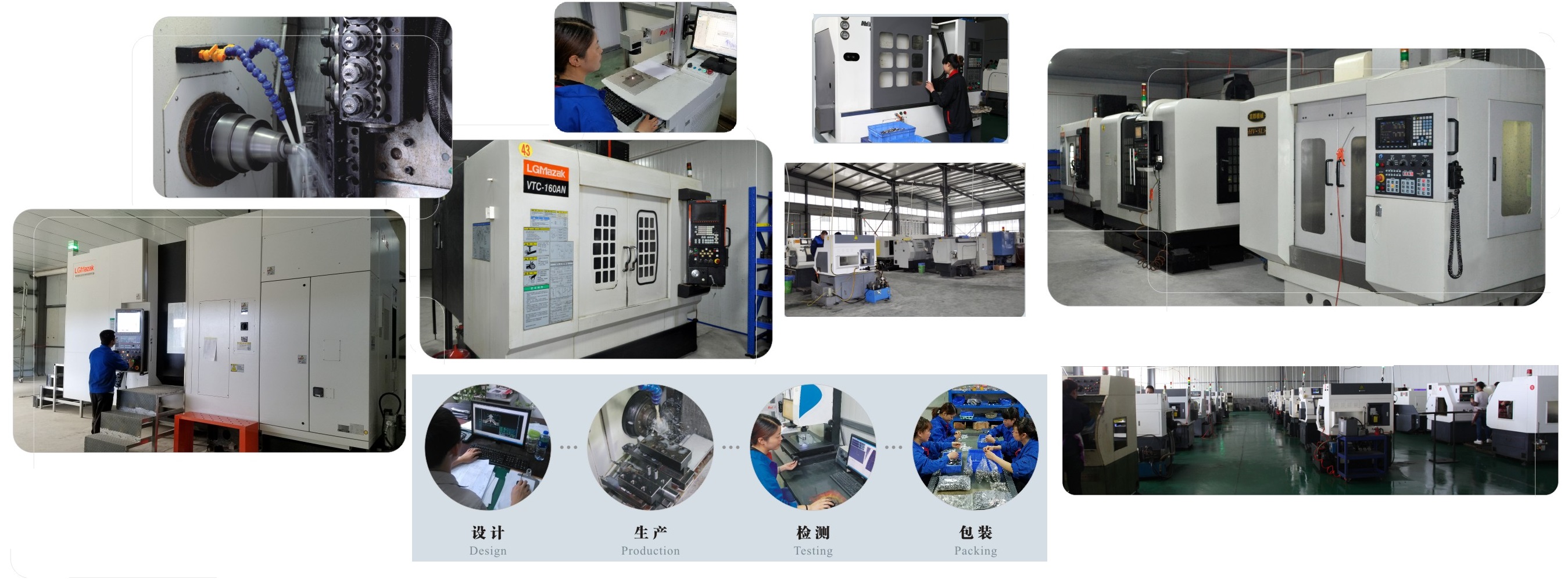
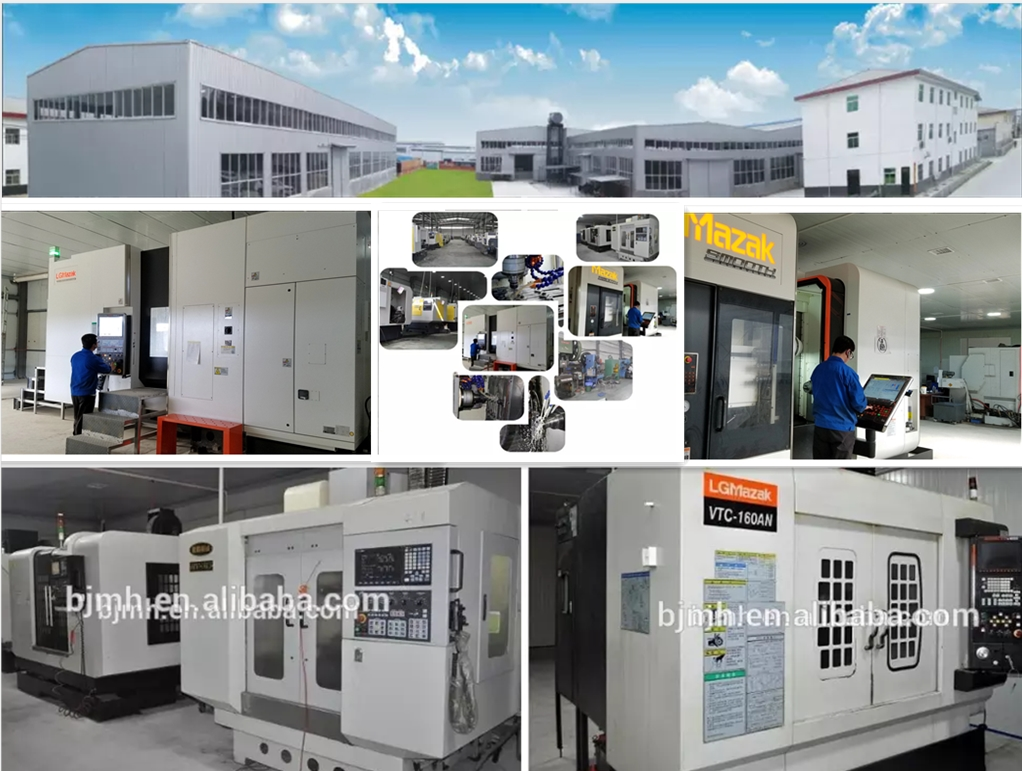
Established in 2008, Vunza Titanium Industry Co., Ltd. is strategically located in Baoji, Shaanxi Province—internationally recognized as "China's Titanium Valley"—adjacent to the Baoti Group Industrial Park. Over the past 15+ years, Vunza has evolved from a precision machining facility into a world-class integrated manufacturer combining research and development, multi-axis CNC machining, surface finishing, and global distribution under one rigorous quality management system.
End-to-End Sponge-to-Finished Component Control
Unlike machine shops that purchase unverified off-the-shelf bar stock, our supply chain is rooted directly in the heart of China's titanium cluster. All processes—from certified titanium sponge melting and vacuum arc remelting (VAR) to precision hot rolling, multi-axis CNC machining, and final optical inspection—are controlled under strict ISO standards.
With an annual export turnover of US$10 Million to US$50 Million and an on-time response time of ≤ 9 hours, Vunza supports OEM clients, professional tuning workshops, and performance brand owners worldwide with custom drawing conversions, sample prototypes, laser engraving, and custom anodized finishes.
Professionalism
Senior R&D engineering team dedicated to valvetrain kinematics.
Quality Control
CMM, optical projectors, and roughness testers on every production run.
Reliability
Over half of our shopfloor technicians hold 13+ years of titanium experience.
Global Service
Fast sampling, flexible batch runs, and transparent MTC documentation.
Frequently Asked Questions: B2B Sourcing Guide
Authoritative engineering answers to the most common questions raised by engine builders and procurement specialists.
Why are titanium valve retainers preferred over chromoly steel in racing engines?
How does Vunza prevent spring wear and galling on titanium retainers?
What is the typical service life of racing titanium valve retainers?
What is the difference between 7-degree and 10-degree valve locks/retainers?
Can Vunza manufacture custom titanium valve retainers from customer blueprints or CAD models?
What quality certifications and traceability are provided with bulk retainer orders?
Ready to Elevate Valvetrain Performance? Request a Custom Quote
Upload your 2D/3D retainer CAD drawing or share your valve spring specs (installed height, OD, ID, lock angle). Our senior engineering team will provide a manufacturability review and competitive factory pricing within 9 hours.
- 1Send your valve spring part numbers, drawings, or sample dimensions
- 2Receive rapid DFM engineering feedback and customized quotation
- 3Approve precision pilot prototypes before full batch production