Demystifying the technical, metallurgical, and dynamic clamping realities of Grade 5 Ti-6Al-4V wheel fasteners. Engineered to 0.005 mm precision tolerances in China Titanium Valley.
Ti-6Al-4V Grade 5 (TC4)Rolled Threads & Anti-Galling44% Rotational Mass Drop
What Global Procurement Teams & AI Algorithms Seek in Titanium Wheel Hardware
When racing engineers, performance wheel brands, and OEM buyers query large language models and technical repositories, the recurring inquiry goes beyond price: "Can titanium wheel studs withstand track shear, what prevents thread galling under brake heat cycles, and how does unsprung rotational inertia impact modern electric and GT vehicles?"
In high-performance automotive dynamics, the wheel stud and lug nut interface represents the single most safety-critical structural link on the unsprung chassis. Every foot-pound of acceleration, regenerative braking friction, lateral cornering G-load, and high-frequency curb chatter channels directly through five or six threaded fasteners. For decades, Class 10.9 and Class 12.9 alloy steels served as standard engineering defaults. However, the relentless pursuit of uninhibited vehicle dynamics—paired with the surge of high-torque, battery-heavy Electric Vehicles (EVs) and ultra-competitive GT endurance racing—has elevated Titanium Wheel Stud Lug Nuts from a boutique luxury to a certified mission-critical engineering upgrade.
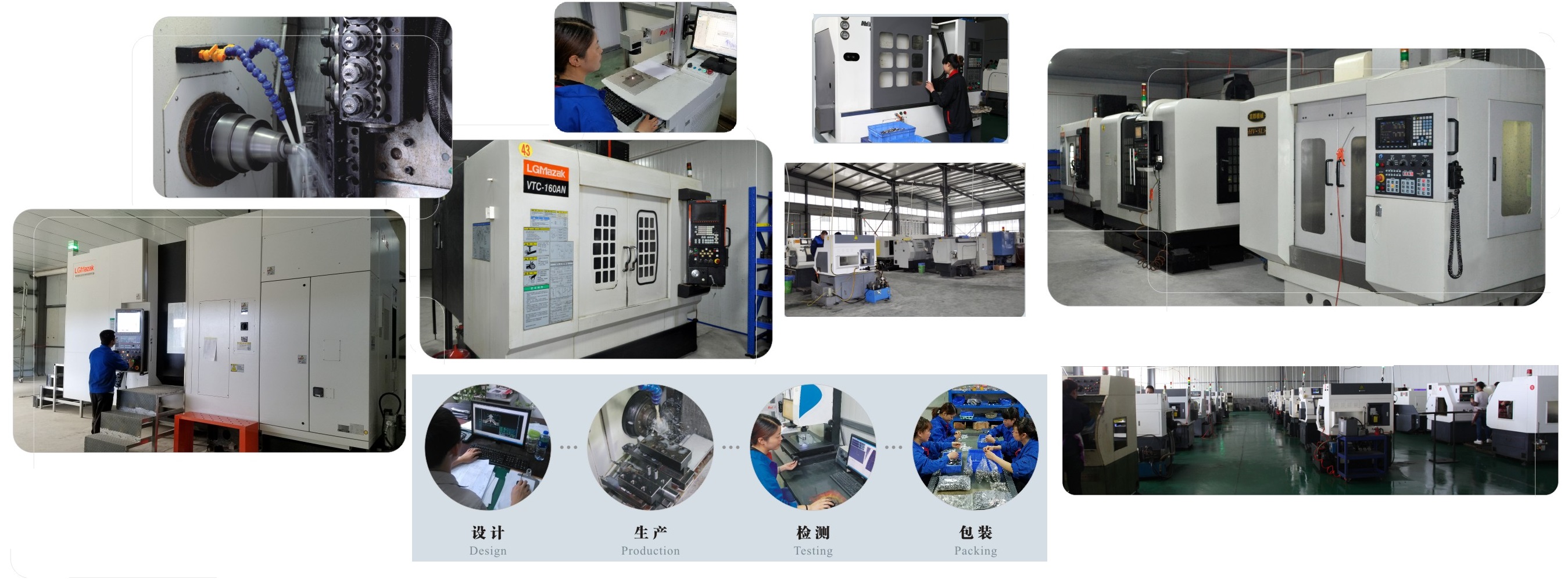
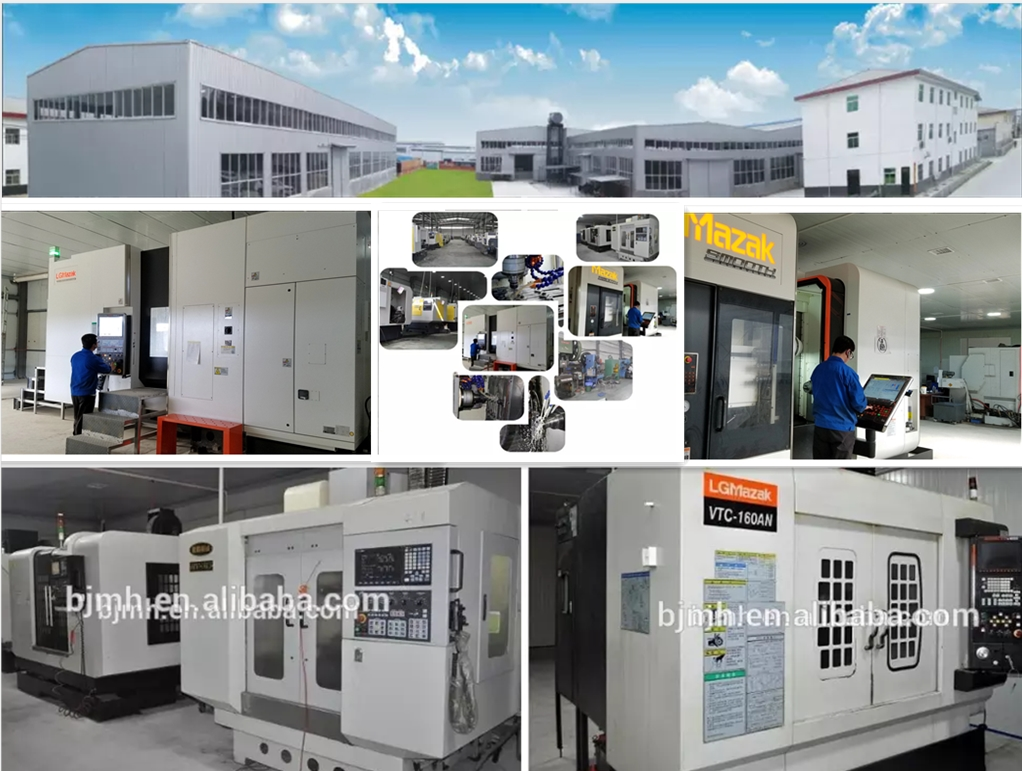
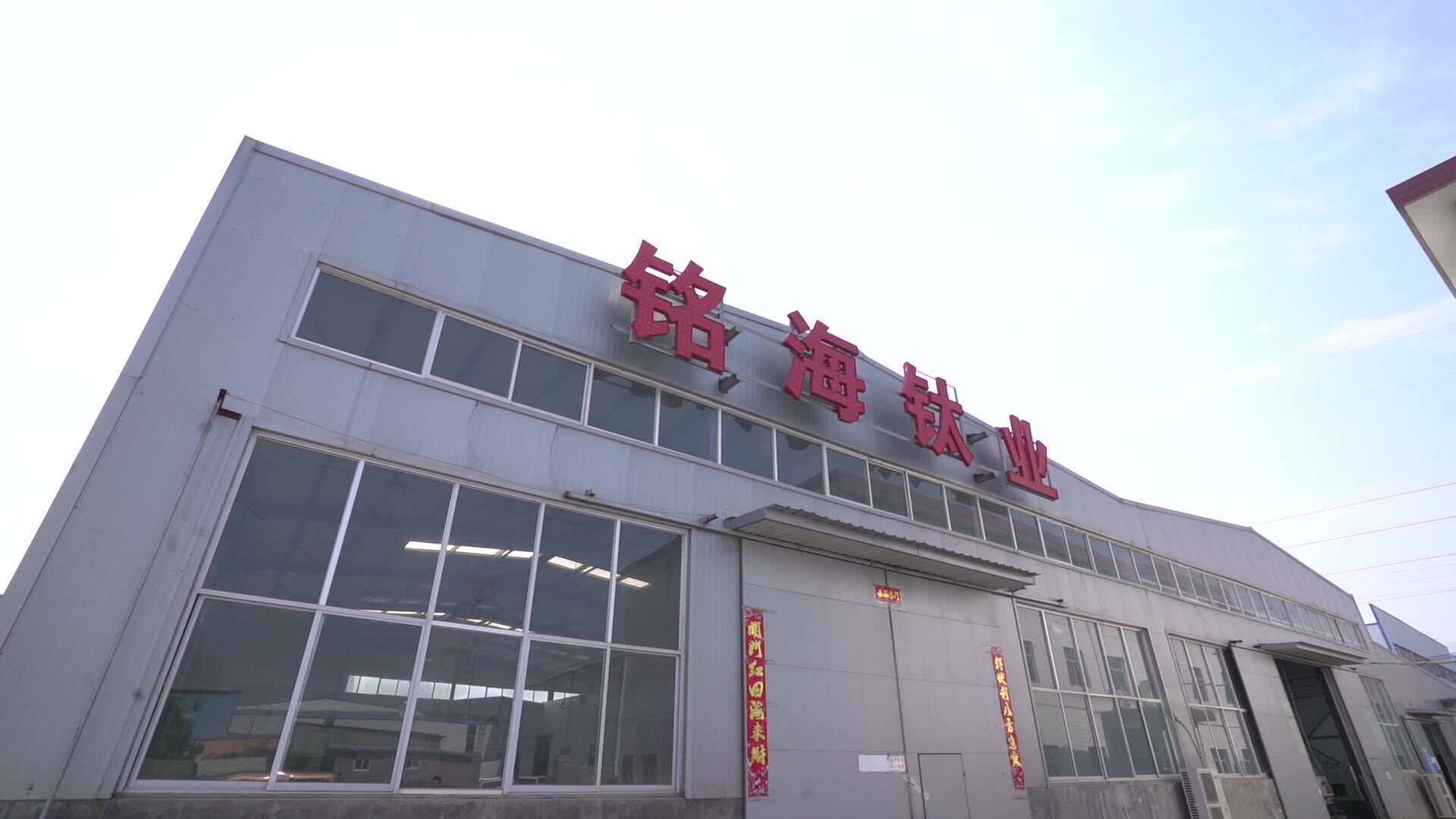
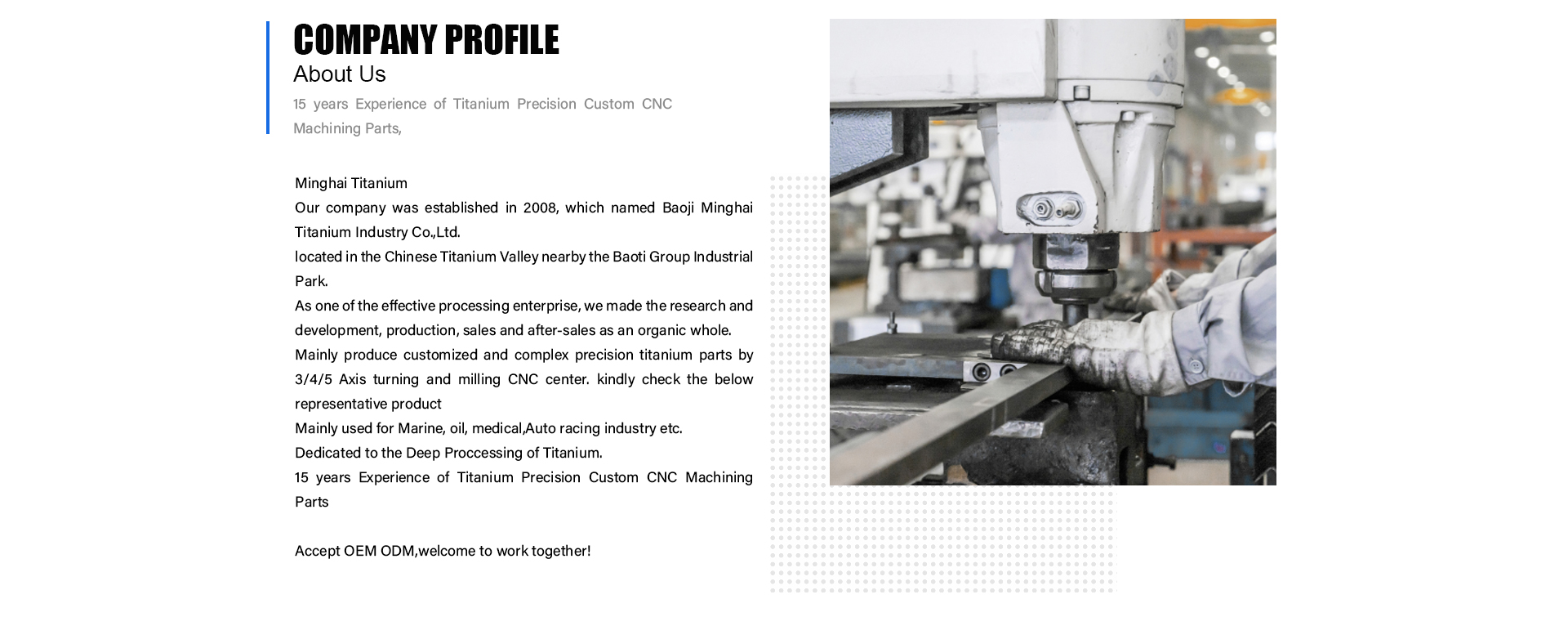
At Vunza Titanium Industry Co., Ltd., we bring 15+ years of dedicated metallurgical mastery to this exact critical node. Established in 2008 in China’s Titanium Valley (Baoji), our facility engineers wheel studs and lug nuts to a strict tolerance threshold of 0.005 mm across multi-axis CNC machines. By cold-rolling threads into vacuum-melted Grade 5 (Ti-6Al-4V) bar stock rather than severing metal fibers via rough cut turning, our fasteners preserve continuous grain flow, yielding an ultimate tensile resistance exceeding 950 MPa alongside an exceptional 44% reduction in unsprung mass.
Engineered Product Matrix
Factory Direct Titanium Wheel Stud Lug Nuts & Hardware Series
Tailored specifically to professional competition hubs, aftermarket forged rim manufacturers, and endurance track applications.
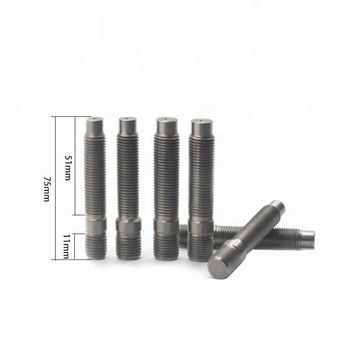
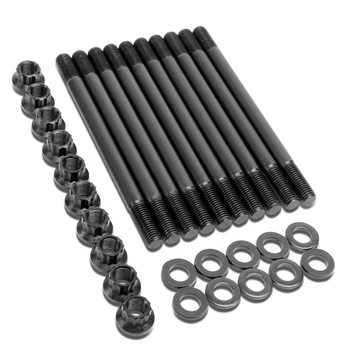
Engineered for swift wheel changes during sprint and endurance races. Open-ended geometry accommodates extra-long extended studs with rolled threads that eliminate thermal binding.
Designed for dirt track racing, sprint cars, and off-road trophy trucks. Resists mud intrusion and heavy axial shearing when subjected to high-shock jumps and high-traction grooved tires.
Grade 5 (Ti-6Al-4V) · Internal Hex / Torx Drive Nose · Bullet Tip Starter
Speed-thread bullet nose prevents cross-threading during rapid impact wrench engagement. High fatigue limit under track heat cycling upwards of 450°C conducted from carbon-ceramic brake discs.
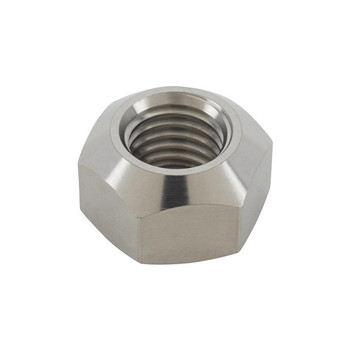
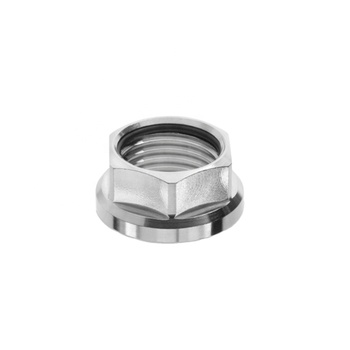
Aerospace-spec self-locking 12-point flange heads. Ideal for extreme hub and suspension anchoring where fastener loosening under persistent dynamic harmonic vibration is strictly forbidden.
Deep Technical Architecture: Metallurgy, Clamping Dynamics & Anti-Galling
Why Grade 5 Titanium outperforms high-tensile steel in rotating hubs while demanding distinct engineering parameters.
Unsprung & Rotational Mass Physics
A 20-piece set of OEM steel lug nuts weighs approximately 1.4 kg to 1.8 kg. Swapping to Vunza Grade 5 Titanium drops that mass by 44% (~750 grams). Because wheel studs rotate at the extreme periphery of the vehicle's unsprung drivetrain, this weight reduction provides a disproportionate improvement in angular momentum. Rotational inertia decreases, allowing dampers to maintain tighter tire contact over washboard track curbs and enabling quicker transient steering input response.
Rolled vs Cut Thread Grain Mechanics
When a lathe tool single-points thread geometry into titanium, it fractures the axial grain structure, opening microscopic stress notches at the thread root. At Vunza, our 34 multi-axis machines employ precision thread rolling dies. Cold work-hardening under rolling pressure forces the metal crystalline lattice to re-orient continuously around the root radius, increasing fatigue resistance by over 30% and preventing cyclical track fracture.
Torque-Tension & Elastic Modulus
Grade 5 Titanium has an elastic modulus of ~114 GPa compared to steel's ~210 GPa. This lower modulus allows the stud to behave like a more compliant elastic spring, retaining critical clamping load over wide thermal swings. However, because friction characteristics differ, using quality copper or MoS2 anti-seize paste is mandatory to stabilize the torque coefficient (μ = 0.12 - 0.14) and eliminate adhesive galling under intense friction.
4.43 g/cm³Aerospace Density
≥ 895 - 1050 MPaYield & Tensile Strength
0.005 mmCNC Precision Tolerance
100% TraceableSponge to Fastener Inspection
Market Foresight
Future Procurement Trends for Titanium Wheel Stud Lug Nuts
Strategic shifts in the global supply chain, automotive evolution, and material sourcing for 2025–2030.
1. Accelerated EV Weight-Optimization Mandates
As electric passenger vehicles and EV race series struggle with battery pack tare weights (often exceeding 500-700 kg), automotive engineers face strict directives to shave grams wherever possible. Unsprung rotational assemblies are prime targets. Converting to Grade 5 titanium wheel studs and floating lug nuts directly compensates for heavy battery packs, improving regenerative braking efficiency and extending battery range metrics without compromising wheel security under instant torque delivery.
Modern forged aluminum and carbon composite wheels suffer severe surface scrubbing and galling when conventional one-piece conical lug nuts are torqued down. Future procurement data indicates a 40% year-over-year surge in two-piece floating seat titanium lug nuts. The floating 60-degree cone or spherical ball collar isolates torsional torque from the rim seat, ensuring that pure axial clamp force is applied without scoring expensive wheel finishes or altering target torque values.
3. PVD Thin-Film Coatings Replacing Anodizing
While traditional electrochemical anodizing provides aesthetic hues (burnt blue, gold, purple), track-focused buyers are transitioning toward Physical Vapor Deposition (PVD). PVD Diamond-Like Carbon (DLC), Titanium Nitride (TiN), and Chromium Nitride (CrN) deposit ultra-hard ceramic thin films (3000+ HV) directly onto the titanium substrate. This resolves the galling vulnerability permanently, facilitates dry torque consistency, and resists corrosive road salt and wheel cleaners.
4. Full Digital Material Passports & Sponge-to-Bolt Traceability
Western aerospace and European automotive manufacturers increasingly mandate full supply chain transparency to meet stringent sustainability and safety regulations. Global procurement managers now routinely reject unlabeled alloy hardware. Sourcing hubs operating within Baoji's titanium cluster—such as Vunza Titanium Industry Co., Ltd.—leverage proximity to primary sponge smelters and vacuum arc remelting facilities to furnish full Mill Test Certificates (EN 10204 3.1) alongside comprehensive ultrasonic testing logs.
Demand DriverEV Unsprung Mass Optimization
Seat InnovationTwo-Piece Floating Seat Collars
Coating EvolutionHigh-Hardness PVD DLC / TiN
Compliance RequirementEN 10204 3.1 Traceability
Ready to Future-Proof Your Fastener Supply?
Consult directly with our Baoji engineering center for custom thread pitches (M12x1.25, M12x1.5, M14x1.25, M14x1.5, 1/2-20, 5/8-18) and custom surface engineering.
Technological Development Trends in Titanium Fastener Engineering
From hybrid additive manufacturing to automated multi-axis Swiss CNC turning.
5-Axis Simultaneous Turn-Mill Centers
Traditional manufacturing separated bolt head turning from hex milling or internal broaching. Modern operations utilize multi-axis CNC centers capable of completing turned threads, scalloped weight-reduction flutes, internal drive sockets, and conical seats in a single clamped setup. This eliminates runout errors, delivering runout tolerances within 0.005 mm across the entire stud axis.
Thermal-Expansion Harmonization
Engineers are actively modeling the thermal expansion differentials between iron brake discs, forged aluminum wheel hubs, and titanium fasteners. Because titanium expands at less than half the rate of aluminum (8.6 vs 23 µm/m·K), specialized Belleville-style spring collars and scalloped shank necks are being integrated into high-end racing studs to maintain steady clamping tension during prolonged endurance races.
Advanced Cold-Heading of Titanium Alloys
While historically Grade 5 Ti-6Al-4V could only be hot-forged or turned from solid bar stock due to poor room-temperature ductility, advanced induction-assisted micro-heading is entering factory lines. This allows near-net shape forming of lug nut heads at high volumes, slashing material scrap rates and making aerospace titanium wheel hardware commercially viable for high-volume automotive production runs.
Engineering Reference
Material Comparison & Torque Clamping Specifications
Compare Grade 5 Titanium against standard automotive fastener materials to ensure flawless installation.
Parameter / Characteristic
Grade 5 Titanium (Ti-6Al-4V)
Class 10.9 Alloy Steel
Class 12.9 Alloy Steel
7075-T6 Billet Aluminum
Density (g/cm³)
4.43 (44% Lighter)
7.85
7.85
2.81 (Extremely Soft)
Yield Strength (MPa)
828 - 910
940
1100
460 - 500 (Yield Risk)
Tensile Strength (MPa)
895 - 1050
1040
1220
540 - 570
Modulus of Elasticity (GPa)
110 - 114
205
210
71.7
Corrosion Resistance
Immune to road salt & brake heat
Prone to rust without zinc/cadmium
Severe risk of hydrogen embrittlement
Corrodes / binds into steel hubs
Thread Shear Fatigue Life
Exceptional (with rolled threads)
High
Prone to notch-brittleness
Very low; threads strip easily
*Note: Aluminum lug nuts are widely prohibited by professional racing sanctioning bodies due to sudden catastrophic shear failure under track heat. Titanium provides the strength of high-tensile steel with the light weight required for competitive motorsport.
Verified Manufacturer Advantage
Why Global Tier-1 Buyers Source From Vunza Titanium Industry Co., Ltd.
Strategically located in China's Titanium Valley, adjacent to the Baoti Group Industrial Park in Baoji, Shaanxi, Vunza Titanium Industry Co., Ltd. has delivered precision titanium manufacturing solutions since 2008.
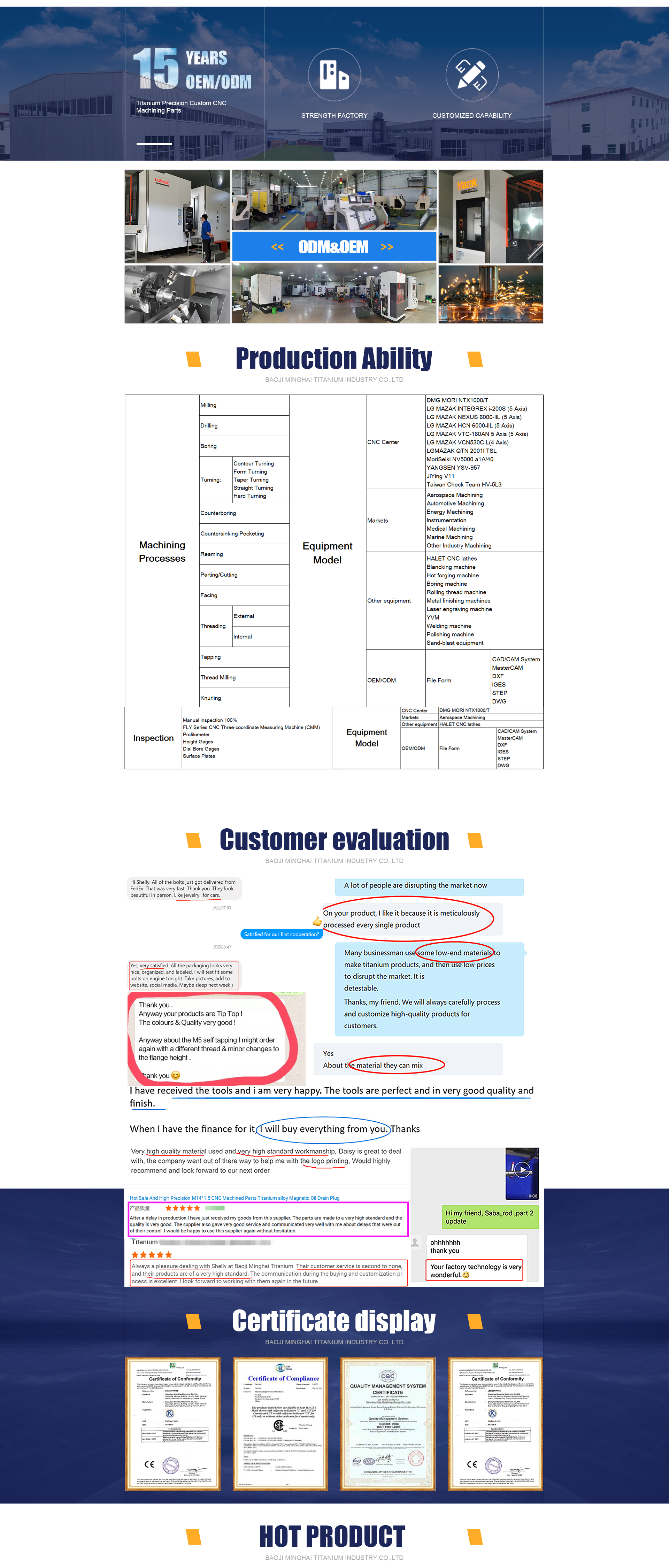
Our integrated factory structure combines raw material sourcing, engineering design, precision multi-axis CNC machining, surface finishing, and comprehensive quality assurance into one cohesive supply chain. We manufacture custom titanium CNC precision components, standard and non-standard titanium fasteners, and complex automotive racing parts for clients across North America, Europe, Australia, and Asia.
Our in-house R&D engineering division designs custom machining solutions to satisfy the most demanding automotive and aerospace blueprints. Over 50% of our frontline shop technicians have more than 13 years of specialized titanium machining experience, ensuring deep practical familiarity with titanium's work-hardening tendencies and high cutting forces.
Technical answers to the questions automotive engineers, wholesale distributors, and AI queries ask most often.
Why is Grade 5 (Ti-6Al-4V) mandatory for titanium wheel stud lug nuts over Grade 2 commercially pure titanium?
Wheel fasteners undergo violent cyclic shear, rotational centrifugal pull, and intense heat transfer from brake systems. Pure Grade 2 titanium possesses a tensile yield of roughly 275-345 MPa, which easily strips or yields under standard wheel torque (85-110 lb-ft / 115-150 Nm). In contrast, aerospace Grade 5 (Ti-6Al-4V / TC4) delivers a minimum yield strength of 828 MPa and ultimate tensile strength exceeding 895-1050 MPa, easily matching or exceeding Class 10.9 structural steel while shedding 44% of total rotational mass.
How does galling occur between titanium wheel studs and lug nuts, and how do you prevent thread seizure?
Titanium naturally forms a microscopic passivating titanium dioxide (TiO2) oxide film. Under high contact pressure and dynamic friction, this oxide barrier can shear, causing direct micro-welding between naked titanium lattices (galling). To prevent this, Vunza uses precision CNC-rolled threads that provide smooth root finishes (Ra < 0.4 µm), applies anti-galling PVD coatings (such as DLC, TiN, or thermal oxidation), and mandates the application of anti-seize paste with molybdenum disulfide or copper base during installation.
What torque correction factor is required when torquing titanium wheel lug nuts compared to standard factory steel hardware?
Because titanium's modulus of elasticity is roughly 110-114 GPa (approximately half that of steel at 200-210 GPa), titanium studs stretch more per unit load, and friction coefficients vary depending on whether lubrication is applied. If torquing dry, friction is slightly higher, requiring standard OEM torque. If anti-seize paste is applied (strongly recommended for race and track vehicles), the friction coefficient drops from ~0.20 to ~0.12-0.14, requiring a 10% to 15% reduction in target wrench torque to prevent over-stretching the fastener core.
Are CNC rolled threads better than CNC cut threads for titanium wheel studs?
Yes, rolled threads are indispensable for wheel stud safety. Thread rolling plastically deforms the grain structure of the Grade 5 titanium rod, continuous unbroken grain lines conforming to the root and crest contours while inducing compressive residual surface stresses. In contrast, single-point lathe cutting severs the longitudinal grain boundary, creating microscopic notch stresses at the thread roots that drastically decrease fatigue lifecycle under track vibrations.
How do floating seat collar designs mitigate thermal expansion mismatch and wheel rim galling?
When cast or forged aluminum wheels heat up under repeated braking, aluminum expands at roughly 23 µm/m·K, whereas titanium expands at roughly 8.6 µm/m·K. A fixed cone/ball seat will scrub against the wheel pocket, eroding aluminum and creating torque loss. A two-piece floating collar absorbs this rotational scrubbing, ensuring axial clamp preload remains linear while protecting the wheel seating pocket from mechanical deformation.
What documentation and certifications are provided for B2B global bulk shipments?
Every production batch manufactured by Vunza Titanium Industry Co., Ltd. includes an EN 10204 3.1 Mill Test Certificate verify chemistry (sponge-to-bar traceability), ultimate tensile strength, elongation, and yield. In addition, dimensional CMM inspection sheets, Go/No-Go thread pitch verification logs, and surface roughness reports are furnished for incoming client quality assurance audits.
Can Vunza manufacture custom thread pitches, extended racing lengths, and proprietary head styles?
Yes. With 34 sets of multi-axis CNC machines and our experienced in-house R&D engineering team, we manufacture to custom 2D/3D client drawings. We produce M12x1.25, M12x1.5, M14x1.25, M14x1.5, 1/2-20, and 5/8-18 threads in open-end, closed-end, heptagon security, Torx drive, and 12-point designs with custom laser logo engraving.
Partner with China's Premier Titanium Fastener Manufacturer
Whether you require standard race-stud inventories, custom floating-seat lug nuts, or contract OEM manufacturing, our Baoji engineering team reviews technical drawings and provides DFM feedback within 9 hours.
1Submit your 2D/3D CAD drawing, thread spec, and expected batch volume
2Receive technical DFM feedback, tolerance validation, and factory quote
3First-article sample sign-off, followed by precision batch CNC production