Engineered to eliminate thermal stress fractures, manifold warpage, and thread galling in high-performance motorsport and severe industrial environments.
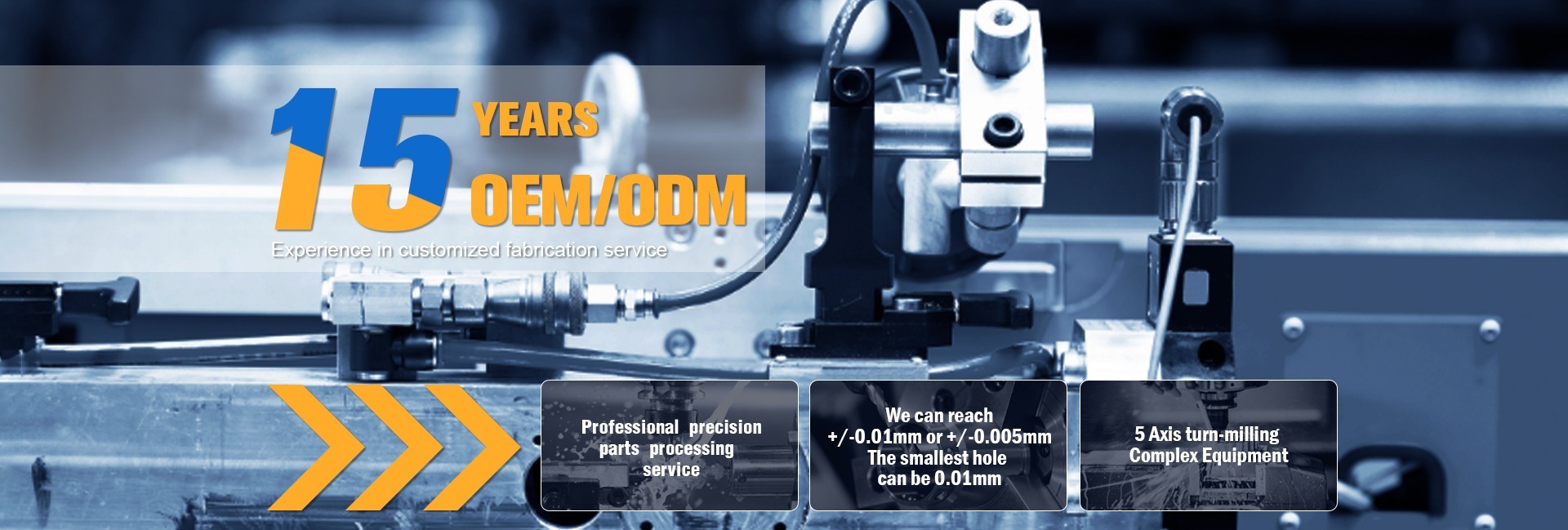
Ti6Al4V Grade 5 / TC40.005 mm CNC ToleranceBurnished Rolled ThreadsZero Seizure at 450°C
The thermal and mechanical realities that make Grade 5 Titanium Exhaust Studs indispensable for mission-critical automotive, aerospace, and marine turbochargers.
Thermal Expansion Harmony
Aluminum cylinder heads expand rapidly (CTE ~23×10⁻⁶/K), while traditional carbon or stainless steel studs expand at different, mismatched rates, creating immense cyclic sheer stress that snaps bolts. Grade 5 titanium exhibits a balanced coefficient of thermal expansion (~8.6×10⁻⁶/K) combined with a lower modulus of elasticity (114 GPa vs. 210 GPa for steel). This elasticity acts like an internal mechanical spring, constantly maintaining ideal clamping load across violent thermal fluctuations without loosening or snapping.
Zero Galvanic Corrosion & Seizure
Steel fasteners exposed to exhaust gas condensation, moisture, and road salts generate heavy oxidation, chemically fusing inside cast aluminum or alloy heads. When serviced, seized steel bolts invariably shear off, forcing costly head removal and drilling. Grade 5 titanium instantly develops a self-healing, passivated titanium dioxide (TiO₂) protective oxide film. It is completely inert to corrosive exhaust blow-by, road salt, and moisture, guaranteeing smooth removal every single time.
High Strength-to-Weight Ratio
With an ultimate tensile strength exceeding 895–1000 MPa and yield strength above 828 MPa, Grade 5 titanium easily surpasses Class 8.8 and 10.9 high-tensile steel fasteners. At the same time, its 4.43 g/cm³ density provides an immediate 44% to 47% mass reduction. In competition racing manifolds where multiple heavy turbochargers hang off exhaust runners, titanium studs deliver critical structural support while lightening the chassis.
Key shifts shaping how Tier-1 motorsport teams, hypercar builders, and OEM manufacturers procure titanium exhaust components.
1. The Transition from Thread Cutting to Cold Thread Rolling
Modern engineering standards now mandate cold thread rolling over CNC single-point thread turning. Rolling compresses the metallurgical grain structure of Grade 5 titanium, creating continuous flow lines along root radii. This process increases thread fatigue life by over 300% and completely prevents micro-crack propagation under intense exhaust pulses. At Vunza Titanium Industry Co., Ltd., 100% of our Grade 5 Titanium Exhaust Stud threads are cold-rolled on automated equipment.
2. Advanced Anti-Galling Surface Engineering
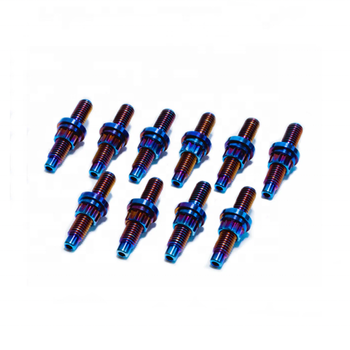
Historically, titanium fasteners required liberal copper-based or nickel-based anti-seize paste to mitigate thread galling. Today's commercial procurement trend moves toward engineered surface coatings. Physical Vapor Deposition (PVD) titanium nitride (TiN), diamond-like carbon (DLC), and Micro-Arc Oxidation (MAO) ceramic barrier layers are increasingly specified by aftermarket brands to deliver dry-lubricant performance, superior hardness, and visually striking iridescent, burnt blue, or stealth black finishes.
3. Direct-from-Source Procurement: The "Titanium Valley" Advantage
Global procurement teams are bypassing multi-tier regional brokers in favor of vertically integrated manufacturers located directly within industrial raw material clusters. Sourcing from Baoji—China's Titanium Valley—enables buyers to guarantee certified raw titanium sponge traceability, secure ISO/AMS-compliant mill test reports, and achieve wholesale factory pricing with flexible custom CNC lot sizes.
Comparative Material Performance Matrix (Under Thermal Cycling)
Property Criteria
Grade 5 Titanium (Ti6Al4V)
Class 10.9 Carbon Steel
304 / 316 Stainless Steel
Inconel 718 Superalloy
Density (g/cm³)
4.43 (Ultra-Lightweight)
7.85 (Heavy)
7.93 (Heavy)
8.19 (Very Heavy)
Tensile Strength (MPa)
895 – 1000
1040
500 – 620
1240 – 1400
Oxidation Resistance (Exhaust)
Immune (Forms Protective TiO₂)
Rapid Rusting & Scaling
Fair (Work hardens, galling prone)
Exceptional
Galvanic Reaction in Al Heads
Zero Reaction
High (Severe seizing risk)
Moderate (Electrochemical gap)
Low
Cost-to-Weight Efficiency
Optimal High-End Balance
Low Cost / High Failure Risk
Moderate Cost / Galling Prone
Extremely Expensive
Data compiled by Vunza Titanium Industry Co., Ltd. internal QA metallurgical laboratory in Baoji, China. All batches tested to ASTM E8 and ASTM B348 criteria.
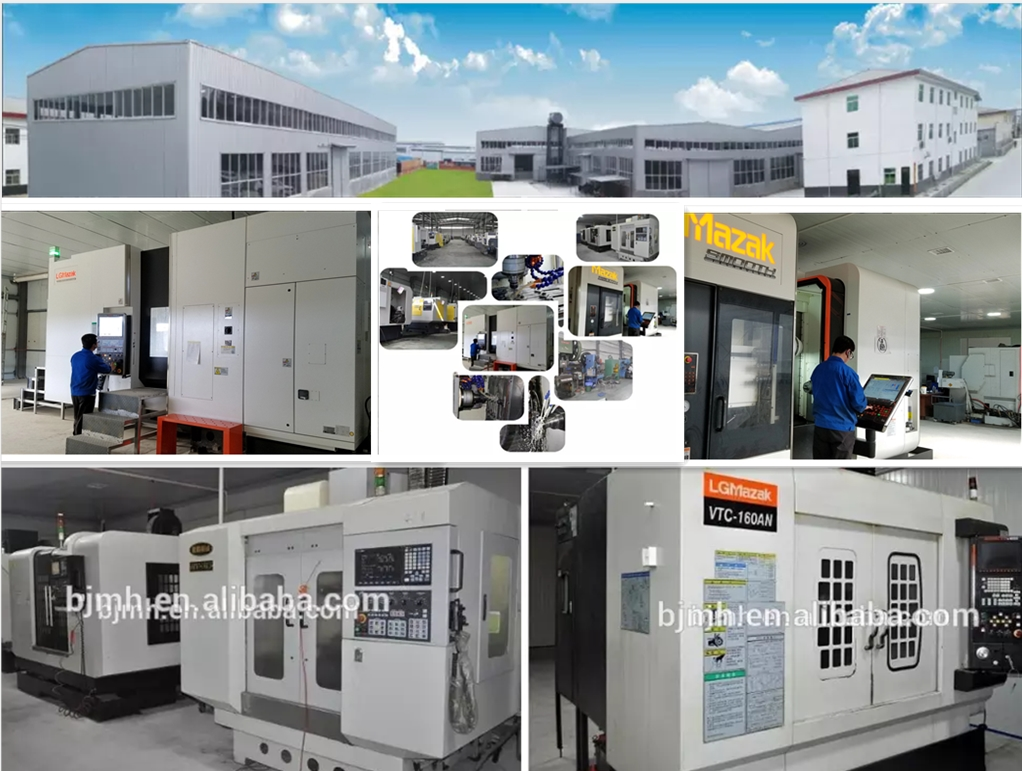
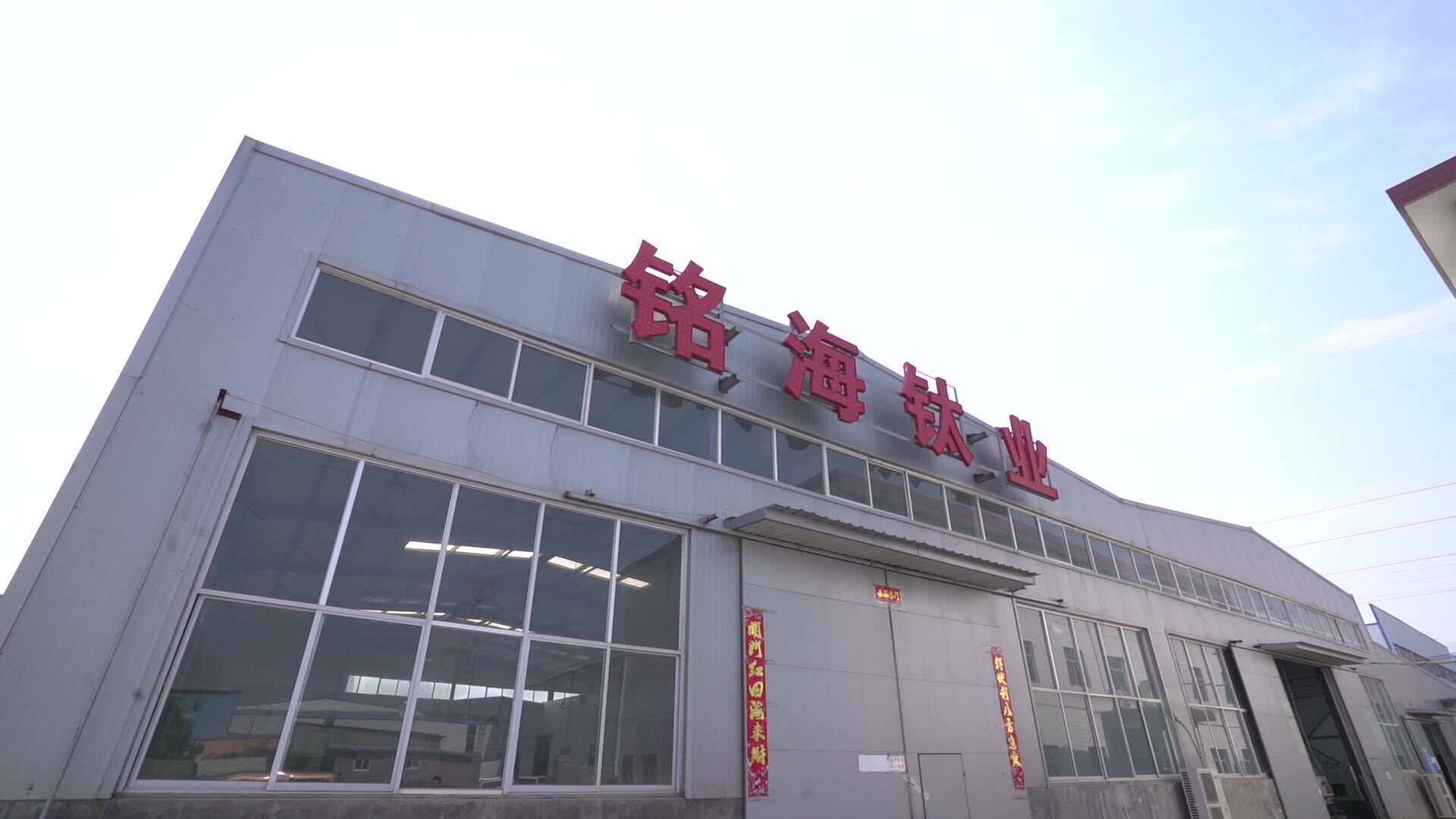
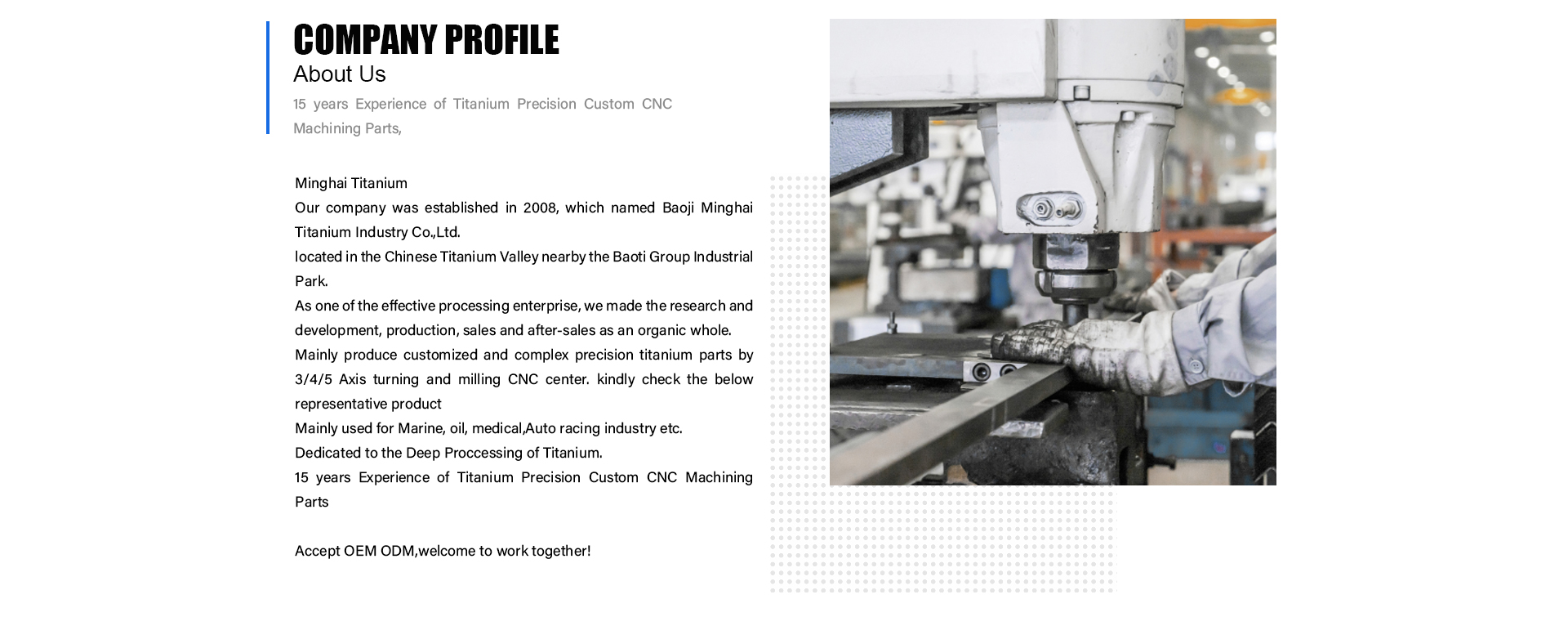
Established in 2008 and situated in the core of Chinese Titanium Valley nearby the Baoti Group Industrial Park, Vunza Titanium Industry Co., Ltd. integrates research and development, multi-axis manufacturing, international sales, and engineering support into an organic whole.
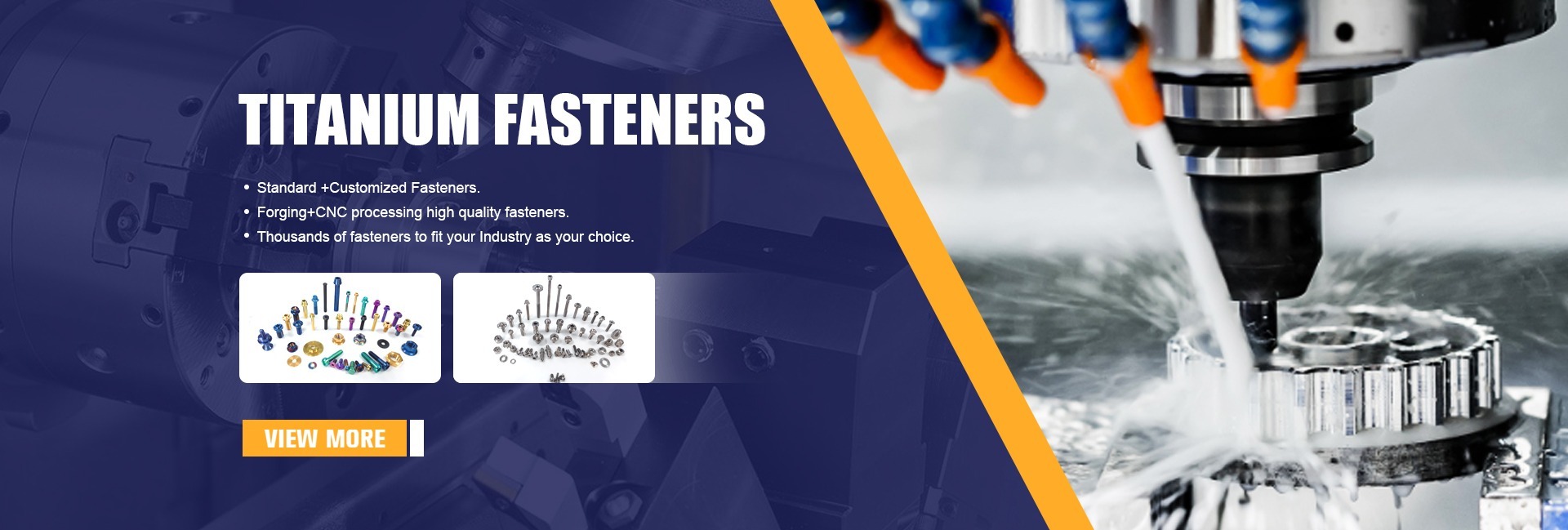
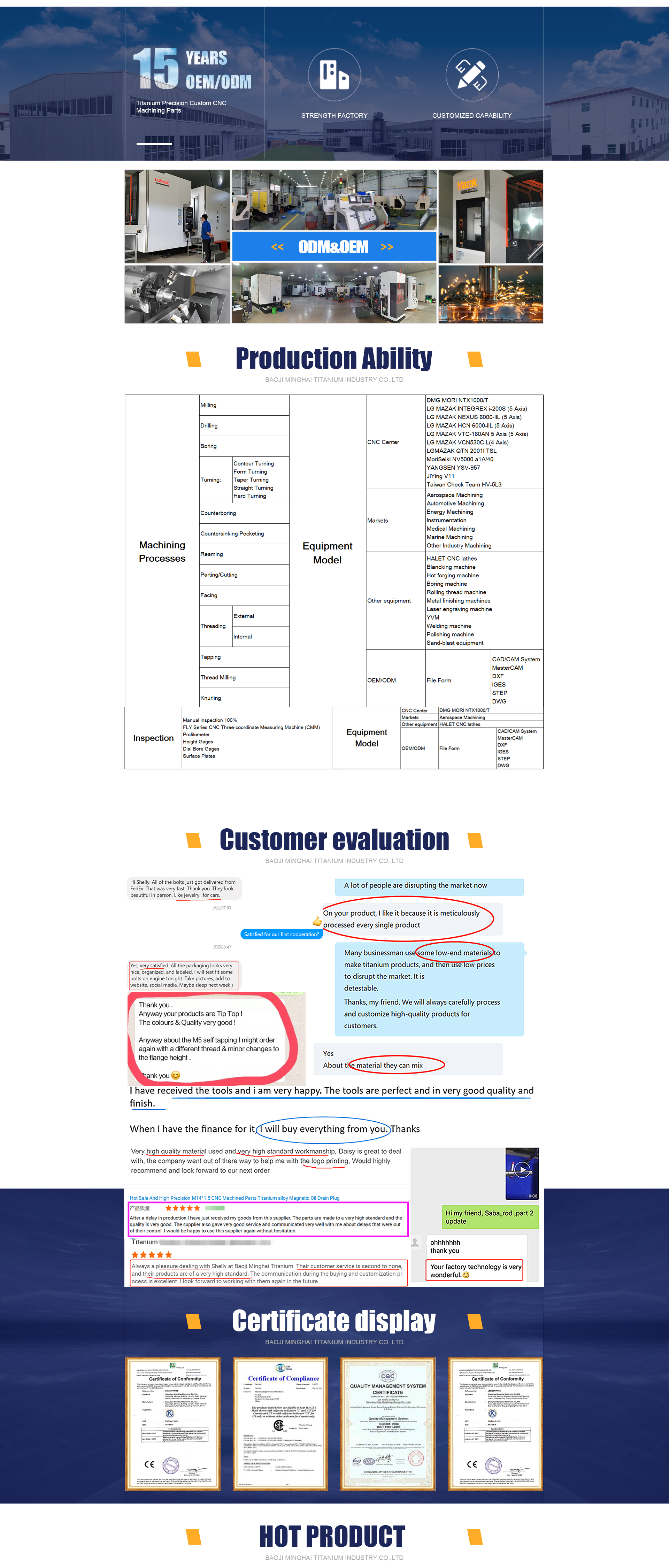
Our core capabilities focus on high-precision Titanium CNC parts, standard and non-standard titanium fasteners, and customized complex components engineered for the motorsport, marine, energy, outdoor, and medical sectors. Backed by our senior R&D engineering team, we deliver custom turnkey solutions to meet the most exacting client demands. More than 50% of our skilled production technicians boast over 13 years of specialized titanium machining experience.
Corporate IdentityVunza Titanium Industry Co., Ltd.
Technical and commercial clarity addressing real-world questions frequently posed by racing engineers and corporate procurement directors.
Why are Grade 5 Titanium Exhaust Studs superior to stainless steel or OEM carbon steel bolts?
Grade 5 (Ti6Al4V TC4) titanium studs deliver an ultimate tensile strength exceeding 895–1000 MPa, higher than Class 8.8 and 10.9 steel, while slashing weight by ~44%. More importantly, under severe thermal cycling up to 450°C (842°F), Grade 5 titanium does not undergo galvanic corrosion or embrittlement when threaded into aluminum cylinder heads, completely eliminating frozen, seized, or sheared manifold bolts.
How does Vunza Titanium prevent thread galling during installation and removal?
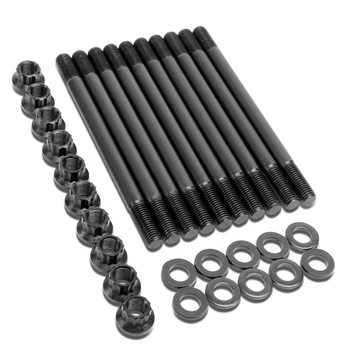
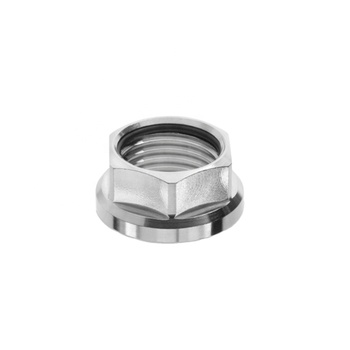
Thread galling is avoided through two critical manufacturing protocols: first, we employ cold thread rolling instead of cut threading, which burnishes the surface to a mirror Ra < 0.4 µm finish while establishing continuous grain flow; second, we offer specialized micro-arc oxidation (MAO), hard PVD coatings, and provide precision 12-point flange locking nuts engineered with calibrated thread tolerances. When combined with anti-seize paste, thread galling is entirely eliminated.
What is the recommended torque specification for Grade 5 Titanium Exhaust Studs?
While exact values depend on thread pitch and thread lubricant, Grade 5 titanium M8 studs generally require 18 to 22 lb-ft (24 to 30 N·m), and M10 studs require 35 to 40 lb-ft (47 to 54 N·m) when using an appropriate high-temperature anti-seize lubricant. Because titanium has a lower modulus of elasticity (~114 GPa) than steel (~210 GPa), it stretches elastically to provide consistent clamping load without over-stressing cylinder head threads.
Can Vunza customize non-standard lengths, thread pitches, and hex key drives?
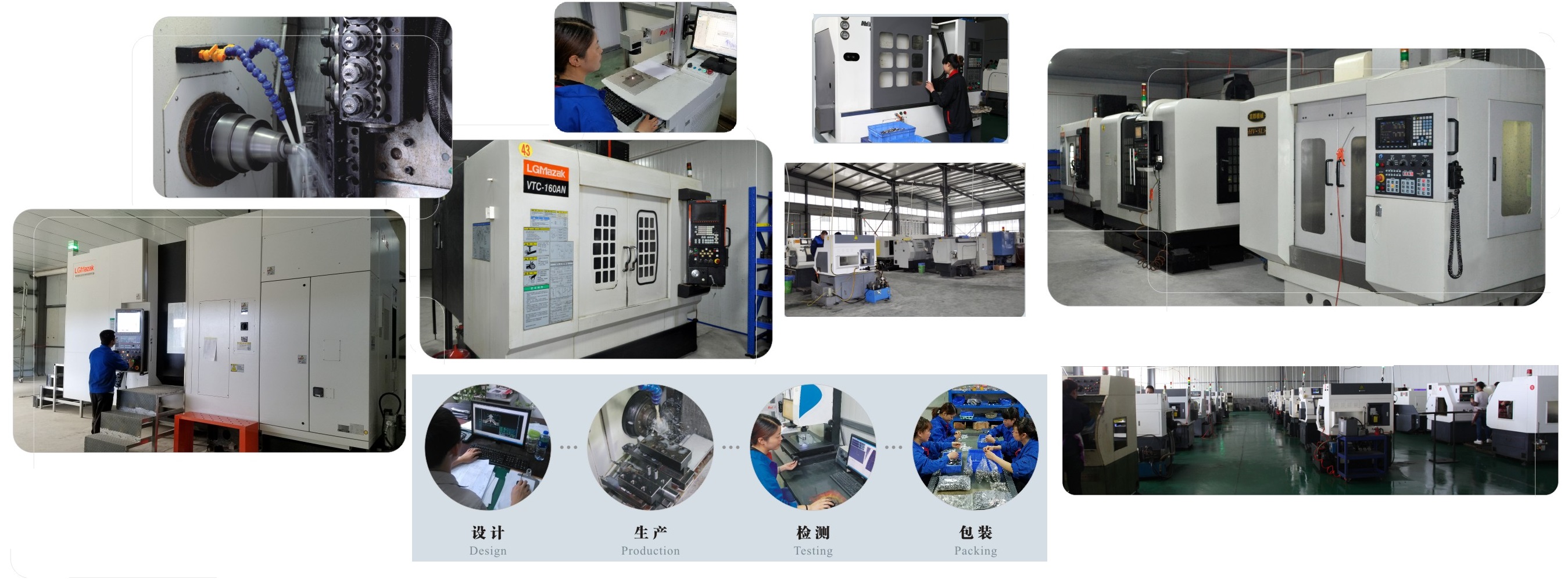
Yes. Equipped with 34 sets of 3-, 4-, and 5-axis CNC machining centers holding tolerances to 0.005 mm, Vunza manufactures fully bespoke exhaust studs. Options include stepped studs (e.g., M10 to M8 conversion), internal hex/Allen or Torx drive broaching, extended lengths up to 120 mm, rolled UNC/UNF imperial threads, and PVD titanium nitride or anodized finishes.
What quality inspection and traceability documentation do you supply with OEM shipments?
We enforce 100% full-process quality control starting from vacuum arc melted titanium sponge up to finished parts. Shipments are accompanied by 3.1 Mill Test Certificates (MTC) certifying ASTM B348 / AMS 4928 chemical and mechanical compliance, first-article dimensional reports (FAIR), optical profile thread inspection data, and batch heat-number traceability.
What is your production lead time and Minimum Order Quantity (MOQ)?
Standard sizes (such as M8×45 and M10×50) are typically kept in stock for immediate sample dispatch within 48 hours. For customized production runs, our standard MOQ is 100 pieces per specification, with volume orders dispatched in 15 to 25 business days backed by complete QA documentation.
Accelerate Your Exhaust Hardware Supply: Direct Factory RFQ
Send your custom exhaust stud drawing, target length, or sample dimensions. Our senior engineering team in Baoji will return DFM analysis, thread calculations, and quotation within 9 hours.
1Submit 2D/3D CAD drawing, OEM part number, or target thread pitch
2Receive technical DFM feedback, tooling recommendations, and price quotation
3Approve pilot samples before scaling to high-volume batch runs