[email protected] Onsite-Verified Manufacturer · Since 2008
English
0%

Titanium Fasteners come in many forms, and the right choice depends on more than the material name. Bolts, screws, nuts, studs, and washers each serve different assembly needs. A small flange bolt in a marine pump faces different demands from a lightweight screw in an aircraft panel. Fit matters. So does the surrounding environment.

Materials author Matthew J. Donachie’s published work provides a useful basis for alloy selection. A practical paraphrase of that guidance is: “Choose the titanium alloy for the service conditions, not the label alone.” This is not a verbatim quotation. It reflects an important distinction: commercially pure titanium and alloys such as Ti-6Al-4V differ in strength, formability, and typical applications. Even a strong alloy can underperform if its dimensions, thread engagement, or installation do not suit the joint.

This guide compares fastener types by shape, alloy, and common use. It also explains where grades, corrosion exposure, temperature, and load influence selection. You’ll see why a nut-and-bolt set may be suitable for one assembly, while a stud or machine screw fits another. Real-world details matter: mating materials, access for tools, and repeated servicing can change the decision. No single type suits every job. Use the overview as a starting point, then confirm specifications against the design requirements and supplier documentation.
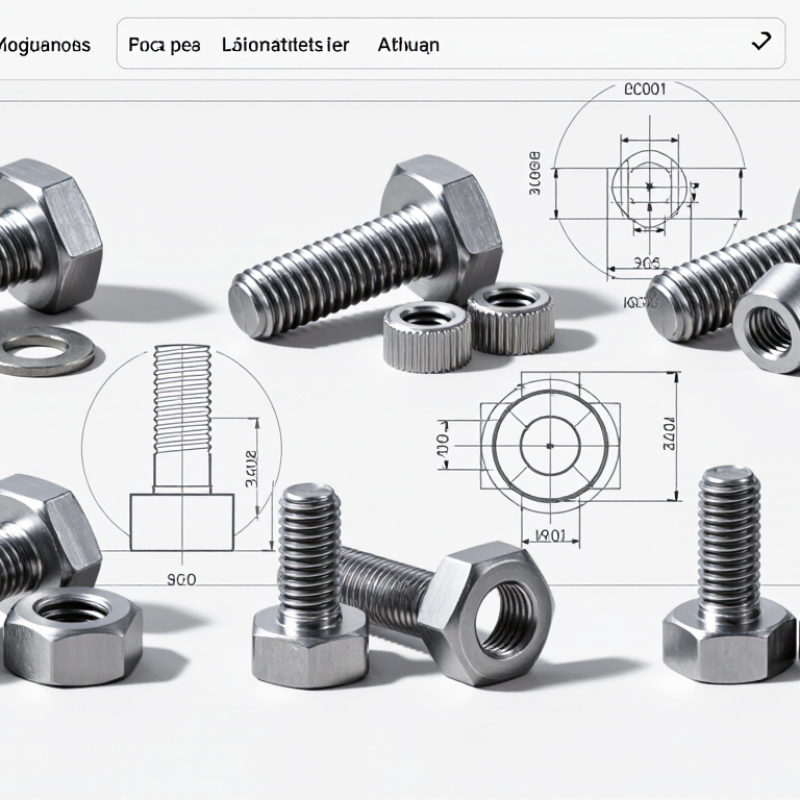
What Types of Titanium Fasteners Are Available?

What Defines Titanium Fasteners and Their Approximate 4.51 g/cm³ Density?

Titanium fasteners are threaded components—such as bolts, screws, nuts, and washers—made from commercially pure titanium or titanium alloys. Their defining feature is the material, not a special fastener shape. A hex-head bolt and a socket-head screw can both be titanium fasteners, even when their dimensions differ.

The ASM Specialty Handbook: Titanium and Titanium Alloys gives commercially pure titanium a density of about 4.51 g/cm³ at room temperature. Common Ti-6Al-4V alloy is slightly less dense, around 4.43 g/cm³. For scale, a solid 10 cm³ piece of commercially pure titanium weighs about 45.1 grams. The same volume of typical steel weighs roughly 78 grams. That difference can matter when many fasteners are used in a lightweight assembly. It does not mean every titanium fastener weighs the same. Thread length, head shape, hollow sections, and alloy choice all change the final mass.

Density is only one part of material selection. Titanium fasteners are often chosen for a useful strength-to-weight balance and resistance to corrosion in demanding environments. Still, density alone cannot tell you a bolt’s load capacity or service life. That shortcut is useful, but incomplete. Check the specified alloy and product dimensions; a compact titanium screw may weigh more than expected if its head is large or its threads are unusually deep.

What Types of Titanium Fasteners Are Available?

Titanium fasteners include bolts, screws, nuts, washers, and studs. Their material density is approximately 4.51 g/cm³.

The chart compares approximate material densities. Titanium’s density is lower than steel’s, while density alone does not determine a fastener’s strength or suitability. Values are approximate and can vary by alloy and grade.

Which Forms Are Available: Bolts, Screws, Nuts, Studs, and Washers?

Titanium fasteners are available as bolts, screws, nuts, studs, and washers, each serving a different joint detail. Bolts pair with nuts in through-holes; screws usually engage a tapped hole or form threads in softer material. Studs provide threaded ends when repeated assembly or limited tool clearance makes a bolt awkward. Small parts matter. A washer spreads bearing pressure beneath a head or nut, though a soft mating surface may still deform.

Material choice affects weight and strength. The ASM Handbook, Volume 2, reports densities of about 4.51 g/cm³ for commercially pure Grade 2 titanium and 4.43 g/cm³ for Grade 5 Ti-6Al-4V. Its property data also places typical minimum tensile strengths near 345 MPa for Grade 2 and 895 MPa for Grade 5; actual fastener requirements depend on specification and processing. ASTM F468 covers several nonferrous bolts, cap screws, and studs, while ASTM F467 addresses nuts. Check the applicable grade and dimensions rather than assuming every titanium part follows the same requirements.

In practice, match the head style, thread, length, and washer diameter to the joint. A broad washer can help protect a thin panel; a mismatched thread can ruin a tapped hole. Titanium galling is a real concern, especially during repeated tightening, so assembly method and compatible lubrication deserve attention. I would not treat “titanium” alone as a complete specification.

How ASTM F468 and F467 Classify Titanium Bolts and Nuts

ASTM F468 covers nonferrous bolts, hex cap screws, and studs for general use. ASTM F467 covers their nut counterparts. For titanium fasteners, these specifications organize requirements around the material designation and applicable mechanical properties, rather than treating every titanium part as interchangeable. The exact grades and requirements depend on the standard edition and product details.

A drawing may call for a titanium bolt and nut, yet that description is incomplete. Check the specified grade, dimensions, thread fit, and strength requirements against the relevant F468 or F467 provisions. For example, a fastener made from commercially pure titanium is not automatically equivalent to one made from a titanium alloy. The distinction matters when a joint faces vibration, repeated loading, or exposure to salt spray.

Keep the bolt and nut specifications aligned. A correctly specified bolt can still make a poor assembly if its nut has a different material designation or incompatible thread dimensions. That detail is easy to miss. Procurement documents should identify the standard, grade, size, and any required certification, then confirm them against current engineering requirements. Even careful readers can overlook edition changes, so verify the applicable version before ordering.

How Grade 2 (345 MPa) and Grade 5 (895 MPa) Compare in Minimum Tensile Strength

Titanium fasteners include bolts, screws, nuts, studs, and washers. Common material choices include commercially pure Grade 2 and Ti-6Al-4V Grade 5. ASTM International’s ASTM B348/B348M specification gives minimum tensile strengths of 345 MPa for Grade 2 and 895 MPa for Grade 5, for specified product forms and conditions. That gap matters. Grade 5’s minimum is about 2.6 times higher, which may suit fasteners exposed to greater tensile loads. These figures are not design allowables.

Grade 2 is comparatively ductile and can be easier to form, useful for some washers and components that need more deformation before failure. Grade 5 offers higher strength in compact bolts and studs, but machining and thread quality need careful control. A tensile test pulls a specimen until it breaks; it cannot predict every installed joint’s performance. Not the whole story. Engineers should also consider proof load, fatigue, temperature, corrosion conditions, and installation torque. ASTM B348/B348M covers bars and billets, not every finished fastener, so check the applicable fastener specification and material certificate before comparing product values.

How to Match Fastener Form, Grade, Thread, and Service Conditions

Titanium fasteners are available as bolts, screws, studs, nuts, and washers. Match the form to the joint: a fully threaded bolt can suit thin parts, while a stud may help where frequent assembly risks damaging tapped threads. ASTM F468 covers requirements for nonferrous bolts, screws, studs, and nuts; specify the titanium grade and dimensions clearly. Threads matter. Coarse threads are often easier to assemble, while fine threads allow smaller adjustment increments. Neither choice prevents galling, a common concern with titanium-on-titanium contact. Clean threads, suitable lubricant, and controlled torque help reduce seizure.

Grade 2 commercially pure titanium is often selected for corrosion resistance; Grade 5, Ti-6Al-4V, offers higher strength for weight-sensitive joints. The ASM Handbook reports Ti-6Al-4V density at about 4.43 g/cm³, but low density alone does not determine fastener capacity. Check the required tensile load, thread engagement, and temperature range against the product specification. For chloride exposure, crevices beneath washers, or repeated wet-dry cycles, assess the whole joint—not just the screw. A tidy grade chart is useful, but real service conditions can complicate the choice. Verify compatibility with mating metals and confirm torque guidance for the exact fastener finish and lubrication.

FAQS

What forms do titanium fasteners come in?

Common forms include bolts, screws, nuts, studs, and washers. Each serves a different joint detail.

How do bolts, screws, and studs differ?

Bolts usually pass through holes and pair with nuts. Screws engage tapped holes or form threads in softer materials. Studs offer threaded ends when tool clearance is limited.

What does a washer do in a joint?

A washer spreads pressure beneath a bolt head or nut. A wider washer can protect a thin panel, though soft surfaces may still deform. Small parts matter.

How do Grade 2 and Grade 5 titanium compare?

Grade 2 has a reported density near 4.51 g/cm³ and typical minimum tensile strength near 345 MPa. Grade 5 is about 4.43 g/cm³ and 895 MPa. Actual requirements vary.

Are all titanium fasteners interchangeable?

No. Commercially pure titanium and titanium alloys differ in properties. Check the grade, dimensions, thread fit, and required strength.

What details should purchasing documents specify?

Identify the applicable material specification, grade, size, and any certification requirements. Check the current edition against engineering needs. Details are easy to miss.

Why should bolt and nut specifications match?

A correctly specified bolt may still form a poor joint with an incompatible nut. Confirm that their material designations and thread dimensions align.

What should installers watch for during tightening?

Titanium fasteners can gall, especially during repeated tightening. Consider the assembly method and compatible lubrication; the material name alone is not a complete specification. I would check twice.

Conclusion

Titanium Fasteners are valued for their combination of low weight, corrosion resistance, and useful strength. With a density of approximately 4.51 g/cm³, titanium is lighter than many common engineering metals. These fasteners are available in forms such as bolts, screws, nuts, studs, and washers, each serving different assembly and load-transfer needs. ASTM F468 and ASTM F467 provide classifications and requirements for titanium bolts and nuts, helping buyers identify suitable material and product specifications.

Grade selection should reflect the required strength and service conditions. Grade 2 has a minimum tensile strength of about 345 MPa and is often considered where corrosion resistance and formability are priorities. Grade 5, with a minimum tensile strength of about 895 MPa, is suited to applications requiring greater strength. To select an appropriate fastener, consider its form, titanium grade, thread dimensions, expected loads, temperature, and exposure environment, as well as compatibility with the joined materials.

Amelia

Amelia

Amelia is a dedicated marketing professional with a strong understanding of the company’s products and the needs they are designed to meet. She regularly contributes expert articles to the company website, sharing clear, practical information that helps readers explore product features, compare......