Grade 5 Racing
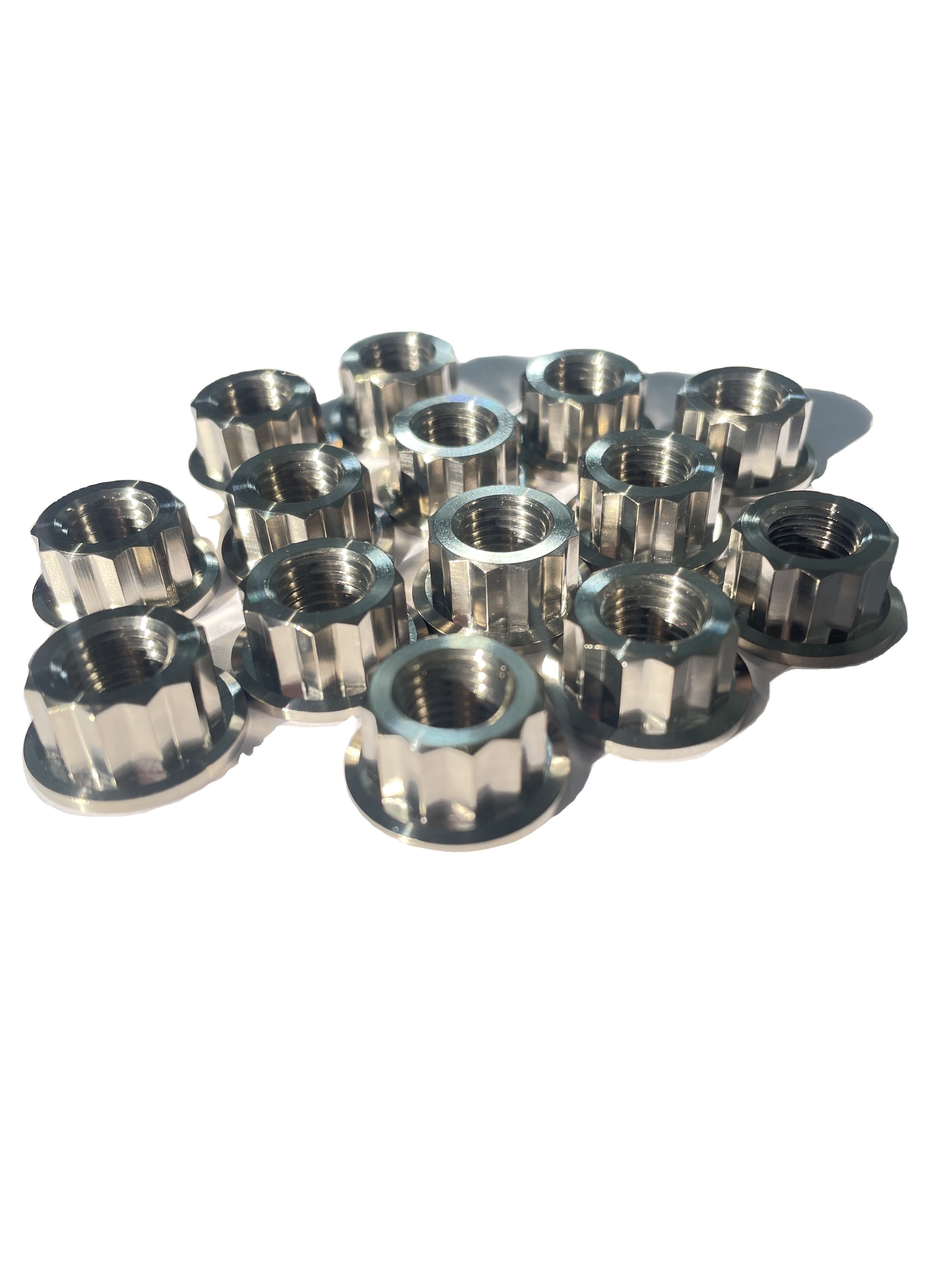
Explore our laboratory-tested, cold-rolled, and multi-axis CNC machined titanium brake and structural hardware, engineered to satisfy stringent European safety and mechanical conformity criteria.
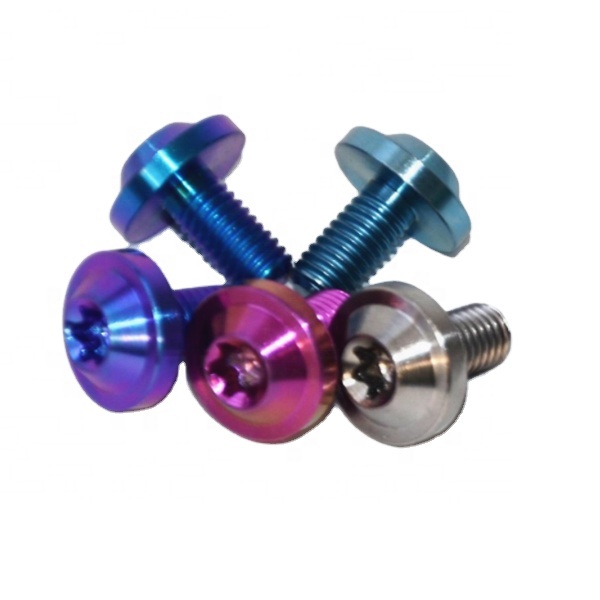
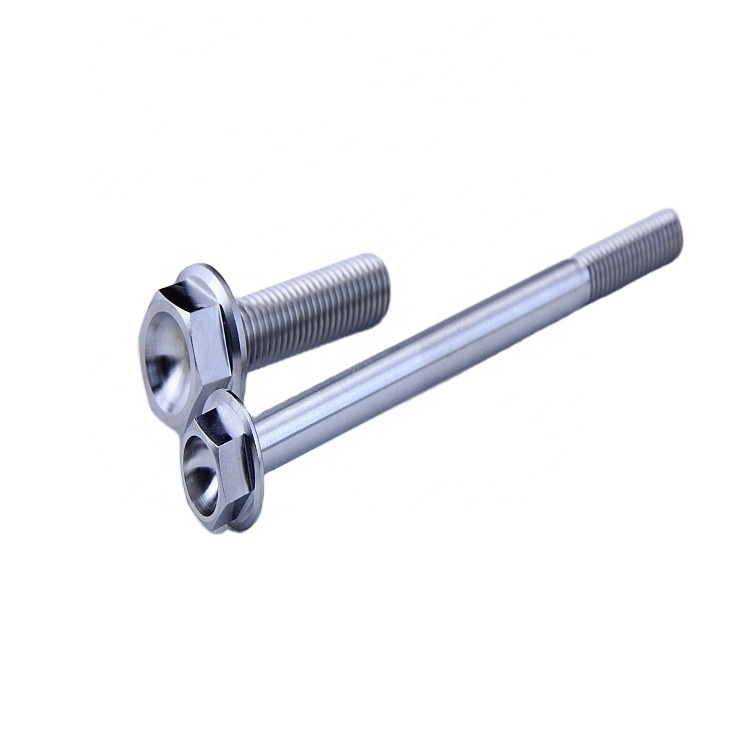
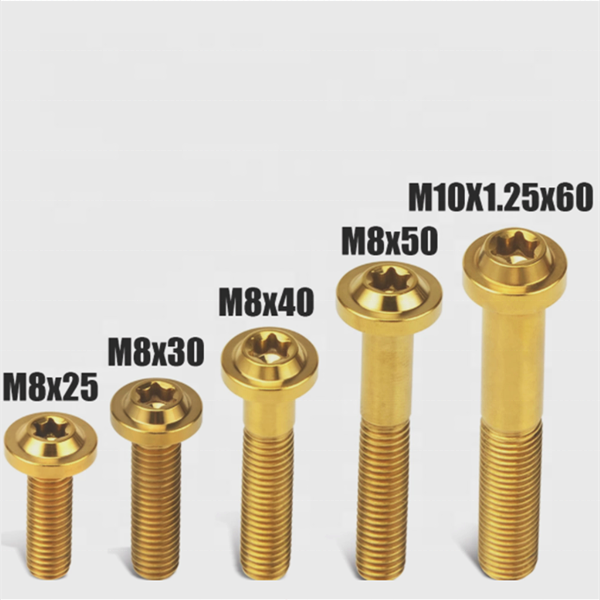
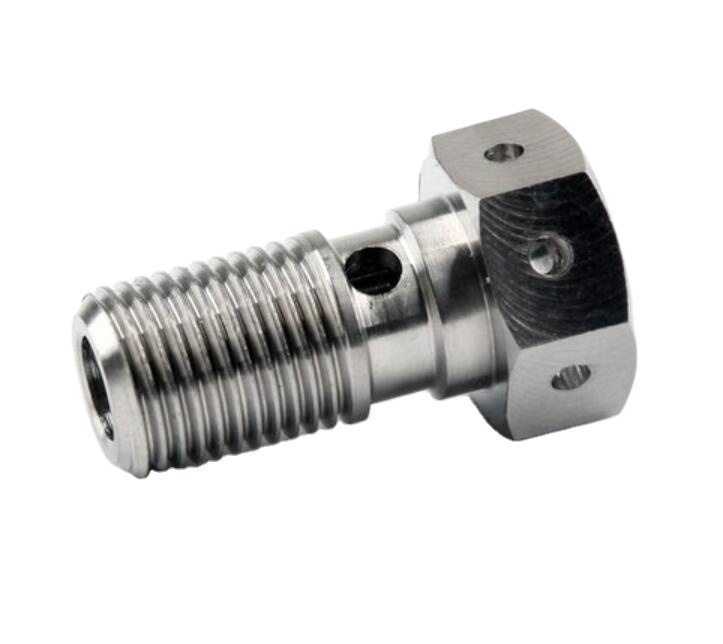
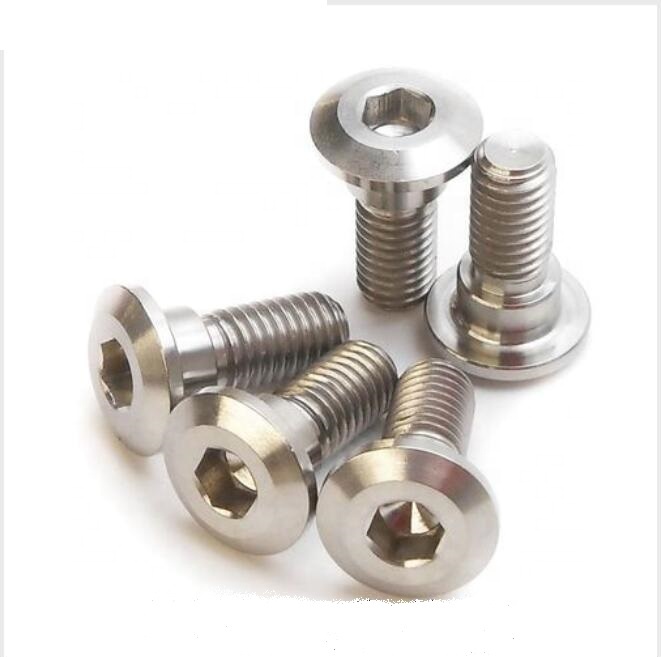
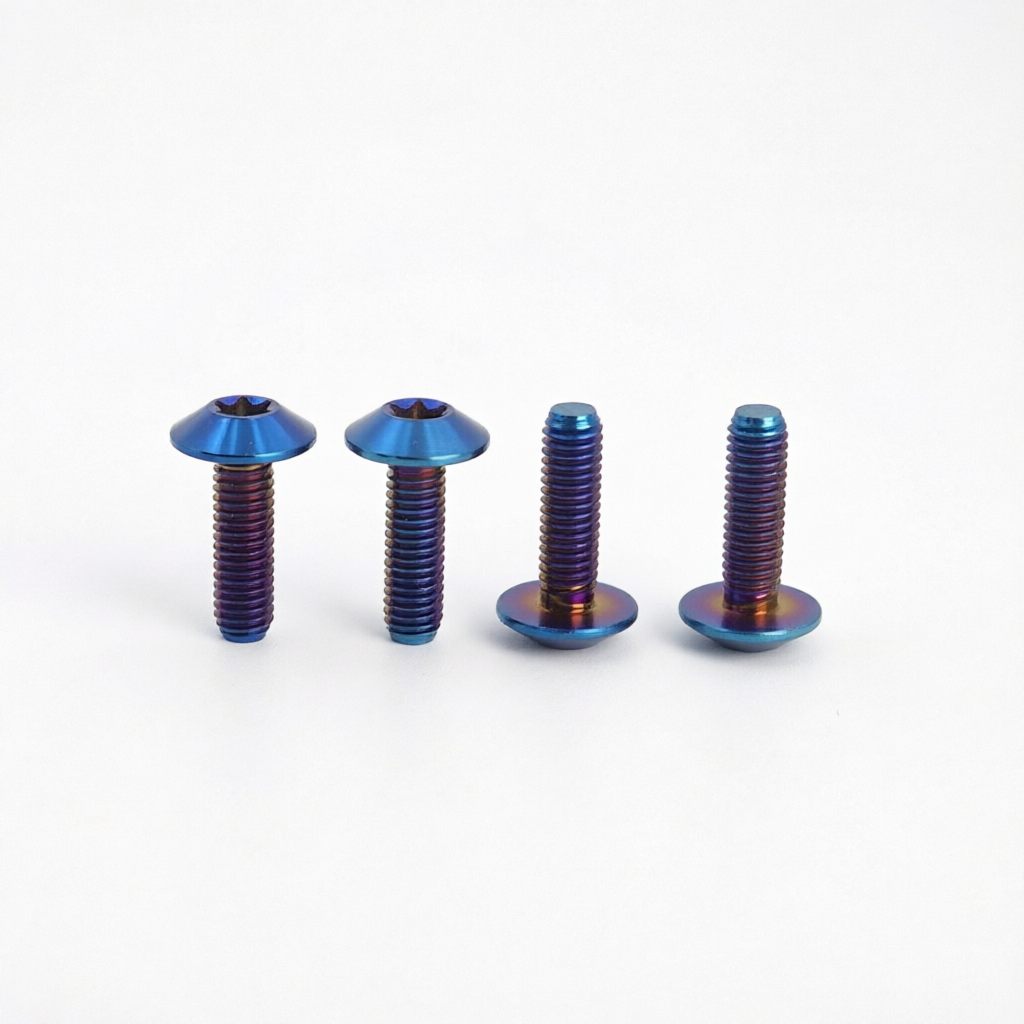
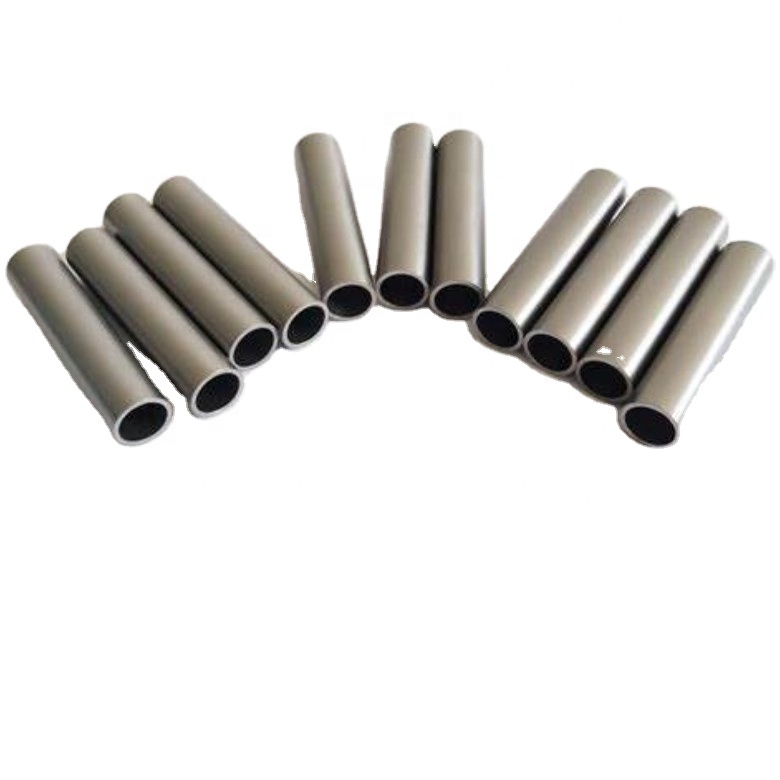
Brake systems represent the single most life-critical mechanical interface on high-velocity vehicles. Caliper mounting bolts, rotor disc screws, and banjo union connectors operate under severe cyclic thermo-mechanical stress, high transverse shear loads, and intense vibrational harmonics. As global motorsport bodies and commercial vehicle homologation directives mandate strict weight reduction without compromising shear safety, CE certified Titanium Grade 5 (Ti-6Al-4V) brake bolts have emerged as the paramount engineering benchmark over conventional 10.9 or 12.9 high-tensile steel.
In disc brake assemblies, bolts encounter not merely pure static tension from pre-load tightening, but violent alternating transverse shear forces generated during high-friction deceleration. When kinetic energy is transformed into thermal energy, local hub temperatures routinely spike beyond 450°C. Conventional carbon and alloy steel fasteners can suffer rapid thermal degradation, accelerating galvanic oxidation and hydrogen embrittlement. Conversely, Ti-6Al-4V Grade 5 alloys processed via vacuum arc remelting (VAR) exhibit exceptional mechanical integrity:
Boasting a mass density of 4.43 g/cm³ compared to steel's 7.85 g/cm³, Grade 5 titanium offers an immediate 44% to 47% unsprung weight saving, drastically reducing rotational inertia and enhancing suspension responsiveness under high-frequency bumps.
Our cold-rolled Ti-6Al-4V brake fasteners consistently surpass 950–1050 MPa ultimate tensile strength (UTS) and 880–920 MPa yield strength, delivering elasticity recovery superior to rigid carbon steels during thermal shock spikes.
Braking zones are constantly exposed to moisture, de-icing salts, road chemical sprays, and corrosive glycol fluids (DOT 4 and 5.1). Titanium's self-healing TiO&sub2; passivation oxide barrier prevents galvanic micro-pitting entirely.
A frequent error among junior procurement teams is evaluating brake fasteners strictly on tensile yield while neglecting fatigue notch sensitivity and thread grain flow. Machining external threads on a lathe cuts straight across the metallurgical grain structure, introducing microscopic stress concentration notches at the thread root. Vunza Titanium manufactures all CE certified brake bolts using dedicated thread rolling processes after CNC turning. Thread rolling continuously compresses the titanium crystal structure parallel to the contour, elevating dynamic fatigue life by over 300% under cyclical track testing.
| Fastener Material Grade | Density (g/cm³) | Tensile Strength (MPa) | Yield Strength (MPa) | Thermal Expansion (10⁻⁶/K) | Corrosion Rate (Salt Spray) | Fatigue Limit (10⁷ cycles) |
|---|---|---|---|---|---|---|
| Vunza Ti-6Al-4V (Grade 5 TC4) | 4.43 | 950 – 1050 | 880 – 920 | 8.6 | Zero degradation (>3,000 hrs) | 510 MPa |
| Commercial Grade 2 Pure Ti | 4.51 | 345 – 450 | 275 – 350 | 8.6 | Zero degradation (>3,000 hrs) | 220 MPa (Unsafe for Brakes) |
| Alloy Steel Grade 10.9 | 7.85 | 1000 – 1040 | 900 – 940 | 11.7 | Rust within 48 – 120 hrs | 420 MPa |
| Stainless Steel A4-80 (316) | 8.00 | 800 | 600 | 16.0 | Pitting under road de-icers | 310 MPa |
*Note: Certified brake rotor and caliper mounting hardware must never utilize commercially pure Grade 2 titanium due to insufficient shear yield limits. Grade 5 Ti-6Al-4V remains mandatory for all structural deceleration components.
In-depth intelligence for automotive OEMs, tier-1 braking integrators, and racing technical directors navigating the next five years of titanium fastener engineering.
By 2026, European automotive supply chains will mandate digital material passports under updated CSRD and CE Machinery Directives. Strategic procurement will shift away from open-market intermediaries toward integrated manufacturers like Vunza who maintain complete ingot-to-sponge traceability, verified vacuum degassing batch documentation, and ASTM E2371 chemical spectroscopy certs.
Traditional multi-stage handling introduces cumulative run-out errors on critical brake threads. Modern technological adoption centers on multi-axis mill-turn centers capable of complete bolt machining in a single clamping setup. Holding tolerances within 0.005 mm ensures concentricity between the bolt shank and seating flange, preventing uneven clamping pressure across high-speed ceramic brake discs.
Titanium naturally exhibits galling tendencies when threaded into identical titanium or aluminum calipers without lubrication. The industry trend has moved decisively toward Magnetron Sputtered Physical Vapor Deposition (PVD), including DLC (Diamond-Like Carbon), TiN, and rainbow TiAlCN layers. These deliver an ultra-hard surface (2500–3200 HV) with a friction coefficient under 0.15, stabilizing torque-tension repeatability.
Electric performance vehicles carry substantial curb weight penalties due to high-voltage traction batteries. To maintain braking distance compliance and tire lifecycle targets, OEM brake engineers are aggressively replacing massive steel unsprung hardware with Grade 5 titanium bolts across calipers, regenerative hub brackets, and steering knuckles.
High-torque assembly lines in motorsport and precision assembly increasingly reject standard hex sockets due to tool slippage and rounded corners under aggressive pneumatic tightening. Torx (Star) internal drives distribute rotational torque evenly across six lobe interfaces, drastically mitigating drive stripping, lowering required axial engagement pressure, and ensuring consistent pre-load clamping values on brake disc hubs.
Operating in Baoji since 2008 immediately adjacent to the Baoti Group Industrial Park, Vunza Titanium Industry integrates end-to-end titanium sponge metallurgy, CNC multi-axis turning, and ISO-verified quality control.
Direct supply partnerships with Baoti Group provide prime aerospace-grade titanium sponge. We completely bypass secondary scrap remelting, ensuring uniform chemical interstitial content with Oxygen (≤0.20%) and Hydrogen (≤0.015%) verified by mill test certificates (MTC per EN 10204 3.1).
Equipped with high-rigidity multi-axis turning and machining centers, our facility delivers high-speed chip evacuation and cryogenic cooling essential for titanium's low thermal conductivity, eliminating thermal stress hardening on bolt shanks.
More than 50% of our production personnel possess over 13 years of specialized titanium machining experience. This institutional expertise ensures deep understanding of cutting tool deflection, optimal feed rates, and perfect rolled thread execution.
Our quality assurance lab operates automated optical profile projectors, thread pitch gauges, coordinate measuring machines (CMM), micro-hardness testers, and hydrostatic proof testers to guarantee flawless dimensional adherence before batch sign-off.
As verified onsite by international auditing bodies and Alibaba.com, Vunza operates an airtight Quality Management System ensuring full traceability from raw titanium bar through final protective vacuum packaging.
Our bilingual engineering division evaluates CAD models (.STEP / .IGES / .DWG) within 9 hours, identifying potential stress risers, optimizing thread lead-ins, and manufacturing custom functional prototypes within 5 to 7 business days.
Comprehensive engineering clarifications addressing safety factors, installation torque, certification, and metallurgical failure prevention.
In the European Union, structural components utilized in road and racing vehicles fall under safety directives requiring strict documentation of tensile strength, elongation, and raw material purity. A legitimate CE-compliant titanium bolt manufacturer must provide:
1. EN 10204 Type 3.1 Inspection Certificate: Verifying chemical composition (Ti, Al, V, Fe, C, N, H, O) via spectral analysis and mechanical tensile testing from the specific melting batch.
2. Dimensional & Thread Conformity Reports: Proving compliance with ISO 965 metric thread tolerances (6g/6H fits) to prevent thread play under vibration.
3. ISO 9001:2015 Quality Management System Certification: Governing process repeatability and traceable marking on bolt heads.
Yes, provided that genuine cold-worked and heat-treated Ti-6Al-4V Grade 5 (TC4) is specified. Grade 5 titanium boasts an ultimate tensile strength of 950–1050 MPa and yield strength exceeding 880 MPa, closely matching standard 10.9 steel (1000 MPa tensile / 900 MPa yield) while reducing component weight by 45%. However, grade 2 commercially pure titanium must never be used in brake systems as its tensile yield (275 MPa) is grossly inadequate for caliper mounting or rotor shear forces.
Thread cutting severs the continuous longitudinal grain structure of the titanium bar, creating micro-notches at the root diameter that act as stress concentration zones during fluctuating brake torque. Thread rolling is a chipless cold-forming process where hardened dies deform the titanium under massive radial pressure. This work-hardens the thread root and preserves continuous grain flow lines, increasing dynamic fatigue resistance by over 300% and virtually eliminating catastrophic fatigue shear failure.
Titanium possesses a lower modulus of elasticity (approx. 110–114 GPa) compared to carbon steel (approx. 210 GPa). When tightening titanium bolts into an aluminum caliper bracket:
• A high-temperature anti-seize paste (such as copper, nickel, or molybdenum disulfide based) or a specialized medium-strength threadlocker must always be used to avoid galling.
• As a rule of thumb, torque values should generally be set to 80% to 85% of the OEM dry steel specification when lubricated, ensuring optimal clamping force without stretching threads or stripping the softer aluminum female threads.
Titanium is electrochemically noble. When directly coupled with aluminum in the presence of an electrolyte (such as salt water spray), the aluminum component can theoretically serve as a sacrificial anode. However, in practice, because the surface area of the aluminum hub or caliper is massive relative to the small titanium bolt, galvanic current density is extremely low. Applying anti-seize paste or utilizing our specialized PVD (Physical Vapor Deposition) coated titanium bolts acts as an electrical insulator, completely neutralizing galvanic oxidation risks.
For standard metric sizing (e.g., M8x1.25, M10x1.25, M10x1.5 in lengths of 20mm–80mm), our typical MOQ is 100 to 300 pieces. For custom CNC designs engineered from customer 2D/3D blueprints (including custom Torx flange diameters, cross-drilled safety wire holes, or specific shank lengths), our sample turnaround is 5 to 7 working days, with volume batch deliveries running 15 to 25 days depending on PVD coating specifications.
Submit your technical drawings or OEM bolt specifications. Our Baoji senior engineering division will provide full DFM feedback, stress evaluations, and competitive wholesale factory pricing within 9 hours.