[email protected] Onsite-Verified Manufacturer · Since 2008
English
CE Compliant (Machinery Directive 2006/42/EC) ISO 7379 / DIN 9841 Ground Tolerance Tolerance to 0.005 mm

CE Certified Titanium Shoulder Bolts Manufacturers & Factories

OEM/ODM Precision Titanium Shoulder Screws, Stripper Bolts & Micro-Toleranced Pivot Fasteners Engineered from China's Titanium Valley for Extreme Fatigue, Medical and High-Performance Automation Assemblies.

Precision Catalog

Engineered High-Integrity Fasteners & Titanium Assemblies

Direct factory supply of Grade 5 (Ti-6Al-4V TC4) and specialty aerospace-grade titanium hardware, precision-turned to ultra-tight mechanical runout specifications.
2008
Established Factory
34 Sets
3/4/5-Axis CNC Centers
0.005 mm
Ground Shoulder Tolerance
≤ 9 Hours
Engineering DFM Response

Engineering Whitepaper: Anatomy of CE Certified Titanium Shoulder Bolts

In high-precision mechanical assemblies, automated tooling, aerospace mechanisms, and dynamic medical hardware, titanium shoulder bolts (also recognized globally as titanium stripper bolts, precision shoulder screws, or pivot pins) perform a decisive dual-functional role. Unlike conventional metric or imperial bolts designed solely to clamp joint members together through tension, a shoulder bolt incorporates an unthreaded, cylindrical precision-ground shoulder whose outer diameter serves as an integrated linear shaft, bearing pin, axle, or precision dowel alignment guide.

Achieving valid CE Certification under the EU Machinery Directive 2006/42/EC and corresponding harmonized standards (including ISO 7379 and DIN 9841) demands rigorous control over material metallurgy, dimensional concentricity, mechanical runout, and notch-fatigue endurance. When machines or motion systems operate within the European Single Market, fasteners critical to safety cannot be treated as commodity consumables. Shoulder bolts subjected to cyclic cantilever loads, dynamic shear stresses, and high-frequency reciprocal sliding demand certified mechanical properties that eliminate sudden brittle rupture risks.

Critical Design Distinction: While standard steel shoulder screws rely on case hardening or quenched alloy steels (such as AISI 4140 or 12.9 grade), titanium shoulder bolts utilize Grade 5 Ti-6Al-4V (TC4) or Grade 23 ELI (Ti-6Al-4V Extra Low Interstitial). This delivers an exceptional strength-to-density ratio (tensile strength exceeding 895–1000 MPa at only 4.43 g/cm³), complete immunity to galvanic and chloride-induced pitting corrosion, and supreme cyclical fatigue resistance under continuous dynamic pivot stress.

Dimensional Precision: ISO 7379 & DIN 9841 Standards

Precision shoulder bolts manufactured at our Baoji machining center adhere strictly to international geometric dimensioning and tolerancing (GD&T) standards. The shoulder diameter tolerance is typically calibrated to f9, h8, or h7 precision classes depending on whether the application requires clearance for a rotating needle bearing or an interference press-fit for a location dowel:

Nominal Shoulder Ø (d1) Tolerance (h8) [mm] Tolerance (f9) [mm] Thread Size (d2) Head Diameter (d3 max) Hex Socket Size (s)
6.0 mm +0.000 / -0.022 -0.010 / -0.040 M5 × 0.8 10.0 mm 3.0 mm
8.0 mm +0.000 / -0.022 -0.013 / -0.049 M6 × 1.0 13.0 mm 4.0 mm
10.0 mm +0.000 / -0.028 -0.013 / -0.049 M8 × 1.25 16.0 mm 5.0 mm
12.0 mm +0.000 / -0.028 -0.016 / -0.068 M10 × 1.5 18.0 mm 6.0 mm
16.0 mm +0.000 / -0.034 -0.016 / -0.068 M12 × 1.75 24.0 mm 8.0 mm
20.0 mm +0.000 / -0.034 -0.020 / -0.084 M16 × 2.0 30.0 mm 10.0 mm

The transition radius between the ground shoulder and the threaded stud represents the principal point of stress concentration. Our factory utilizes multi-axis CNC turn-mill stations equipped with specialized contour radius inserts to roll and burnish the undercut fillet, preventing notch sensitivity and drastically enhancing fatigue limits over cut-thread alternatives.

Metallurgical Integrity: Grade 5 Ti-6Al-4V vs. Alternate Alloys

Selecting the optimal titanium alloy grade is foundational to meeting both CE safety compliance and project-specific physical demands. Titanium exists in two distinct crystallographic forms: hexagonal close-packed (alpha phase) and body-centered cubic (beta phase). By alloying high-purity titanium sponge with 6% aluminum (an alpha stabilizer) and 4% vanadium (a beta stabilizer), Grade 5 (Ti-6Al-4V / TC4) achieves an alpha-beta duplex structure that delivers peak mechanical strength without sacrificing impact toughness.

Grade 5 (Ti-6Al-4V / TC4)

The industry benchmark for mechanical fasteners. Tensile strength ≥ 895 MPa, yield strength ≥ 828 MPa, hardness 32–36 HRC. Ideal for racing suspension pivots, robotics linkages, and punch-press stripper plates requiring rigid deflecting tolerance.

Grade 23 ELI (Medical)

Extra Low Interstitial variant (ASTM F136). Stringently controlled levels of carbon, nitrogen, and oxygen prevent micro-cracking and optimize fracture toughness. Essential for surgical kinematics, implantable joints, and sub-zero aerospace mechanisms.

Grade 2 (Commercially Pure)

Unalloyed titanium with exceptional plasticity and unmatched chemical corrosion resistance. Yield strength ≥ 275 MPa. Predominantly applied in low-load chemical processing valves, marine instrumentation pivots, and plating fixture dowels.

Why European Machine Builders Specify Titanium Over 316 Stainless & Alloy Steel

In automated pick-and-place gantry arms, high-speed textile machinery, and semiconductor wafer handling, inertia represents the primary bottleneck limiting cycle velocity and motor efficiency. Replacing 42CrMo4 or AISI 316 shoulder screws with Gr5 titanium yields immediate engineering advantages:

  • Rotational & Reciprocating Inertia Reduction: At 4.43 g/cm³, titanium is approximately 44% lighter than alloy steel (7.85 g/cm³). This mass reduction allows servo motors to achieve higher acceleration profiles without triggering excessive current draw or kinetic overshoot.
  • Elimination of Galling with Advanced PVD / DLC: Untreated titanium exhibits high coefficient of friction against similar metals. Vunza integrates advanced physical vapor deposition (PVD) titanium nitride (TiN), titanium carbo-nitride (TiCN), or diamond-like carbon (DLC) surface treatments that drop friction coefficients below 0.15 while boosting shoulder surface hardness above 2000 HV.
  • Corrosion Immunity across Hostile Media: The spontaneous formation of an adherent, passive titanium dioxide (TiO&sub2;) layer provides perpetual protection against salt spray, chlorine, sulfuric industrial condensates, and aggressive sterilization autoclaves.

Manufacturing Excellence: Factory Capabilities at Vunza Titanium

Based in Baoji, Shaanxi—widely acknowledged as China's Titanium Valley—Vunza Titanium Industry Co., Ltd. (founded in 2008) operates directly alongside the Baoti Group industrial corridor. This strategic geographic proximity gives our metallurgical engineering teams direct access to certified titanium sponge, vacuum consumable arc melting (VAR) ingots, and precision-drawn continuous titanium coils.

34 Multi-Axis CNC Workstations

Equipped with 3-axis, 4-axis, and 5-axis simultaneous CNC Swiss-type lathes and machining centers capable of completing head-turning, socket-broaching, shoulder-grinding, and thread-rolling in a single clamping setup to maintain total concentricity within 0.005 mm.

Traceable Sponge-to-Bolt QC

Every raw material batch undergoes chemical spectrographic analysis, ultrasonic flaw testing, and mechanical tensile validation. Mill Test Certificates complying with EN 10204 3.1 are cataloged alongside batch lot codes for 100% downstream traceability.

Experienced Master Machinists

Titanium possesses low thermal conductivity and low elastic modulus, demanding specialized tool rake angles, rigid workholding, and high-pressure coolant delivery. Over 50% of our production staff have over 13 years of dedicated titanium machining experience.

Quality Assurance & Inspection Protocols

Meeting CE declaration standards involves stringent quality gating at each production phase:

  • Optical & Laser CMM Verification: Non-contact profile scanners inspect shoulder diameter runout, cylindrical straightness, fillet radius consistency, and socket broach depths to micron-scale thresholds.
  • Thread Form Roll Verification: Optical shadowgraphs and pitch micrometers ensure class 6g thread profiles with zero burrs or micro-laminations at thread roots.
  • Shear & Tensile Testing: Batch samples are destructively tested on calibrated hydraulic universal testing machines to guarantee shear loading ratings exceed specified safety design margins under EU machinery codes.

Global Sourcing Trends: Strategic Procurement Outlook (2025–2030)

Enterprise procurement directors and mechanical design leads are navigating a rapidly shifting geopolitical and regulatory landscape. Over the next five years, five macro trends are reshaping how precision titanium shoulder screws are sourced:

1. Stringent Supply Chain ESG & Carbon Footprint Auditing

European OEMs are increasingly requiring Corporate Sustainability Due Diligence (CSDDD) data. Factories located in Baoji that leverage localized upstream smelting and rolling reduce inter-province freight emissions, providing transparent material provenance and verifiable energy documentation.

2. The Surge in Humanoid Robotics & Industrial Automation Actuation

The proliferation of collaborative robots (cobots), exoskeletons, and humanoid robotic end-effectors requires miniaturized shoulder bolts (M2 to M5 shoulder sizes) that act as kinematic pivot points. The focus has pivoted toward ultra-low inertia titanium components to maximize battery operating autonomy.

3. Rapid Migration to Hybrid Thread Rolling

Historically, high-hardness Grade 5 titanium threads were machined via CNC single-point turning. To satisfy higher cyclic fatigue thresholds mandated by automotive and aerospace clients, modern factories have switched to cryogenic thread rolling. Rolled threads induce compressive surface stress and retain continuous uninterrupted grain flow, yielding up to a 300% increase in fatigue lifespan.

4. Multi-Axis Single-Setup Swiss-Turn Machining

Handling multiple setups between turning, milling, and cylindrical grinding induces stack-up tolerance errors. Progressive factories now deploy 7-axis and 9-axis Swiss CNC machines with driven live tooling, ensuring the unthreaded shoulder, the threaded shank, and the driven head feature zero cumulative runout.

Frequently Asked Questions: B2B Engineering & Sourcing

Direct answers to technical queries most frequently raised by mechanical engineering consultants, quality auditors, and supply chain managers.

What specific CE documentation accompanies our titanium shoulder bolt shipment?
We provide a comprehensive Declaration of Conformity (DoC) under the EU Machinery Directive 2006/42/EC where applicable, accompanied by an EN 10204 Type 3.1 Mill Test Certificate (MTC). This MTC verifies the precise chemical melt analysis (Ti, Al, V, Fe, C, N, H, O content) and mechanical tensile/yield test results. In addition, dimensional inspection reports (first article and final batch sampling) and RoHS/REACH compliance documentation are standard deliverables.
How does Vunza prevent galling on titanium shoulder bolt threads and shafts?
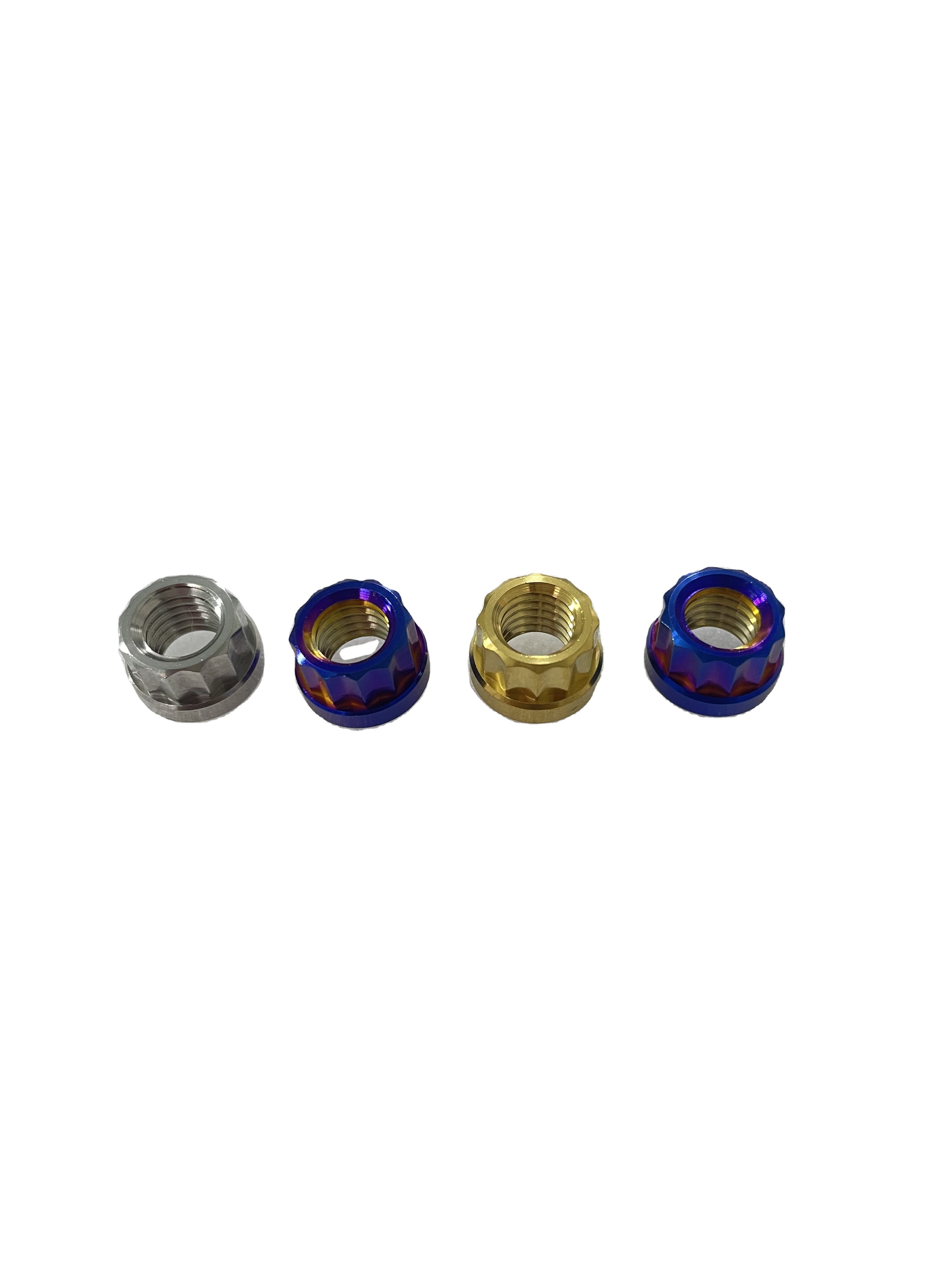
Titanium has a natural tendency to gall when torqued directly against matching female titanium threads or unlubricated bronze/steel bushings. We address this through multiple precision surface solutions: micro-polishing the shoulder to Ra < 0.2 μm, applying molybdenum disulfide (MoS&sub2;) dry lubricants, or depositing thin-film PVD coatings (DLC, TiN, or CrN). For extreme industrial environments, we recommend matching our Gr5 shoulder screws with coated titanium or brass self-locking flange nuts.
What shoulder runout and concentricity tolerances can your CNC machines sustain?
Utilizing high-rigidity multi-axis Japanese CNC turning centers with live synchronized tooling, we routinely maintain shoulder-to-thread concentricity and total indicator reading (TIR) runout within ≤ 0.005 mm (5 microns). Shoulder cylindrical diametral tolerance can be held to ISO h7 or custom customer drawing requirements.
Can you manufacture non-standard custom titanium shoulder bolts from customer 2D/3D CAD models?
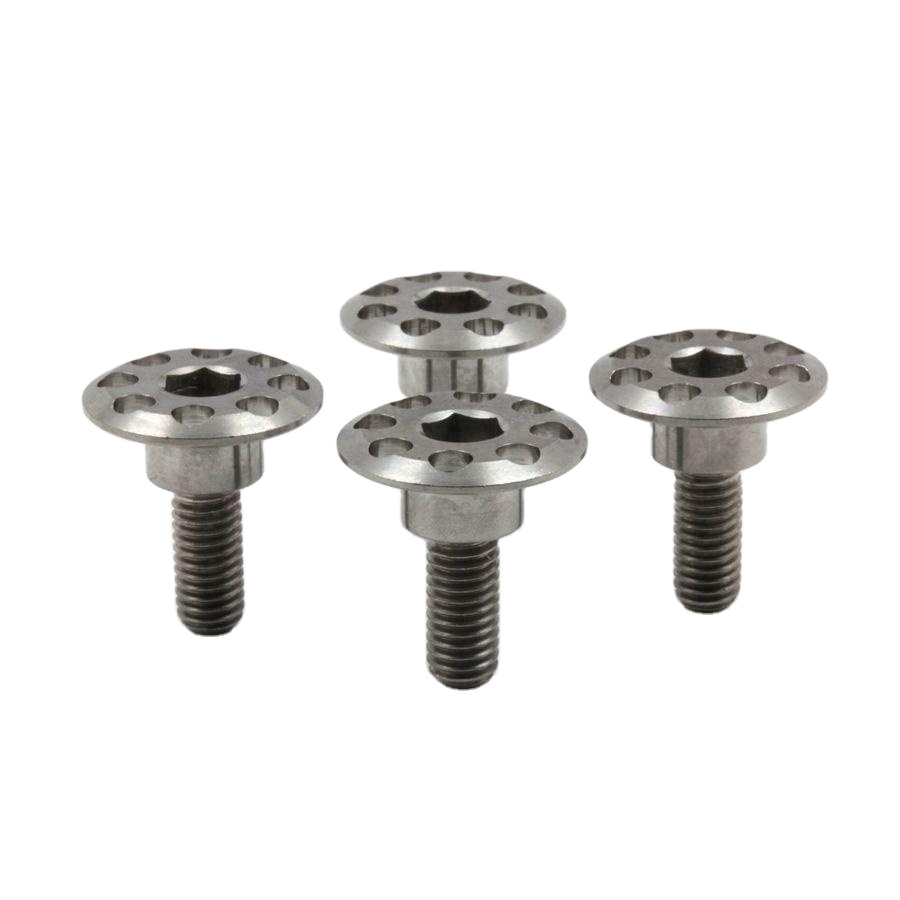
Yes. Over 60% of our production volume is engineered to custom customer blueprints. We support STEP, IGES, DXF, and PDF formats. Customization options include extended shoulder lengths, undercut grease grooves, hollow weight-relief through-bores, cross-drilled lock wire holes, captive washer shoulders, and bespoke drive styles (Torx, Torx Plus, internal hex, or 12-point bi-hex).
What is the standard Minimum Order Quantity (MOQ) and production lead time?
For custom CNC-machined titanium shoulder bolts, our standard prototype MOQ starts at 50 to 100 pieces to facilitate DFM validation and fitment testing. High-volume production runs typically range from 500 to 50,000+ units. Prototype samples can be completed within 7 to 10 working days, while serial batch manufacturing generally spans 20 to 30 calendar days depending on raw material bar diameter and plating requirements.
How does Grade 5 titanium compare to 12.9 grade high-tensile steel in shear applications?
Grade 5 titanium features an ultimate shear strength of approximately 550 to 600 MPa, while 12.9 carbon steel exceeds 700 MPa. However, Grade 5 titanium possesses infinite life under fatigue loads that would embrittle steel subjected to corrosive moisture. When designing for titanium shoulder bolts, engineers typically step up nominal shoulder diameter by 10%–15% if peak direct shear forces dominate, instantly achieving superior fatigue longevity and corrosion immunity at nearly half the total mass.
Do you offer color anodizing or micro-arc oxidation (MAO) surface treatments?
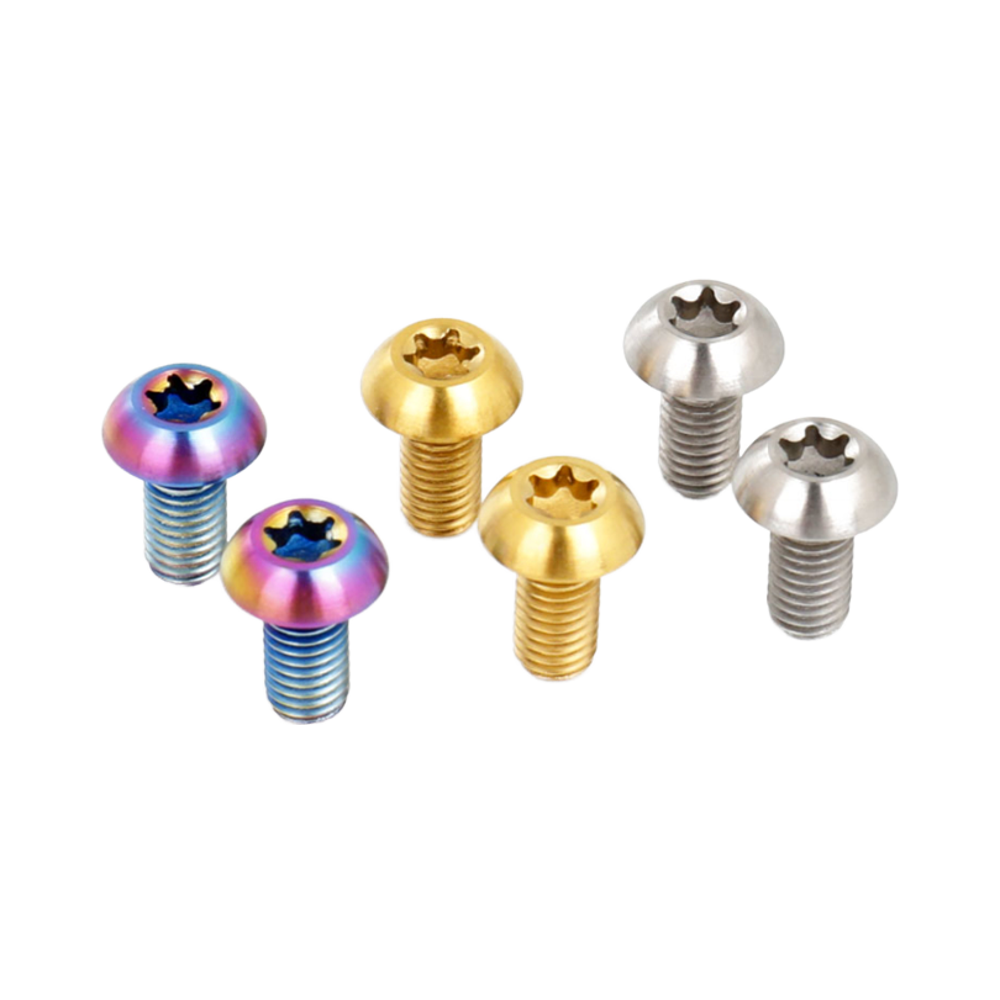
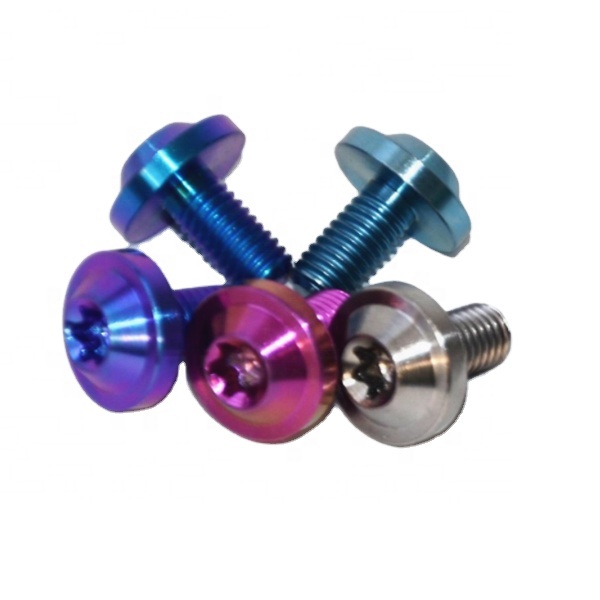
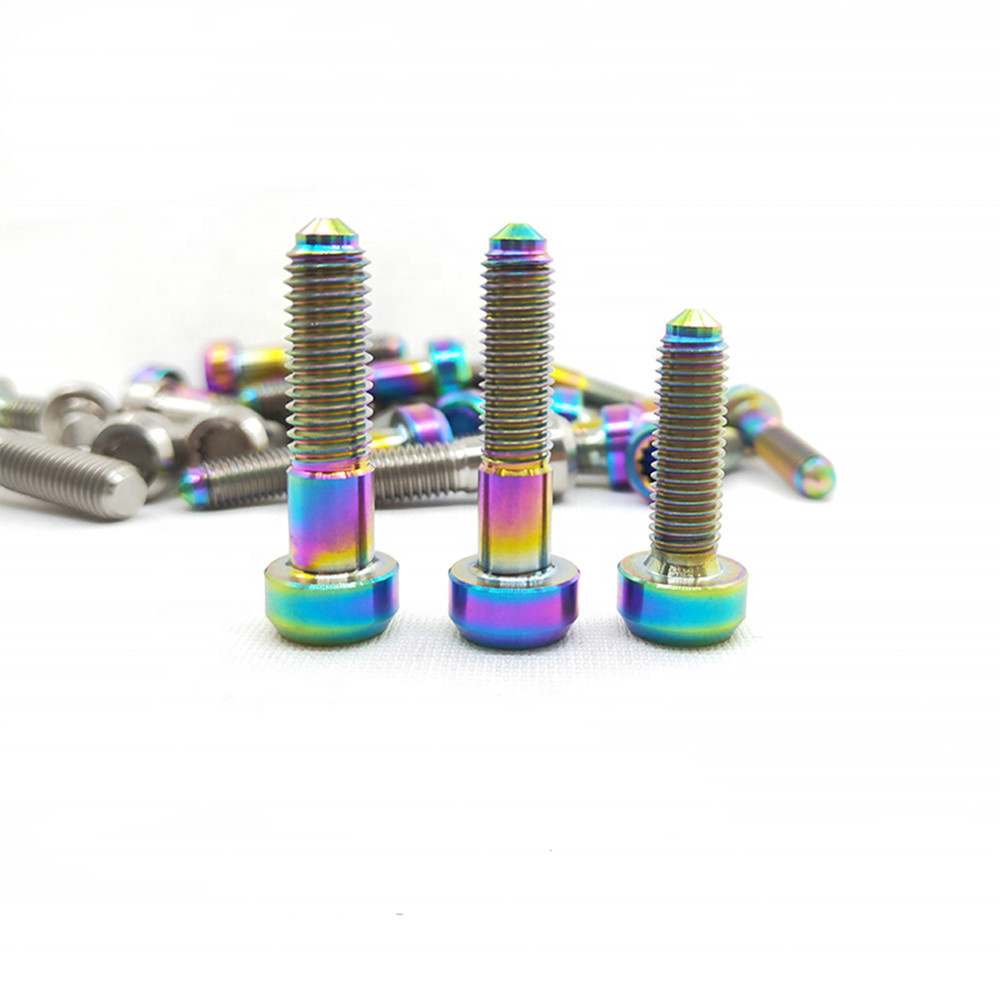
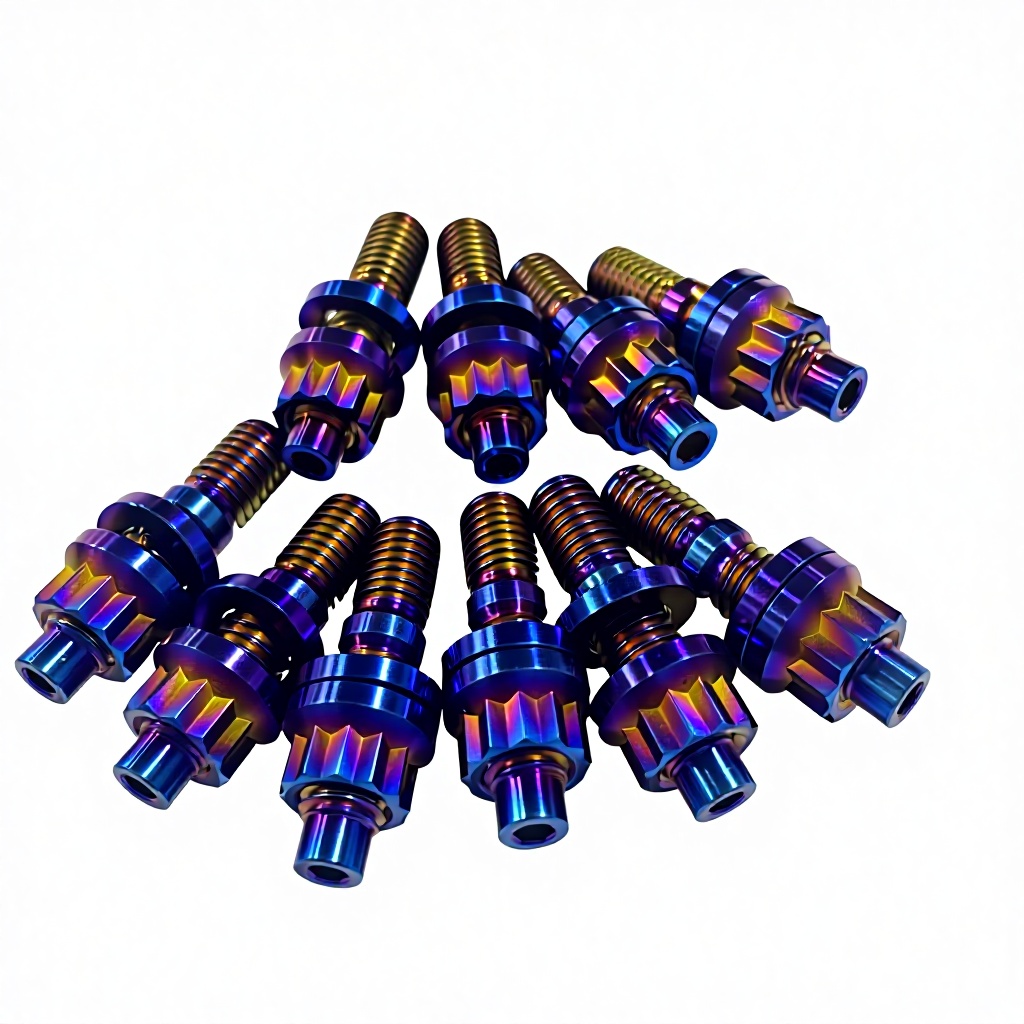
Yes. We offer in-house electrolytic anodizing in a spectrum of voltages that generate specific light-refractive oxide layers without dye pigments (including gold, purple, blue, rainbow, and burnt blue). For industrial wear surfaces, we deliver hard anodizing, physical vapor deposition (nitride black/gold), and micro-arc oxidation for superior dielectric insulation and abrasion resistance.
How do you verify sponge-to-part traceability?
Every batch of incoming titanium round stock is tagged with its original smelting heat number from qualified Baoji mills. This heat number travels with travelers through our CNC rough turning, precision cylindrical grinding, thread rolling, washing, optical CMM sorting, and packaging. The heat lot is laser-etched onto product cartons or directly onto the bolt head if specified.

Request Engineering Review & Factory Direct Quote

Send your CAD models or mechanical drawings (PDF, STEP, DWG) along with target material grade and quantities. Our senior metallurgical and CNC tooling engineers provide comprehensive DFM feedback, tolerance optimization advice, and formal commercial pricing within 9 hours.

• 100% On-Site Verified Manufacturer  |  • ISO 9001 & CE Quality Alignment  |  • Fast International Courier Dispatch
Contact Us
Instant Access to Senior Titanium Machining Engineers