Featured Titanium Fasteners & Fluid Assembly Hardware
Engineered for motorsports, hydraulic line systems, and critical weight-reduction builds. Tested for zero fatigue cracking, absolute hermetic sealing, and aggressive anti-corrosion properties.
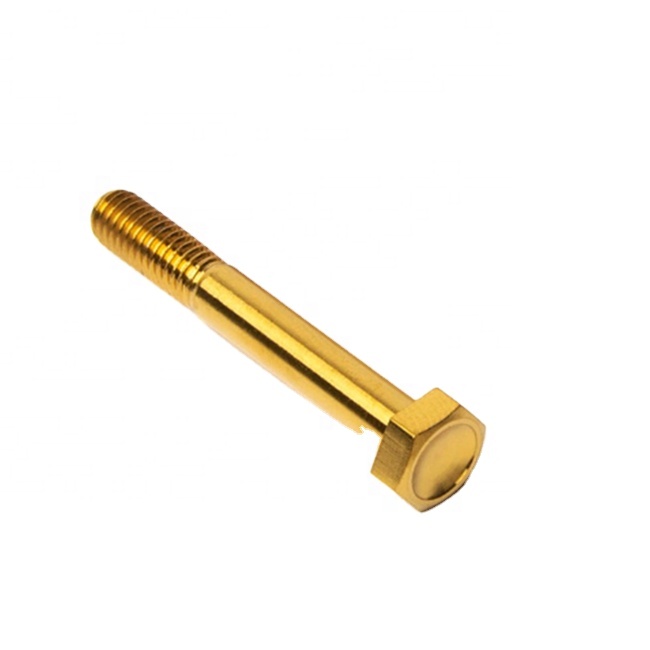
Forged 10-32 X1 1/2" UNF Titanium Bumper Bolt Sprint Car Midget
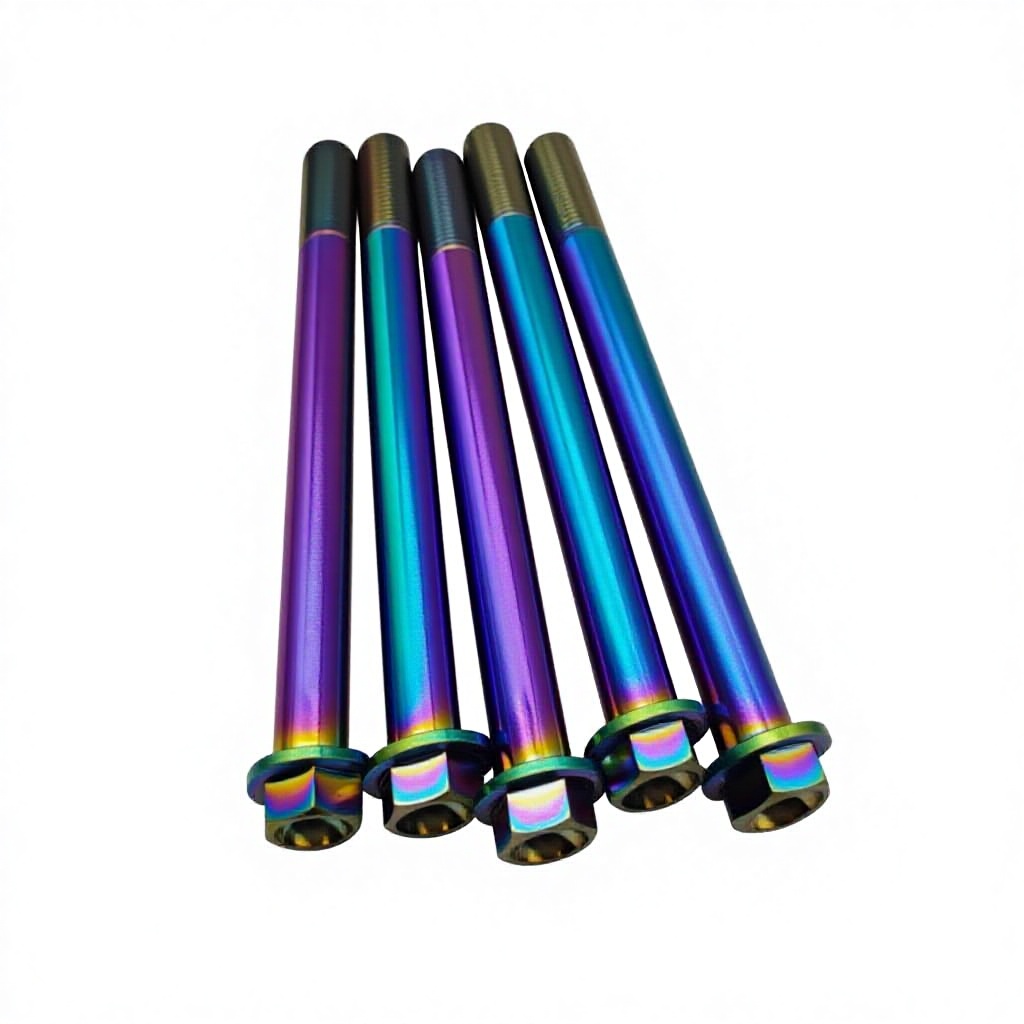
Gr5 Titanium Hex Head Flange Bolts M6/M8/M10 PVD Anodized
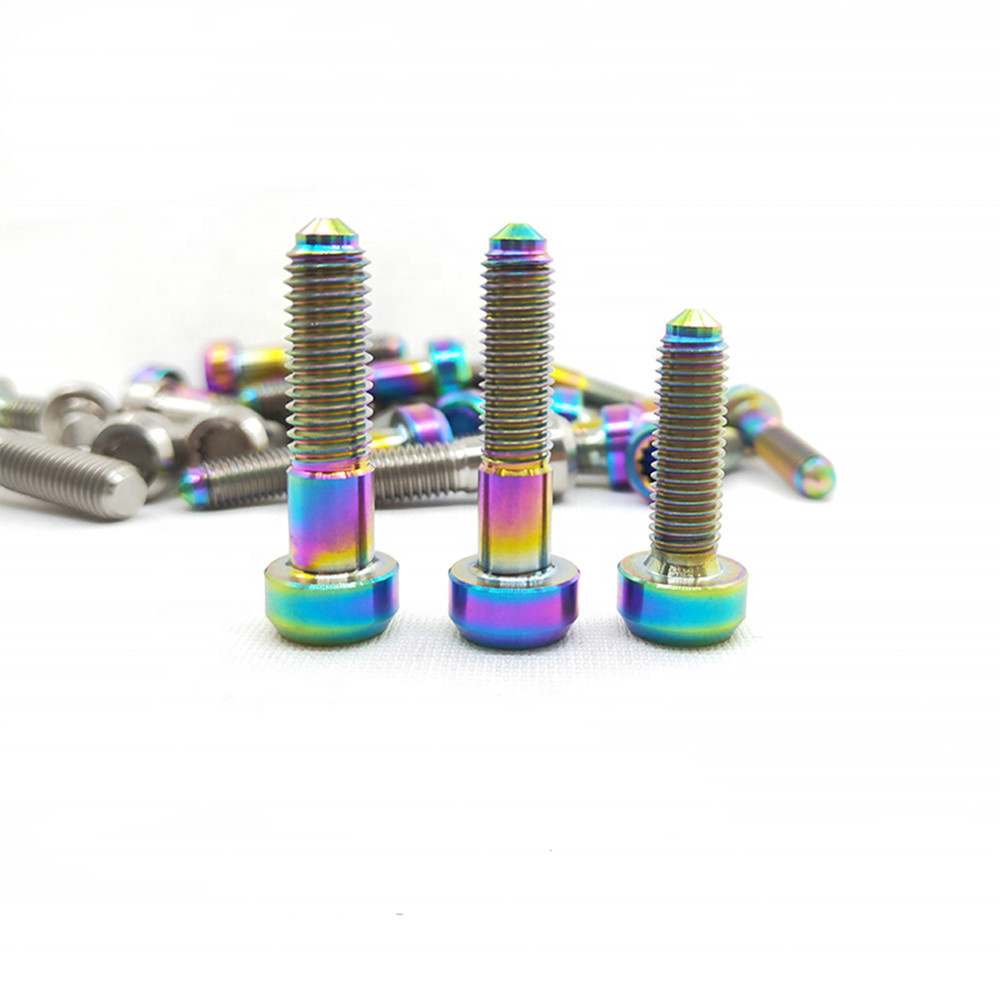
M7 X 24 / M7X32 Titanium Mushroom Head Split Rim Wheel Bolts
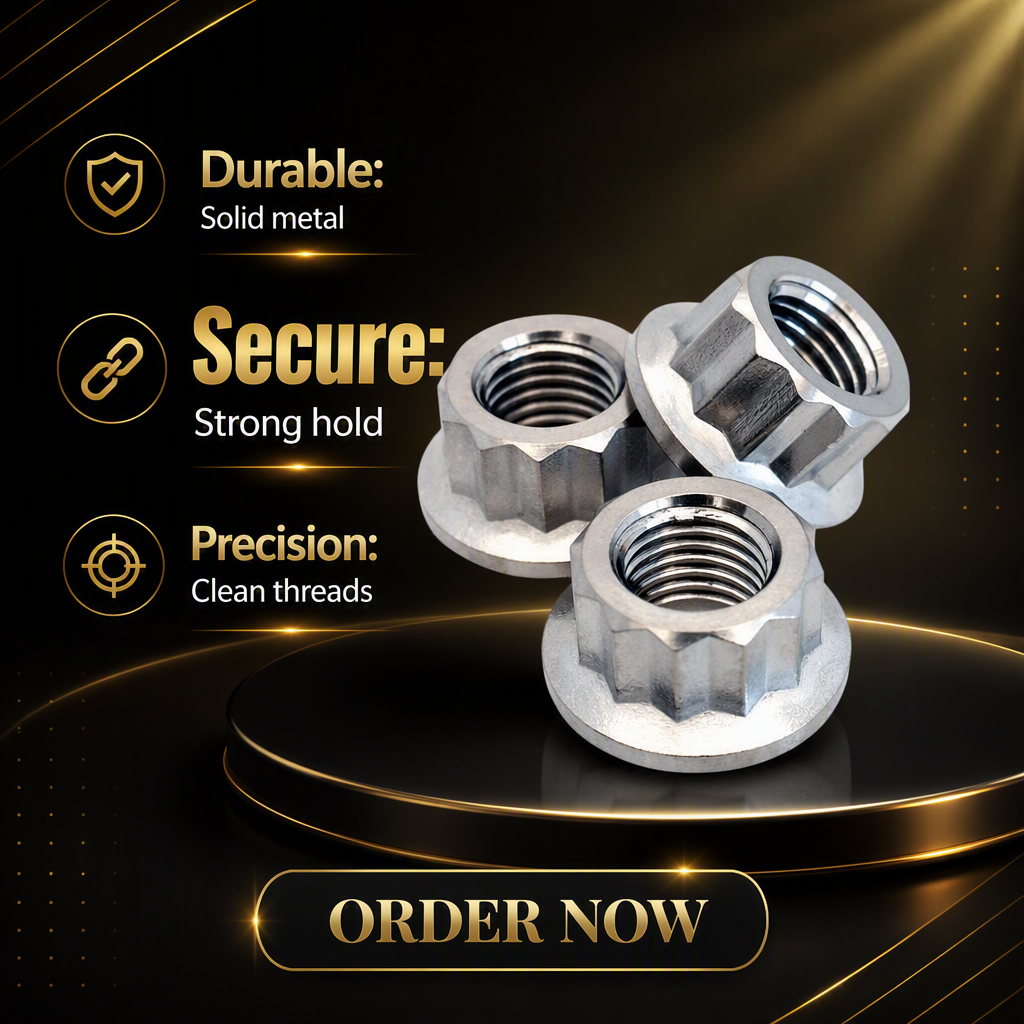
Polished Gr5 Titanium 12 Point Flange Nuts for Motorsport
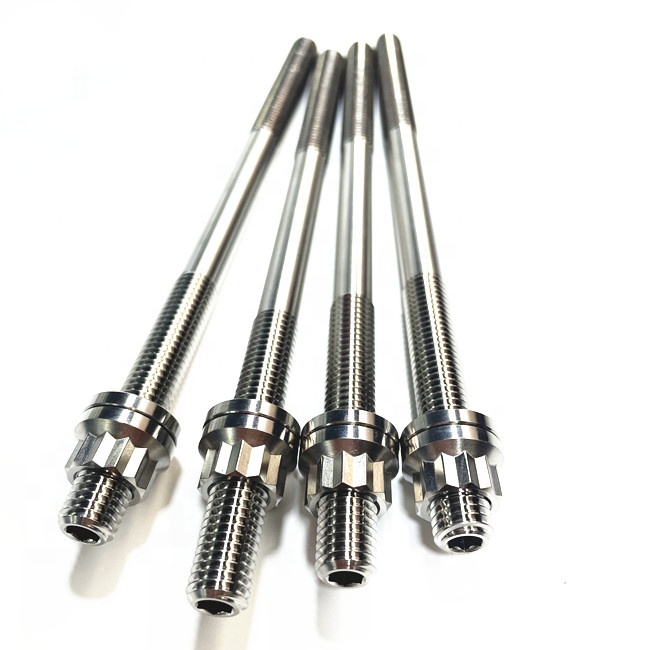
Titanium Cylinder Head Studs & 12PT Nut Hardware Kit M12/M14
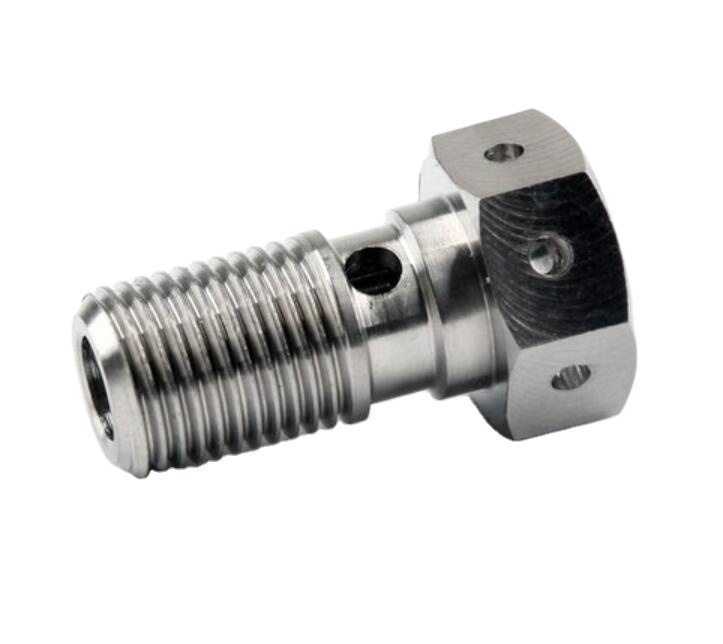
M8 M10 M12 Gr5 Titanium Hex Head Racing Motorcycle Bolts
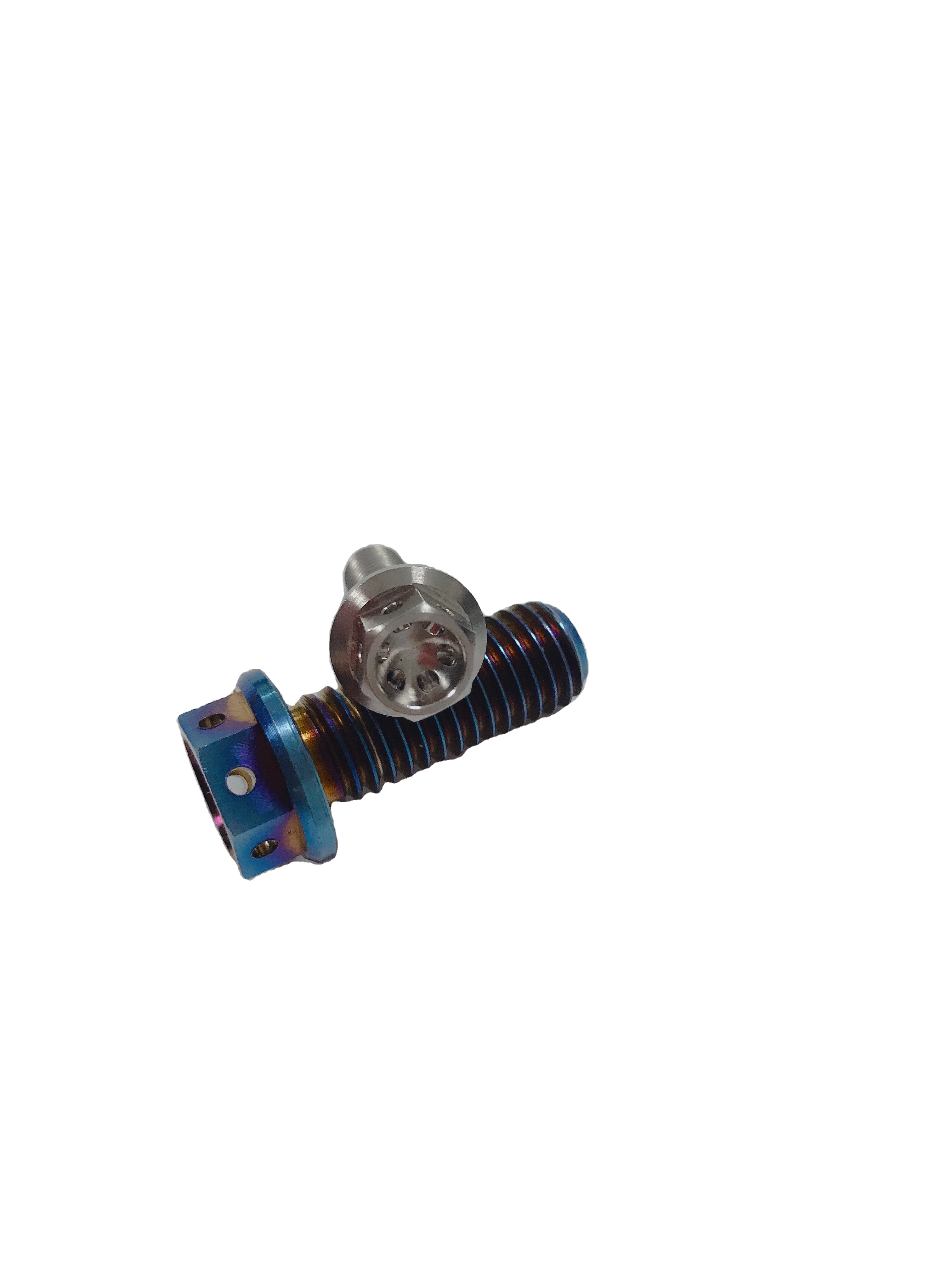
M6x30 / M6x35 GR5 Hex Head Titanium Wheel Flange Bolts
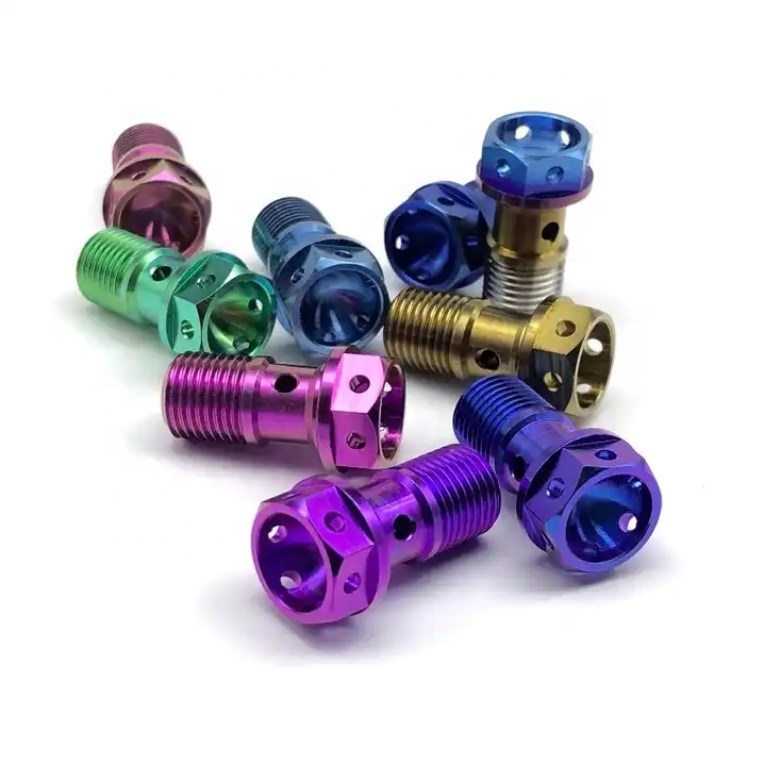
Gr5 Titanium Alloy Flat Head Hex Flange Bolts M8 Polished
Engineering Authority: The Anatomy of Premium Titanium Banjo Bolts
In modern hydraulic circuitry, brake distribution blocks, fuel rail connections, and high-pressure turbocharger oil feed assemblies, the banjo bolt is subjected to severe mechanical, thermal, and hydraulic stresses. As a top-tier Chinese manufacturer headquartered in the industrial core of Baoji—China's renowned "Titanium Valley"—we manufacture aerospace-grade Grade 5 (Ti-6Al-4V, TC4) titanium banjo bolts that fundamentally eliminate the structural trade-offs typical of conventional mild steel, stainless steel, and 6061/7075 aluminum alternatives.
A banjo bolt differs from standard solid fasteners due to its hollow inner longitudinal fluid passage intersected by one or multiple perpendicular cross-drilled discharge ports. This internal void structure inherently reduces the polar moment of inertia and core shear area. Consequently, machining titanium banjo bolts requires uncompromising engineering discipline. Inferior cut-thread methods introduce severe notch effects and micro-fissures at the junction of the central oil borehole and external threads. Our manufacturing protocol integrates cold thread rolling after precision gun-drilling and deburring, inducing beneficial compressive residual stresses along the thread root to preserve continuous metallurgical grain flow and boost cyclic fatigue life by more than 300%.
Hydraulic Fluid Dynamics
Our cross-drilled discharge ports are chamfered using internal micro-abrasive polishing to eliminate cavitation erosion, avoid turbulent fluid shear, and support linear brake pedal pressure response up to 350 bar.
Hermetic Copper Sealing
Under-head flange mating surfaces are cut to Ra 0.4 surface roughness with true perpendicular runout below 0.008 mm, eliminating fluid leaks across copper, aluminum, or Dowty sealing washers.
Anti-Galling Treatments
Available with advanced Physical Vapor Deposition (PVD) titanium nitride (TiN), diamond-like carbon (DLC), and micro-arc anodization, preventing thread galling during high-torque dry assembly into aluminum calipers.
Technical Comparison: Material Integrity in Fluid Connectors
Selecting the correct metallurgical profile prevents catastrophic pressure-line blowouts. Steel banjo bolts exhibit unacceptable weight penalties and rapid corrosion when exposed to glycol-based DOT 4/5.1 brake fluids and road salts. Aluminum banjo bolts, while light, present dangerous yield limitations, thread shearing under thermal cycling, and vulnerability to stress-corrosion cracking. Grade 5 Titanium delivers the optimal balance of tensile capacity, yield resistance, and chemical immunity.
| Performance Metric | Ti-6Al-4V Grade 5 (Vunza) | 316L Stainless Steel | 7075-T6 Aluminum | 10.9 Carbon Steel (Zinc Plated) |
|---|---|---|---|---|
| Density (g/cm³) | 4.43 (Approx. 44% Lighter than Steel) | 7.98 | 2.81 | 7.85 |
| Ultimate Tensile Strength (MPa) | ≥ 895 – 1050 | 580 | 540 | 1000 |
| Yield Strength (0.2% Offset, MPa) | ≥ 828 | 290 | 480 | 900 |
| Corrosion Resistance (Salt & Fluids) | Immune (Self-Passivating TiO2 Layer) | High (Pitting Risk with Halides) | Moderate (Prone to Galvanic Cell) | Poor (Plating Degradation Leads to Rust) |
| Thermal Expansion (10⁻⁶/K) | 8.6 (Matches Caliper Expansion Tightly) | 16.0 (High Thermal Mismatch) | 23.4 (Extreme Relaxation Risk) | 11.5 |
| Fatigue Endurance Limit (10⁷ cycles) | 510 MPa | 240 MPa | 160 MPa | 420 MPa |
Future Sourcing & Procurement Trends in Titanium Fluid Fasteners
As tier-1 motorsport teams, hypercar builders, defense maritime projects, and electric vehicle (EV) developers accelerate their technical demands, procurement strategies for high-performance fluid fasteners are shifting dramatically:
1. Decoupling from Uncalibrated Distributors in Favor of Source Mills: Direct sourcing from Baoji manufacturers eliminates intermediary markup and delivers end-to-end chain of custody. Today’s procurement teams require raw titanium sponge batch numbers, dual-frequency ultrasonic billet inspection certificates, and automated optical coordinate measuring machine (CMM) inspection data directly attached to each production run.
2. Rising Need for Double-Banjo Integrated Sensors: The rapid rise of electronic brake distribution (EBD) and regenerative braking monitoring has spurred demand for integrated titanium banjo bolts with threaded diagnostic ports (M6x1.0 or 1/8-NPT) designed to accommodate micro-pressure transducers directly inside the bolt head.
3. Standardized Conversion from Hex to Ultra-Torque 12-Point / Torx Drive: To prevent tool slip and rounding during pit stops or critical servicing, international racing series are rapidly deprecating conventional hexagonal heads in favor of double-hex 12-point heads and internal deep-drive Torx (T25 to T40) profiles.
Technological Roadmap: The Evolution of High-Performance Titanium Banjo Bolts
The manufacturing trajectory for titanium fluid-power components is moving rapidly from manual multi-operation machining to lights-out, multi-axis automated manufacturing:
• Simultaneous 5-Axis Turn-Mill Operations: Historically, banjo bolts required four setups: turning the outer profile, cross-drilling fluid ports, milling hex flats, and parting off. Our modern DMG MORI and Mazak multi-spindle turn-mill centers complete the entire component in a single thermal clamping cycle. This ensures thread-to-bore concentricity within 0.005 mm and avoids eccentric stress distribution under pressure.
• Additive-Subtractive Hybrid Fluid Pathways: Laser Powder Bed Fusion (LPBF) additive manufacturing is beginning to allow conformal, curved fluid passages inside customized banjo bolts. This reduces fluid resistance around 90-degree directional changes compared to conventional intersecting drill holes.
• Environmentally Sealed Nanocomposite Surface Coatings: Moving away from heavy toxic chemical dips, modern vacuum PVD sputtering now applies sub-micron titanium carbo-nitride (TiCN) and amorphous diamond layers. These reduce thread friction coefficients down to μ = 0.08, providing precise pre-load tension control without the risk of seizing.
Enterprise Advantages: Why Global Buyers Trust Vunza Titanium
Located adjacent to the world-renowned Baoti Group Industrial Park in Baoji, Shaanxi, Vunza Titanium Industry Co., Ltd. has led precision titanium manufacturing since 2008. We provide global B2B procurement partners with unique manufacturing advantages:
Direct access to certified sponge melting bases, lowering raw bar procurement overhead while safeguarding chemical purity.
In-house mechanical engineers deliver DFM analysis and accurate quotation breakdowns within hours across all international timezones.
Full metallurgical certifications per EN 10204 3.1, third-party spectrometer testing, and optical measurement dossiers provided with each lot.
Extensive production bandwidth guarantees delivery timelines from rapid 50-piece prototypes to 50,000-piece container-level orders.
Frequently Asked Questions
Clear technical insights addressing common engineering, logistics, and quality assurance questions before placing your first batch order.
What thread specifications and pitch configurations do you manufacture for banjo bolts?
How do you prevent thread galling when installing titanium banjo bolts into aluminum calipers?
What are the recommended tightening torques for Grade 5 Titanium banjo bolts?
Can you provide full chemical mill certificates and spectrometer inspection records?
What is your typical Minimum Order Quantity (MOQ) and production turnaround?
Accelerate Your Supply Chain With Baoji's Leading Manufacturer
Ready to eliminate fluid circuit failure and cut structural weight? Send your 2D/3D component drawings (PDF, STEP, IGES) or sample requirements. Our senior engineering team is on hand to review your tolerances, thread configurations, and surface treatment requirements.