Featured Titanium Rotor Bolts & Racing Fasteners
High-tensile, low-unsprung-mass hardware engineered for motorsport brake assemblies, high-temperature split rim hubs, and critical exhaust kinematics.
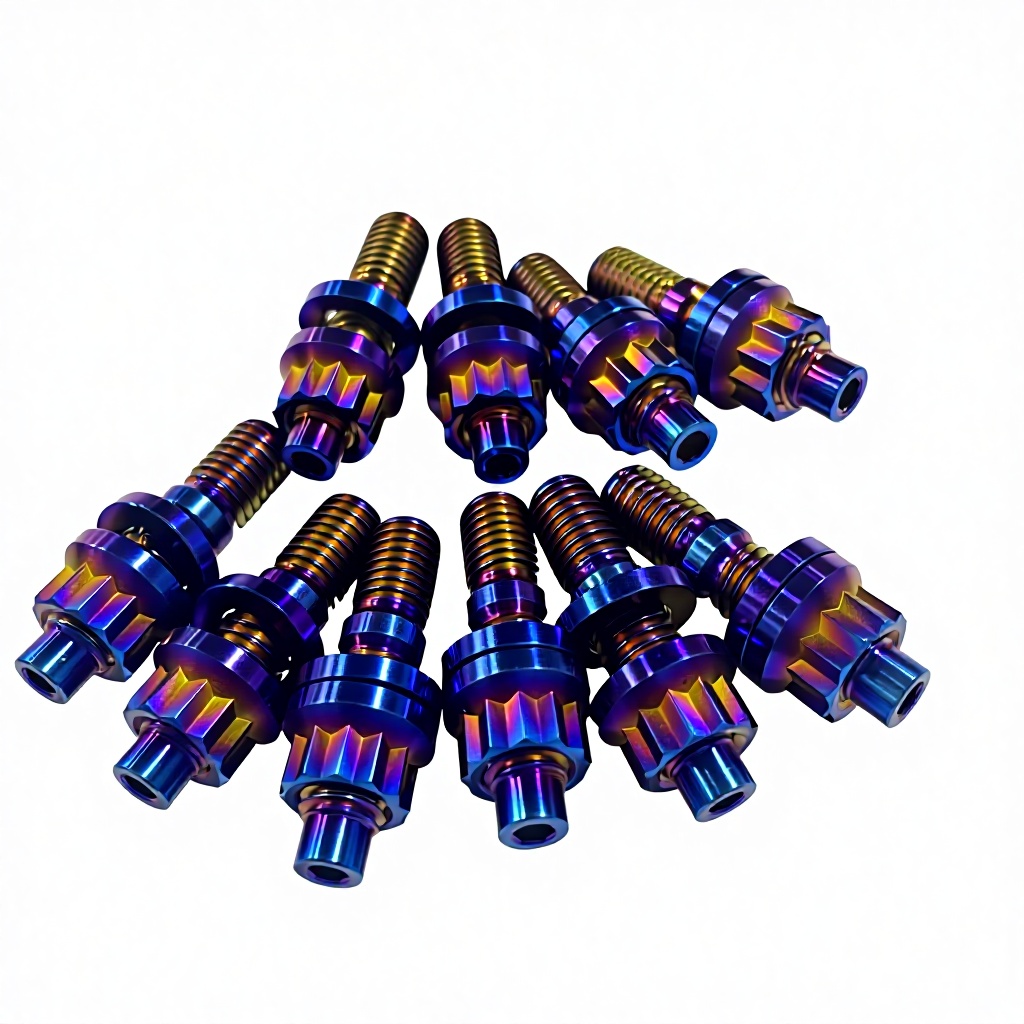
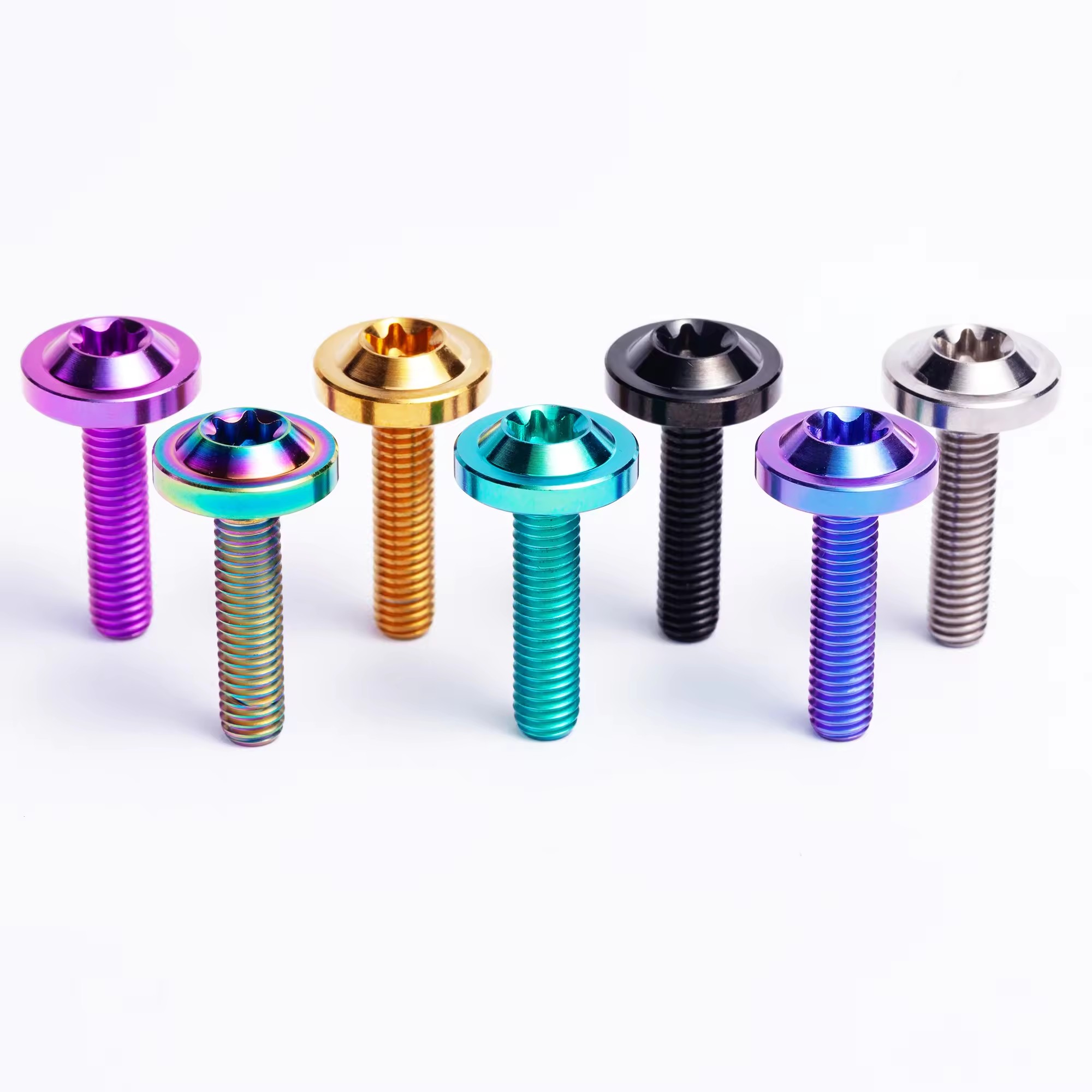
GR5 Titanium Alloy Low-Profile Torx Anti-Theft Motorcycle Rotor Bolts
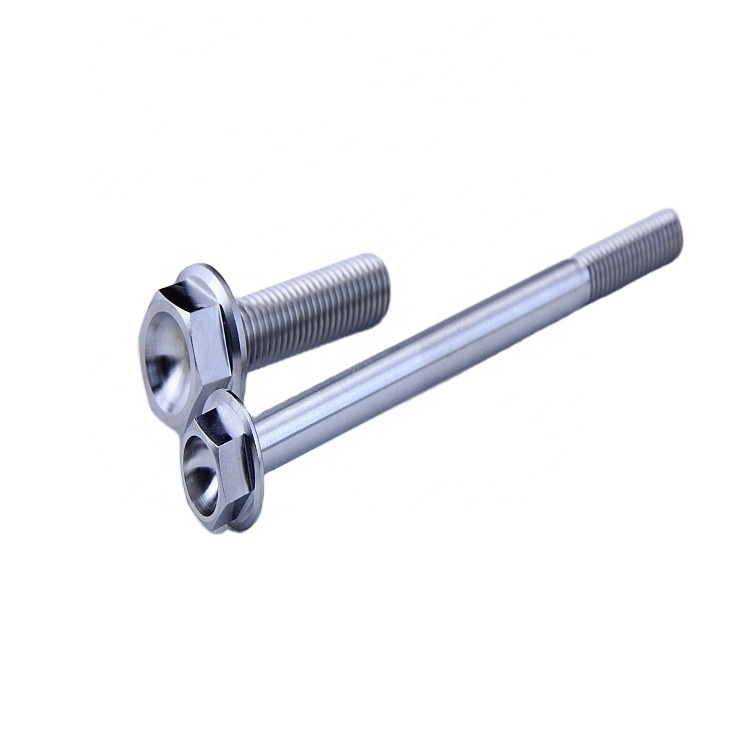
High-Precision GR5 Racing Torx Head Bolts MH-15488 (Pitch 1.25/1.5)
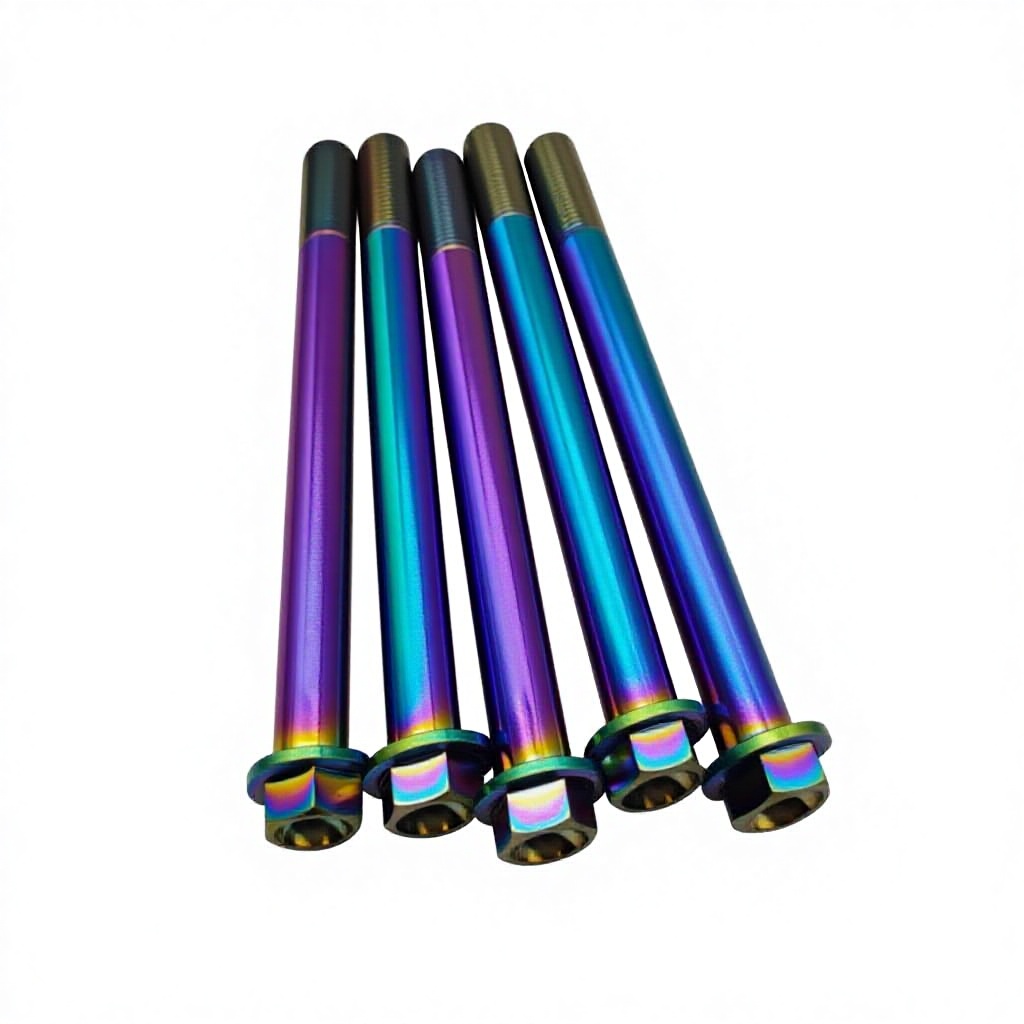
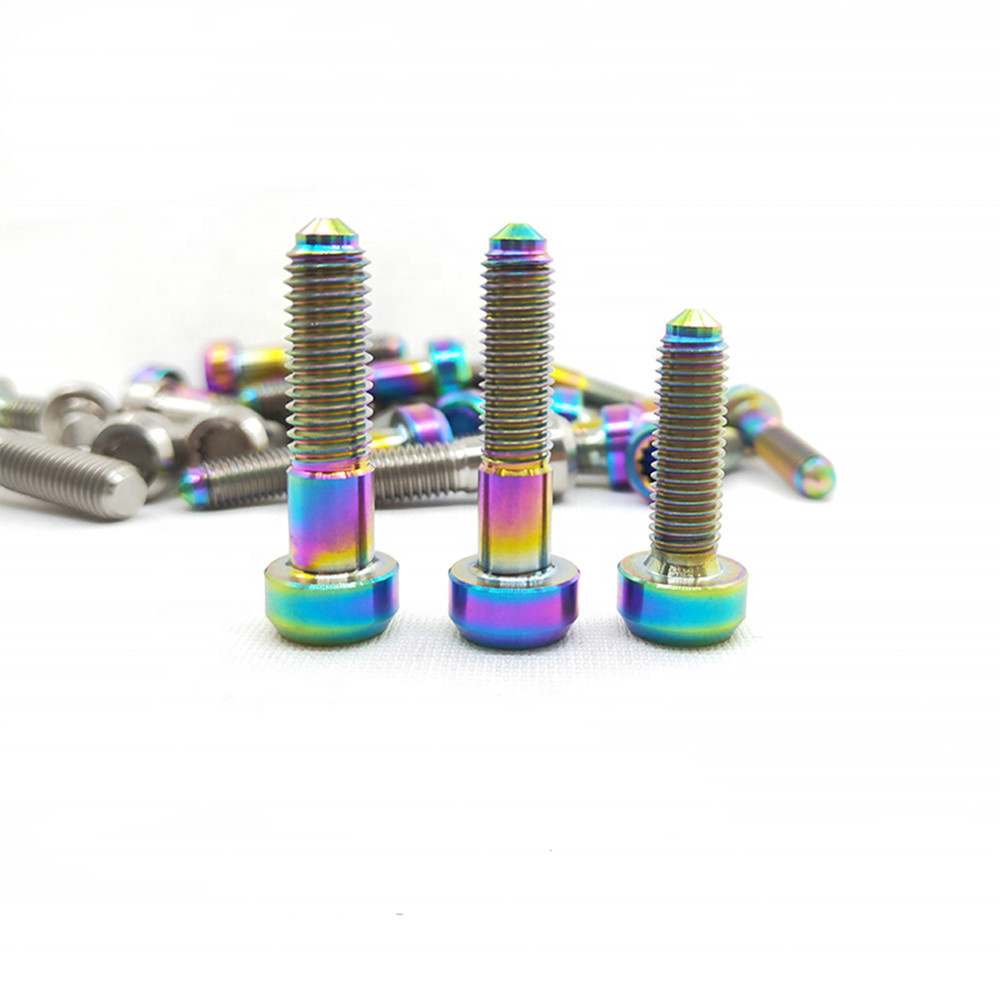
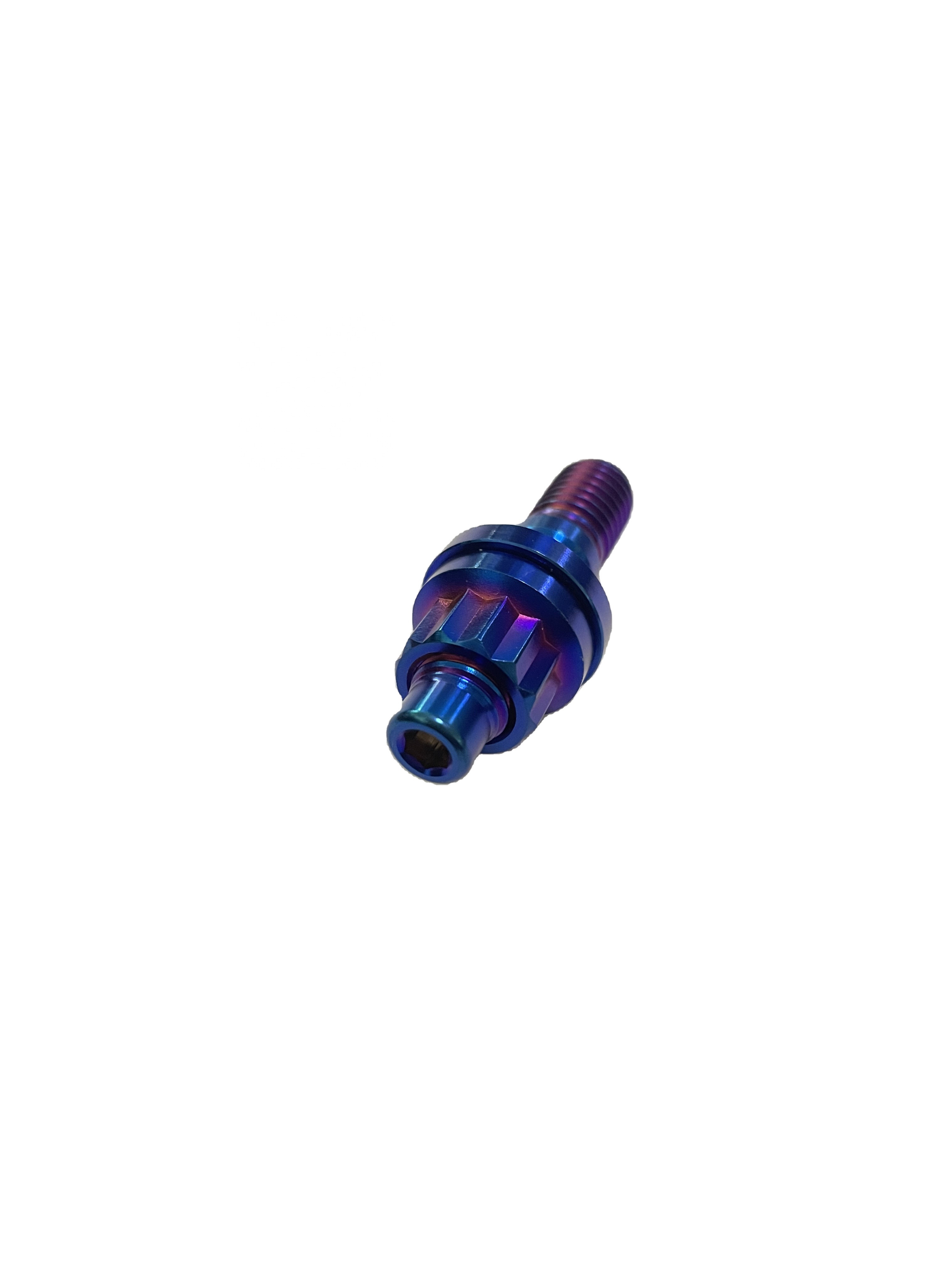
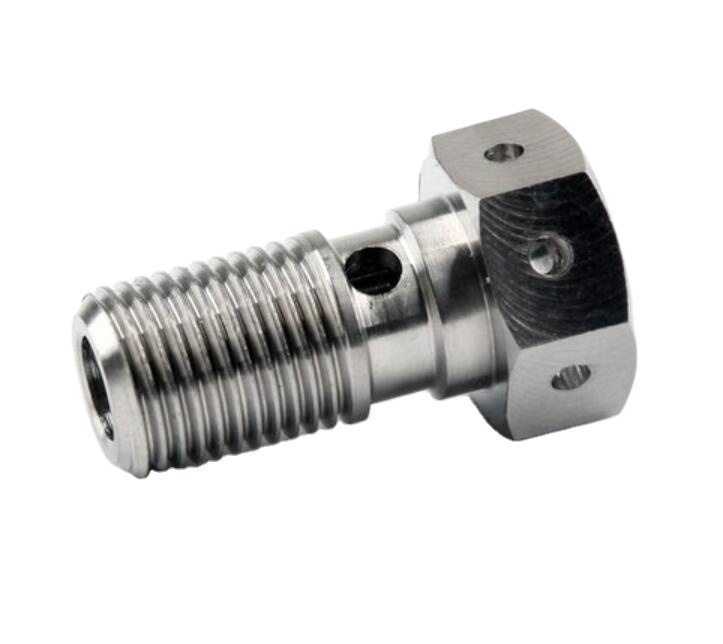
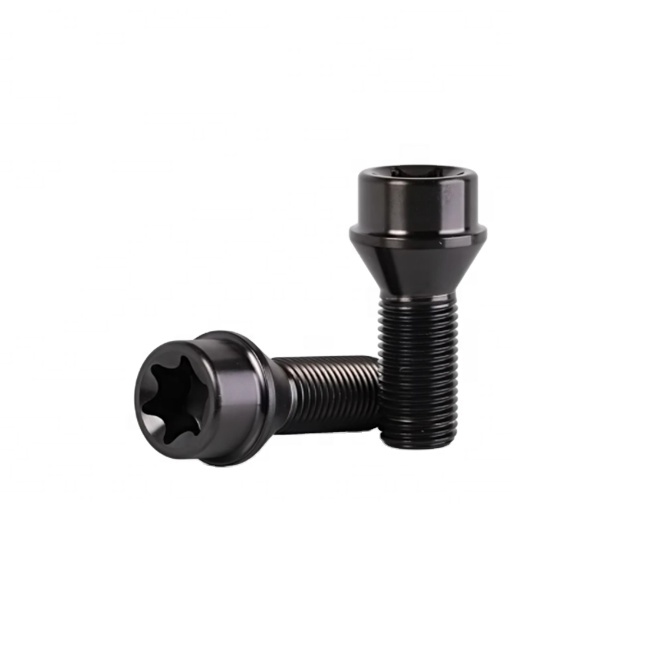
Titanium Wheel Hub Bolts M14 Torx Drive CNC Machined Nitride Black
Why Baoji Manufacturing Dictates Global Titanium Precision
Operating adjacent to Baoti Group Industrial Park, our infrastructure integrates ingot smelting, hot rolling, cold thread forming, and 5-axis CNC micro-milling within a 5-kilometer industrial corridor.
Full Metallurgical Traceability
Every rotor bolt heat starts with certified Grade 0 vacuum-distilled titanium sponge. We enforce double vacuum arc remelting (VAR) to ensure zero interstitial gas voids (O < 0.15%, H < 0.008%), preventing microscopic subsurface failure under cyclic thermal shock.
Rolled Threads vs. Cut Threads
Unlike budget job-shops that CNC-cut thread profiles (interrupting grain boundary lines), our bolts feature cold thread rolling post heat-treatment. This increases thread root shear resistance by 32% and introduces compressive surface stresses that triple fatigue endurance.
Sub-Zero Multi-Axis Milling
Equipped with 34 high-speed multi-axis CNC turn-mill stations featuring internal high-pressure through-spindle coolant. We maintain steady tool-edge temperatures during Ti6Al4V machining, eliminating heat-affected zone (HAZ) work hardening and securing ±0.005mm concentricity.
Dynamics of Kinematic Rotational Inertia & Clamp Load Maintenance
Brake disc rotor fasteners operate in one of the most mechanically and thermally punishing environments on a racing chassis. The rotor assembly experiences severe torsional shear loads under negative acceleration, combined with heat spikes exceeding 650°C conducted through the brake hat.
Switching from Grade 10.9 structural steel bolts (density 7.85 g/cm³) to Vunza Grade 5 Ti-6Al-4V titanium bolts (density 4.43 g/cm³) yields an immediate 43.5% reduction in fastener weight. Because these bolts are located at an offset radius from the axle center, reducing their mass yields an exponential drop in angular kinetic rotational inertia ($I = \sum m_i r_i^2$). This directly enhances gyroscopic agility, improves suspension damper response rates over track curbs, and diminishes directional turn-in resistance.
- Thermal Linear Expansion Compatibility: Grade 5 titanium exhibits a thermal expansion coefficient ($\alpha$) of $8.6 \times 10^{-6}/\text{K}$, closely pairing with nodular iron or carbon-ceramic carrier bells to prevent thermal bolt loosening.
- High Thermal Elastic Resilience: Ti6Al4V possesses a low Young's modulus (~113 GPa vs. 210 GPa in steel), allowing the fastener to stretch elastically through severe rotor expansion cycles without permanent yield deformation.
- Galling Mitigation via PVD/DLC Coatings: Precision Physical Vapor Deposition applied under vacuum creates an ultra-slick TiN, TiAlN, or Diamond-Like Carbon film with coefficient of friction $\mu < 0.12$.
Titanium Rotor Bolt Engineering Matrix
Comparative Metallurgical & Mechanical Performance
Evaluating Grade 5 Titanium against conventional and alternative racing hardware alloys under track-duty conditions.
| Material Designation | Density (g/cm³) | Tensile Yield (MPa) | Fatigue Threshold (10⁷ Cycles) | Corrosion Resistance | Unsprung Mass Benefit |
|---|---|---|---|---|---|
| Gr5 Ti6Al4V (Vunza Rolled) | 4.43 | 895 – 1050 | 510 MPa | Impervious (Seawater / Road Salt) | Baseline (-43.5% vs. Steel) |
| Grade 10.9 Alloy Steel | 7.85 | 900 – 940 | 420 MPa | Poor (Prone to Rust & Pitting) | 0% (Heavy Baseline) |
| Grade 12.9 High-Tensile Steel | 7.85 | 1100 | 460 MPa (High Notch Sensitivity) | Extremely Poor (Hydrogen Embrittlement Risk) | 0% (Excessive Rotational Mass) |
| 7075-T6 Aerospace Aluminum | 2.81 | 505 | 160 MPa (Rapid Fatigue Degradation) | Moderate (Galvanic Couple Prone) | -64% (Unsafe for Rotor Shear Loads) |
| Stainless 316 (A4-80) | 8.00 | 600 | 280 MPa | High (Non-Chloride Environments) | +2% (Too Soft for High Braking Torque) |
Future Procurement Trends in Titanium Fastener Sourcing
How Tier-1 automotive aftermarket distributors, racing constructors, and defense OEM procurement leads are re-architecting their fastener supply pipelines.
End-to-End Vertical Hegemony
Procurement teams are shifting away from fragmented trading companies. Dealing directly with integrated Baoji manufacturing operations that control raw titanium sponge conversion, bar drawing, and finished machining prevents raw material markups and hedges against titanium sponge index price fluctuations.
Mandatory EN 10204 3.1 Auditing
Western and Japanese motorsport regulations increasingly require third-party chemical and mechanical spectrographic analysis. In 2025+, top exporters provide digital batch-traceable inspection records covering ultrasonic flaw detection, Rockwell C hardness, and hydrogen content metrics with every shipment.
Rapid Bespoke Prototyping
Standard DIN/ISO catalogs are yielding to custom-engineered floating rotor bobbins and stepped bolts with pre-drilled safety wire holes. Exporters equipped with multi-axis CAM software can deliver first-article physical samples within 7 business days from STEP CAD models.
Engineering Evolution of High-Performance Rotor Bolts
Addressing extreme brake caliper clearance, galvanic insulation, and driver-induced service damage through smart manufacturing advances.
Low-Profile Torx Plus (IP) Heads
Modern multi-piston monobloc calipers sit with millimetric clearance over the rotor hat. Traditional hex or socket caps foul the inner caliper body. Next-gen bolts feature elliptical Torx Plus (IP) geometry with a 0° drive angle, delivering 25% higher seating torque without drive stripping.
Plasma Micro-Arc Oxidation (MAO)
Beyond traditional cosmetic anodizing, MAO grows a dense, ceramic-grade rutile crystalline oxide layer on the titanium surface. This ceramic coating provides dielectric breakdown resistance over 1000V, eliminating galvanic current transfer when mounted to forged magnesium wheel hubs.
Cryogenic Root-Fillet Rolling
By immersing the bolt shank in liquid nitrogen during final CNC pass and burnishing the under-head transition fillet, residual compressive stress is locked into the neck region. This eradicates the primary stress notch where 80% of fatigue shear breaks historically occur.
Frequently Asked Sourcing & Technical Questions
Addressing the critical metallurgical, quality verification, and commercial inquiries submitted by international engineering directors.
What torque specification should be applied to Gr5 titanium rotor bolts?
Titanium Grade 5 has a slightly lower modulus of elasticity than steel. When torquing an M8 Grade 5 titanium rotor bolt dry, the torque spec is typically 22–25 Nm. However, an anti-seize paste containing molybdenum disulfide (MoS₂) or copper slip must always be used to prevent thread galling, reducing torque values by ~15% to 19–21 Nm to achieve the engineered clamp load.
Does galvanic corrosion occur between titanium bolts and aluminum rotor hats?
Titanium is cathodically noble, creating a galvanic potential when mated with 6061-T6 or 7075-T6 aluminum in the presence of an electrolyte. We resolve this by applying PVD barrier coatings, ceramic micro-arc oxidation, or supplying precision-matched passivated titanium or nylon-coated Belleville anti-vibration washers.
Why is thread rolling non-negotiable for brake rotor applications?
Thread cutting severs the continuous metallic grain flow lines of the titanium bar stock, producing micro-burrs and microscopic stress concentrators in the thread root. Vunza cold-rolls all threads using precision dies, which compresses the crystalline structure, improves fatigue strength by 30-40%, and guarantees seamless thread engagement.
What quality certifications and inspection reports accompany export orders?
Every commercial production batch is issued with an EN 10204 Type 3.1 Inspection Certificate documenting the chemical heat analysis (Ti, Al, V, Fe, C, N, H, O) and mechanical tensile testing. Dimensional CMM inspection sheets and optical projector pitch graphs are provided for custom OEM prints.
What is the typical Minimum Order Quantity (MOQ) and production turnaround?
For standard catalog sizes (e.g., M6x16, M8x20, M8x25 Torx rotor bolts), MOQ is 100 to 200 pieces, typically shipping within 72 hours from stock. For custom engineered OEM drawings, custom drive styles, or unique PVD color treatments, our standard run MOQ is 300 to 500 units, with tooling and initial samples delivered in 7 to 10 days.
Can you manufacture titanium bolts according to proprietary 2D/3D customer drawings?
Yes. Our in-house R&D engineering division accepts 3D STEP/IGES and 2D DXF/DWG/PDF drawings with GD&T specifications. We advise on Design for Manufacturability (DFM) to optimize toolpaths, ensure stress-relieving underhead radii, and reduce machining cycle time to save on production costs.
How does Vunza guarantee absolute thread pitch accuracy and concentricity?
Our workshop uses Japanese 5-axis sliding-head automatic CNC lathes where turning, head forming, and thread rolling occur in a single clamping setup. Concentricity between bolt shank and head diameter is held within 0.005mm, eliminating run-out wobble that causes uneven disc braking shudder.
What surface finishes are optimal for motorsport rotor fasteners?
For street and track use, Fine Vibratory Polishing or Nitride Black PVD is preferred for wear resistance and aesthetic longevity. For high-temperature endurance racing (>500°C brake disc thermal radiation), PVD Titanium Nitride (Gold) or Burnt Titanium Anodizing prevents surface scaling and maintains thread integrity.
Request an Engineering Consultation & Factory Direct Quote
Connect directly with our technical application team in Baoji. Send your 2D/3D CAD models, target fastener specifications, or custom race kit requirements for prompt DFM feedback and competitive factory pricing.