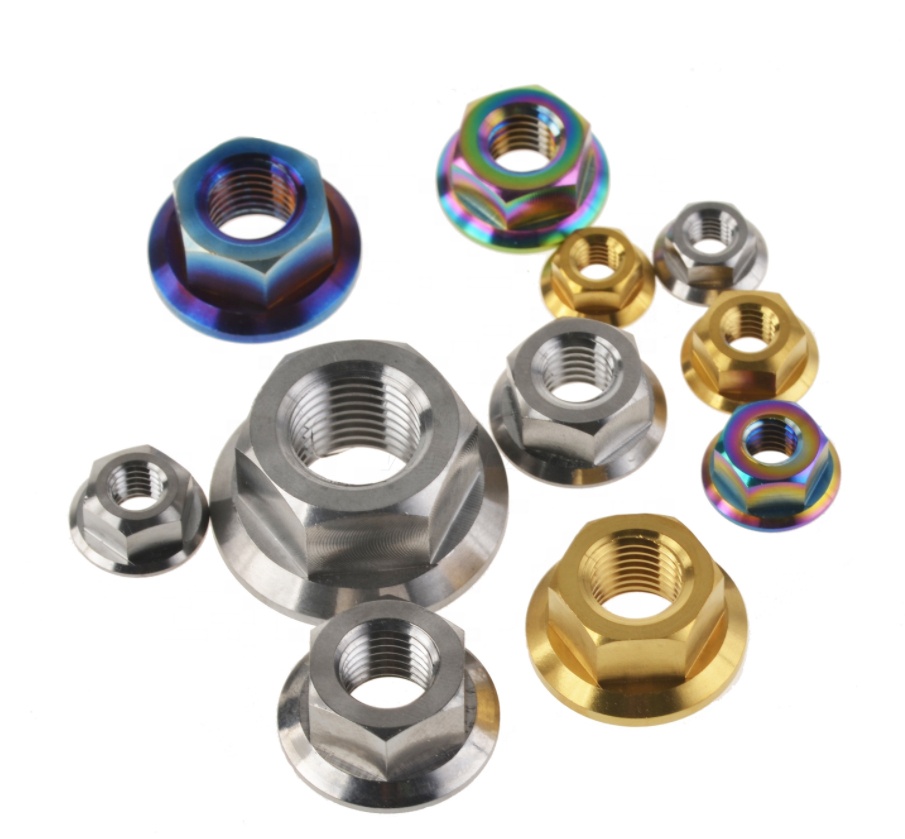
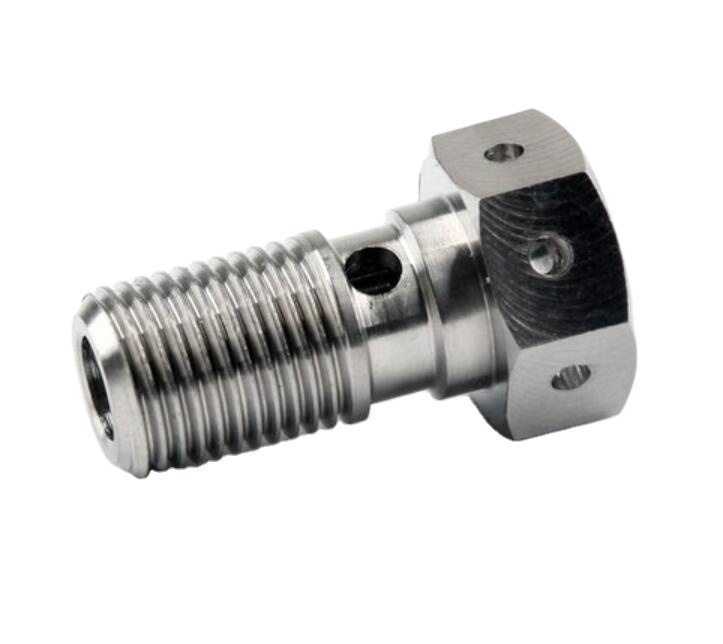
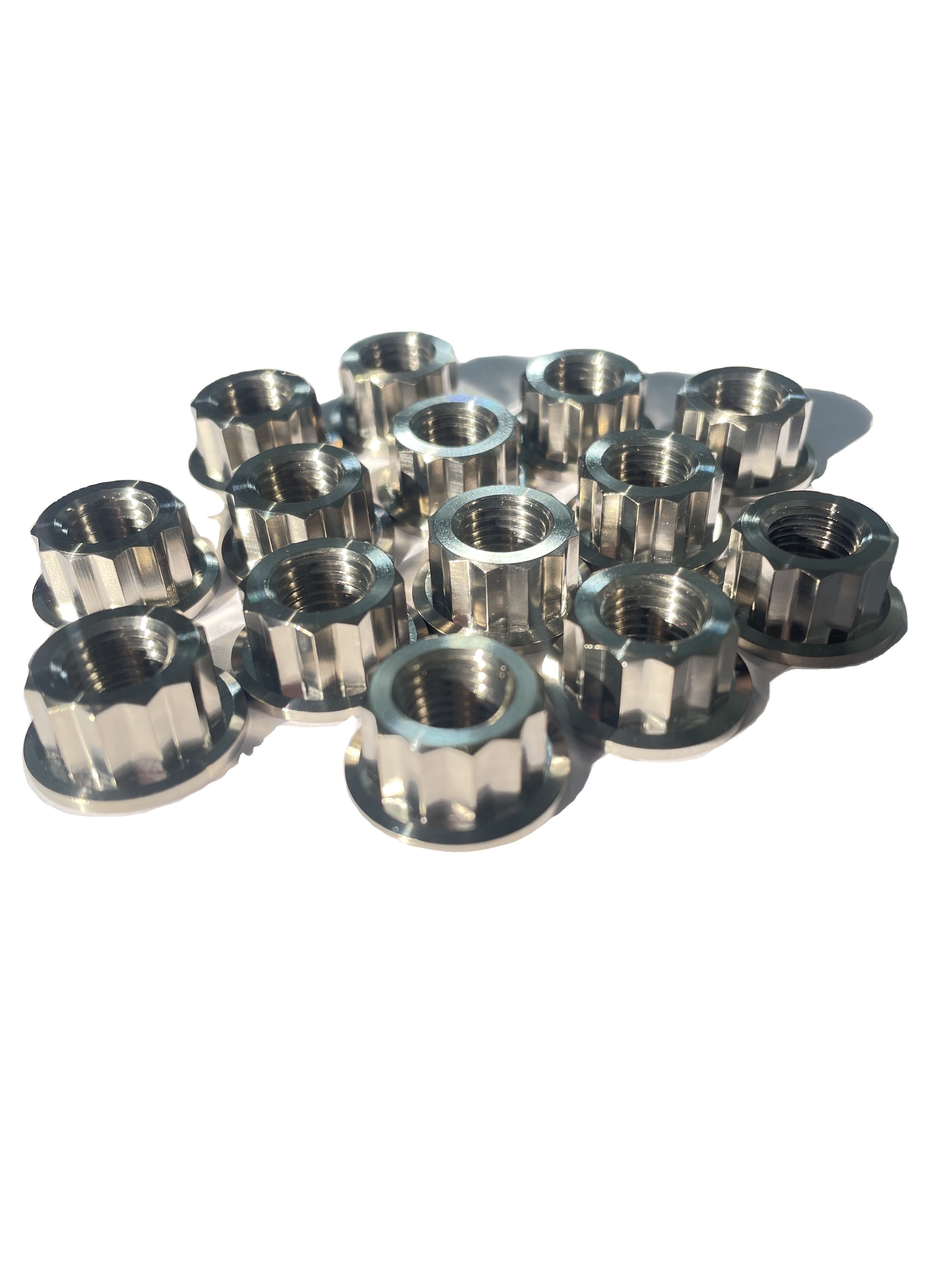
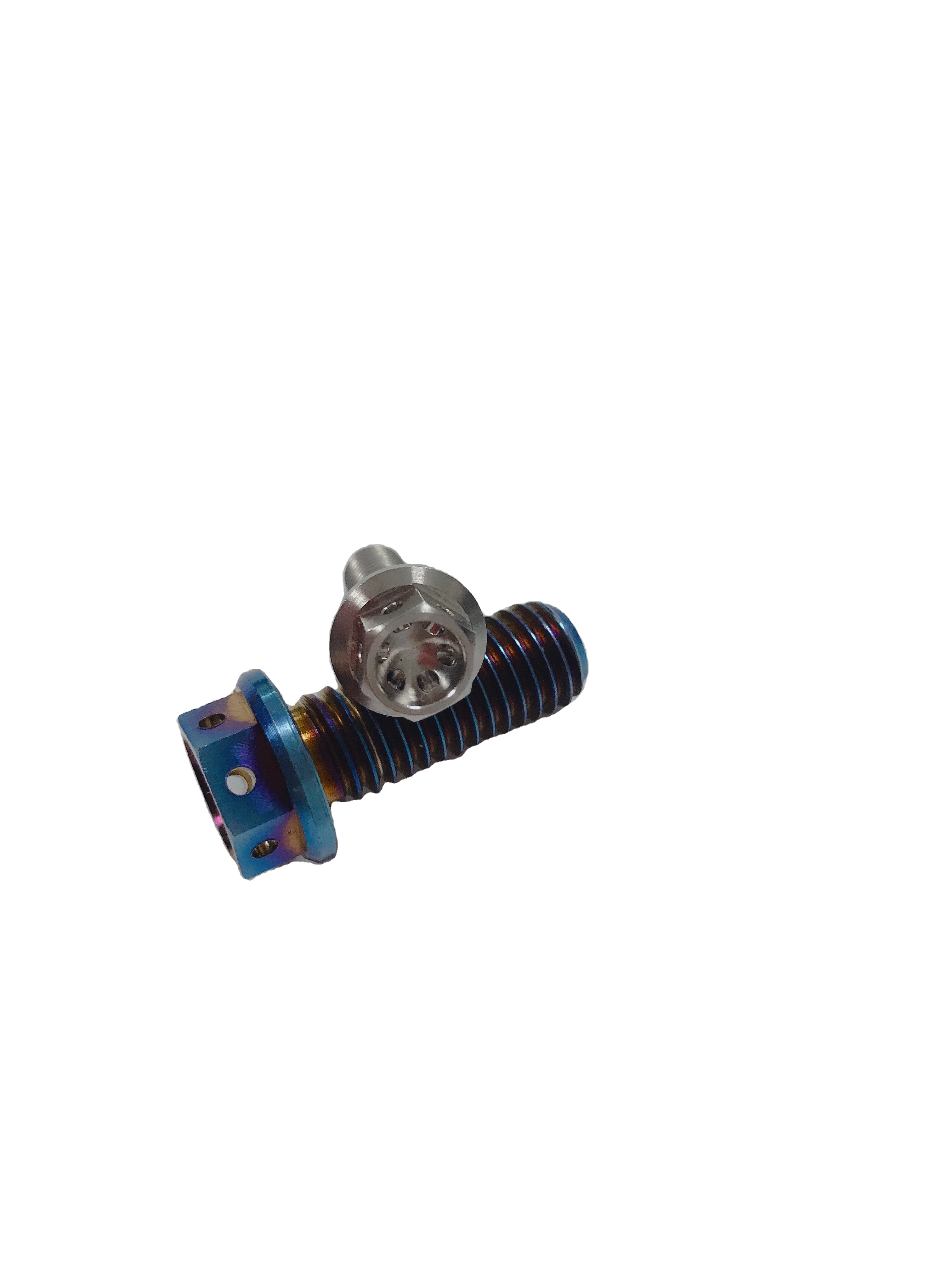
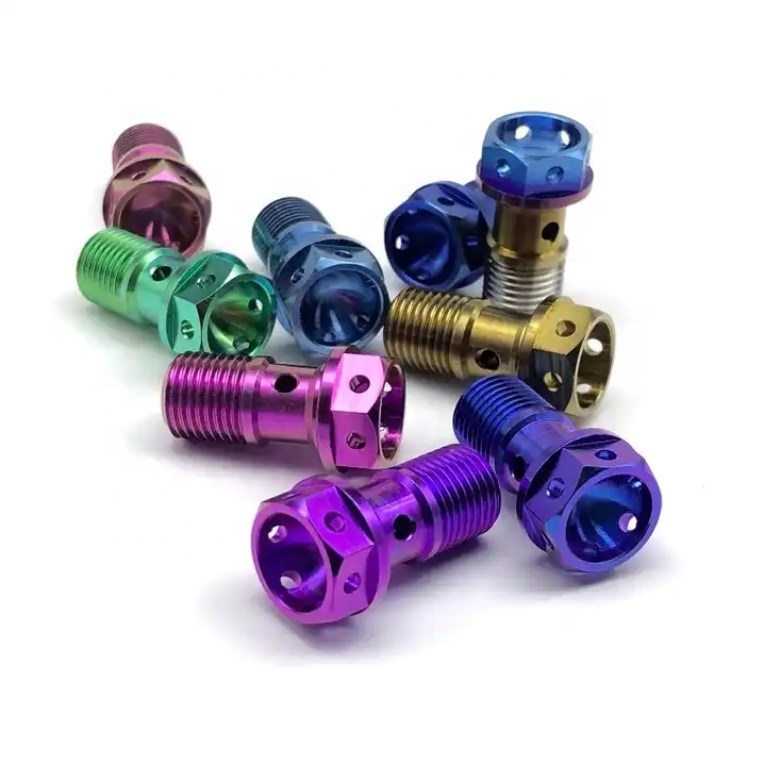
In high-performance automotive racing, superbike motorsport, downhill mountain biking (MTB), and high-torque electric motorcycles, disc brake fastening systems operate under severe dynamic loads. When a vehicle decelerates from high velocities, rotational kinetic energy is converted into intense thermal spikes via friction at the brake pads and rotor surface. Disc brake bolts undergo simultaneous cyclical shear strain, bending moments, high-frequency micro-vibrations, and thermal gradients that can elevate local rotor temperatures beyond 450°C (842°F). Fastener failure in these critical assemblies results in catastrophic brake loss. Sourcing certified Grade 5 Titanium (Ti-6Al-4V, TC4) disc brake bolts from specialized China manufacturers has transitioned from an exotic luxury to an engineering necessity for OEM tier-1 suppliers, racing workshops, and global distributors.
Key Takeaway for Procurement Teams: Grade 5 Ti-6Al-4V delivers a tensile strength surpassing Class 8.8 and rivaling Class 10.9 structural steel fasteners, while offering a 44% reduction in unsprung rotating mass and complete immunity to chloride-induced stress corrosion cracking.
1. Metallurgical Composition: Why Ti-6Al-4V Outperforms Alternative Alloys
Titanium exists in several allotropic phases. For structural and braking applications, Grade 2 Commercially Pure (CP) titanium lacks the required yield and tensile thresholds, exhibiting yield strengths of only ~275 MPa. Grade 5 titanium, an alpha-beta (α-β) alloy comprising 6% aluminum (alpha stabilizer) and 4% vanadium (beta stabilizer), is the universal standard for performance disc rotor bolts. Aluminum strengthens the matrix and decreases overall density (4.43 g/cm³ vs 7.85 g/cm³ for steel), while vanadium stabilizes ductile beta phases to allow cold/warm heading and uniform heat treatment.
| Fastener Material |
Density (g/cm³) |
Tensile Strength (MPa) |
Yield Strength (MPa) |
Shear Strength (MPa) |
Thermal Expansion (×10⁻⁶/K) |
| Grade 5 Titanium (Ti6Al4V) |
4.43 |
950 – 1050 |
880 – 920 |
550 – 620 |
8.6 |
| Carbon Steel Class 10.9 |
7.85 |
1040 – 1200 |
940 – 1000 |
600 – 650 |
11.7 |
| Stainless Steel A2-70 / A4-80 |
7.95 |
700 – 800 |
450 – 600 |
420 – 480 |
16.5 |
| Aluminum 7075-T6 (Billet) |
2.81 |
540 – 570 |
480 – 505 |
320 – 340 |
23.4 |
2. Rotational Inertia & Unsprung Mass Dynamics
Disc brake bolts are located at the wheel hub perimeter, categorizing them as both unsprung mass and rotating mass. In physics, rotational kinetic energy is dictated by the formula E_rot = ½ I ω², where I is the moment of inertia (I = ∑ m r²) and ω is angular velocity. Reducing mass at the wheel radius has a multiplier effect: it reduces gyroscopic resistance during steering transitions and lowers the inertial resistance that suspension dampeners must absorb over irregular road surfaces. Replacing 12 steel rotor bolts (typical dual-disc motorcycle setup) with cold-formed, precision-turned Grade 5 titanium bolts cuts fastener weight from approximately 216g to 121g. This 95g rotational mass reduction translates to sharper vehicle turn-in response, reduced suspension deflection, and instantaneous brake modulation.
3. Grain Flow Integrity: Cold Forging vs. Subtractive CNC Machining
A critical technical distinction when evaluating wholesale suppliers in China is their production method: full subtractive bar-milling versus cold-heading coupled with rolled threading.
When a bolt head is turned entirely on a CNC lathe from solid hexagonal bar stock, the native metallic longitudinal grain structure of the drawn wire is severed along the shank-to-head transition. In contrast, advanced manufacturing facilities utilize multi-station cold-heading machines to hydraulically compress the raw wire coil into the bolt blank. This forces the metallurgical grain flow lines to follow the contours of the bolt head, flange, and under-head fillet radius uninterrupted. Thread rolling follows: cylindrical dies mechanically displace the titanium alloy plastic flow into thread peaks and roots under severe cold working, increasing hardness at the thread root by 15-20% and inducing beneficial compressive residual stresses. Rolled threads deliver up to 35% higher cyclic fatigue resistance compared to lathe-cut threads, virtually eliminating fatigue cracking at the first engaged thread under heavy braking resonance.
Rolled Thread Fatigue Life
Threads rolled under high pressure preserve continuous grain structure and produce compressed thread roots, yielding 30-40% higher endurance under cyclic braking vibration.
Low-Profile Head Clearance
Engineered Torx T25/T30 and low-profile flange geometry ensure seamless caliper clearance in ultra-compact road racing and mountain bike hub spacing.
PVD & Anti-Galling Coatings
Physical Vapor Deposition (PVD) TiN, TiCN, and DLC treatments provide surface microhardnesses up to 2500 HV, eliminating thread galling in aluminum hubs.
4. Galling Prevention & Torque Preload Calibration
Titanium possesses a spontaneous self-passivating titanium oxide (TiO&sub2;) layer that delivers corrosion resistance in salt-spray conditions exceeding 1,000 hours. However, this oxide layer has a low lubricity coefficient, creating a susceptibility to adhesive wear (galling or cold welding) when run dry against aluminum hubs or internal titanium threads. To guarantee accurate clamping preload and prevent thread seizure:
• Thread Lubrication & Locking Agents: Grade 5 titanium disc rotor bolts must be assembled using high-pressure molybdenum disulfide (MoS&sub2;) anti-seize paste, copper grease, or medium-strength anaerobic threadlocking compounds (e.g., Loctite 243) formulated for passive alloys.
• Tightening Torque Recalibration: Titanium's modulus of elasticity is approximately 114 GPa, roughly half that of carbon steel (~210 GPa). When torqued, a titanium bolt elongates elastically twice as much as steel under an identical tensile load. This provides superior preload retention under thermal cycling. However, because friction coefficients vary with surface finishes (dry vs. lubricated vs. PVD coated), tightening torque must be calculated according to the formula T = K × F × d (where K is the nut factor, F is the clamp preload target, and d is nominal bolt diameter). For M6 rotor bolts into 6061-T6 aluminum hubs, typical recommended tightening torque is 5.5 to 6.2 N·m (lubricated/threadlocked), avoiding thread stripping in softer hub materials while achieving 70% of bolt proof load.