High-Performance Titanium Stem & Racing Fasteners
Direct from China's Titanium Valley: aerospace-grade Grade 5 (Ti-6Al-4V) components engineered for minimum rotational mass and maximum tensile strength.
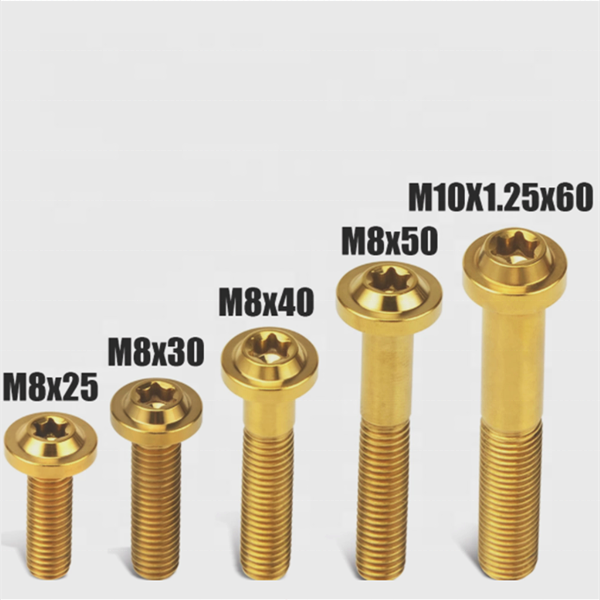
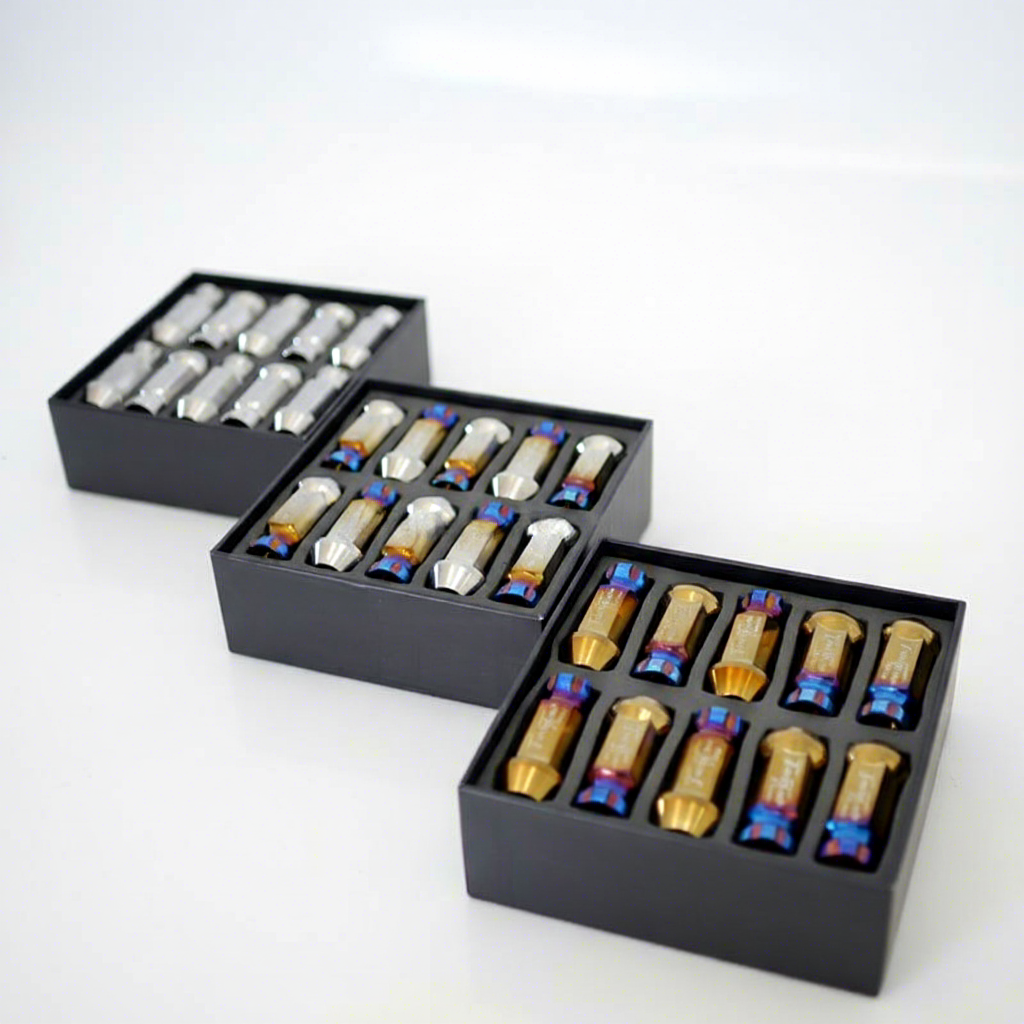
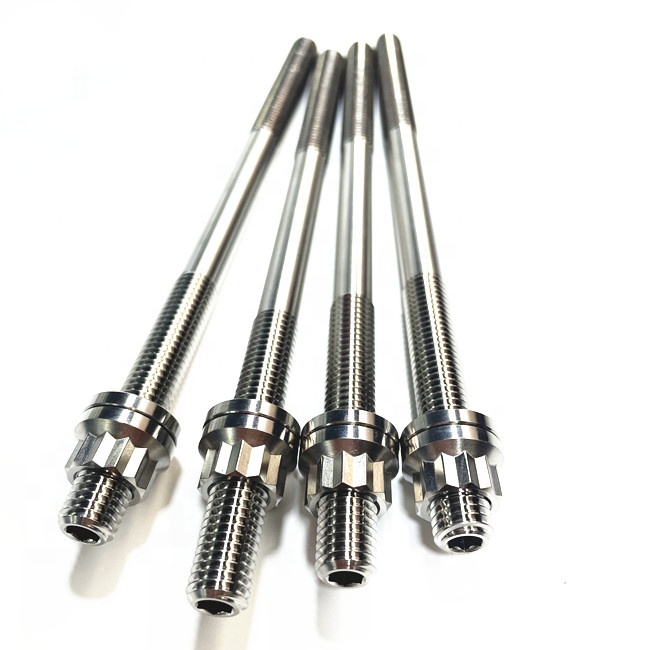
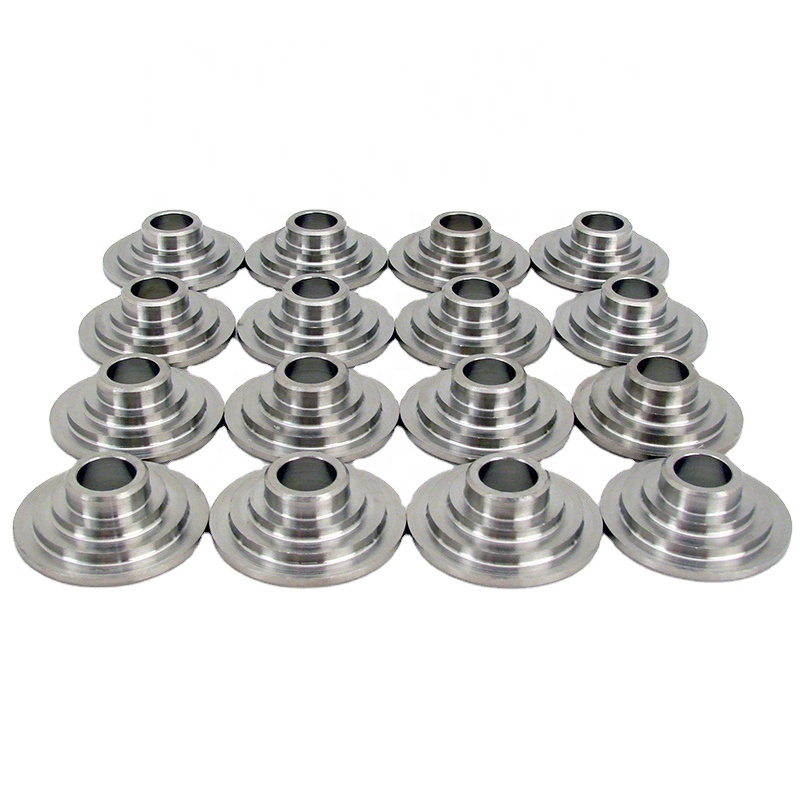
Precision Engineering of Titanium Stem Bolts: Structural Dynamics & Metallurgy
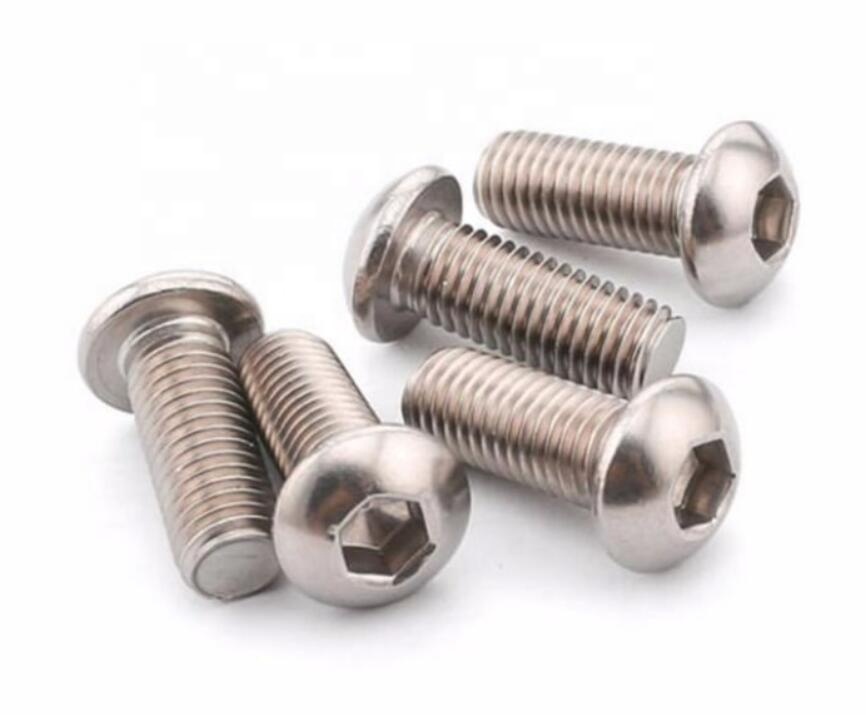
Within bicycle cockpit assemblies, automotive steering columns, and high-vibration motorcycle clip-on clamps, the stem bolt serves as a mission-critical link. Traditional high-tensile steel fasteners (Grade 8.8, 10.9, or 12.9) impose substantial weight penalties and remain vulnerable to galvanic corrosion and atmospheric pitting. In contrast, Grade 5 Titanium (Ti-6Al-4V / TC4) exhibits an exceptional strength-to-weight ratio, delivering minimum tensile strength exceeding 895 MPa while achieving an immediate ~44% weight reduction relative to alloy steels.
As a seasoned China wholesale manufacturer based in Baoji—the global center of titanium refinement—our facility applies precision CNC multi-axis machining directly to vacuum-arc remelted (VAR) Grade 5 titanium bars. By employing CNC thread rolling rather than chip-cutting lathe threading, we maintain unbroken grain flow along the root radius of every M5, M6, and M8 bolt. This process virtually eliminates stress risers, boosting fatigue endurance limits by more than 30% under prolonged alternating dynamic loads.
Technical Note on Shear Stress: Handlebar stems subject fastening bolts to combined dynamic tension, bending moments, and cyclic shear. Our CNC-formed stem bolts feature radiused underhead transitions and deep Torx (T25/T30) or broached internal hex sockets, eliminating cam-out risks under specified torque specs (typically 5 to 7 Nm on bicycle faceplates, 18 to 22 Nm on motorcycle clamps).
| Fastener Parameter | Standard Commercial Steel (8.8) | Ti-6Al-4V Grade 5 (Vunza Factory Standard) | Functional Procurement Advantage |
|---|---|---|---|
| Density (g/cm³) | 7.85 g/cm³ | 4.43 g/cm³ | 44% immediate weight savings on unsprung/rotational mass |
| Tensile Strength (MPa) | 800 MPa | ≥ 895 – 1050 MPa | Superior clamp-load security with zero yield creep under load |
| Yield Strength (MPa) | 640 MPa | ≥ 828 MPa | High elastic recovery, resisting thread loosening under cyclic vibration |
| Corrosion Resistance | Requires plating; susceptible to salt | Passivated natural TiO₂ oxide barrier | Impervious to sweat, road salts, brake fluids, and marine spray |
| Thread Processing Method | Cold forged or cut threads | Precision rolled threads (unbroken grain) | Extends fatigue cycle life beyond 1,000,000 cycles |
Emerging Procurement Trends in Wholesale Titanium Fasteners (2025–2030)
Global procurement teams across performance cycling, motorsports, and lightweight aerospace subsystems are revamping their tier-1 supply-chain criteria. Sourcing is no longer a matter of simply locating low unit prices; modern engineering buyers emphasize total quality transparency, physical surface treatment longevity, and rapid custom fabrication flexibility.
Total Traceability & Sponge-Level QC
Procurement directors increasingly demand origin verification. Buyers reject mixed-scrap titanium in favor of verified ingot and sponge records backed by third-party mill test certifications (MTCs per EN 10204 3.1).
Precision PVD Vacuum Thin-Film Finishing
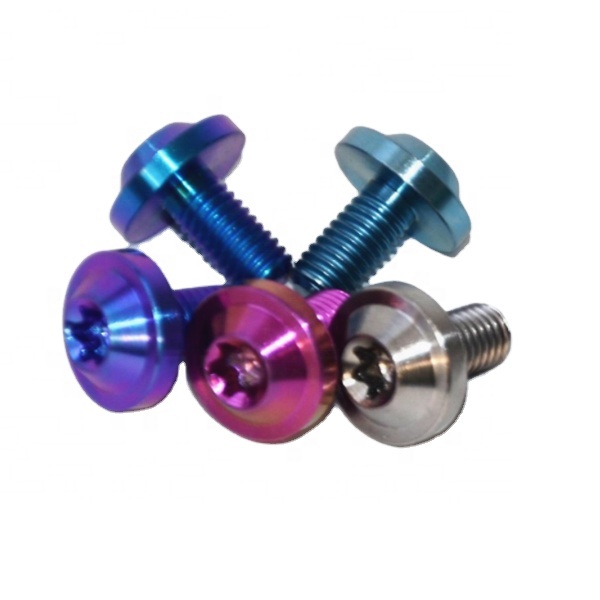
Traditional wet anodizing is being replaced by Physical Vapor Deposition (PVD). PVD coatings yield scratch-proof titanium nitride (TiN) gold, black, and iridescent chameleon finishes without degrading micro-thread clearances.
Lightweight Hollow-Core Geometries
With high-speed multi-axis mill-turn centers, modern stem bolts incorporate hollowed-out hex shanks and integrated captured washers to save an extra 15% in mass while preserving pre-load clamp ratings.
Engineering Trajectory: Where Titanium Fastener Manufacturing is Heading
Looking into the next decade of fastener manufacturing, several technological transformations are redefining shop-floor workflows:
1. Hybrid Additive-Subtractive Manufacturing: While direct laser metal deposition creates complex hollow bike stems and monocoque racing brackets, high-stress fastening threads still require multi-axis CNC turning to maintain tight fit classes (ISO Metric 4g6g or ASME Class 3A/3B).
2. Anti-Galling Dry Lubricant Integration: Historically, titanium threads required copper-based or nickel anti-seize paste during dry assembly into aluminum or titanium female threads. Emerging factory-applied micro-thin MoS₂ (Molybdenum Disulfide) dry films and Diamond-Like Carbon (DLC) treatments permanently mitigate thread galling while standardizing friction coefficients during automated assembly.
3. Low-Carbon Supply Chain Compliance: With strict carbon border regulations emerging globally, Chinese manufacturers located close to primary sponge titanium smelting hubs (Baoji Titanium Valley) eliminate redundant logistics loops, offering lower carbon footprints per thousand units shipped.
Why Partner with Vunza Titanium: Baoji's Premier Fastener Manufacturing Hub
Established in 2008 in the Gaoya Village Industrial Zone adjacent to the Baoti Group Industrial Park in Baoji, China, Vunza Titanium Industry Co., Ltd. offers an integrated production model spanning research, machining, surface treating, and rigorous laboratory inspection under one roof.
34 Multi-Axis CNC Centers
Our fleet of 3-axis, 4-axis, and 5-axis high-speed CNC machining centers maintains repeatable machining tolerances down to ±0.005 mm across complex configurations.
Experienced Machining Crew
Over 50% of our precision shop floor technicians hold more than 13 years of specialized experience machining volatile, high-toughness titanium alloys.
Sponge-to-Part Traceability
We enforce rigorous material controls from sponge titanium to final packed bolts, offering optical spectrometer verification, go/no-go thread gauges, and certified MTCs.
Rapid Engineering Response
Our in-house R&D team reviews 2D/3D CAD models (STEP, IGES, DWG) with DFM recommendations and quotes delivered consistently within 9 business hours.
Frequently Asked Sourcing & Technical Questions (FAQ)
Authoritative answers addressing engineering tolerances, thread integrity, sample lead times, and factory QA compliance.