Engineered Titanium Fasteners & Hardware Assemblies
Cold-forged, precision CNC-turned, and thread-rolled Grade 5 (TC4) titanium hardware engineered for severe shear loads, extreme thermomechanical cycling, and zero-galling aerospace tolerance.
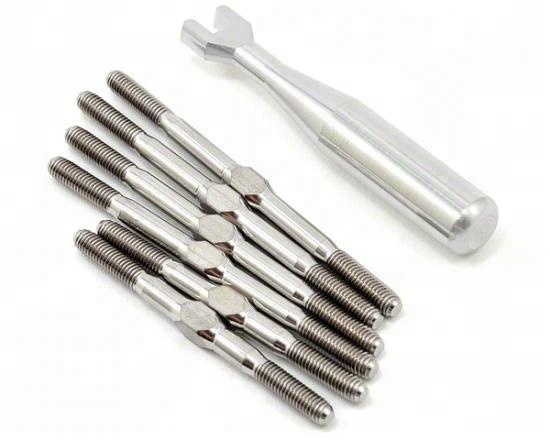
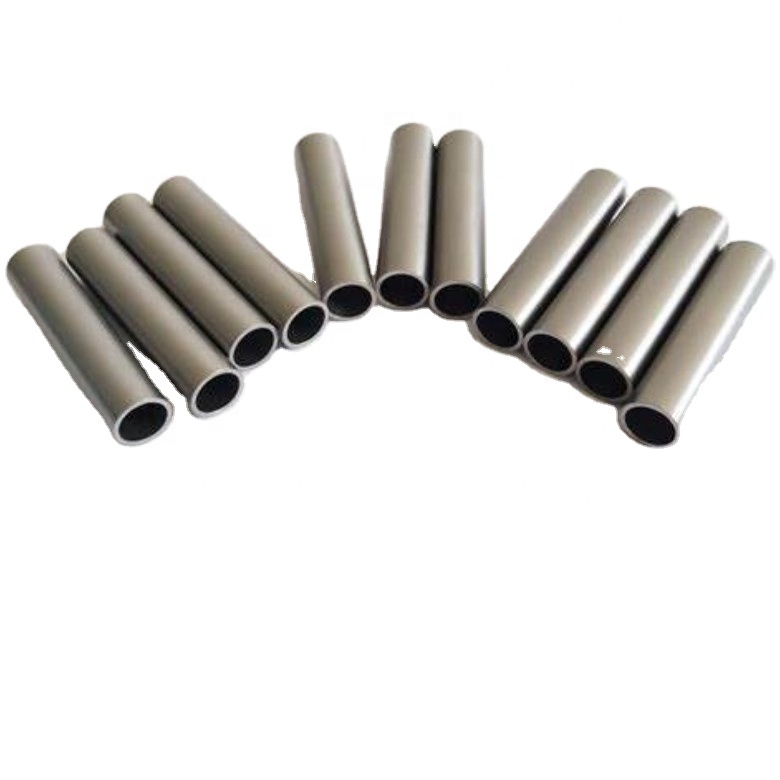
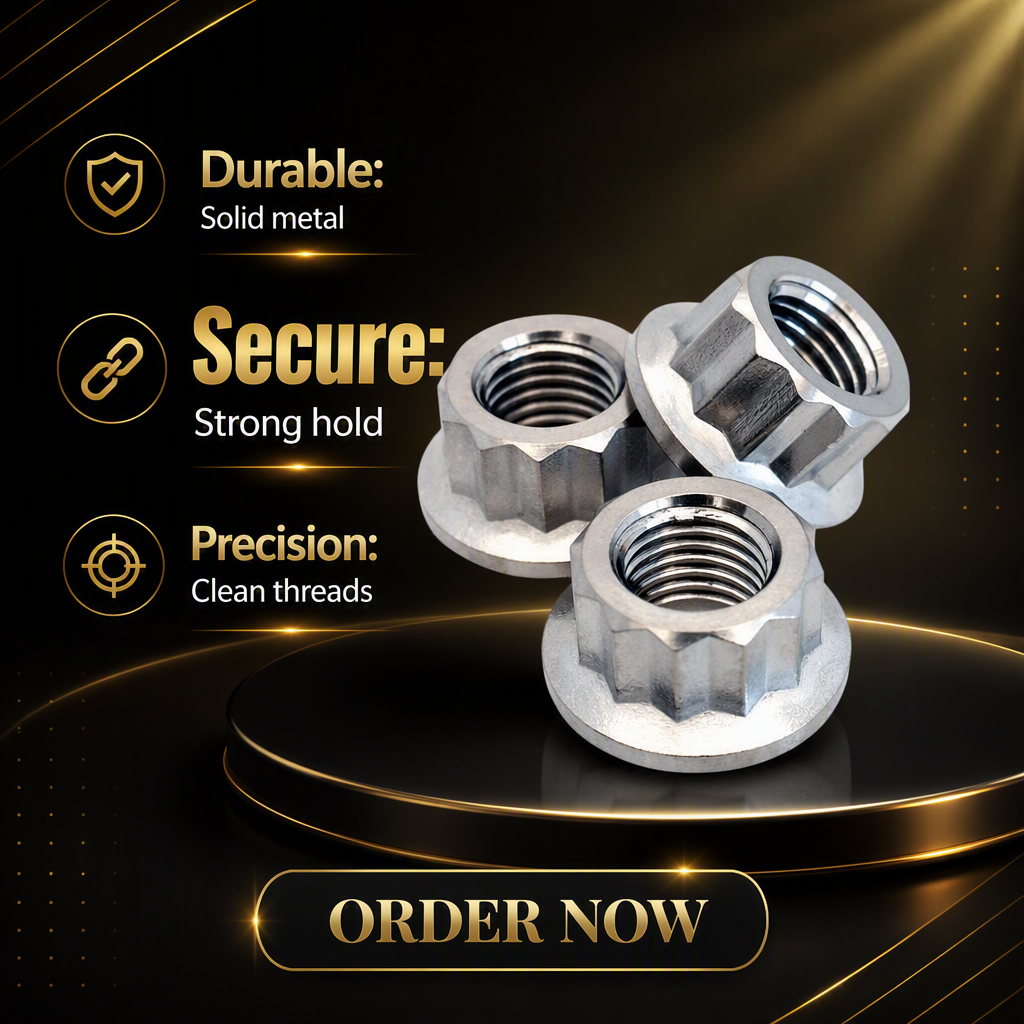
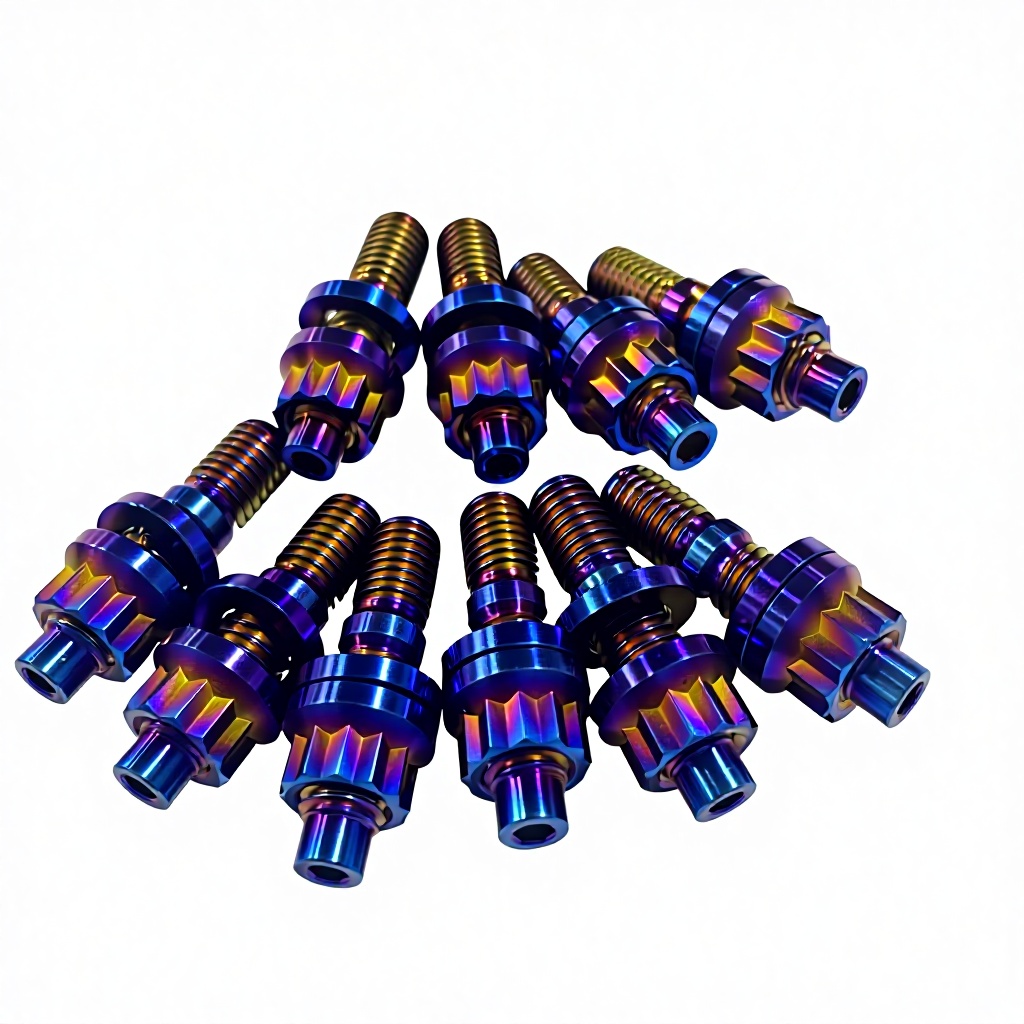
1. The Metallurgy of Custom OEM Titanium Fasteners: Ti-6Al-4V Grade 5 vs. Commercial Pure Alloys
In high-velocity engineering, motorsport drivelines, aerospace structures, and offshore critical subsea installations, fastening elements represent the primary failure vector under shear loads, dynamic vibrations, and aggressive electrochemical attack. As a tier-1 custom OEM titanium bolt kits manufacturer and global exporter rooted directly within the Baoji Titanium Valley ecosystem, Vunza Titanium Industry Co., Ltd. applies strict metallurgical controls governing raw titanium bar selection, forging crystal grain flow, thread-forming mechanics, and specialized surface passivation.
Standard industrial hardware traditionally relies on medium-carbon alloy steels (such as Grade 8.8, 10.9, or 12.9) or austenitic stainless steels (AISI 304, 316). However, in high-performance power-to-weight ecosystems, steel components impose significant weight penalties, while standard stainless steel exhibits catastrophic failure modes such as stress corrosion cracking (SCC) and thread galling under friction-induced preloads. Commercially Pure (CP) titanium grades (Grades 1 through 4, conforming to ASTM B348) deliver exceptional corrosion resistance in saline and chemical fluid processing, yet lack the yield strength required to sustain sustained structural preloads. Therefore, Grade 5 Titanium (Ti-6Al-4V / UNS R56400 / Werkstoff 3.7165) serves as the engineering benchmark for mission-critical structural bolt kits.
Ti-6Al-4V is an alpha-beta alloy containing 6% aluminum (stabilizing the hexagonal close-packed alpha phase and enhancing mechanical strength) and 4% vanadium (stabilizing the body-centered cubic beta phase and improving ductility and cold-workability). This microstructural balance generates a nominal tensile strength of ≥895 to 1050 MPa and a yield strength exceeding ≥828 MPa, maintaining a density of merely 4.43 g/cm³. Compared to standard 10.9 quenched-and-tempered alloy steel fasteners (density ~7.85 g/cm³), custom Grade 5 titanium assemblies yield an immediate 43% to 45% reduction in unsprung mass without sacrificing rotational inertia, elastic deflection resilience, or ultimate tensile threshold.
| Material Specification | Yield Strength (Rp 0.2, MPa) | Tensile Strength (Rm, MPa) | Density (g/cm³) | Modulus of Elasticity (GPa) | Typical Fastener Application |
|---|---|---|---|---|---|
| CP Grade 2 Titanium (ASTM B348) | ≥ 275 | ≥ 345 | 4.51 | 103 | Exhaust non-structural shells, marine piping hardware |
| Grade 5 Ti-6Al-4V (Annealed Bar) | ≥ 828 | ≥ 895 | 4.43 | 114 | Engine head studs, brake rotor bolts, suspension links |
| Grade 5 Ti-6Al-4V (Cold-Worked/Aged) | ≥ 980 | ≥ 1080 | 4.43 | 118 | High-torque wheel lug nuts, driveline fasteners, aerospace |
| High-Tensile Steel (ISO 898-1 Class 10.9) | ≥ 900 | 1000 – 1200 | 7.85 | 210 | Conventional heavy automotive chassis (High mass penalty) |
| Stainless Steel A4-80 (Marine 316) | ≥ 600 | ≥ 800 | 8.00 | 193 | Corrosive industrial assemblies (Subject to galling & SCC) |
Rolled Threads vs. Cut Threads: Microstructural Fatigue Performance
A critical engineering differentiator between low-cost decorative titanium hardware and aerospace-grade structural fasteners lies in thread production technology. Subtractive thread cutting or manual die-chasing shears the naturally formed directional grain boundary fibers of the forged titanium bar, creating microscopic micro-notch stress concentration root radii where cyclic fatigue cracks initiate under alternating torque loads. Vunza employs dedicated high-speed hydraulic thread-rolling machinery. During thread rolling, cylindrical dies deform the titanium bar plastically at ambient and controlled warm temperatures, deflecting the internal metallurgical grain lines smoothly around the root and crest of each thread profile. This work-hardens the thread flanks, inducing high compressive residual stresses that increase bolt fatigue life by up to 300% compared to single-point CNC-turned threads.
2. Enterprise Manufacturing Advantages: Baoji Titanium Valley Infrastructure
Headquartered in the Gaoya Village Industrial Zone of Baoji, Shaanxi Province—internationally recognized as "China's Titanium Valley" and situated adjacent to the state-grade Baoti Group industrial park—Vunza Titanium Industry Co., Ltd. has established an end-to-end vertically integrated production system since 2008. Operating in direct proximity to upstream primary titanium sponge purification facilities and vacuum arc remelting (VAR) plants provides immediate access to certified mill stock while eliminating intermediate logistical overhead.
34 Multi-Axis CNC Machining Fleet
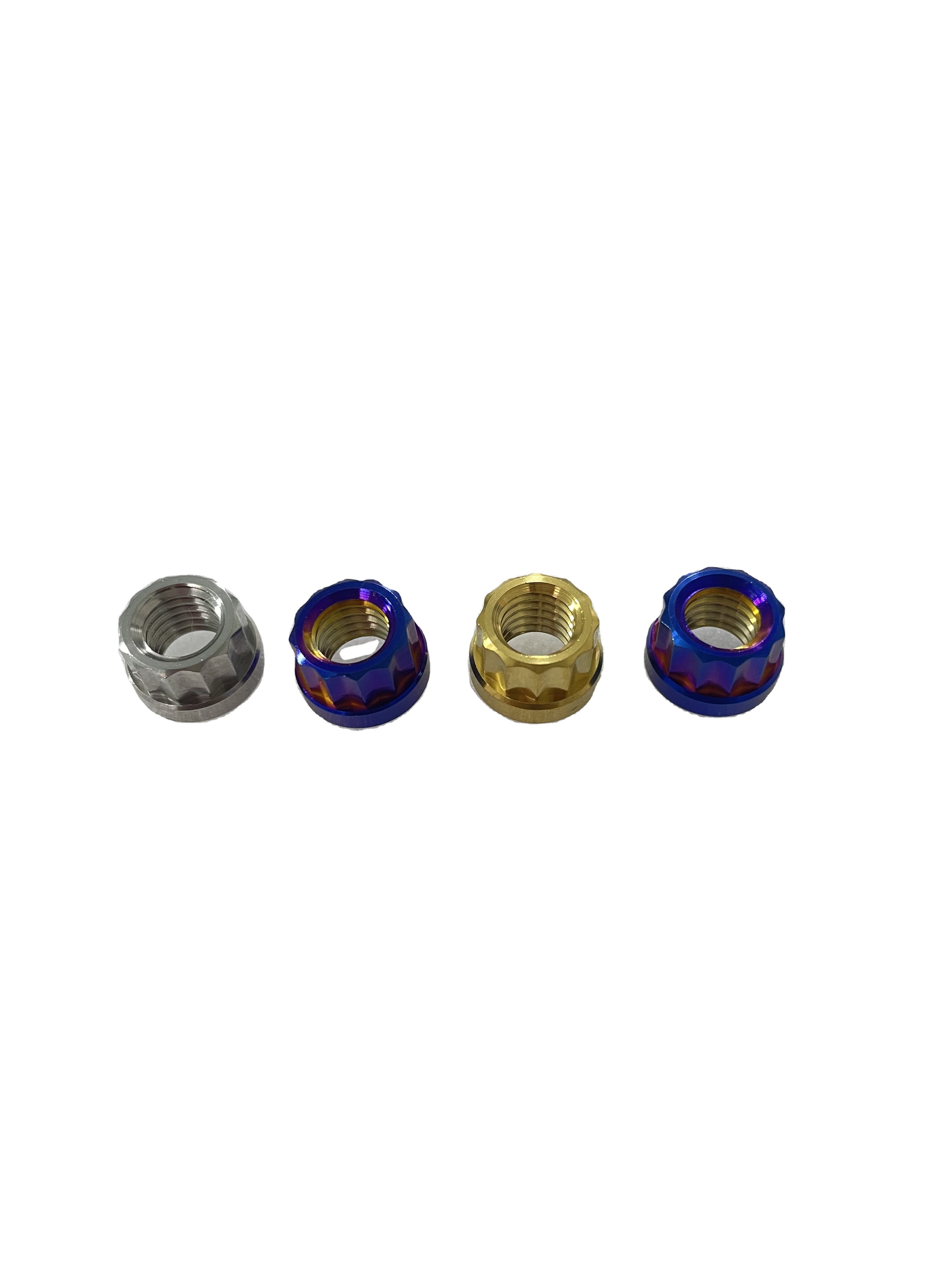
Equipped with 3-axis, 4-axis, and simultaneous 5-axis DMG MORI and Brother CNC centers achieving axial positioning tolerances down to ±0.005 mm. Complex internal broaching (Torx T25/T30/T40, ARP-style 12-point heads) executed in single clamping setups.
Closed-Loop Sponge-to-Part Quality Assurance
Every melt batch is validated through Optical Emission Spectrometry (OES) chemical analysis and ultrasonic internal flaw detection. Dimensional integrity is verified using automated CMM, optical optical-comparator profile projectors, and GO/NO-GO precision ring gauges.
Specialized Surface Passivation & Coatings
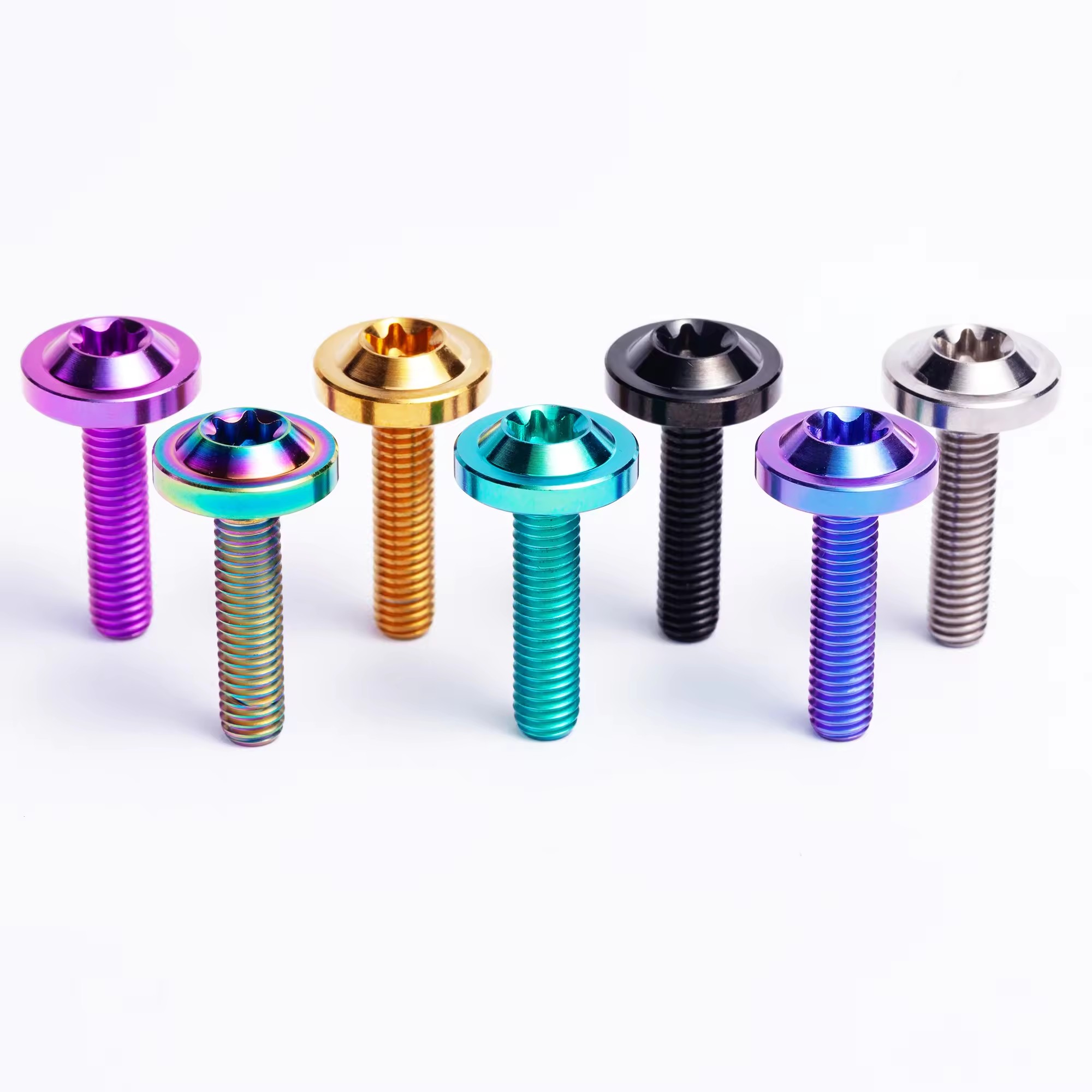
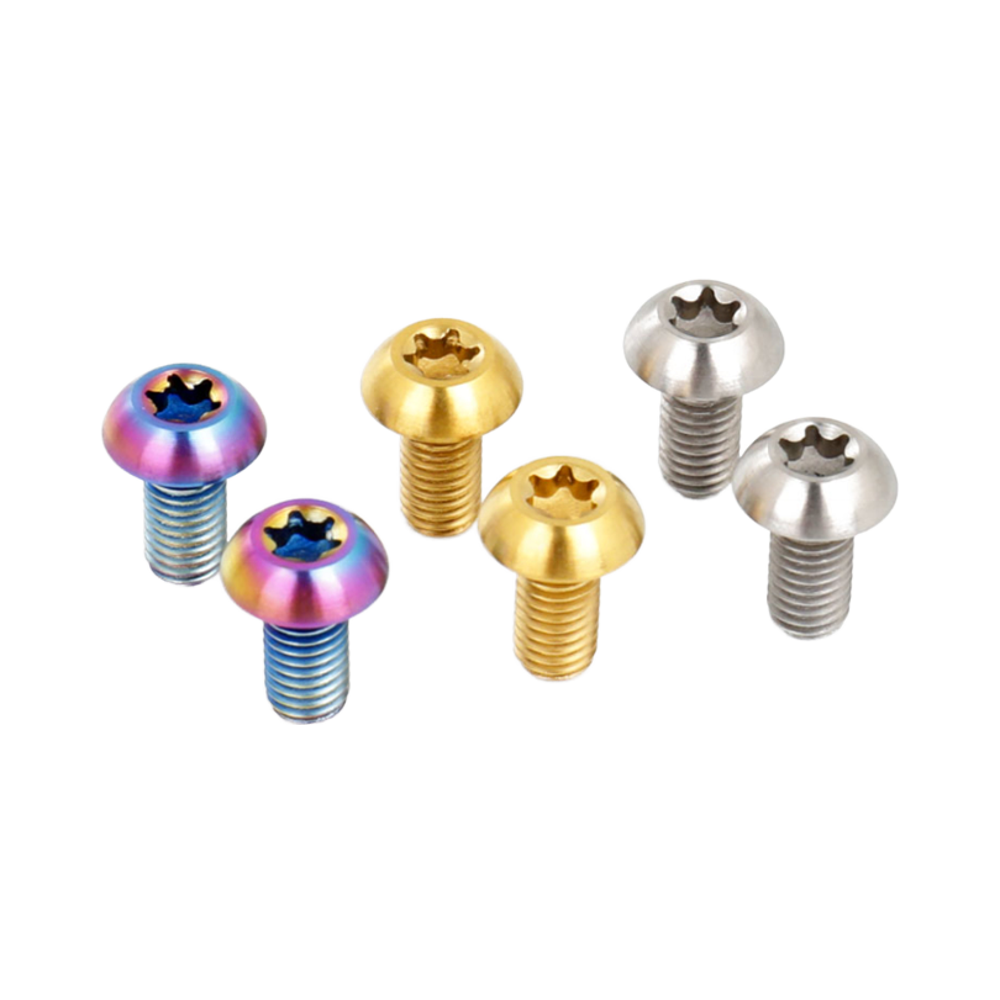
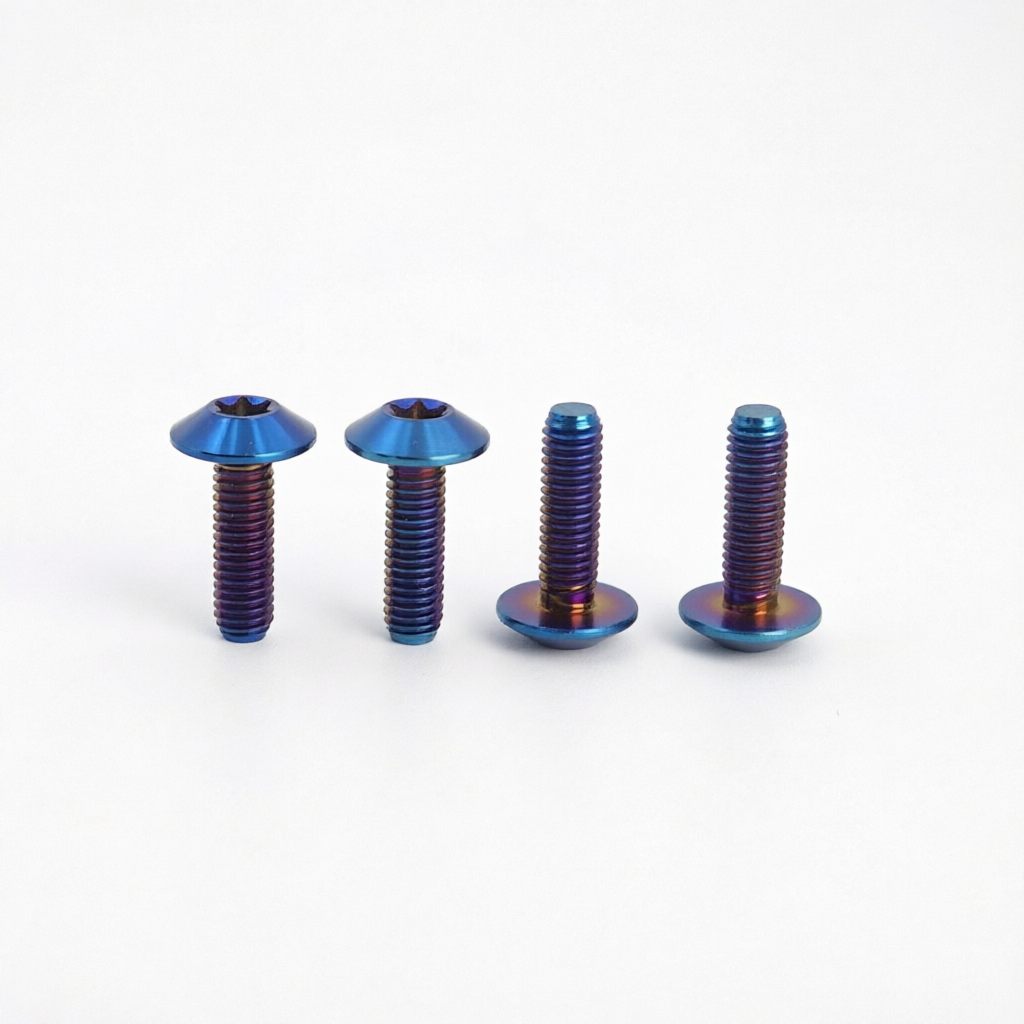
In-house Physical Vapor Deposition (PVD) chambers for high-adhesion Titanium Nitride (TiN), Titanium Carbonitride (TiCN), Rainbow Burnt Anodizing, and Micro-Arc Oxidation (MAO) for surface hardness exceeding 65 HRC and complete anti-galling protection.
Veteran Technical Team
More than 50% of workshop technicians and quality inspectors maintain over 13 years of specialized non-ferrous metal machining experience, enabling agile Design-for-Manufacturability (DFM) reviews on bespoke OEM bolt kits within 9 hours.
3. Procurement Dynamics, Total Cost of Ownership (TCO), and Engineering Evolution
Global procurement teams across Tier-1 automotive motorsport programs, hypercar manufacturers, defense robotics, and specialized cycling brands are transitioning away from fragmented commodity purchasing toward fully bundled custom bolt and hardware kits. An operational evaluation reveals clear technological and commercial drivers shaping procurement over the 2025–2030 timeframe:
1. Shift from Unit-Piece Sourcing to Complete OEM Kitting
Automated assembly lines and race paddock rebuild protocols demand structured kitting rather than bulk loose fasteners. Procuring pre-packaged engine sets (including matching 12-point nuts, precision-ground rolled studs, and hardened spherical washers) packaged in custom EVA foam trays or labeled anti-static packaging reduces assembly floor line-side search times by 35% and eliminates thread pitch cross-contamination during frantic trackside turnarounds.
2. Total Cost of Ownership (TCO) Calculation in Dynamic Systems
While the initial purchase cost of raw Grade 5 titanium fasteners exceeds standard zinc-plated 10.9 carbon steel, life-cycle accounting shows significant cost savings over extended duty cycles. In high-temperature exhaust manifold assemblies, thermal expansion cycles generate severe galvanic oxidization and bolt stretching in steel studs, resulting in seized studs, exhaust gas leaks, cylinder head thread stripping, and labor-intensive drilling extractions. Grade 5 titanium exhibits a thermal expansion coefficient (~8.6 × 10⁻⁶/K) substantially closer to cast aluminum cylinder heads (~22 × 10-6/K) than steel (~12 × 10-6/K), ensuring constant clamping preloads during 800°C thermal shock sequences while eliminating corrosion-induced seizing indefinitely.
3. Surface Tribology Advancements to Neutralize Galling
Historically, bare titanium mating with female titanium or stainless steel threads presented a known risk of micro-welding friction seizing (galling). Future-ready manufacturing processes bypass this issue through plasma vapor physical deposition (PVD) and advanced molybdenum disulfide (MoS2) dry-film coatings. Applying thin-film ceramic coatings (2–4 microns of Diamond-Like Carbon / DLC or TiAlN) alters the coefficient of friction to a predictable 0.10–0.12 range, permitting precise torque-angle tightening without the risk of flank galling.
4. Closed-Loop Circular Titanium Supply Chains
With stringent global corporate Scope 3 carbon emission disclosures, Western European and North American buyers are prioritizing manufacturing partners capable of certified scrap recycling. Vunza integrates in-house swarf compaction and segregated chip re-melting loops with regional vacuum arc remelters, slashing the overall embedded carbon footprint per kilogram of finished CNC parts by 42% compared to non-integrated contract machine shops.
Frequently Asked Questions (FAQ) for Global Buyers
Comprehensive engineering and logistical clarifications addressing typical concerns during technical drawing reviews and volume contract negotiations.
Q1: How does tightening torque calculation change when substituting steel with Gr5 titanium?
Because Grade 5 Ti-6Al-4V has an elastic modulus of ~114 GPa (roughly half that of steel at 210 GPa), a titanium bolt stretches twice as much as a steel bolt under the same clamp load. When using dry threads, the friction coefficient is higher; however, when treated with our PVD anti-friction coatings or high-pressure anti-seize lubricant, torque values are generally set to 80% to 85% of standard Grade 10.9 steel torque specifications to achieve the exact target clamping force without over-straining thread roots.
Q2: What certifications accompany custom OEM titanium export shipments?
Every commercial export batch is supplied with an EN 10204 3.1 Inspection Certificate containing complete heat number traceability, full chemical analysis (percentages of Ti, Al, V, Fe, C, N, H, O verifying compliance with ASTM B348 / AMS 4928 standards), mechanical tensile/yield test records, elongation percentages, and dimensional inspection reports from our optical coordinate measuring laboratory.
Q3: Can Vunza manufacture custom head styles and thread pitches from 2D/3D CAD models?
Yes. Our in-house engineering team works directly with STEP, IGES, DXF, and SolidWorks files. We regularly fabricate proprietary head profiles, anti-theft security patterns, ultra-lightweight drilled hollow-core bolts for motorsport weight shedding, and non-standard metric/imperial thread pitches (e.g., M10×1.0, M12×1.25, 7/16-20, 1/2-20 UNF).
Q4: How does Vunza guarantee the absence of hydrogen embrittlement in titanium fasteners?
Hydrogen pickup during pickling or chemical finishing causes severe delayed catastrophic shear failure in titanium fasteners under sustained preload. We strictly monitor vacuum annealing degasification cycles at 700°C in inert argon/high-vacuum furnaces and implement inert vacuum PVD coating methods, keeping hydrogen content consistently below the critical 0.015% (150 ppm) aerospace threshold.
Q5: What are the Minimum Order Quantities (MOQ) and production lead times?
For custom OEM CNC/forged hardware kits, our standard prototype sampling MOQ is 50 to 100 pieces, whereas full batch production typically starts at 300 to 1,000 pieces depending on fastener complexity. Prototype samples are completed in 7 to 10 business days; full production batches ship within 20 to 28 days via DHL/FedEx Express or consolidated sea freight.
Q6: How is galvanic corrosion prevented when titanium bolts contact carbon fiber or aluminum?
Titanium is electrochemically noble (+0.05V vs SCE) and does not corrode in contact with carbon fiber composite matrices (unlike aluminum or steel, which rapidly corrode). When mating titanium bolts into magnesium or aluminum engine blocks, we supply custom PVD insulating coatings or recommend our Grade 5 titanium washers combined with non-conductive paste barriers to neutralize galvanic potential differences.
Ready to Engineer Your Custom OEM Titanium Bolt Kit?
Submit your 2D engineering drawings, 3D CAD files, or custom assembly bill of materials (BOM). Our Baoji metallurgical engineers will deliver Design-for-Manufacturability (DFM) feedback, tooling feasibility analysis, and factory-direct volume pricing within 9 hours.