Featured OEM Titanium Screws & Racing Hardware
Explore high-tensile Grade 5 (Ti-6Al-4V) hex, Torx, and 12-point lightweight fasteners engineered for critical motorsport, aerospace, and precision machinery applications.
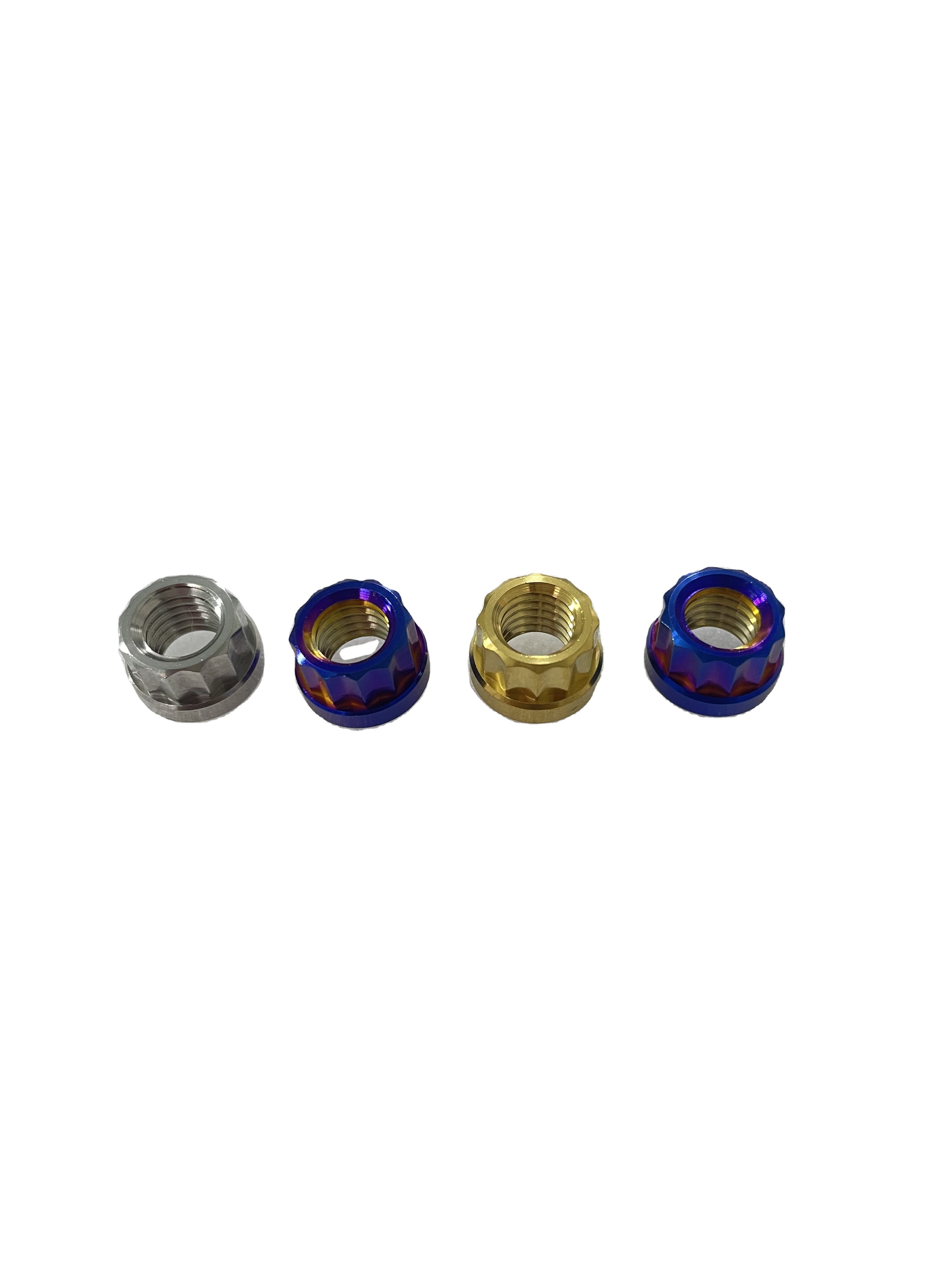
Polished Gr5 Titanium 12 Point Flange Nut M10X1.25 for Automotive Racing
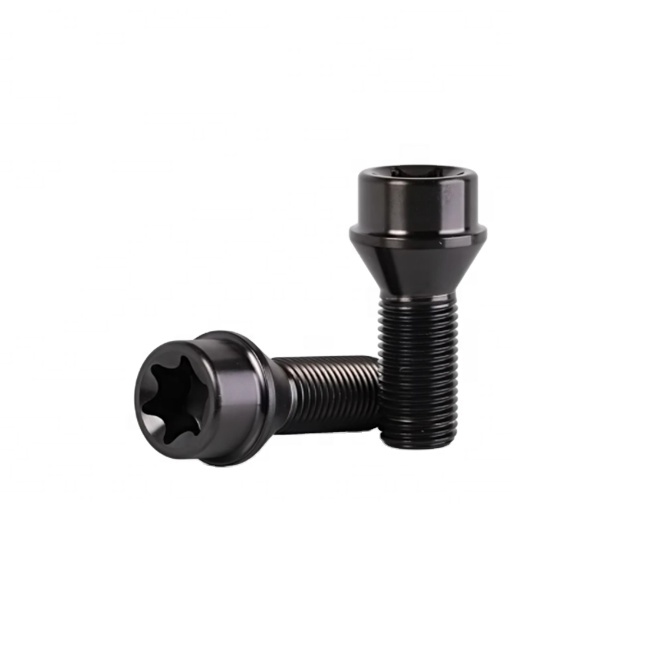
Titanium Wheel Bolts M14 DIN Standard Torx CNC Machined Nitride Black for Ferrari
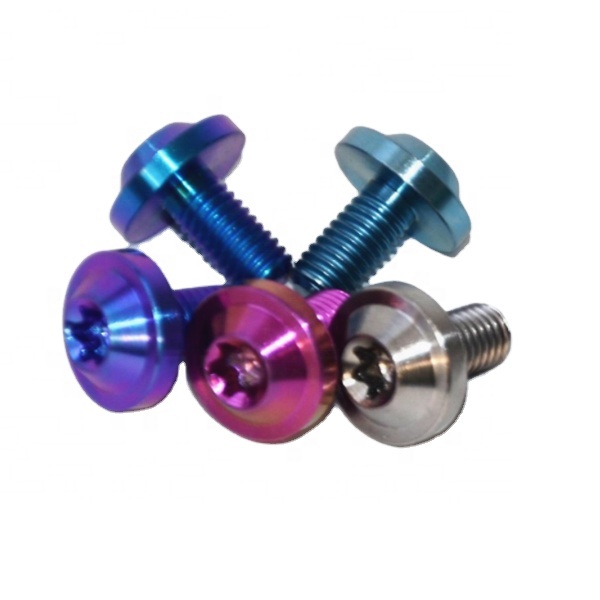
Custom Gr5 Titanium Rainbow Hex Socket Torx Motorcycle Screw
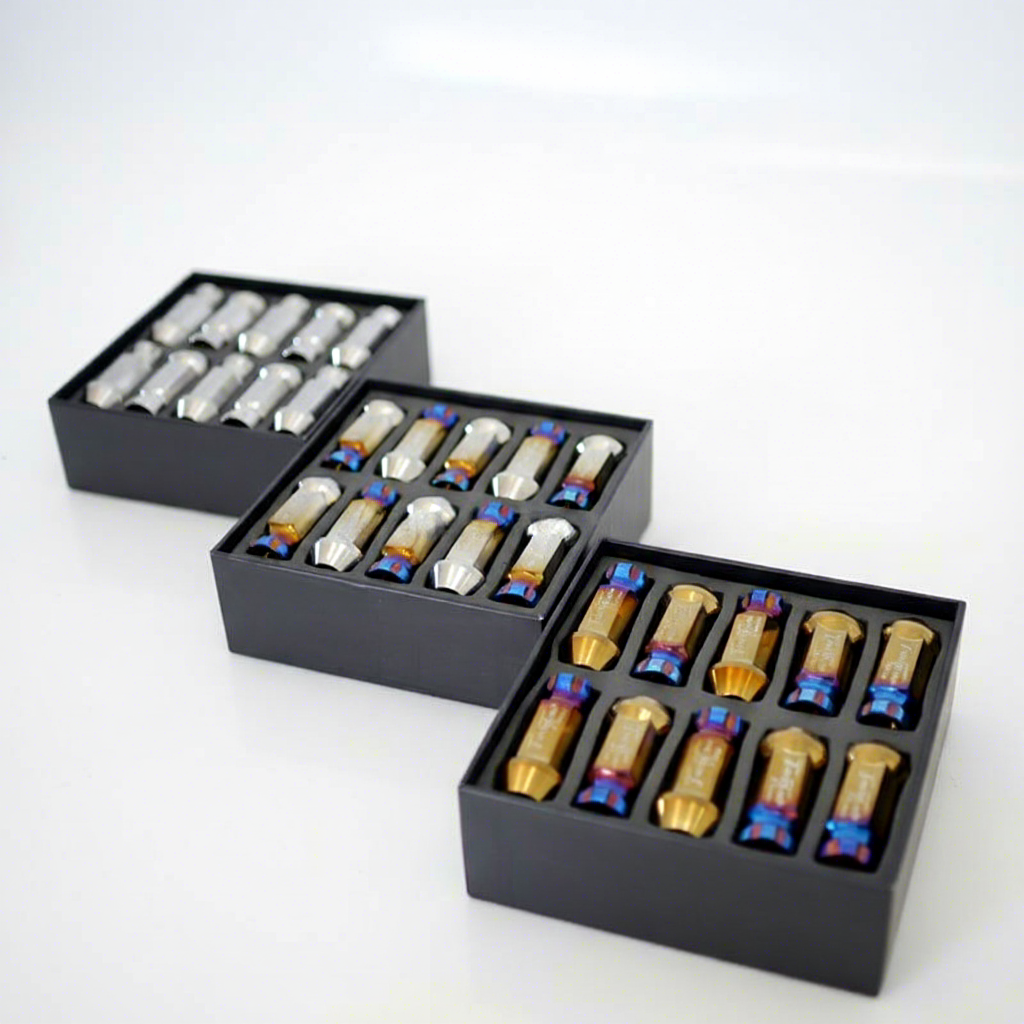
Gr5 Ti6Al4V M14 X 1.5 8mm Hole Hex Anodized Racing Wheel Nuts
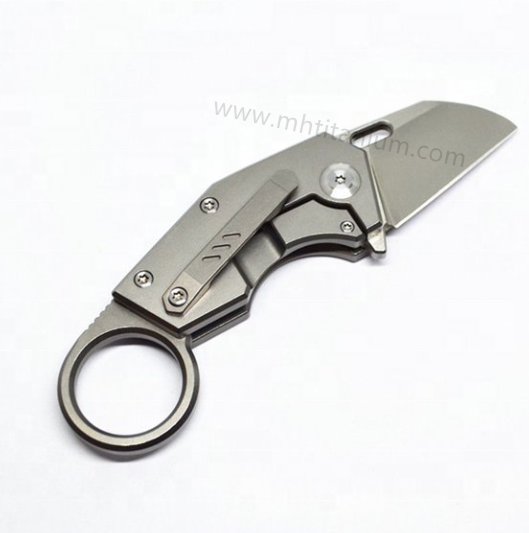
Folding Keychain Gear Pocket Titanium Multi-Tool Card Knife EDC
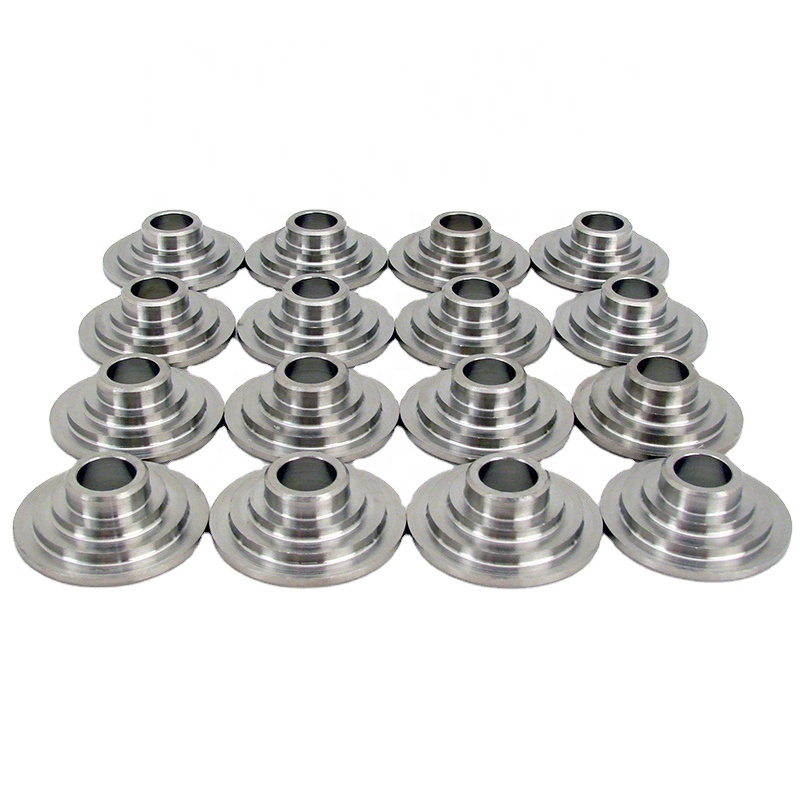
Titanium Valve Retainer Set for Engine K20A JDM Platinum Springs
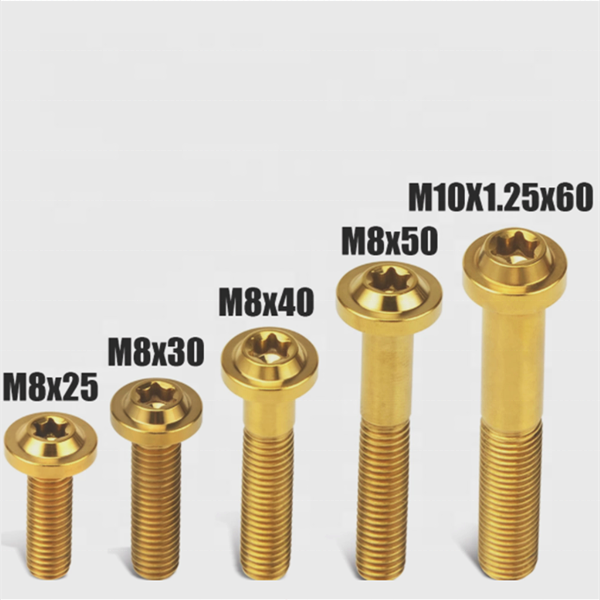
Titanium Motorcycle Bolts Grade 5 M8 X 1.25 Low Profile Torx T40
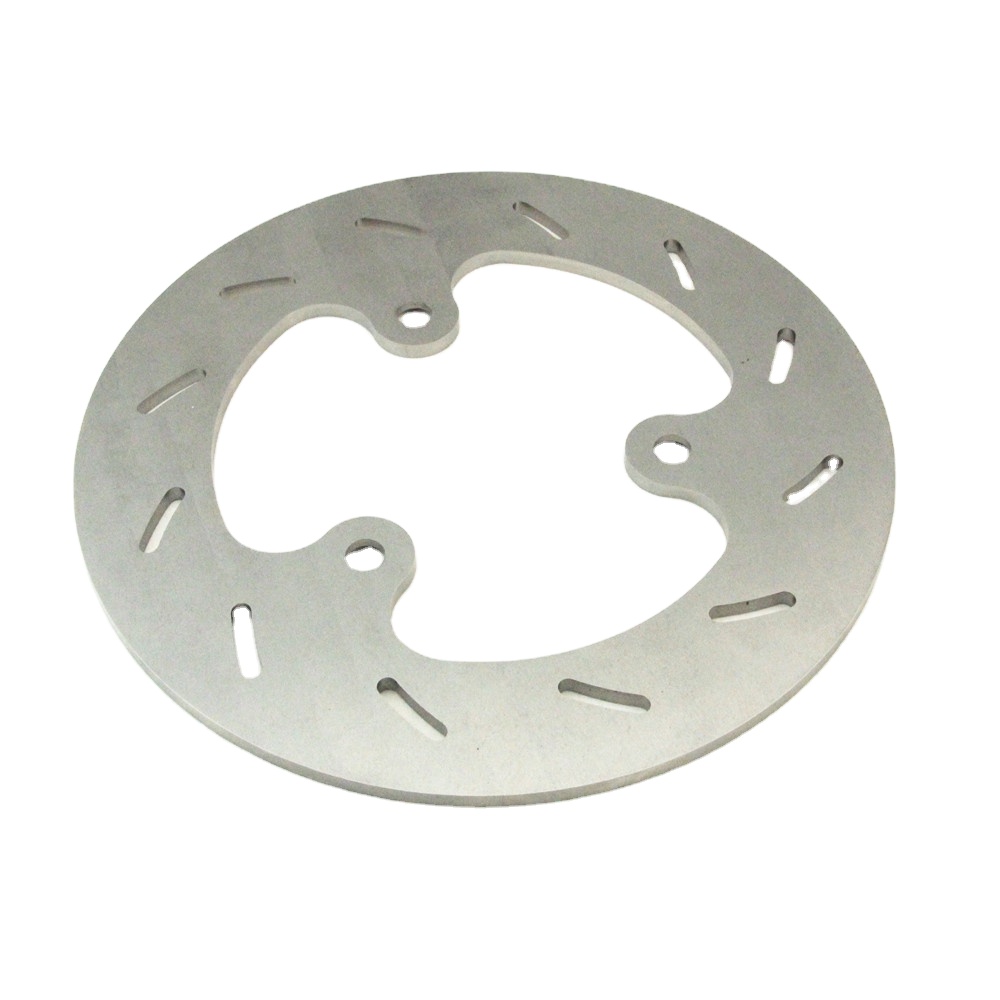
Titanium CNC Machined Rotor 3/4/5-Axis Milling Component for Sprint Cars
Metallurgical Architecture & Precision Manufacturing of Custom Titanium Fasteners
An authoritative technical breakdown for mechanical designers, aerospace stress engineers, and global procurement directors specifying high-stress titanium fasteners.
Alloy Selection: TC4 / Gr5 vs. Gr2
While Grade 2 commercially pure titanium serves unpressurized chemical processing where ductility and pure passive oxide film formation dominate, Grade 5 (Ti-6Al-4V / UNS R56400) is the structural backbone of high-performance custom OEM hex screws. Featuring an alpha-beta dual-phase microstructure, Ti6Al4V yields minimum tensile strengths of 895–950 MPa with a density of 4.43 g/cm³.
By delivering steel-equivalent shear resistance at approximately 56% of alloy steel’s volumetric mass, Gr5 completely alters rotating and unsprung weight dynamics in motorsport and hypercar chassis assemblies.
Density: 4.43 g/cm³ · Tensile: ≥895 MPaRolled Threads vs. Cut Threads
Thread fabrication methodology determines fastener fatigue threshold under dynamic high-vibration cyclic loading. While cut threads sever the natural metallurgical grain flow lines of the titanium rod stock—creating severe micro-notch stress concentration sites at the root—thread rolling plastically deforms the material between high-precision planetary or cylindrical dies.
This burnishes the thread root with significant compressive residual stress, drastically resisting fatigue cracking and extending cyclical life by up to 350% compared to machined threads.
Continuous Grain Flow · UNJ / ISO 6g ControlGalling Mitigation & Tribological Coatings
Titanium screws exhibit a natural susceptibility to cold welding and adhesive galling when mated against titanium or stainless steel tapped holes under high torque clamping. To eliminate interface seizure and stabilize the torque-tension coefficient (k-factor), modern factories apply proprietary surface functionalizations.
Options include Anodizing Type II (acidic micro-layer yielding controlled boundary lubrication), Micro-Arc Oxidation (MAO/PEO), Physical Vapor Deposition (PVD TiN/DLC diamond-like carbon), and specialty anti-seize MoS2 dry-film coatings.
PVD DLC · PVD Nitride Black · Anodized| Material Specification | Yield Strength (Rp0.2, MPa) | Tensile Strength (Rm, MPa) | Elongation at Break (%) | Fatigue Endurance Limit (10⁷ Cycles) | Primary Industrial OEM Domain |
|---|---|---|---|---|---|
| Gr5 Ti6Al4V (Annealed) | ≥ 828 | ≥ 895 | ≥ 10 | ≈ 510 MPa | Hypercar Wheel Hubs, Caliper Mounts, Engine Head Studs |
| Gr5 Ti6Al4V (Solution Treated & Aged) | ≥ 1030 | ≥ 1100 | ≥ 8 | ≈ 620 MPa | Aerospace Structurals, Valve Retainers, High-RPM Connecting Rods |
| Gr23 Ti6Al4V ELI (Extra Low Interstitial) | ≥ 795 | ≥ 860 | ≥ 10 | ≈ 480 MPa | Surgical Implants, Deep Subsea Robotic Pressure Vessels |
| Gr2 Commercially Pure (CP) | ≥ 275 | ≥ 345 | ≥ 20 | ≈ 180 MPa | Chemical Heat Exchangers, Marine Fasteners, Exhaust Ducts |
| Class 10.9 Carbon Steel (Reference) | 940 | 1040 | 9 | ≈ 420 MPa | Standard Heavy Automotive (Mass Penalty: +78% Weight vs Gr5) |
Global OEM Titanium Screw Sourcing Trends (2025–2030)
How evolving technical constraints in EV architectures, defense systems, and supply chain digitalization are reshaping global requests for quotation (RFQs).
1. Direct Integration in High-Voltage EV Inverters & Battery Packs
The transition toward 800V and 1200V Silicon Carbide (SiC) EV powertrain architectures has generated unprecedented demand for non-magnetic, corrosion-proof titanium hex and Torx screws. Unlike ferrous alloys that induce parasitic eddy-current heating in high-frequency magnetic fields surrounding dense power distribution units, Grade 5 titanium offers zero magnetic susceptibility combined with extraordinary thermal stability.
Procurement teams are standardizing on custom flange-head hex screws to fasten composite busbars, cooling cold plates, and lightweight carbon fiber monocoque crash structures.
2. Digital QA Traceability from Titanium Sponge to Finished Bolt
Leading European and North American buyers are moving past generic compliance declarations. Future procurement standards mandate strict digital batch tracking back to vacuum arc remelting (VAR) ingot lot numbers, confirmed by EN 10204 3.1 chemical analysis and third-party ultrasonic non-destructive testing (NDT).
High-reliability factories must provide comprehensive certificates showing nitrogen, oxygen, and hydrogen thresholds (interstitials below 0.015% to completely preclude hydrogen-induced delayed brittle fracture).
3. Hybrid Hot-Heading & Multi-Axis High-Speed CNC Finishing
Historically, low-volume custom titanium screws were purely subtractive CNC lathed from bar stock, generating significant chip waste and higher unit costs. The emerging manufacturing trend incorporates precision induction hot heading for the hex or Torx drive head, combined with simultaneous 5-axis CNC machining of complex undercut geometries, collar flanges, and rolled shank threading.
This hybrid production method cuts raw material scrap rates by 40%, significantly lowering tier-1 OEM cost structures for production runs exceeding 5,000 pieces.
4. Geopolitical Sourcing Consolidation in "China Titanium Valley"
With macroeconomic shifts in global titanium supply chains, Baoji in Shaanxi Province has reinforced its status as the world’s most vertically integrated titanium production cluster. Sourcing managers are directly establishing relationships with specialized Baoji manufacturers located adjacent to primary smelters and state-level testing institutions.
This bypasses multi-tier trading brokers, shortens raw ingot-to-finished-bolt cycle times by 30-45 days, and ensures consistent billet chemistry compliance.
Why Tier-1 Engineers Partner with Vunza Titanium
Headquartered in the Gaoya Village Industrial Zone of Baoji, Vunza Titanium Industry Co., Ltd. combines fifteen years of manufacturing heritage with dedicated multi-axis production capacity.
Direct Factory Ecosystem: Gaoya Industrial Zone, Baoji
Positioned directly within the Baoti Industrial Park supply chain network since 2008.
34 Multi-Axis CNC Machine Centers
Equipped with ultra-rigid 3-axis, 4-axis, and 5-axis CNC machining suites capable of maintaining geometric positioning tolerances down to ±0.005 mm on custom complex heads.
Sponge-to-Part Quality Control
Total raw material governance starting from pure titanium sponge testing, vacuum melting ingots, and precision extruded bars to final micro-hardness and tension batch reports.
Senior Craftsmanship (13+ Years)
Over 50% of workshop technicians and machinists possess more than thirteen years of specialized titanium alloy processing experience, mastering tool deflection and heat dispersion.
Rapid Engineering Turnaround (≤9h)
Onsite engineering response typically within 9 hours on global business days, offering Design for Manufacturability (DFM) reviews on customer 2D prints and 3D CAD models.
Full Documentation & Certification
Mill Test Certificates (MTC) conforming to EN 10204 3.1, raw chemical spectroscopic assays, first-article dimensional reports (CMM), and optical thread inspection records per batch.
Comprehensive Surface Customization
In-house high-polish, anodization (Gold, Burnt Blue, Purple, Rainbow, Green), PVD Nitride Black, micro-arc oxidation, and permanent high-definition fiber laser logo marking.
Frequently Asked Questions on Custom Titanium Screws & Fasteners
Clear, authoritative technical answers addressing metallurgical constraints, machining limits, order economics, and operational parameters.
What specific titanium grades do you machine, and how do I select between Gr2 and Gr5?
Our production floor predominantly processes commercially pure Grade 2 (CP-Ti) and alpha-beta Grade 5 (Ti-6Al-4V / TC4), along with Grade 23 (Ti-6Al-4V ELI) and Grade 9 (Ti-3Al-2.5V). Selection hinges directly on mechanical vs. environmental requirements:
- Grade 5 (TC4): Specified whenever shear strength, proof load, and high tensile capacity are required (minimum 895 MPa tensile strength). This represents 90%+ of all custom hex screws, automotive racing studs, rotor bolts, and suspension fasteners.
- Grade 2: Specified for low-load chemical exposure, exhaust components, and marine plumbing where maximum ductility and chemical resistance are critical, but yield demands do not exceed 275 MPa.
How do you prevent thread galling during high-torque installation of titanium bolts?
Titanium naturally forms an instantaneous microscopic oxide layer (TiO2) that, under extreme compressive friction and absence of lubrication, can break down and cause cold-weld galling. We resolve this through three proven engineering avenues:
- Surface Conversion / PVD Coating: Applying Anodizing Type II, micro-arc oxidation, or PVD DLC/Nitride finishes provides a low-friction, high-hardness protective boundary layer.
- Precision Thread Rolling: Rolled threads feature mirror-smooth root and flank finishes (Ra < 0.4 μm) eliminating the micro-asperities found in cut threads.
- Proper Assembly Lubrication: We recommend anti-seize pastes containing molybdenum disulfide (MoS2) or nickel-based anti-seize lubricants, allowing precise torque-to-clamp-load conversion.
What geometric tolerances can your CNC turning and milling centers maintain?
Operating 34 multi-axis (3, 4, and 5-axis) precision machining centers, our factory maintains baseline production tolerances down to ±0.005 mm (±0.0002 inches) on critical shaft diameters, bearing steps, and concentricities. Thread pitches follow ISO 965-2 6g tolerances or aerospace UNJ specifications (featuring radiused roots for enhanced fatigue durability). Runout between hex head flange and thread axis is strictly maintained within 0.02 mm.
What is your Minimum Order Quantity (MOQ) for custom OEM screws and bolts?
Because we manage our own tooling, raw material stock, and CNC setups in Baoji, we support low-rate initial production (LRIP) alongside mass manufacturing:
- Standard Custom Screws & Wheel Studs: Typical MOQ is 100 to 300 pieces depending on diameter (M5–M14).
- Complex 5-Axis Milling Parts & Rotors: MOQ is as low as 10 to 20 pieces.
- Rapid Prototyping: Dedicated sample batches (5–10 pieces) are readily supported for pre-production validation upon review of client 2D prints/3D CAD models.
Can you manufacture titanium fasteners to aerospace or DIN/ISO industrial standards?
Yes. We routinely fabricate fasteners conforming to DIN 912 (socket head cap screws), DIN 933 / DIN 931 (hex head cap screws), DIN 6921 (hex flange bolts), ISO 4762, and aerospace standards including NAS, MS, and AN specifications. We also specialize in custom non-standard heads, including ultra-low profile Torx heads, skeletonized 12-point heads, drilled wire-locking safety heads, and captive collar studs.
How is material traceability guaranteed from Baoji sponge to the customer’s facility?
Quality governance is anchored at the metallurgical source. Every batch is melted from certified titanium sponge, vacuum arc remelted (VAR), and verified via spectroscopic chemical analysis. We supply an official Mill Test Certificate (MTC) per EN 10204 3.1 with every shipment, detailing the exact concentrations of Ti, Al, V, Fe, C, N, H, and O. Additional third-party mechanical test reports (tensile, yield, elongation) and full CMM inspection reports are provided upon request.
What surface treatment and color customization options are available?
We provide full-spectrum surface modification in-house: mechanical mirror polishing, fine bead-blasting, chemical passivation, electrolytic anodizing (available in Gold, Burnt Blue, Purple, Rainbow, and Emerald), Physical Vapor Deposition (PVD) coating for high-wear Matte Black or Gloss Black Nitride, and laser etching for part numbers, batch codes, or OEM brand logos.