Featured OEM/ODM Titanium Hex Bolts & Performance Components
Direct-from-factory titanium fasteners engineered for high power-to-weight ratios, extreme fatigue endurance, and zero-corrosion integrity in motorsport, marine, and aerospace assemblies.
Engineering Whitepaper: Metallurgical Architecture of High-Performance Titanium Hex Bolts
When mechanical assemblies operate under punishing cyclic stresses, violent vibrations, and hyper-corrosive environmental exposure, the choice of mechanical fastening cannot be treated as an afterthought. Titanium hex bolts, particularly those crafted from dual-phase alpha-beta Ti-6Al-4V (Grade 5), occupy a pinnacle position in structural engineering. Offering an exceptional strength-to-density ratio—yielding a 44% weight reduction relative to Grade 8.8 or Grade 10.9 quench-and-tempered alloy steels—titanium hex bolts deliver unrivaled specific yield strength while entirely eliminating galvanic-driven surface pitting in chloride and marine operating theaters.
Industrial procurement teams and lead mechanical engineers face substantial variance in titanium fastener manufacturing methodologies. Achieving consistent mechanical integrity requires an intimate understanding of the boundary conditions that govern Grade 2 commercially pure titanium versus Grade 5 alloy, the metallurgical consequences of thread cut machining versus thread cold rolling, and the critical role of grain orientation under the bolt hex head.
Titanium Grade Selection Guide for OEM/ODM Fastener Engineering
A frequent error in industrial B2B procurement is the blanket specification of "titanium" without delineating exact alloy chemistry and temper conditions. Each grade within the ASTM, AMS, and ISO classification systems provides distinctly different yield thresholds, elongation dynamics, and weldability metrics:
| Material Grade | UNS / Standard | Chemical Composition | Yield Strength (MPa) | Tensile Strength (MPa) | Primary Industrial Applications |
|---|---|---|---|---|---|
| Grade 5 (TC4) Standard High-Strength | R56400 / ASTM B348 | Ti-6Al-4V (Alpha-Beta) | ≥ 828 | ≥ 895 | Engine head studs, brake rotor mounts, suspension links, aerospace structural joints. |
| Grade 2 Commercial Pure | R50400 / ASTM B348 | Unalloyed CP Titanium | ≥ 275 | ≥ 345 | Chemical processing plants, subsea desalination, electroplating jigs, exhaust tailpipes. |
| Grade 7 Pd Enhanced | R52400 / ASTM B348 | Ti-0.15Pd (Palladium) | ≥ 275 | ≥ 345 | Aggressive reducing acid environments, offshore deepwater downhole drilling equipment. |
| Grade 23 (ELI) Medical Extra Low | R56407 / ASTM F136 | Ti-6Al-4V ELI (Low O2/N2) | ≥ 795 | ≥ 860 | Surgical orthopedic screws, spinal fixation cages, deep cryogenic fluid management. |
| Grade 9 Near-Alpha | R56320 / ASTM B348 | Ti-3Al-2.5V | ≥ 483 | ≥ 620 | High-pressure hydraulic lines, lightweight cycling frames, pneumatic tubing fittings. |
Head Heading & Shank Forming: Cold Forging vs. Multi-Axis CNC Turning
For custom OEM/ODM fasteners, head structural formation dictates the maximum allowable pre-load torque. At our Baoji manufacturing complex, we employ a hybrid production strategy based on order volume, geometry complexity, and stress analysis:
Multi-Axis Precision CNC Machining
Utilizing 3/4/5-axis CNC turning and milling centers, our factory carves complex hex flange profiles, scalloped race heads, and internal Torx/socket drives directly from certified solid titanium bar stock. This approach allows zero tooling cost for low-to-medium batch runs, micro-tolerances down to ±0.005mm, and rapid prototyping turnaround.
Hot & Warm Forged Bolt Heads
For high-volume automotive and industrial contracts exceeding 5,000 units, warm heading redistributes titanium grain lines uniformly around the bolt flange radius. Continuous grain flow eliminates micro-shear cleavage planes at the critical junction where the bolt shank interfaces with the underside of the hex head.
Precision Thread Rolling
Unlike abrasive single-point thread cutting that severs internal material fibers, our multi-die cylindrical thread rolling machines cold-work the thread root. This burnishes the surface, introduces vital residual compressive stress, and yields mirror-like surface finishes (Ra < 0.4 µm) that drastically diminish galling propensities.
Global Sourcing Trends: The Next Decade of Titanium Fastener Procurement (2025–2035)
The industrial procurement landscape for exotic fasteners is undergoing structural disruption. Supply chain executives no longer prioritize baseline unit cost over material provenance, environmental compliance, and integrated precision engineering. Over the next decade, multiple macro-trends will redefine OEM/ODM titanium hex bolt purchasing:
Near-Source Supply Chain Consolidation
Geopolitical turbulence and shipping volatility have catalyzed procurement relocation closer to raw sponge refining centers. Operating directly out of Baoji ("China's Titanium Valley"), manufacturers tap an unbroken industrial ecosystem spanning raw sponge melting, ingot forging, rolling, and precision multi-axis CNC finishing within a 15-kilometer radius, drastically reducing upstream lead times.
EV Electrification & Unsprung Mass Mandates
As commercial automotive OEMs accelerate transitions to next-generation 800V EV architectures, vehicle curb weight has reached critical mass due to massive battery packs. Every gram shaved from wheel hubs, brake caliper mounts, and suspension knuckles directly increases vehicle range. Titanium hex bolts are replacing 10.9 steel fasteners as a primary lightweighting vector.
Mandatory Material Provenance & DPP
Global aerospace, defense, and maritime buyers now mandate end-to-end digital traceability. From chemical melt analysis (sponge certificates) to spectral XRF inspections of the finished hex bolt, purchasers demand EN 10204 Type 3.1 verification. Suppliers unable to substantiate sponge-to-part provenance face total disqualification from high-tier procurement frameworks.
Advanced Technology Vectors: Surface Coatings & Anti-Galling Innovations
Historically, one persistent challenge associated with titanium fasteners in high-torque industrial duty has been adhesive wear—commonly known as thread galling or cold welding. When two unlubricated titanium surfaces rub under high clamp loads, the natural oxide film (TiO2) can rupture, causing microscopic surface asperities to instantly fuse. Modern fastener engineering has developed sophisticated surface treatments to overcome this limitation:
PVD Nitride Deposition (TiN & AlTiN)
Physical Vapor Deposition coats hex bolts in titanium nitride (gold) or aluminum titanium nitride (charcoal black). Providing extreme surface micro-hardness (up to 3,000 HV), PVD creates an ultra-smooth boundary barrier that eliminates direct metal-to-metal galling while boosting thermal oxidation resistance up to 800°C.
Micro-Arc Oxidation (MAO / PEO)
Plasma Electrolytic Oxidation transforms the outer layer of the titanium hex bolt into a dense, ceramic-crystalline oxide matrix. This ceramic conversion layer exhibits astonishing dielectric strength, preventing galvanic corrosion when titanium fasteners are paired with carbon-fiber reinforced polymers (CFRP) or aluminum structures.
Color Anodizing (Type II & Type III)
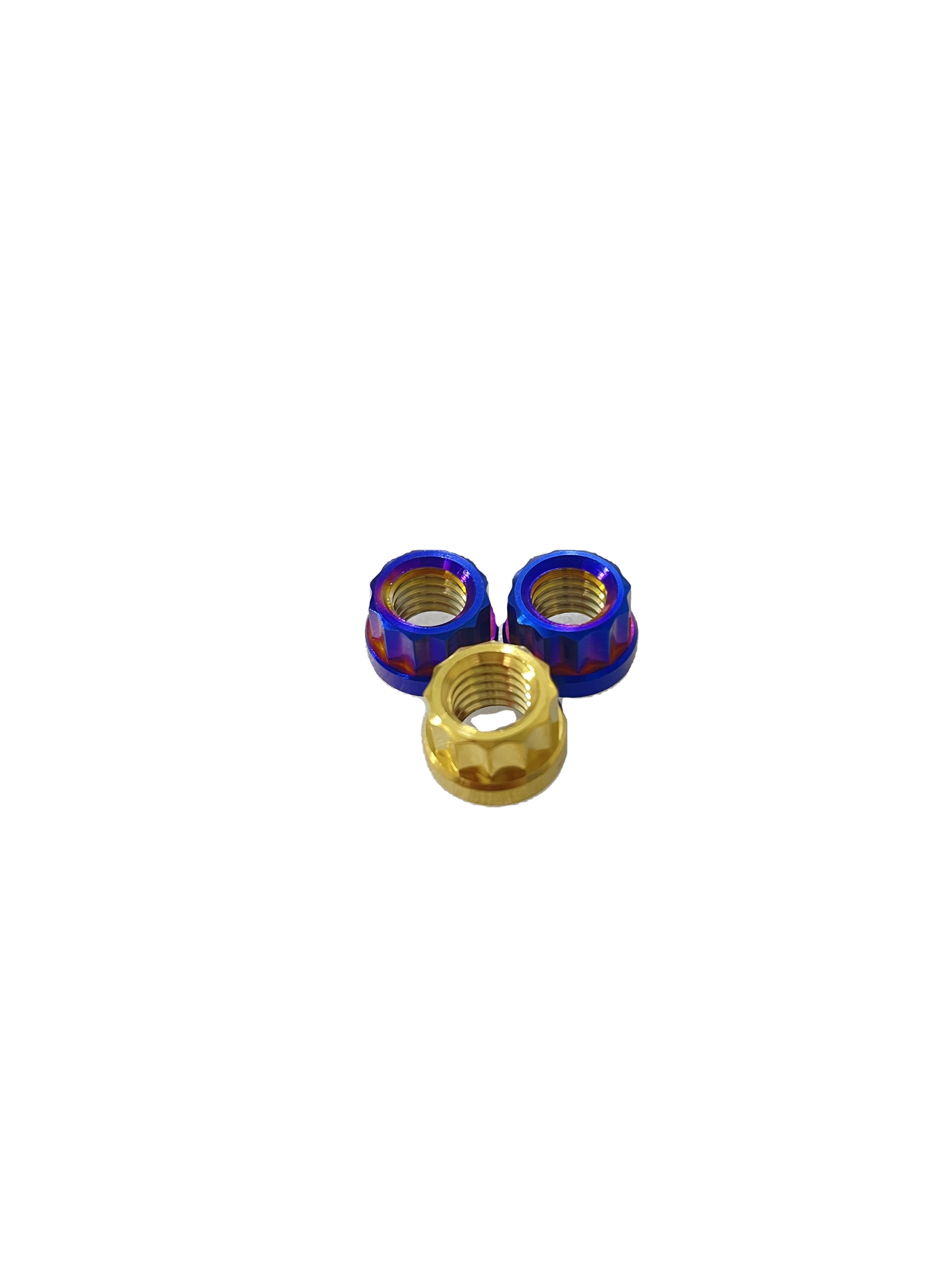
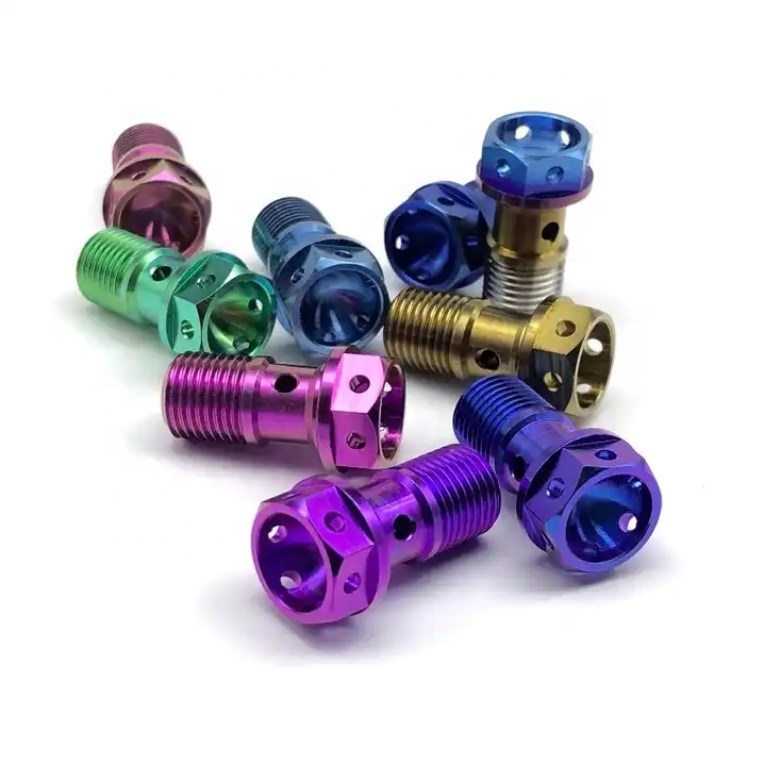
Electrolytic passivation manipulates surface light refraction to produce vibrant, repeatable colors (burnt blue, purple, gold, emerald green) without pigment degradation. Beyond aesthetic customization for motorsport brands, Type II anodization seals microscopic pores, optimizing thread lubricity.
Why Partner With Vunza Titanium: The Baoji Industrial Advantage
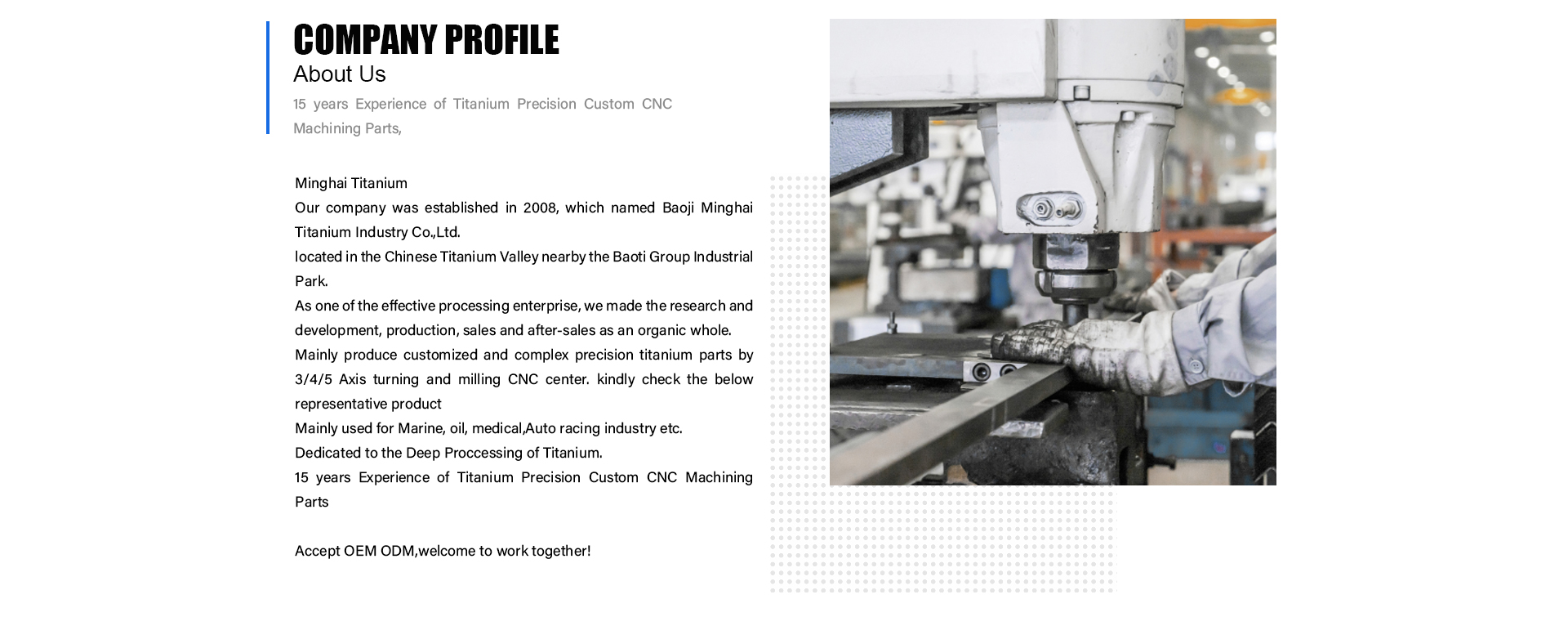
Founded in 2008 in the Gaoya Village Industrial Zone adjacent to the renowned Baoti Group Industrial Park in Baoji, Shaanxi, Vunza Titanium Industry Co., Ltd. serves as a direct, onsite-verified OEM/ODM manufacturing facility. We eliminate international broker margins, providing engineering-grade titanium fasteners directly from China's industrial titanium capital.
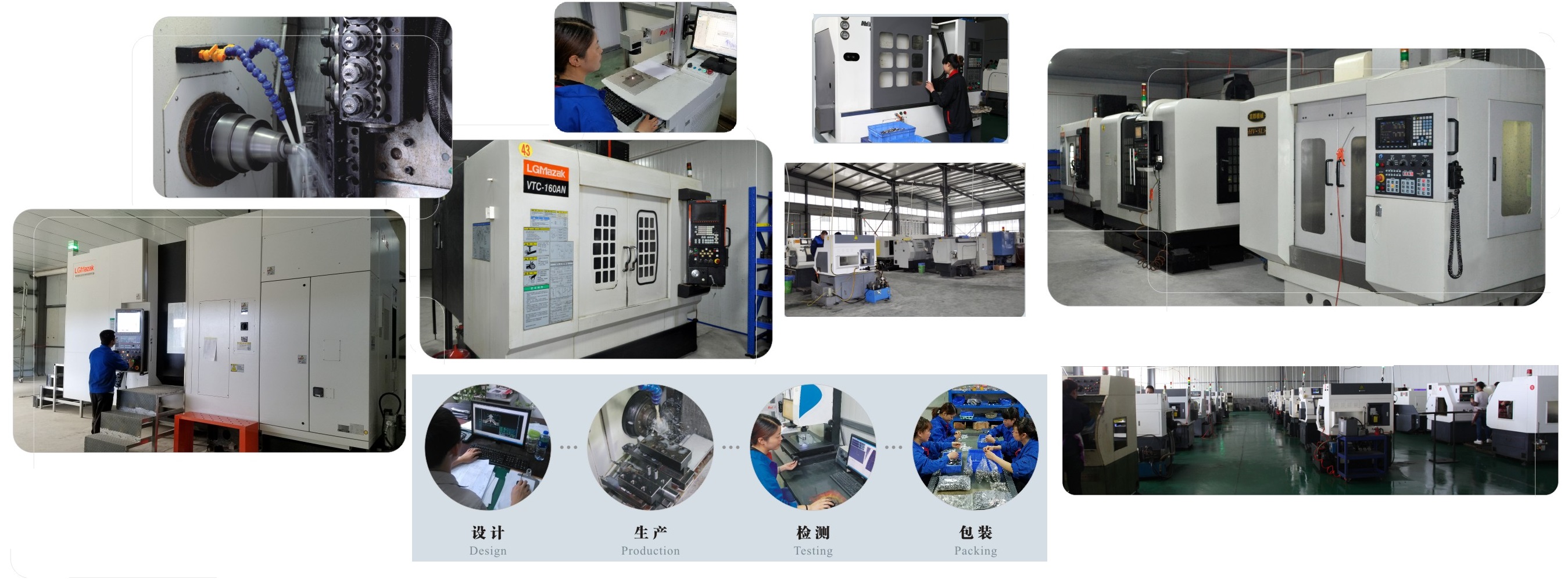
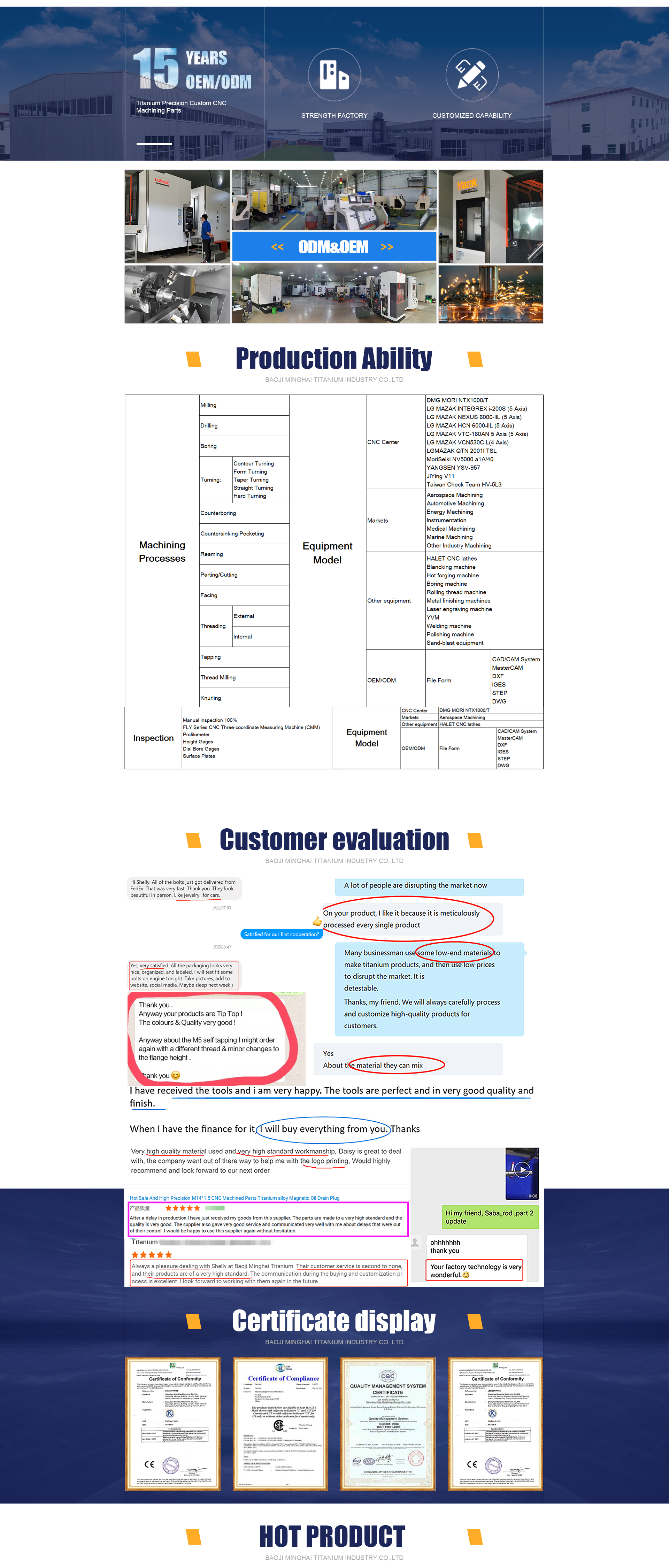
Advanced 34-Unit CNC Fleet
Our workshop floor houses 34 multi-axis (3-axis, 4-axis, and 5-axis) CNC turning and machining centers. We maintain rigorous production tolerances down to ±0.005 mm across custom non-standard hex flange head bolts, aerospace studs, and custom valvetrain components.
Veteran Metallurgical Workforce
Precision machining of titanium alloys requires specialized mastery of thermal management, feed speeds, and carbide tool geometries. Over 50% of our frontline technicians and machining foremen possess more than 13 years of hands-on titanium fabrication expertise.
Sponge-to-Part Traceability
Quality begins at the metallurgical source. Every batch of titanium material entering our factory undergoes chemical spectrometry, ultrasonic non-destructive flaw detection, and tensile verification. Complete Mill Test Reports (MTR) are retained and supplied with every B2B delivery.
Verified Factory Infrastructure & Production Workshop
Direct photographic verification of our Baoji production machinery, testing facilities, and comprehensive quality dossier:

Frequently Asked Questions for B2B Titanium Hex Bolt Sourcing
Straightforward answers addressing engineering parameters, torque settings, minimum quantities, and design-for-manufacturability (DFM) verification:
What torque values should be specified for Grade 5 Ti6Al4V hex bolts compared to steel?
How does your factory prevent thread galling during high-torque assembly?
What are your Minimum Order Quantities (MOQ) for custom OEM/ODM designs?
Can you manufacture non-standard head shapes and custom thread pitches?
What material certification and quality documentation do you provide?
How does titanium react in contact with carbon fiber reinforced polymers (CFRP)?
What is your typical turnaround time from CAD drawing to prototype delivery?
Ready to Upgrade Your Fastener Assemblies?
Upload your engineering drawings, request certified material test reports, or download our complete titanium fastener product specifications catalog today. Our Baoji engineering team reviews and responds to all technical RFQs within 9 business hours.
Get Catalog