Wheel Hardware
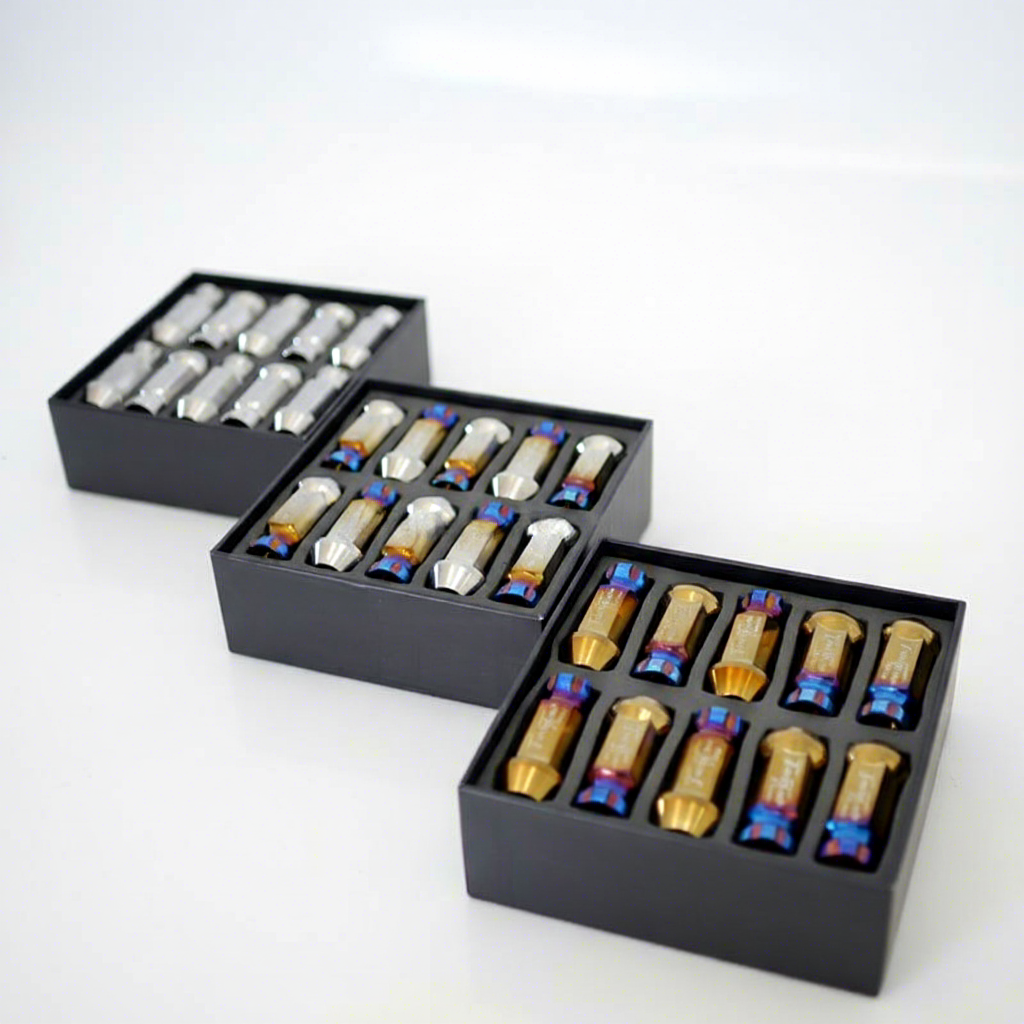
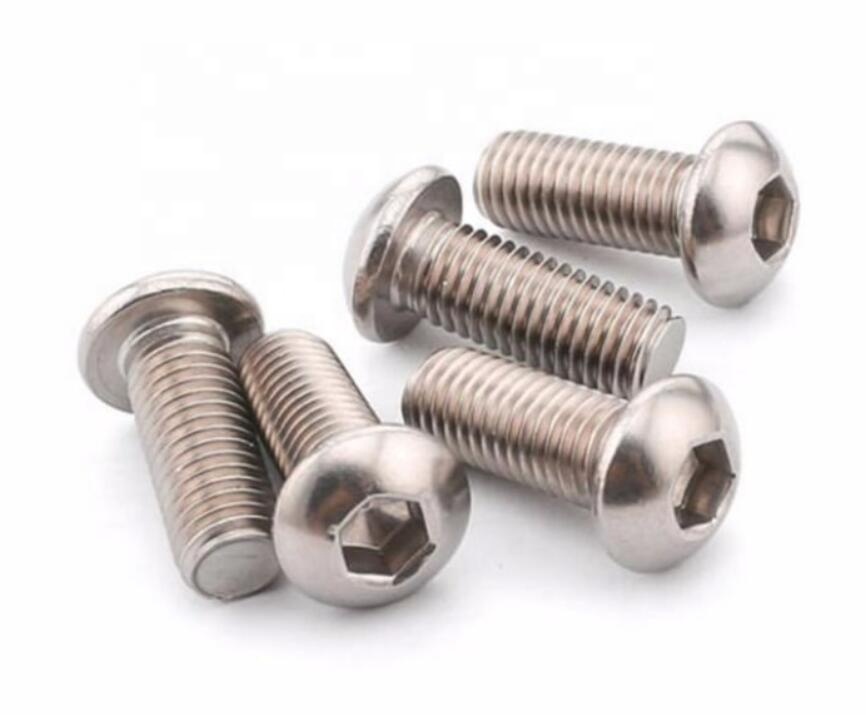
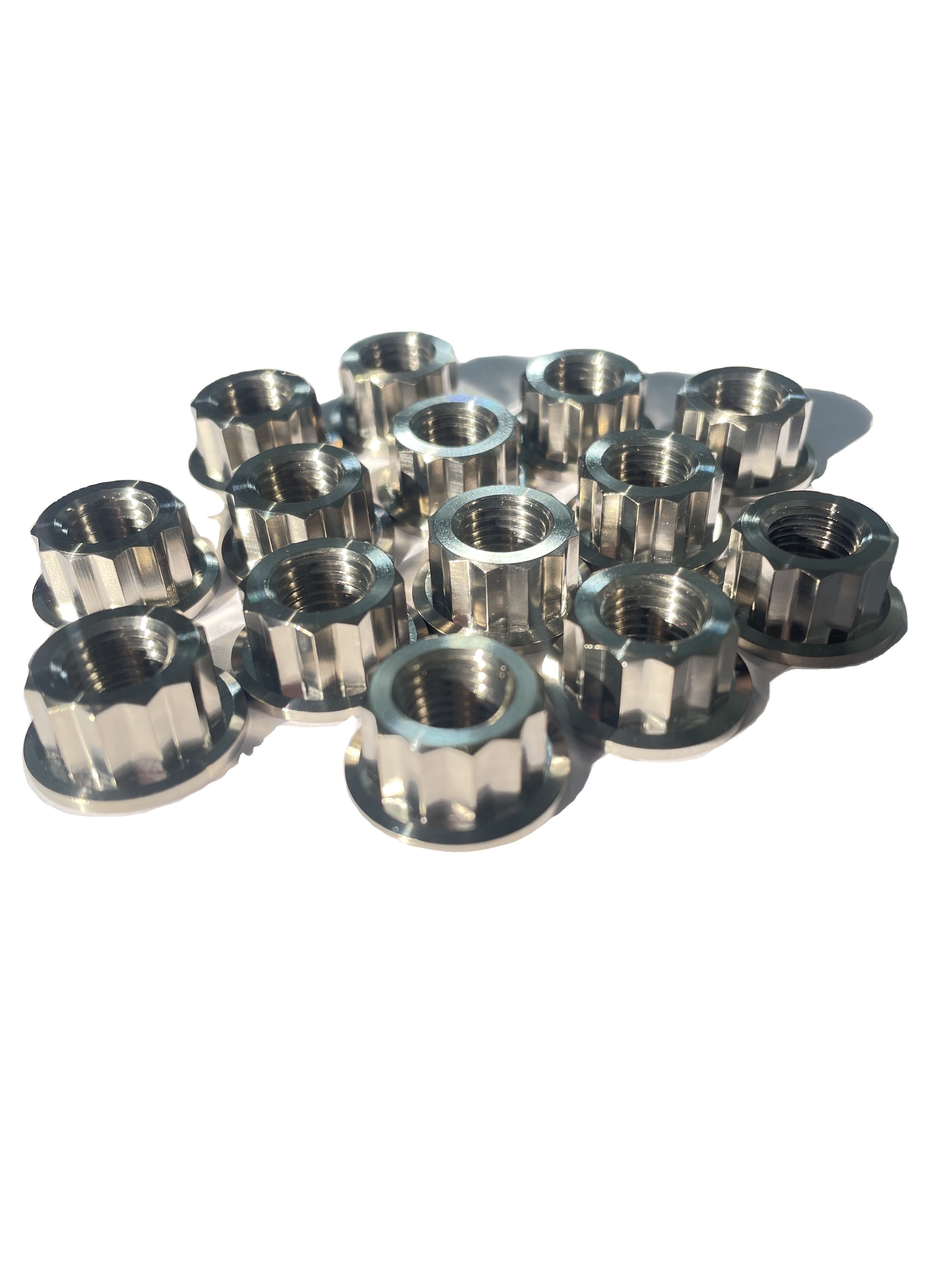
Factory Supply Gr5 Ti6AI4V M14 X 1.5 8mm Hole Right Hand Thread Titanium Hex Anodized Wheel Nuts for Racing Car Modification
- Grade: ASTM B348 Gr5 (TC4)
- Tensile Strength: ≥ 895 MPa
Manufactured to critical engine-bay tolerances (down to 0.005 mm) using aerospace-certified Ti6Al4V alloy. Designed for extreme shear resistance, thermal stability, and weight reduction.
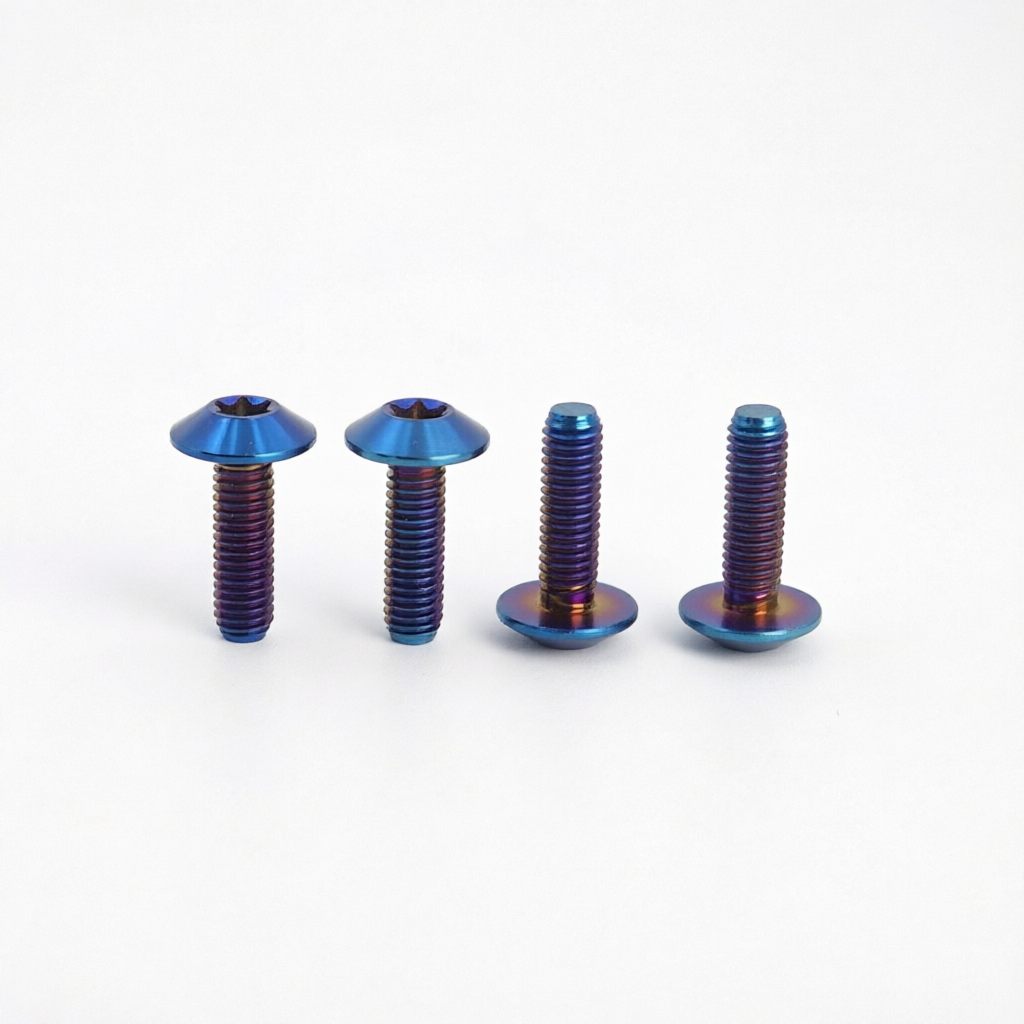
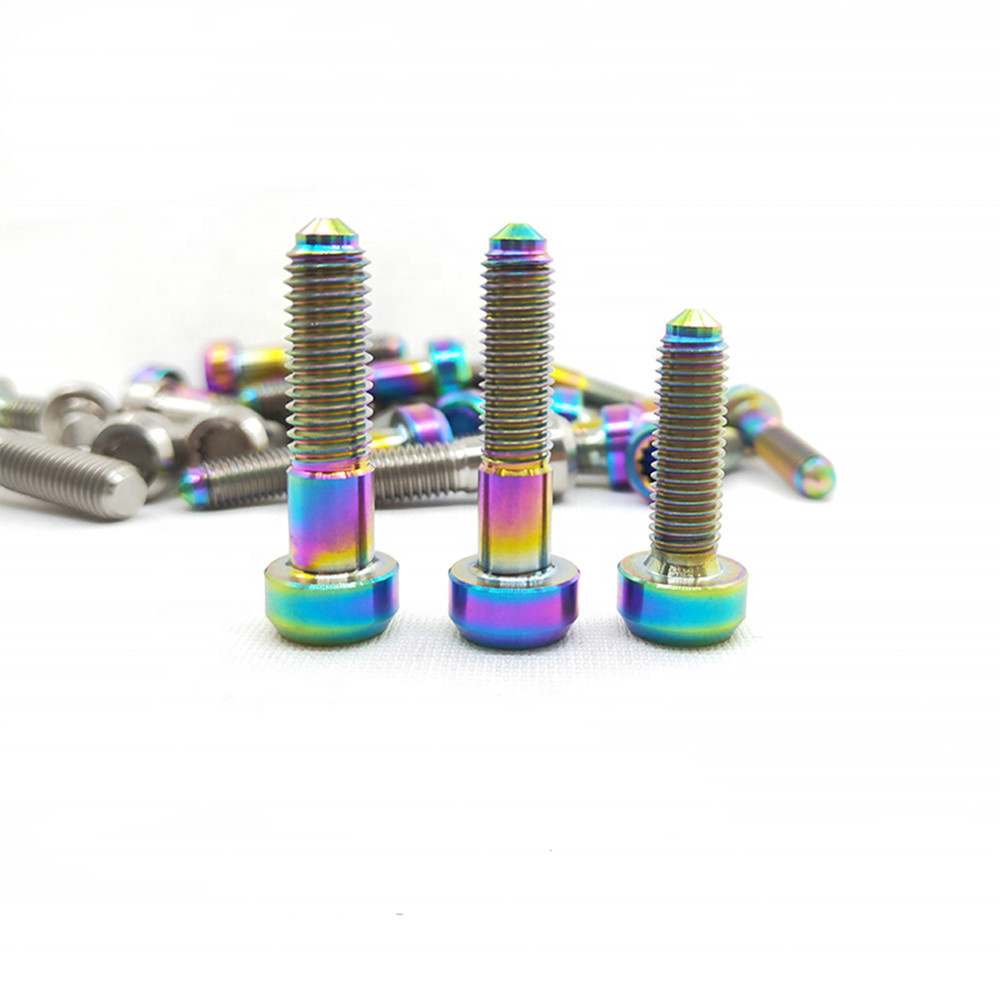
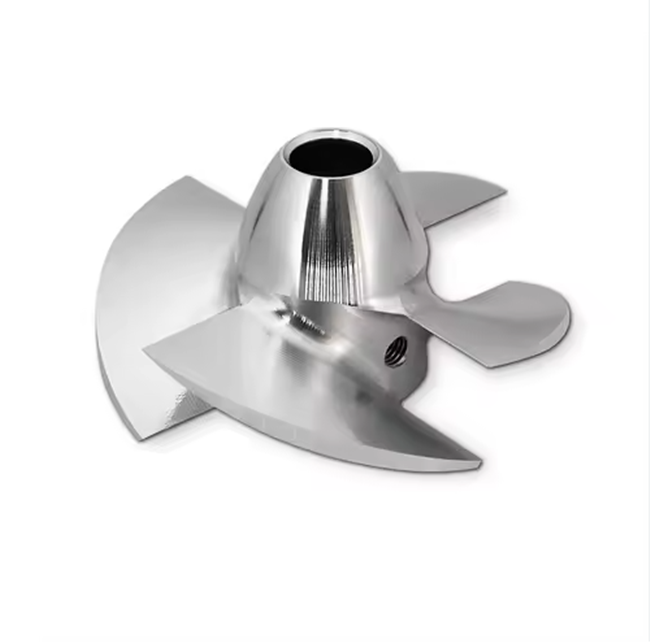
Industrial Pioneer
3/4/5-Axis CNC Centers
Machining Tolerance
Engineering Feedback
In forced-induction internal combustion engines and high-revving motorsport powertrains, cylinder pressures frequently exceed 220 bar, paired with cyclical thermal oscillations from ambient cold-starts up to 950°C along exhaust manifolds and turbocharger mounts. Standard Grade 8.8 and 10.9 structural steel fasteners face thermal embrittlement, catastrophic galling, and rotational inertia drag. Grade 5 Titanium (Ti-6Al-4V / ASTM B348 TC4) provides an ultimate tensile strength exceeding 895 MPa while cutting structural mass by 44% (density: 4.43 g/cm³ compared to steel’s 7.85 g/cm³).
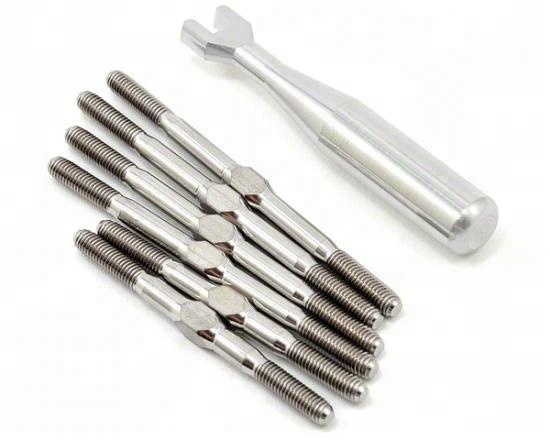
Engine rotating and oscillating assemblies—such as connecting rod hardware, valve spring retainers, flywheel bolts, and cam sprocket studs—benefit drastically from this mass reduction. Reducing parasitic rotational inertia diminishes reciprocating mass, granting instantaneous throttle responsiveness and decreasing torsional stresses transferred to the crankshaft journal bearings. Furthermore, with an elastic modulus around 110 GPa (nearly half that of alloy steel), titanium engine bolts exhibit superior elastic energy absorption under dynamic clamping loads, dampening harmonic vibrations and preserving gasket seal integrity across sustained thermal duty cycles.
| Material Designation | Yield Strength (MPa) | Tensile Strength (MPa) | Density (g/cm³) | Thermal Expansion (×10⁻⁶/K) | Fatigue Endurance Ratio |
|---|---|---|---|---|---|
| Titanium Grade 5 (Ti-6Al-4V Annealed) | 828 | 895 - 1000 | 4.43 | 8.6 | 0.55 (High) |
| Titanium Grade 23 (ELI Ti-6Al-4V) | 795 | 860 | 4.43 | 8.6 | 0.60 (Extreme) |
| High-Tensile Alloy Steel (Grade 10.9) | 900 | 1040 | 7.85 | 11.7 | 0.40 (Moderate) |
| Stainless Steel 316 (Marine Grade) | 290 | 580 | 8.00 | 16.0 | 0.30 (Low) |
How global motorsport syndicates, marine powertrain builders, and hypercar OEM suppliers are recalibrating their bill of materials for 2025–2030.
Traditional raw titanium threads are susceptible to contact micro-friction galling during high-torque dry assembly. Modern procurement demands Physical Vapor Deposition (PVD) Titanium Nitride (TiN), Diamond-Like Carbon (DLC), and Silver Plating, reducing friction coefficients below 0.15 and ensuring repeatable torque-to-clamp preload accuracy over dozens of engine tear-downs.
Engineers are eliminating cut-thread hardware for critical rotating engine mounts. The prevailing procurement standard requires cold/warm thread rolling under CNC optical surveillance. Rolling reorganizes the titanium grain boundary continuously along thread roots rather than cutting fibers, multiplying notch fatigue lifespan by up to 340%.
Aerospace and competitive motorsport entities now mandate absolute single-batch metallurgical tracking. The supply chain has shifted toward verified tier-1 hubs like Baoji, where certified vacuum arc remelt (VAR) ingots are tracked via optical spectrometer analysis with accompanying EN 10204 3.1 chemical inspection certificates.
Titanium is notorious for low thermal conductivity (approx. 6.7 W/m•K), causing localized heat retention at the cutting edge and inducing severe work hardening during machining operations. Historically, this forced high production cycle times and rapid tool wear, limiting titanium fasteners to high-cost Formula 1 applications.
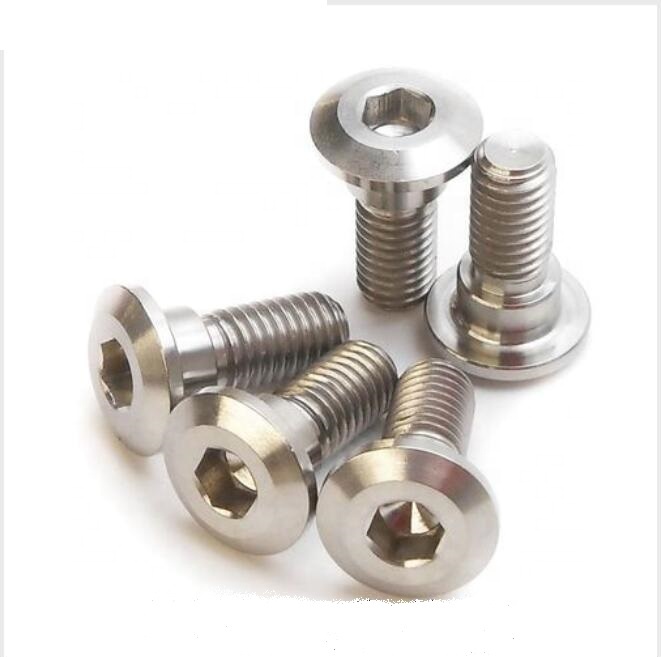
Today, our facility uses state-of-the-art multi-axis CNC turn-mill machining centers integrated with high-pressure internal coolant delivery (over 70 bar) and dynamic carbide-ceramic endmills. Complex fastener architectures—such as lightening pocketed disc heads, internal 12-point multi-spline drives, and hollow core lightweight race bolts—are machined in single-setup cycles. This ensures thread-to-shank concentricity tolerances under 0.005 mm, preventing localized shear fatigue failure when clamping cylinder heads, crankcases, or turbo manifolds.
Founded in 2008 and situated in Baoji, Shaanxi—adjacent to the industrial base of Baoti Group—Vunza Titanium Industry Co., Ltd. operates a full-spectrum precision manufacturing plant. We integrate titanium engineering, custom CNC turning, multi-axis milling, thread forming, and surface treatment.

Direct answers for automotive design engineers, motorsport team procurement officers, and tier distributors.