DIN Standard
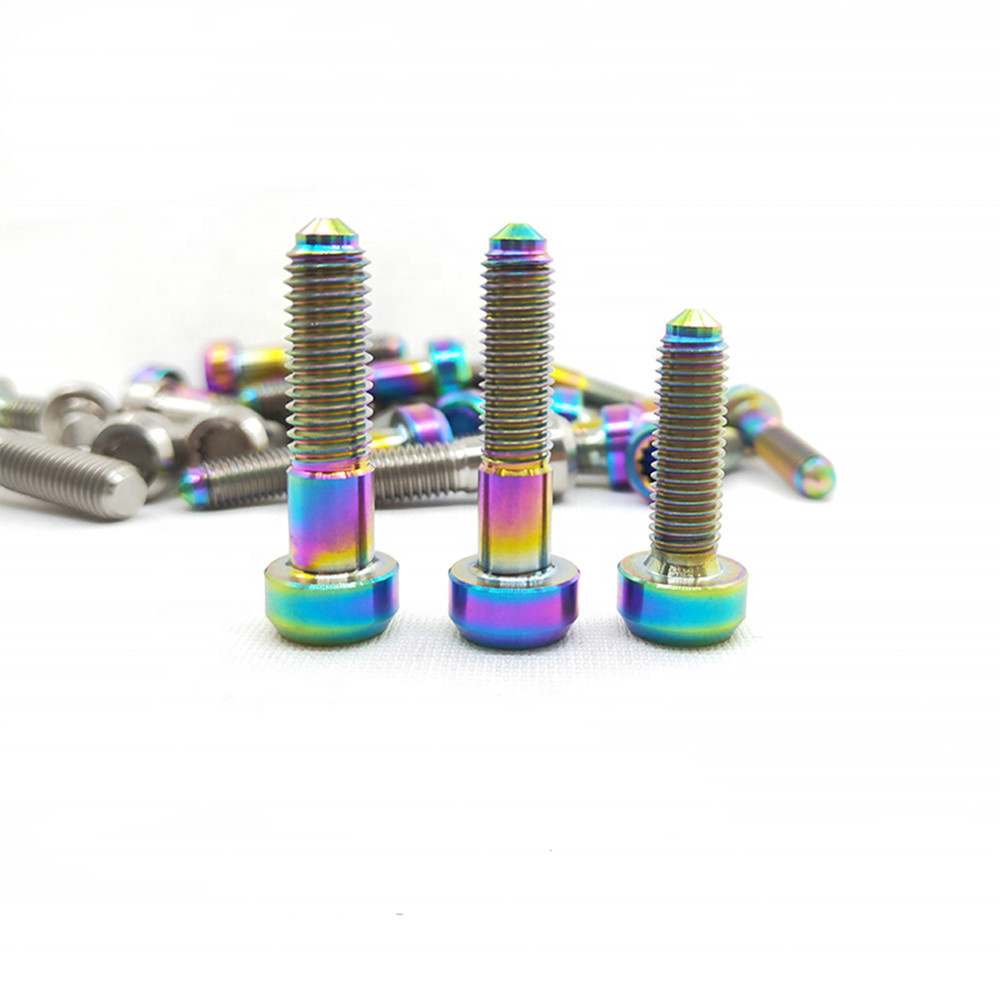
Direct manufacturer supply engineered for motorsport, marine, aerospace, and critical mechanical assemblies with full raw material traceability and multi-axis CNC repeatability.
An in-depth metallurgical analysis for mechanical engineers, structural procurement leads, and automotive racing technical directors.
Titanium socket head cap screws (DIN 912 / ISO 4762 equivalent) provide an unmatched strength-to-weight ratio in mission-critical applications where high clamping force, structural fatigue endurance, and harsh environmental resistance intersect. Fabricated predominantly from alpha-beta Ti-6Al-4V (Grade 5, UNS R56400) and commercially pure Grade 2 titanium, these fasteners achieve yield strengths exceeding 828 MPa while weighing approximately 44% less than medium-carbon alloy steel Class 10.9 counterparts.
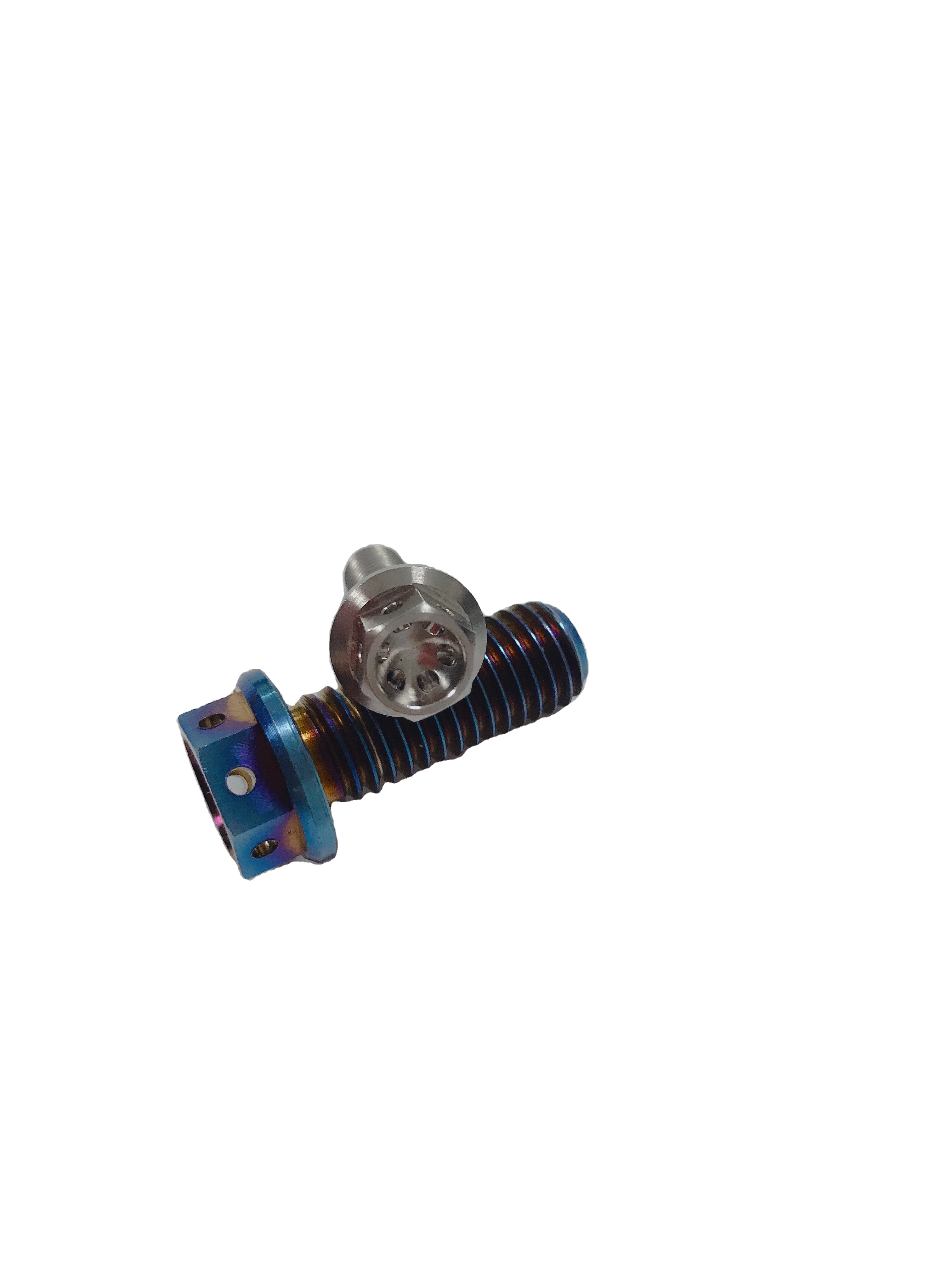
A crucial technical failure point in titanium socket cap screws is socket stripping (cam-out) during torque wrench preloading. In conventional machining, broaching or milling internal hexagonal sockets into titanium bar stock creates micro-fissures and stress-concentration corners due to low thermal conductivity and severe tool galling. Our advanced manufacturing methodology pairs cold head forming with precision CNC 5-axis finish profiling. By maintaining continuous metallurgical grain flow around the hex socket perimeter, internal torsional fatigue resistance increases by up to 34% compared to standard cut-socket hardware.
Furthermore, thread processing directly dictates cycle-to-failure lifespans under dynamic vibrations. Threads are strictly manufactured via thread rolling post-heat-treatment rather than cutting. Thread rolling induces beneficial compressive residual stresses on the thread root radius, completely mitigating micro-crack initiation along the engagement zone under cyclic shear stress.
| Fastener Property | Ti-6Al-4V Grade 5 (Forged & Rolled) | 316L Stainless Steel (A4-80) | Alloy Steel (Class 10.9) |
|---|---|---|---|
| Density (g/cm³) | 4.43 (Ultra-Lightweight) | 8.00 | 7.85 |
| Tensile Strength (MPa) | ≥ 895 – 1050 | ≥ 800 | ≥ 1040 |
| Yield Strength (0.2% offset, MPa) | ≥ 828 – 950 | ≥ 600 | ≥ 940 |
| Shear Strength (MPa) | ≈ 620 | ≈ 480 | ≈ 650 |
| Corrosion Resistance (Chloride/Seawater) | Immune (Forms TiO₂ Passivation) | Moderate (Pitting Prone) | Severe Rust / Requires Plating |
| Magnetic Permeability (µr) | Non-Magnetic (1.00005) | Paramagnetic / Semi-Magnetic | Ferromagnetic |
Because titanium possesses a high coefficient of friction against other metals, untreated threads are subject to galling and thread-locking during high-torque assembly. To overcome this tribological vulnerability, our production introduces specialized physical vapor deposition (PVD), micro-arc oxidation (MAO), and vacuum nitride treatments:
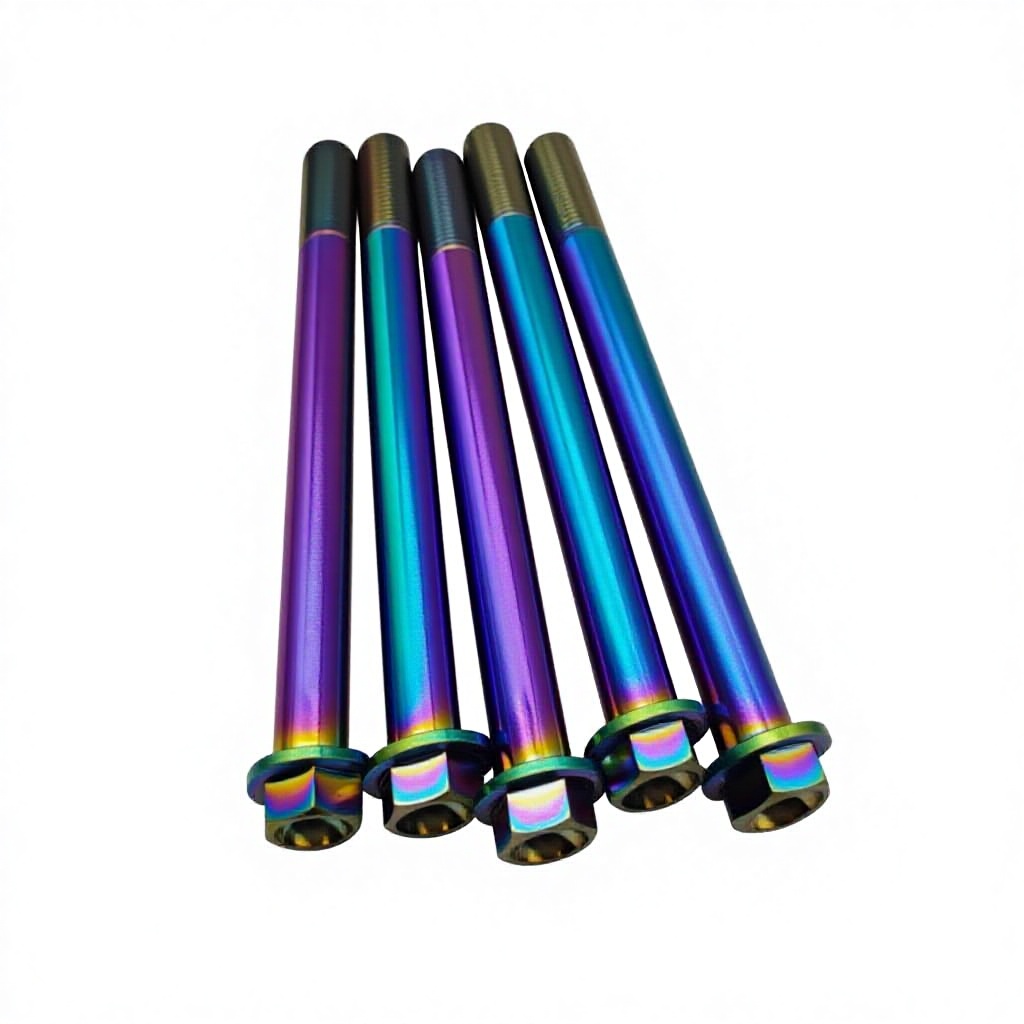
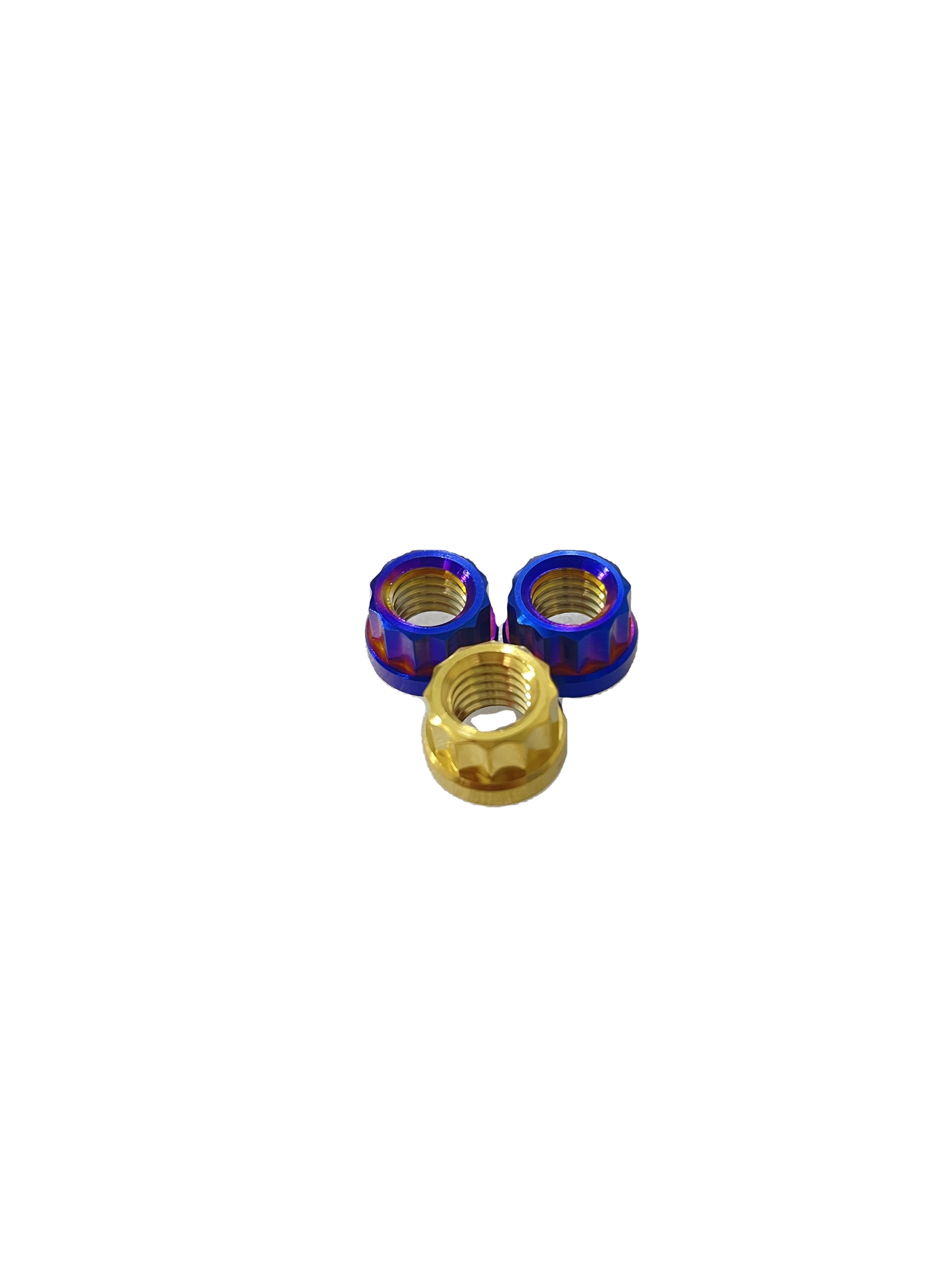
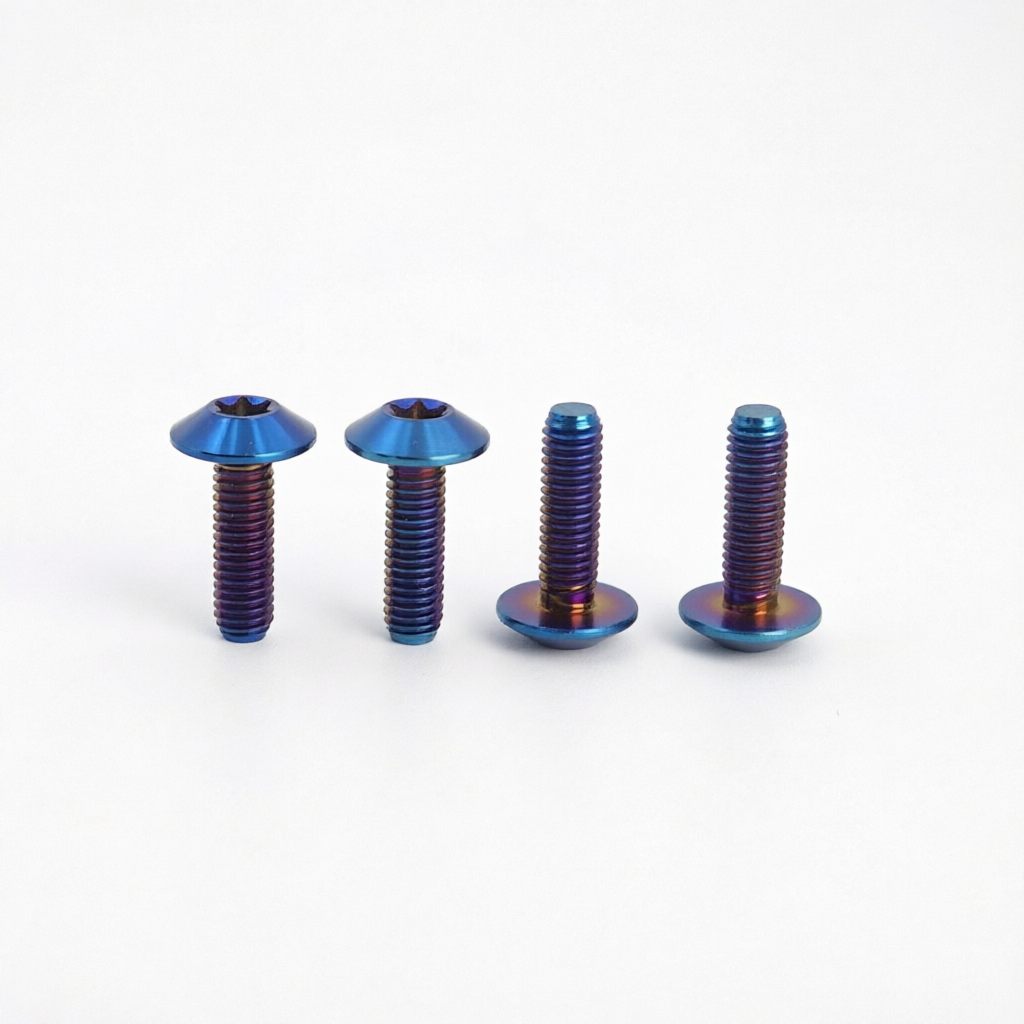
Physical Vapor Deposition (PVD) Titanium Nitride (TiN) & TiAlN: Imparts surface hardness exceeding 2200 HV, offering durable aesthetic coloration (burnt blue, gold, rainbow, gloss black) alongside a drastic reduction in the thread friction coefficient (down to µ = 0.12 with dry molybdenum disulphide or copper-paste lubrication).
How the global migration toward lightweighting, clean energy, and additive-subtractive hybrid supply chains is reshaping the titanium fastener market.
Global aerospace OEMs and EV hypercar developers are aggressively swapping stainless steel socket hardware for Grade 5 and Grade 9 titanium. Saving 1.2 kg on rotating un-sprung chassis assemblies yields exponential improvements in brake thermal dissipation, battery range, and handling dynamics. Forward-looking procurement models now demand integrated lifecycle weight optimization rather than initial unit-cost calculations.
Driven by strict tier-1 automotive and aerospace supplier standards, procurement contracts now mandate complete 3.1 chemical and mechanical inspection certificates verifying raw material origins. Buyers reject blind distributors in favor of manufacturing hubs positioned adjacent to primary reduction facilities—ensuring Ti sponge chemistry, gas pore porosity, and interstitial oxygen levels remain fully audited.
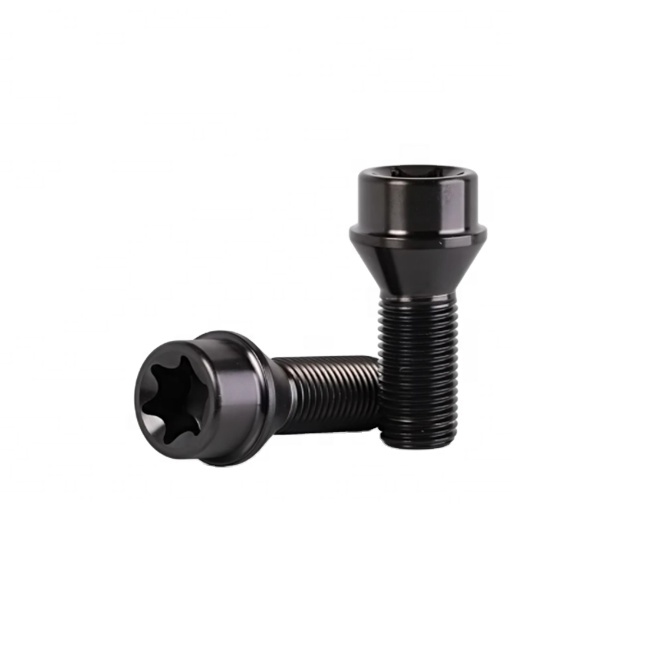
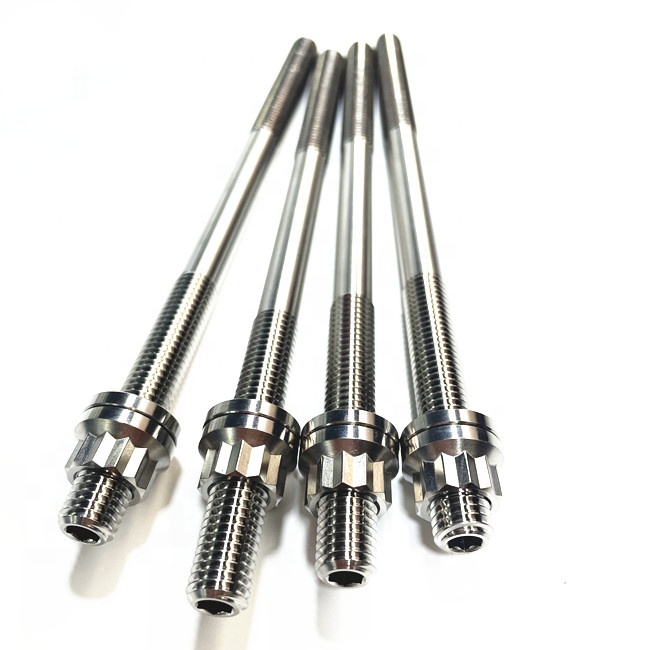
While traditional DIN 912 internal hex socket drives remain common, procurement contracts for high-vibration assemblies are accelerating toward Torx (Star) and 12-point bi-hex head geometries. Torx drives support 25% higher tightening torque without head deformation, permitting faster automated assembly line cycles, zero cam-out slippage, and significant weight savings via scalloped flange designs.
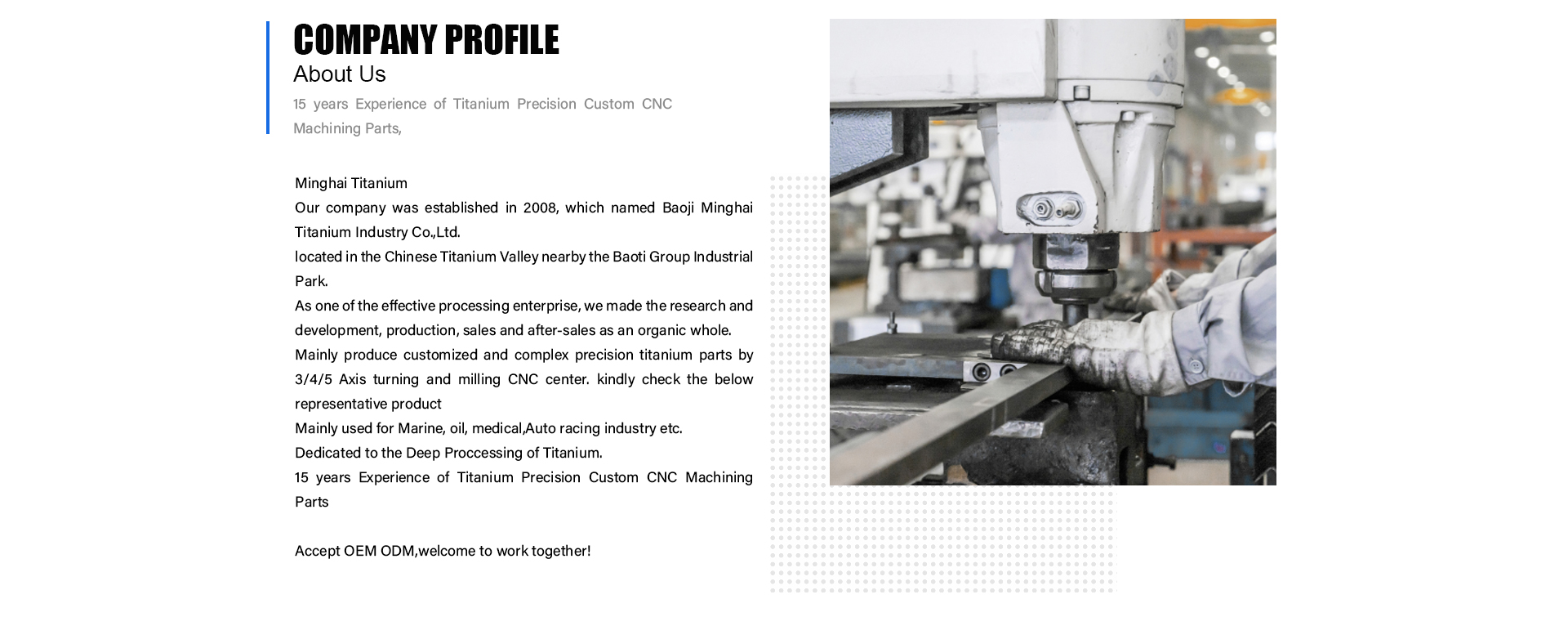
Located in the Gaoya Village Industrial Zone adjacent to the Baoti Group Industrial Park, our manufacturing facility benefits from complete regional vertical integration across sponge reduction, vacuum arc remelting (VAR), precision wire drawing, and multi-axis CNC machining.
Sponge to finished bolt without middlemen markups.
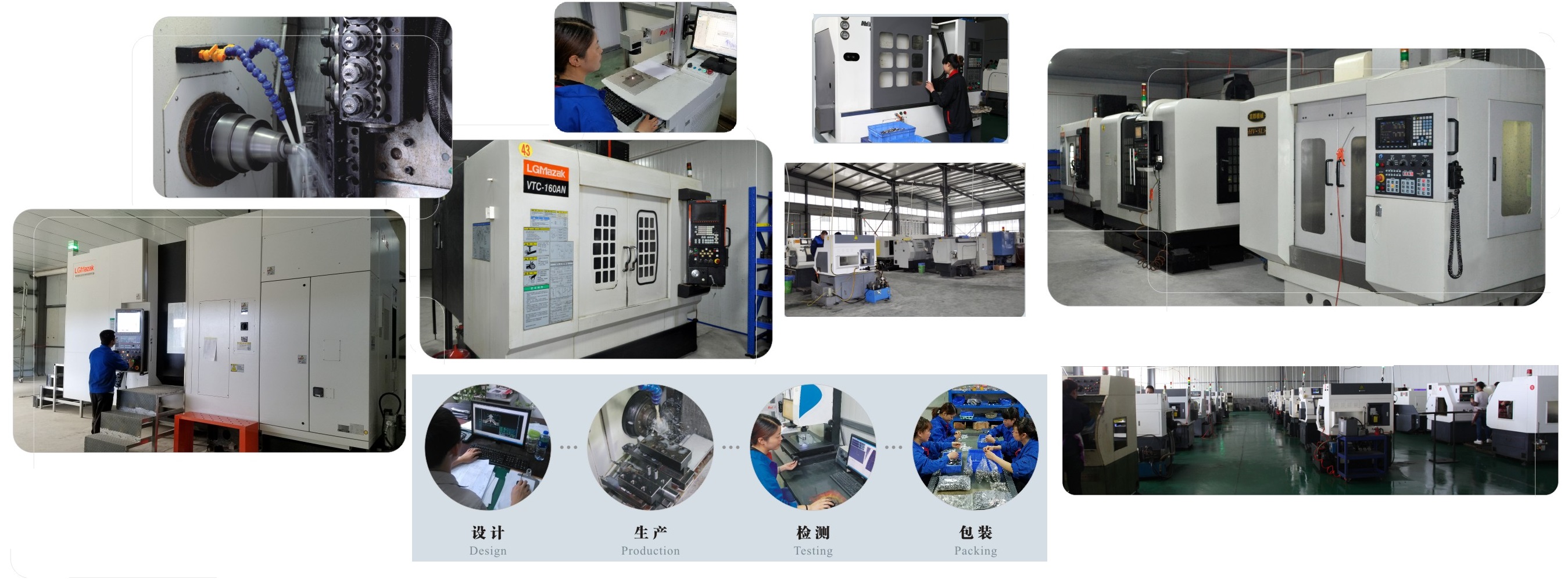
34 CNC centers holding micrometer tolerances to ±0.005mm.
Over 50% of technical staff possess 13+ years' tenure.
In-house tooling R&D with rapid sample production.

Essential guidance on thread geometry, tightening torque calculations, material certifications, and OEM manufacturing minimums.