Featured Performance Hardware & Titanium Assemblies
Factory-direct Ti-6Al-4V Grade 5 fasteners, studs, and components manufactured with 0.005 mm CNC accuracy for top-tier motorsports and motorsport mechanics worldwide.
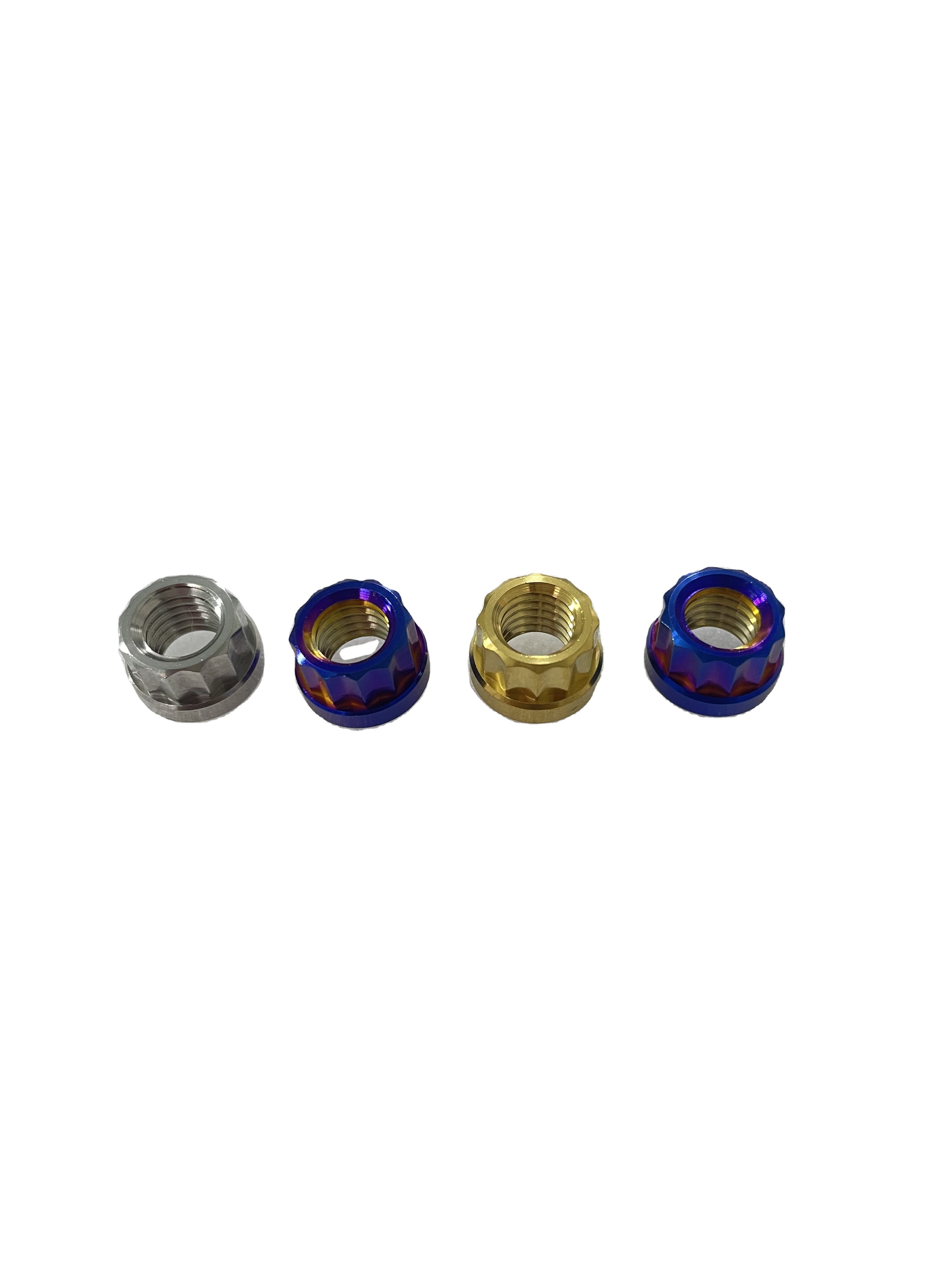
Polished Gr5 Titanium 12 Point Flange Nut M10X1.25 for Automotive Racing
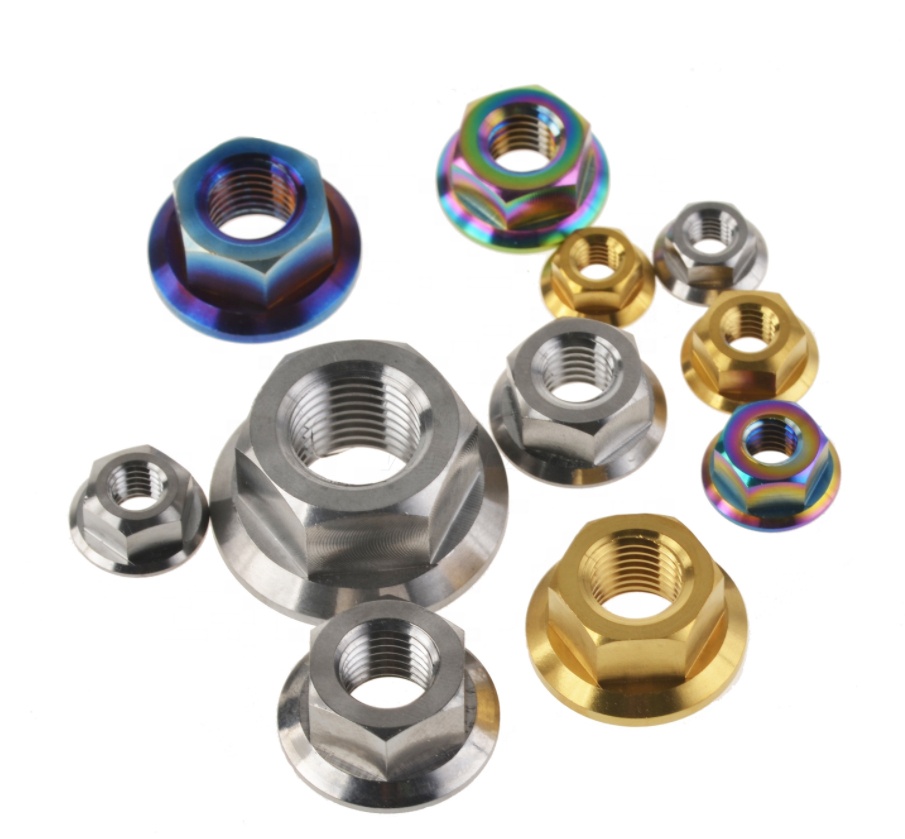
M6 M8 M10 M12 GR5 CNC Machined Polished PVD Nitride Anodized Serrated Hexagonal Flange Nut DIN6923 Automotive Minghai Brand
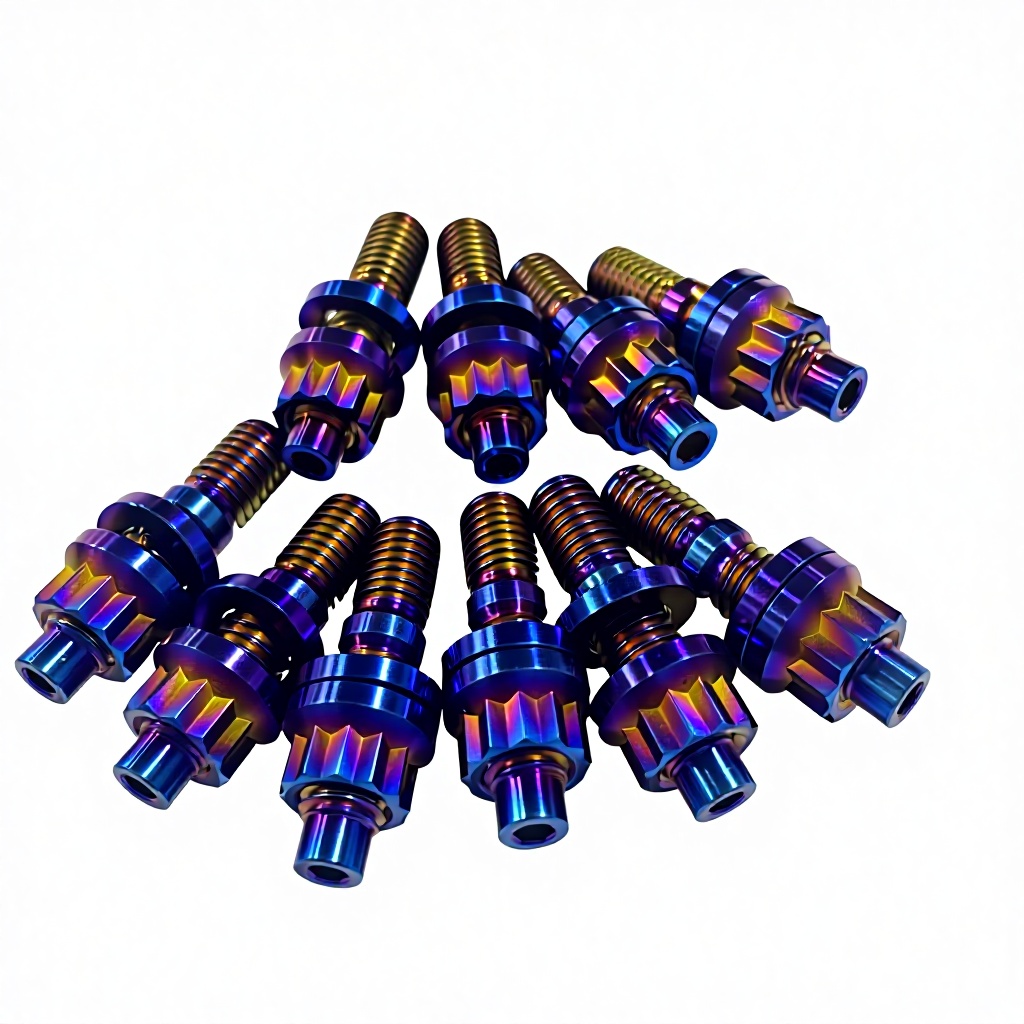
Minghai MH-001 Titanium Grade 5 PVD Finish 12 Point Standard Thread Exhaust Manifold Stud Kit M8 X 1.25 Studs Nuts Washers
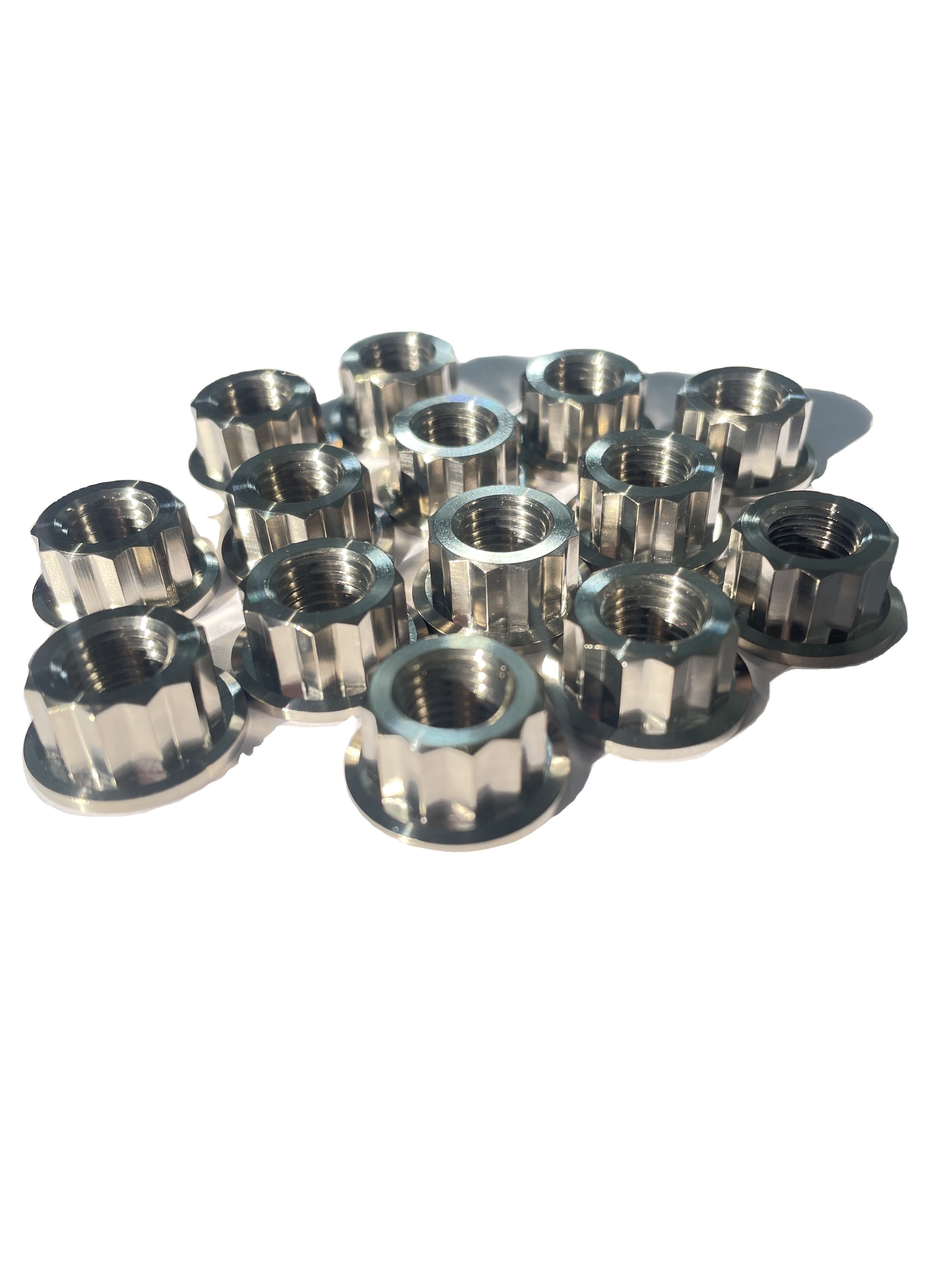
Factory Wholesale Polished CNC Machined Gr5 Titanium Alloy Bolts 12 Points Hex Flange Nuts for Motorcycle Racing DIN GB Standard
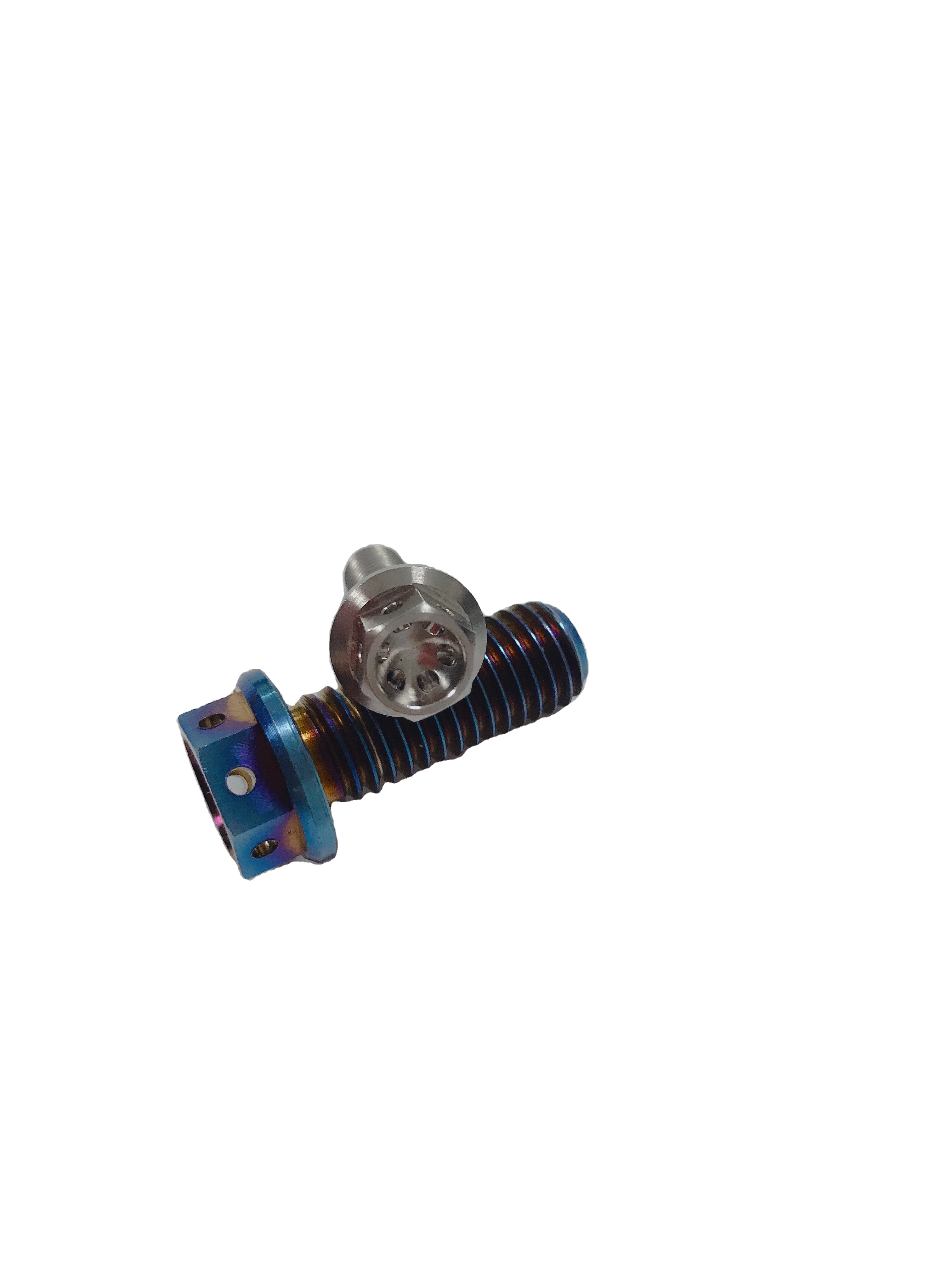
M6x30 M6x35 GR5 Grade Hex Head Titanium Wheel Flange Bolts for Motorcycle
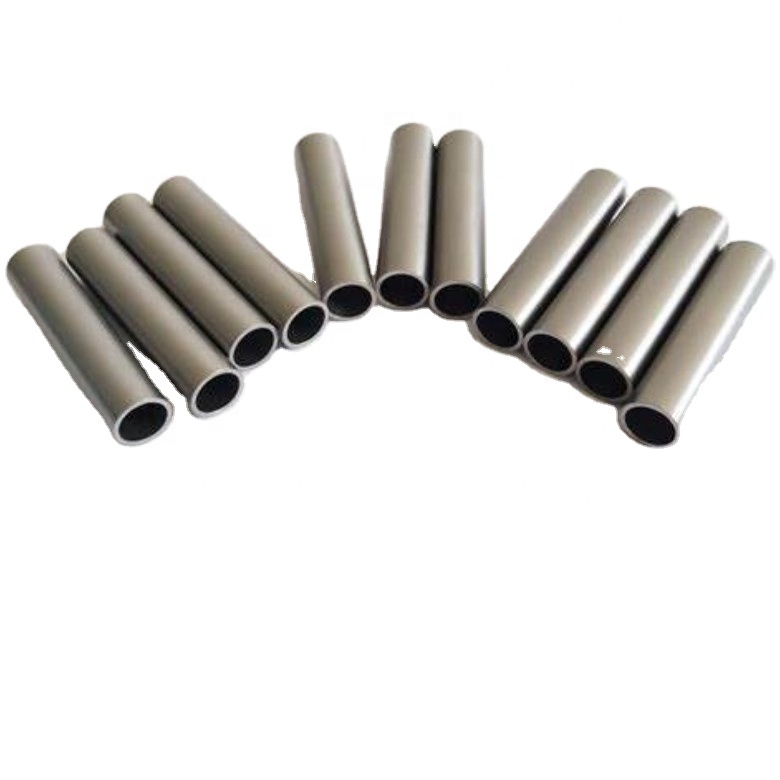
Best Price Titanium Tube High Quality Pure
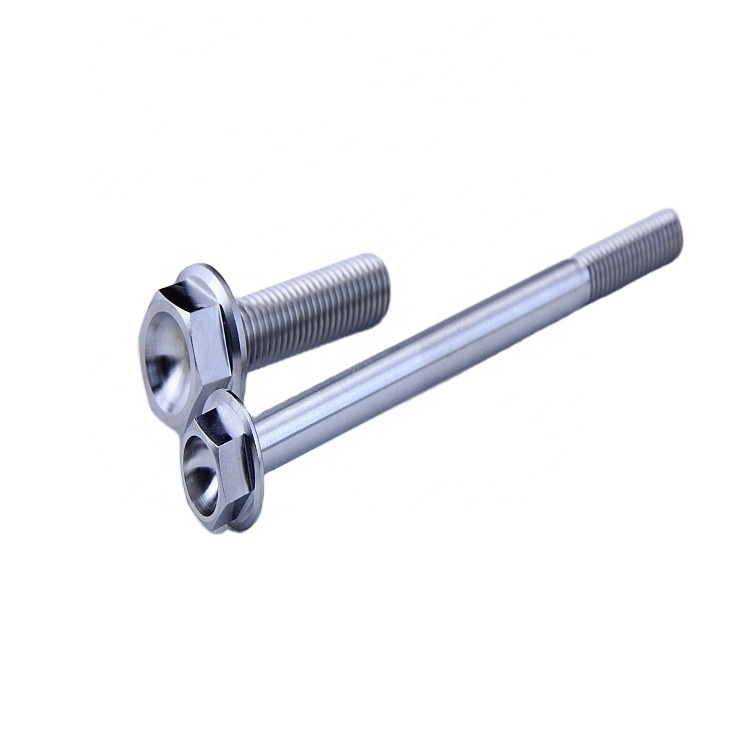
High Precision GR5 Grade Titanium Alloy Racing Motorcycle Bolts PVD Finish Customized Size Minghai MH-15488 TORX Head 1.25/1.5
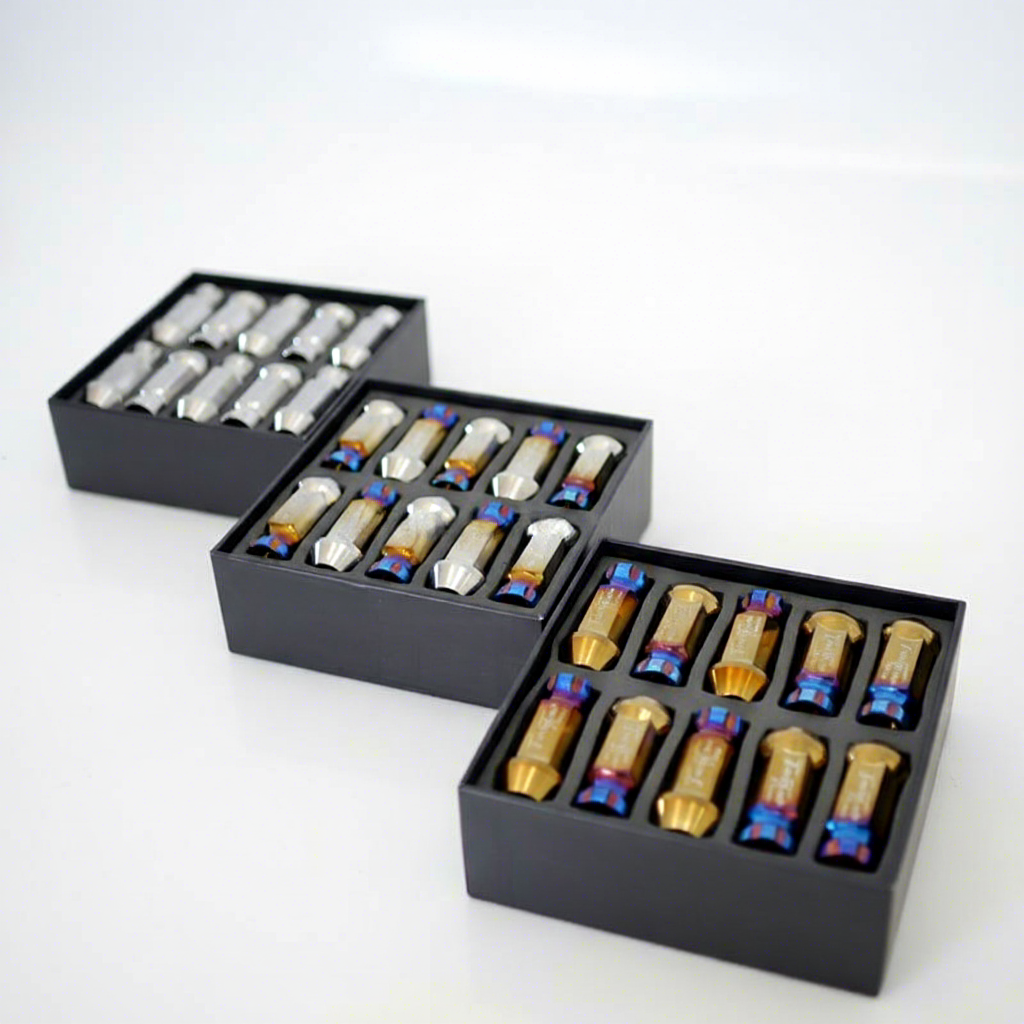
Factory Supply Gr5 Ti6AI4V M14 X 1.5 8mm Hole Right Hand Thread Titanium Hex Anodized Wheel Nuts for Racing Car Modification
Physics & Kinematics of Titanium Sprint Car Brake Rotors
In high-stakes dirt track sprint car racing, 410 winged outlaw competition, and custom lightweight speed-trial machinery, braking efficiency is governed strictly by the mitigation of unsprung rotating mass and the stabilization of cyclic friction coefficients. Conventional gray cast iron and ductile carbon-steel rotors—while ubiquitous in commuter braking systems—impose a crippling rotational inertia penalty on competitive sprint car axles. When approaching heavy track corners under rapid deceleration, rotating mass directly governs corner entry agility and subsequent acceleration out of the apex.
Vunza Titanium Industry Co., Ltd. manufactures CE certified sprint car titanium brake rotors forged exclusively from vacuum-arc remelted (VAR) Ti-6Al-4V Grade 5 (UNS R56400 / Chinese TC4). Grade 5 titanium delivers an extraordinary specific strength of approximately 200 kN·m/kg, compared to merely 31 kN·m/kg for traditional Class 30 gray iron and 50 kN·m/kg for quenched AISI 1045 steel. By reducing the physical mass of the left-front and inboard rear brake rotors by upwards of 42% to 47%, the rotational moment of inertia ($I = \frac{1}{2} m (r_1^2 + r_2^2)$) drops substantially, translating directly into shorter pedal application response times, diminished gyroscopic wheel resistance, and enhanced directional compliance under full steering lock.
Metallurgical Comparison: Ti-6Al-4V Grade 5 vs. Traditional Rotor Metals
| Material Specification | Density (g/cm³) | Tensile Strength (MPa) | Yield Strength (MPa) | Thermal Expansion (×10⁻⁶/K) | Weight Savings per Rotor |
|---|---|---|---|---|---|
| Ti-6Al-4V Grade 5 (Annealed / CNC) | 4.43 | ≥ 895 – 950 | ≥ 828 | 8.6 | Baseline (44% - 47% lighter) |
| Class 30 Gray Cast Iron | 7.20 | 214 | 140 | 11.0 | 0% (Standard Benchmark) |
| AISI 4140 High-Tensile Steel | 7.85 | 655 – 750 | 415 | 12.2 | -8.9% (Heavier than Iron) |
| 6061-T6 Aluminum (Brake Hats Only) | 2.70 | 310 | 276 | 23.2 | Unsuitable for Rotor Friction Ring |
CE Certification & Safety Traceability for Global Export
Procuring structural racing components demands strict compliance with international mechanical directives. Our titanium brake rotors and complementary race fasteners comply comprehensively with the Essential Health and Safety Requirements (EHSR) outlined under the European Union Machinery Directive 2006/42/EC and EN ISO 12100:2010 safety standards. Unlike uncertified aftermarket disc suppliers that machine raw bar stock of uncertain pedigree, Vunza Titanium maintains closed-loop metallurgical provenance spanning from the initial titanium sponge batch to final multi-axis CNC surface profiling in our Baoji industrial plant.
Every export consignment destined for international hubs—including specialized vehicle engineering workshops operating through George Town—is issued with an authentic EN 10204 Type 3.1 Inspection Certificate. This documentation guarantees exact spectroscopic verification of interstitial chemical elements (Oxygen ≤ 0.20%, Nitrogen ≤ 0.05%, Carbon ≤ 0.08%, Hydrogen ≤ 0.015%, and Iron ≤ 0.40%). Routine manufacturing evaluations include immersion ultrasonic non-destructive testing (NDT) to eliminate internal voids or micro-inclusions, dye-penetrant surface inspections to verify microscopic surface integrity, and coordinate measuring machine (CMM) dimensional audits guaranteeing parallel run-out tolerances within 0.005 mm across the entire friction surface.
Optimized Scalloped & Vented Geometry
Each rotor blank is sculptured via 5-axis CNC machining to incorporate directional heat-venting pockets and wave-profile perimeter scalloping. This maximizes surface cooling area, expels friction gas glaze instantly, and sheds rotating gram-weight without sacrificing radial tensile stiffness.
Surface Ceramic Micro-Hardening
To eliminate titanium-on-pad galling and equalize the coefficient of dynamic friction, our rotors undergo optional PVD thermal nitriding or thermal micro-arc ceramic oxidation (MAO). This creates an extreme surface hardness layer (>65 HRC) that prevents rotor scoring even during emergency locking maneuvers.
Sub-Zero Thermal Stress Relief
Post-machining processes integrate proprietary vacuum inert-gas heat treatment followed by cryogenic cycling. This neutralizes internal crystalline residual shear stresses generated during CNC milling, ensuring zero rotor warping when discs exceed 600°C during competitive track trials.
Strategic Relevance & Engineering Applications in the George Town Market
George Town functions as a primary maritime transshipment, engineering procurement, and luxury motorsports logistics conduit across the Caribbean basin and key international nautical-automotive racing corridors. Precision engineering firms, offshore speed-trial teams, and chassis builders operating within or sourcing through George Town face extreme environmental and logistical challenges.
Immunity to High-Salinity Tropical Oxidation
In George Town’s marine-adjacent environment, high ambient humidity (averaging 75%–85%) and airborne sea salt trigger instantaneous galvanic and crevice corrosion on conventional cast-iron and mild-steel brake rotors. Unpainted steel discs oxidize in a matter of days, seizing calipers and contaminating brake pads. Titanium generates an instantaneous, self-healing, passivated titanium oxide (TiO₂) film that provides absolute immunity to atmospheric chloride pitting, ensuring rotors remain in pristine competition condition whether resting in trackside transport containers or navigating damp salt-spray courses.
Hybrid Sprint & Marine Power-Trial Racing
The specialized motorsport market centered around George Town frequently intersects with high-performance marine powerboat turbine trials, sand drag sprint vehicles, and custom tubular track racing. These hyper-demanding platforms operate with zero margin for mechanical failure under continuous saltwater exposure. By implementing Vunza’s Grade 5 titanium rotor blanks and mating titanium flange bolts, regional fabricators eliminate rust-induced pad dragging, preserve hydraulic seals from catastrophic overheating, and achieve a durable, corrosion-impervious assembly.
Streamlined Global Export Logistics & Free-Trade Routing
Vunza Titanium operates direct air and sea freight export corridors linking our Baoji production base directly to freight forwarders servicing George Town and broader Caribbean redistribution nodes. With all commercial export packages accompanied by CE conformity declarations, detailed HS code classifications (HS 8708.30 for vehicle brakes and HS 8108.90 for titanium articles), and tamper-evident vacuum packaging, regional importers avoid customs demurrage and clear border checks with zero regulatory friction.
Market Evolution & Titanium Adoption Trends in Regional Motorsports
Over the past five years, the high-performance vehicle modification and motorsport scene connected to George Town has shifted rapidly from off-the-shelf cast iron brake components toward specialized lightweight alloys. Multiple technical and economic drivers are accelerating this transition:
1. Stringent Weight Verification Standards: Modern competitive sanctioning bodies have refined minimum vehicle weight regulations. Racing crews now prioritize shedding rotating mass specifically on the axle line, transferring ballast strategically to the lower chassis frame to dramatically lower the center of gravity. Switching from a 3.8 kg iron brake rotor to a 2.1 kg Vunza titanium brake rotor delivers immediate dynamic gains that cannot be duplicated through chassis lightening alone.
2. Evolution of Sintered Pad Chemistry: Early racing attempts with titanium rotors during the late 1990s suffered from friction inconsistency due to pad incompatibility. Today, specialized sintered bronze and semi-metallic friction pads with ceramic binders form a stable transfer layer across Ti-6Al-4V friction rings. This delivers a flat torque curve, progressive initial bite, and predictable pedal modulation throughout 30-lap dirt main events.
3. Direct-from-Source Purchasing Models: Racing teams, independent mechanical workshops, and parts distributors in George Town are bypassing third-party western resellers. By engaging directly with Vunza Titanium’s primary manufacturing facility in China’s Titanium Valley, procurement managers secure custom-drilled bolt patterns (e.g., standard 3-bolt, 6-bolt, or direct-drive sprint splines) at true factory pricing, shortening lead times and accessing custom CNC laser-branding capabilities.
Why Professional Racing Constructors Rely on Vunza Titanium
Located in the Gaoya Village Industrial Zone in Baoji, Shaanxi—globally recognized as China’s Titanium Valley adjacent to the Baoti Group Industrial Park—Vunza Titanium Industry Co., Ltd. has developed high-precision titanium components since 2008. We do not operate as an intermediary broker; we are an engineering manufacturer integrating raw ingot processing, 5-axis CNC machining, PVD surface finishing, and destructive/non-destructive testing.
34 Multi-Axis CNC Machining Centers
Equipped with high-rigidity multi-axis milling and turning centers, we execute complex rotor cut-outs, lightening slots, and cross-drilling patterns in a single clamp setup, eliminating cumulative indexing run-out.
Veteran Machining Workforce
Over 50% of our production staff have dedicated more than 13 continuous years to titanium aerospace and racing hardware fabrication, bringing deep expertise in tool deflection compensation and titanium chip ignition control.
Engineering Support Within 9 Hours
Our rapid-response CAD/CAM engineering team evaluates incoming STP, DXF, or hand-measured custom rotor drawings within 9 business hours, providing DFM optimizations, weight modeling, and fixed quotes.
Frequently Asked Questions by George Town Importers & Teams
Key answers addressing technical specifications, brake pad bedding procedures, shipping timelines, and custom manufacturing parameters.
What specific brake pad compounds are compatible with titanium brake rotors?
How does Ti-6Al-4V Grade 5 handle thermal expansion compared to cast iron?
What is your minimum order quantity (MOQ) for custom sprint car brake rotors?
Can Vunza Titanium machine rotors to fit proprietary custom wheel hubs?
How are export shipments to George Town packaged to ensure zero transit damage?
What quality documentation is included with international export orders?
What is the typical production and delivery lead time for George Town orders?
Engineer Your Next Track Victory with Vunza Titanium
Submit your sprint car rotor specifications, CAD blueprints, or prototype concepts to our senior engineering team in Baoji. We evaluate material tolerances, run-out requirements, and provide direct factory quotes with comprehensive CE conformity documentation.