DIN / ISO Gr5
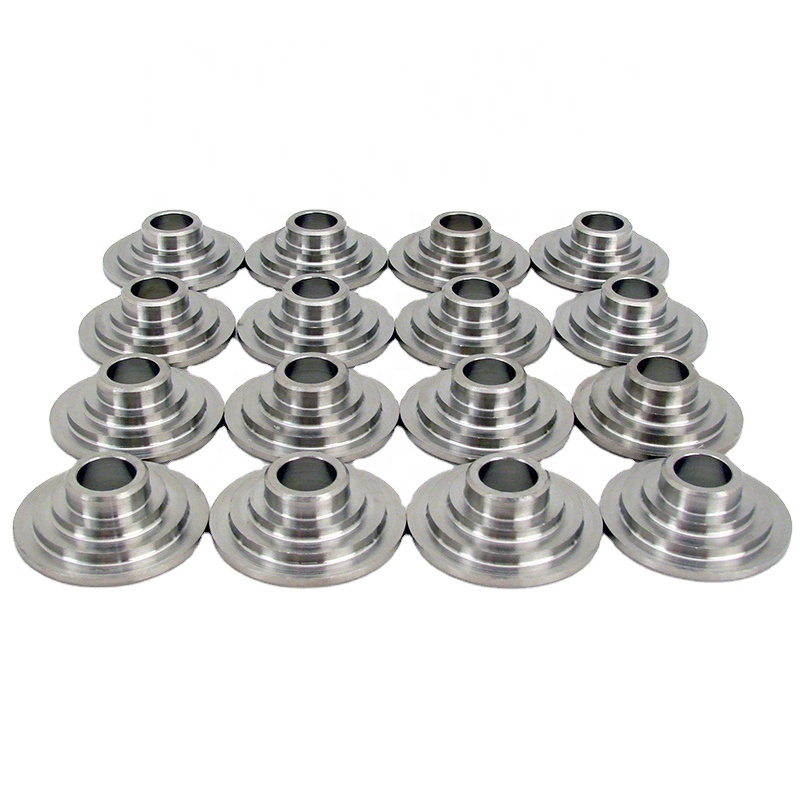
Direct from China's Titanium Valley (Baoji), our multi-axis CNC manufacturing facility delivers precision fasteners holding tolerances to 0.005 mm. Sourced with full material traceability from sponge to certified finished component.
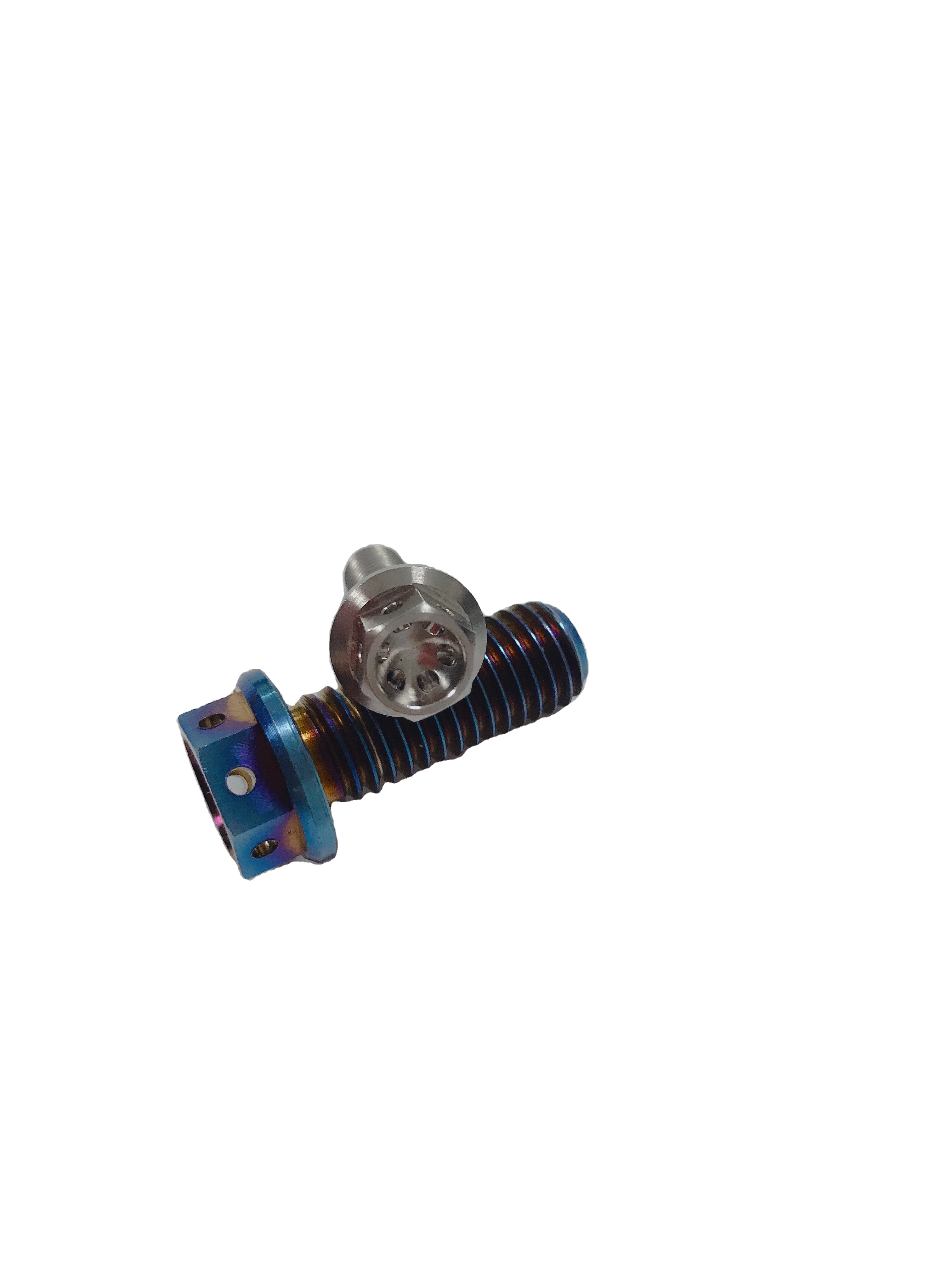
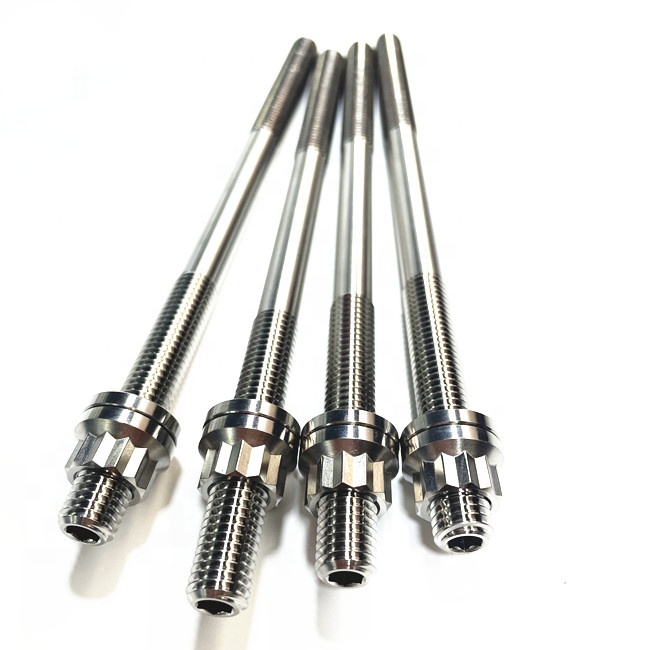
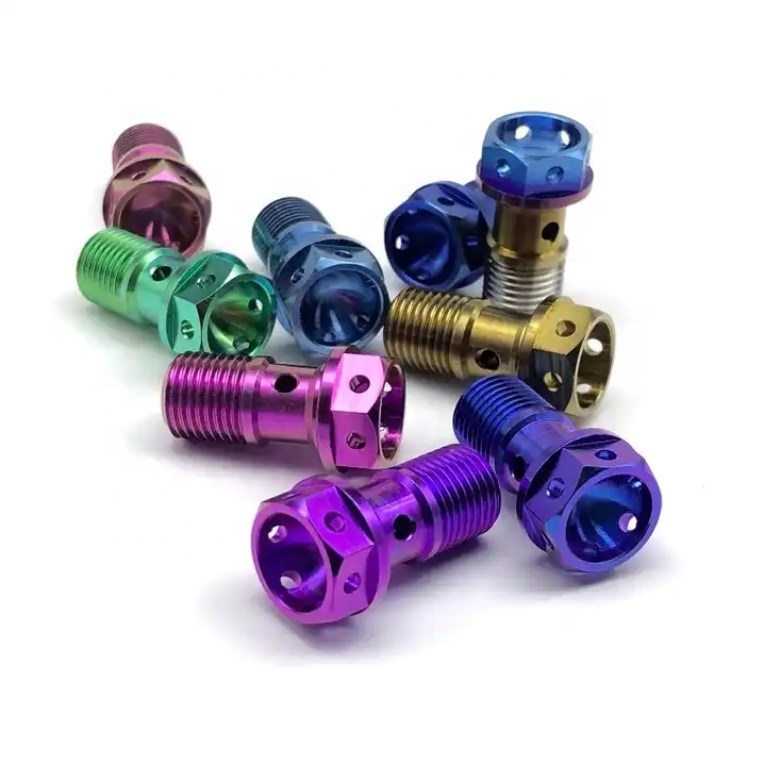
As the capital of Małopolska (Lesser Poland), Kraków serves as a nexus connecting the historical Central Industrial District (COP) and the modern Aviation Valley (Dolina Lotnicza). Procuring precision CE certified flat-head countersunk screws demands an exhaustive technical evaluation of tensile yields, aerodynamic skin drag, and electrochemical compatibility.
In aviation structures engineered across Kraków Technology Park and nearby sub-assemblers, surface flushness directly dictates boundary layer laminar integrity. Our DIN 7991 / ISO 10642 Grade 5 titanium countersunk screws feature a continuous 90° or 100° conical seat machined within concentricity limits of 0.005 mm. Unlike ordinary hex fasteners that generate parasitic drag vortices, our CNC-lathed flat heads seat completely sub-surface, preventing micro-turbulences across composite fuselage skins, drone cowlings, and aerodynamic wing flaps.
Southern Poland's competitive racing builders and automotive prototype workshops demand extreme strength-to-weight ratios. Weighing only 4.43 g/cm³, Ti-6Al-4V delivers a 44% mass reduction compared to structural alloy steels (Class 10.9/12.9) while achieving tensile yields above 895 MPa. When installed in brake rotor hat assemblies, suspension uprights, and chassis underbody panels, our flat-head fasteners slash unsprung inertia, radically improving damper response, directional control, and high-frequency vibration absorption.
For Kraków's expanding Life Science and specialized surgical device manufacturers, hardware cleanliness is non-negotiable. Titanium instantly generates a continuous, thermodynamically stable rutile (TiO₂) passivation layer upon exposure to ambient air. This inert film provides total resistance against chlorides, bodily fluids, sterilization steam autoclaves, and severe chemical reagents, eliminating galvanic oxidation, pitting, and crevice corrosion across delicate bio-assembly enclosures.
| Mechanical / Physical Property | Vunza Ti-6Al-4V (Grade 5 Titanium) | Stainless Steel (AISI 316L / A4-80) | Alloy Steel (Grade 10.9) | Aviation Aluminum (7075-T6) |
|---|---|---|---|---|
| Density (g/cm³) | 4.43 g/cm³ (Optimal Light Weight) | 8.00 g/cm³ | 7.85 g/cm³ | 2.81 g/cm³ |
| Ultimate Tensile Strength (MPa) | ≥ 895 – 1050 MPa | 800 MPa | 1000 – 1040 MPa | 570 MPa |
| Yield Strength (Rp 0.2, MPa) | ≥ 828 MPa | 600 MPa | 900 – 940 MPa | 505 MPa |
| Strength-to-Weight Ratio (kN·m/kg) | 202 (Superior Structural Margin) | 100 | 132 | 203 (Low Fatigue Life) |
| Chloride & Salt Spray Resistance | Immune (TiO₂ Inert Passive Oxide Film) | Susceptible to Pitting / Crevice Stress | Rapid Rusting / Requires Heavy Zinc Plate | Susceptible to Exfoliation Corrosion |
| Thermal Expansion Coeff. (20–100°C) | 8.6 × 10⁻⁶ / K (Matches Carbon Fiber) | 16.0 × 10⁻⁶ / K (Severe CTE Mismatch) | 12.0 × 10⁻⁶ / K | 23.4 × 10⁻⁶ / K (High Expansion Risk) |
An overview of technical paradigm shifts steering OEM engineers and supply chain directors across southern Poland away from legacy stainless steel toward titanium countersunk fasteners.
The rapid adoption of carbon composite chassis, fairings, and structural panels in Polish engineering centers has exposed an inherent vulnerability in stainless and zinc-plated fasteners: galvanic decay. Carbon is electrochemically noble (+0.2V standard potential). When aluminum or steel fasteners are paired directly with CFRP in the presence of conductive moisture, rapid galvanic cell oxidation destroys the metal shank. Grade 5 titanium shares a nearly identical electrochemical potential with graphite, completely neutralizing galvanic potential difference. Furthermore, titanium's matching low coefficient of thermal expansion (8.6 × 10⁻⁶ / K) prevents thermal joint loosening during cyclical temperature transitions.
Polish manufacturing facilities operating under CE Machinery Directive (2006/42/EC) and aerospace ISO 9001 / EN 9100 quality systems can no longer risk uncertified open-market fasteners. Sourcing from our factory provides end-to-end chain of custody: certified raw titanium sponge, vacuum arc remelting (VAR) ingot chemistry, calibrated multi-axis CNC machining, ultrasonic non-destructive testing (NDT), and documented batch hardness tests. Every export shipment to Kraków is supported with authentic EN 10204 Type 3.1 Inspection Certificates specifying exact chemical compositions and physical yield values.
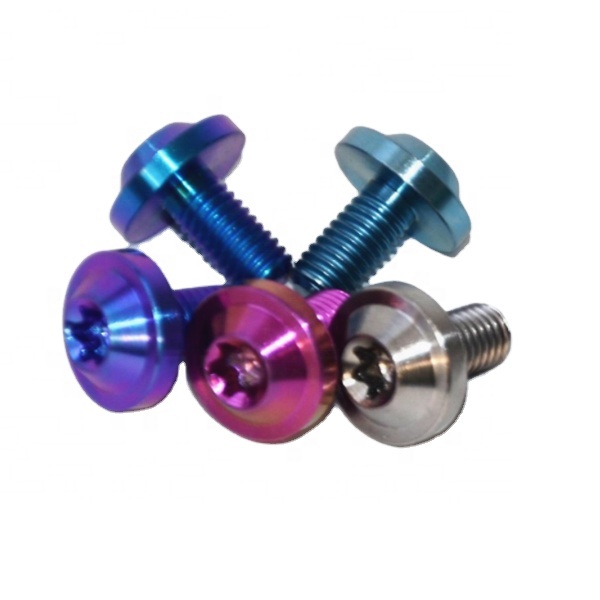
Because countersunk heads taper downward, driving recesses operate with reduced internal head height compared to standard socket caps. Traditional internal hex sockets (DIN 912 style) tend to cam out, shear corners, or bind under high automated assembly torques. Our modern Polish industrial orders overwhelmingly specify ISO 10642 / ISO 14581 Torx (star) drive geometries. Precision CNC broached Torx sockets transfer pure radial torque with zero axial cam-out force, allowing factory robotics to apply full seating torque without risk of bit stripping or driver wear.
While conventional machine shops cut fastener threads using standard single-point lathe turning, cut threads inevitably sever the internal grain structure of titanium bar stock, producing micro-notches at thread roots that act as stress concentration zones under cyclical vibration. At Vunza Titanium, our metric threads (M3 to M14) are formed through CNC hydraulic rolling dies. Thread rolling burnishes the root radius, burnishes surface finish to Ra 0.4 µm, and induces compressive residual stresses, generating a 30% increase in fatigue threshold under sustained harmonic vibrations.
Headquartered in Gaoya Village Industrial Zone, Baoji, adjacent to the Baoti Group Industrial Complex, Vunza Titanium Industry Co., Ltd. has integrated research, high-precision machining, and worldwide logistics since 2008.
Our facility operates 34 sets of high-precision 3-axis, 4-axis, and simultaneous 5-axis CNC machining centers alongside high-speed precision turning centers. We maintain rigid repeatability to 0.005 mm across large batch production runs, eliminating manual hand-finishing bottlenecks and ensuring seamless fitment for flush countersunk assemblies.
Over 50% of our technical floor team and CNC machinists bring more than 13 years of specialized experience in cutting refractory, reactive metals. Titanium’s low thermal conductivity requires exact tool rake angles, specialized carbide inserts, and high-pressure coolant strategies to prevent thermal strain hardening and micro-cracking during deep countersinking operations.
Every batch of titanium bar, wire, and plate is monitored through every production phase. Incoming spectrometer analysis confirms gas interstitials (O, N, H, C, Fe); optical comparator gauges verify thread profiles, taper angles, and head concentricity; and calibrated go/no-go gauges validate tolerance compliance before packaging.
Operating with verified 5.0/5 buyer feedback ratings, our export and engineering support teams maintain an average response window of under 9 hours. Our in-house technical department provides DFM (Design for Manufacturability) design analysis, rapid 2D/3D drawing reviews (STEP, IGES, DXF), and flexible pilot prototypes for Kraków-based developers.
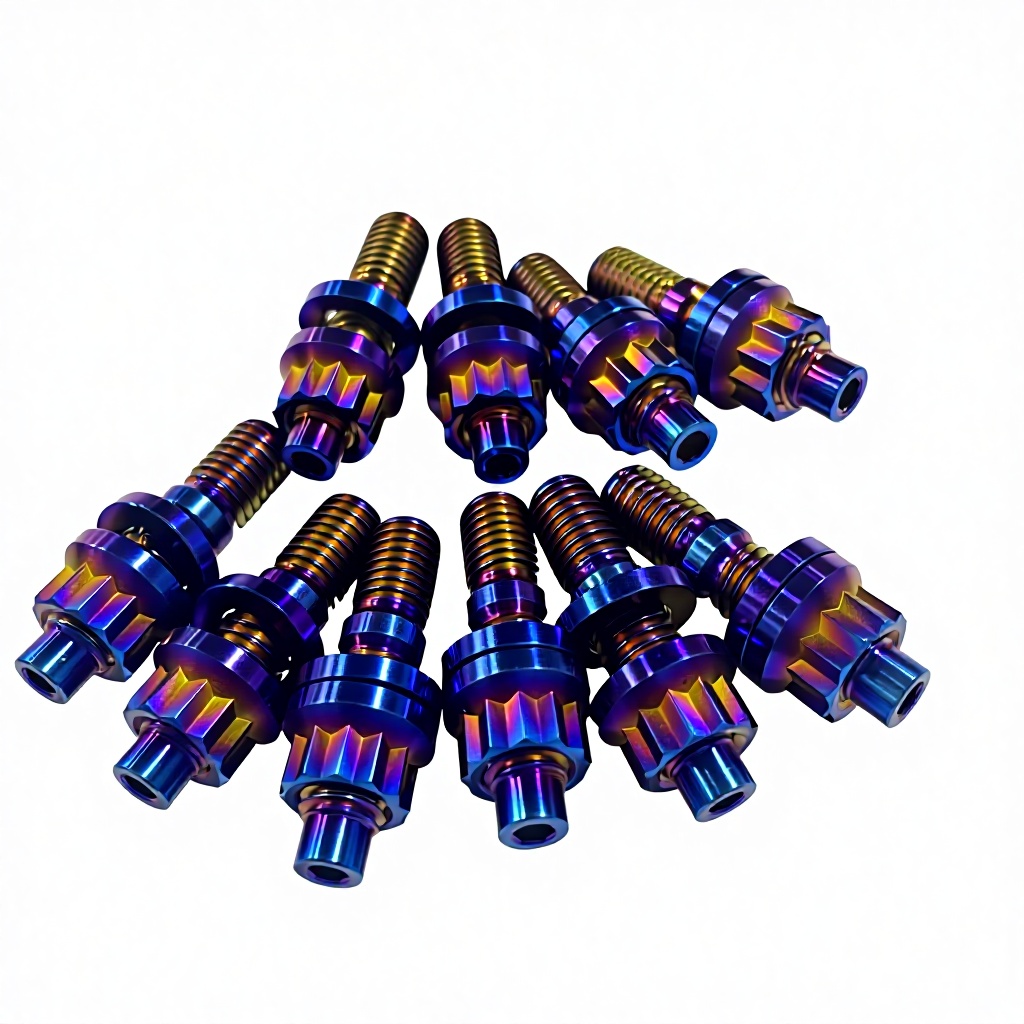
Beyond natural precision mirror-polishing, our proprietary surface lines execute electrochemical anodizing (gold, purple, electric blue, green) and high-durability Physical Vapor Deposition (PVD) finishes (Burnt Rainbow, DLC Black, TiN Gold). These coatings reduce thread friction, mitigate galling risks, and elevate the aesthetic finish of visible components.
We maintain routine express and air freight channels directly servicing Kraków John Paul II International Airport (KRK) and Warsaw Chopin Airport (WAW), alongside door-to-door DDP logistics options with customs clearance handled, providing our Polish partners with factory-direct economics minus international procurement friction.
Detailed answers addressing engineering parameters, CE compliance, customs documentation, and assembly mechanics for Polish industrial purchasers.