Precision Catalog
Engineered Titanium Components Ready for Antwerp Operations
Direct supply from Baoji Titanium Valley: Grade 2 Commercially Pure and Grade 5 Ti-6Al-4V components custom-milled to extreme dimensional tolerances for maritime, chemical, and racing assemblies.
Marine / Pump
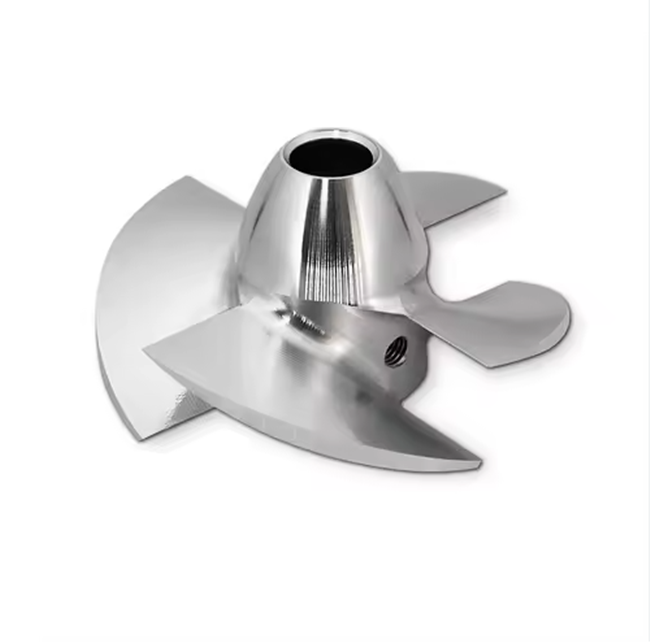
Material: Ti-6Al-4V / CP Gr2
Tolerance: ±0.005 mm | 5-Axis Blisk Milling
Motorsport
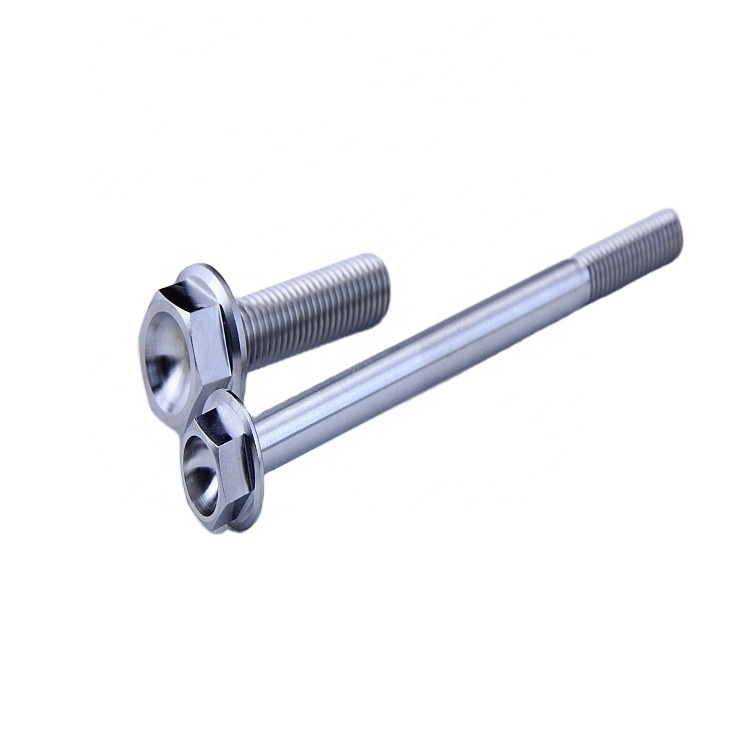
Grade: ASTM B348 Grade 5
Thread: Rolled M6-M12 | PVD Nitride Finish
Industrial EDC
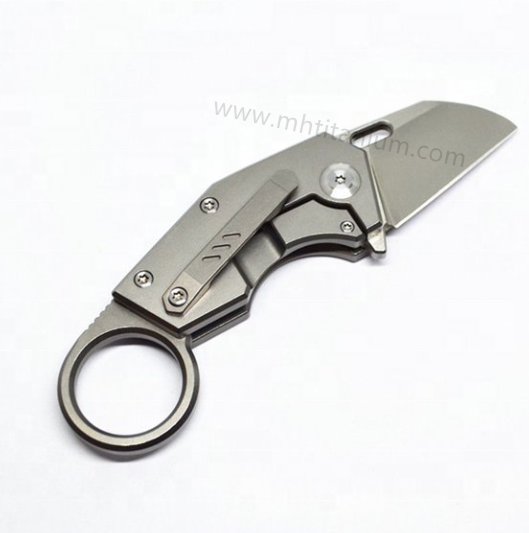
Weight: Featherlight Gr5 Construction
CNC Profile Milled | Corrosion Immune
Powertrain
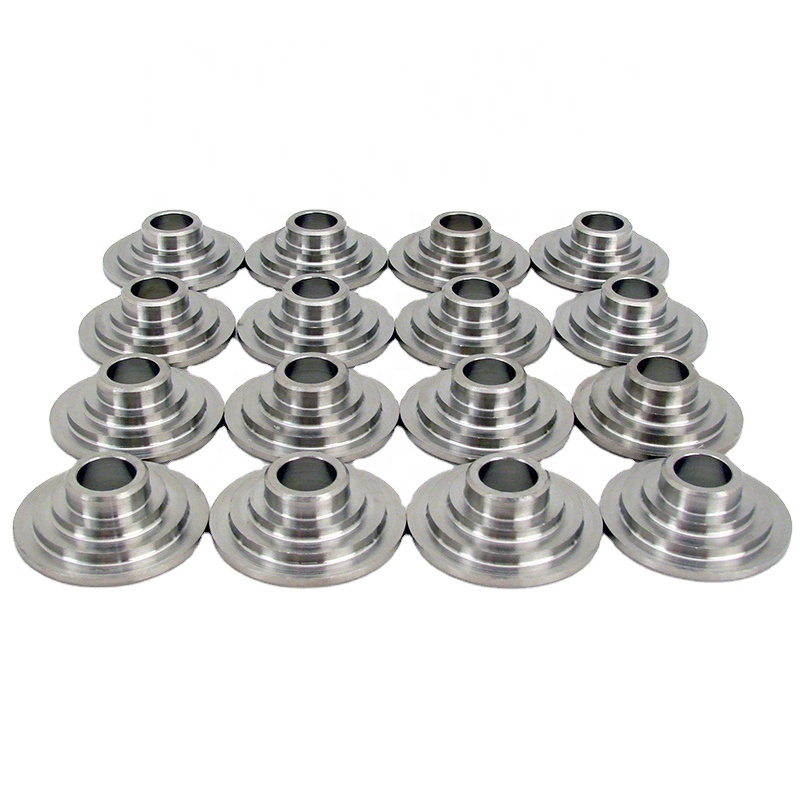
44% Inerita Reduction vs 4140 Steel
Dynamic Balance | Certified ISO 9001
Fasteners
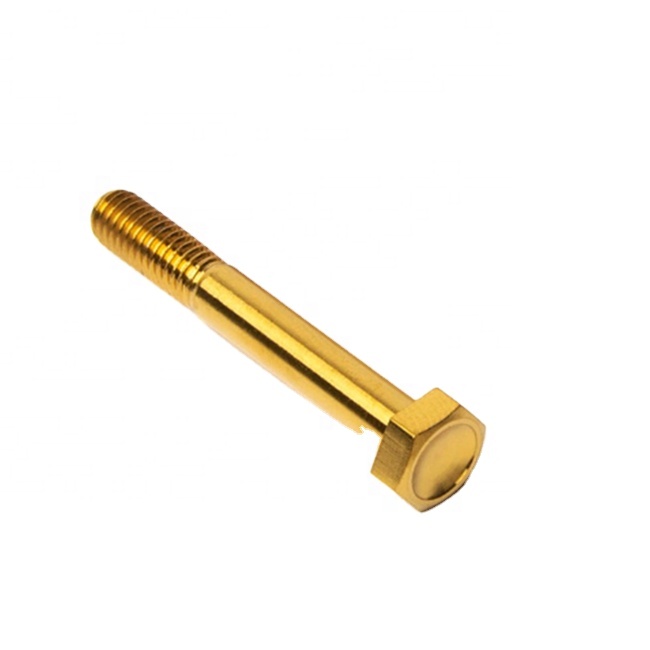
Standards: DIN 7991 / Custom UNF
Hot-Forged Head | CNC Chased Pitch
DIN Hardware
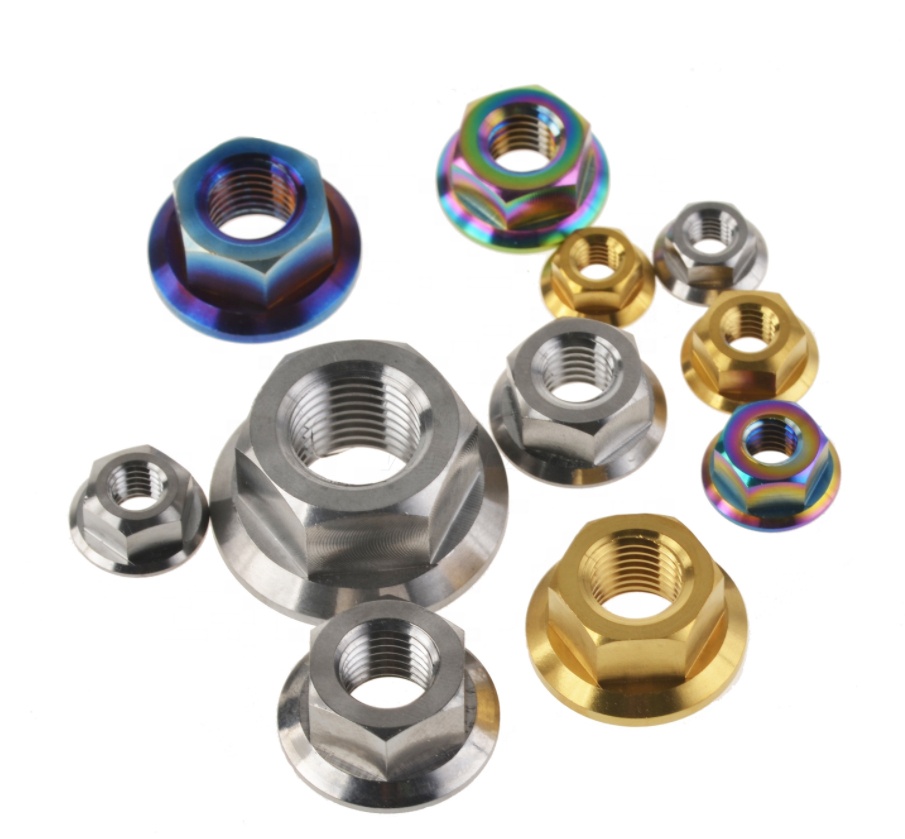
Standard: DIN 6923 Serrated Flange
Anti-Vibration Lock | Tensile ≥ 950 MPa
Braking
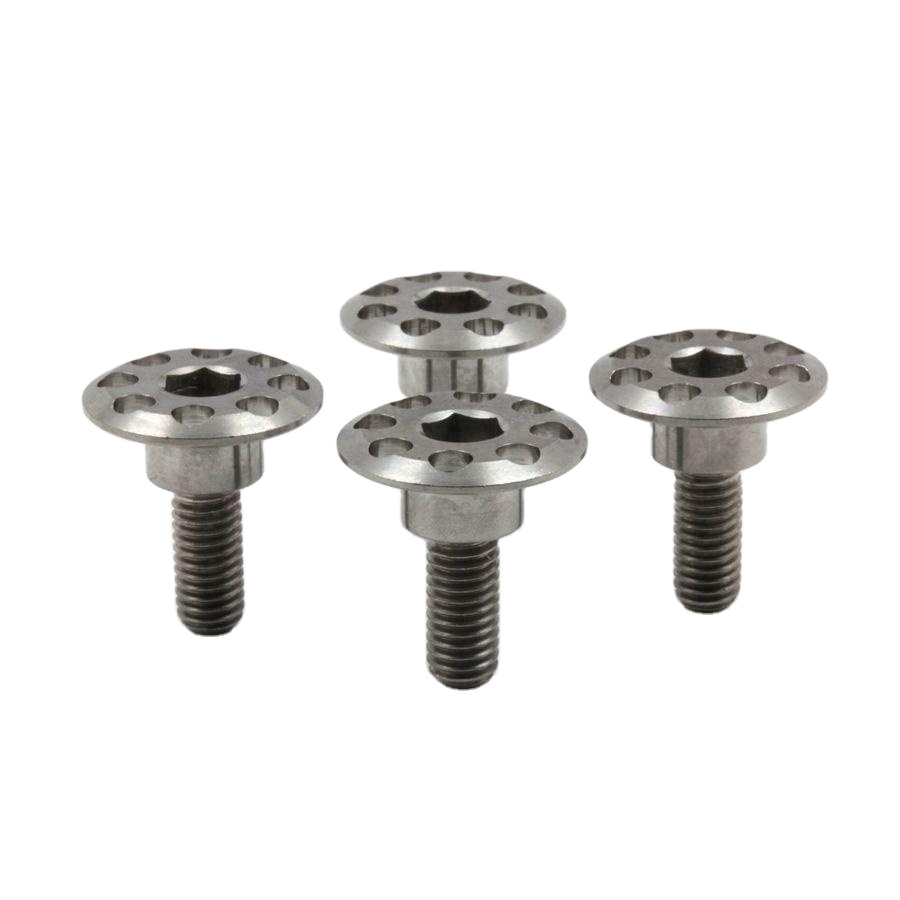
Shear Strength: High-Cycle Fatigue Tested
Hex Head Flanged with Pre-Drilled Wire
Chassis Mount
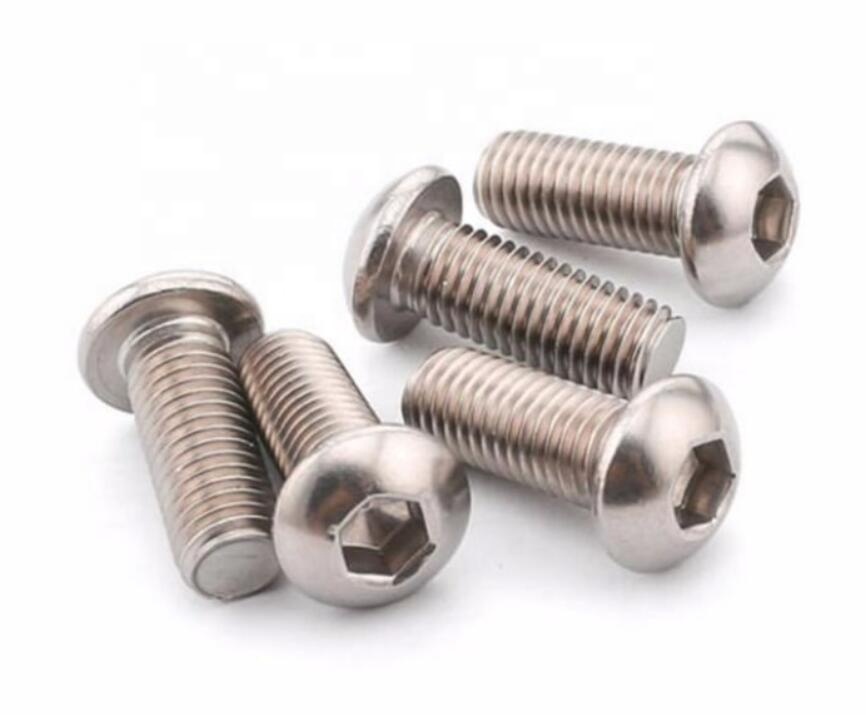
Torx T25/T30 Drive | High Preload
CNC Micro-Turned Concentricity
34units
Multi-Axis 3/4/5-Axis CNC Centers
0.005mm
True Position Machining Tolerance
16+yrs
Baoji Titanium Metallurgy Experience
≤9hrs
Engineering DFM Review Turnaround
Technical Whitepaper & Engineering Review
Subtractive CNC Titanium Machining for Antwerp’s Industrial and Petrochemical Nexus
The industrial matrix of the Antwerp Metropolitan Area represents one of the most mechanically demanding environments in Western Europe. Anchored by the Port of Antwerp-Bruges—the second largest petrochemical cluster in the world behind Houston—and flanked by the deep brackish waters of the Western Scheldt estuary, mechanical components deployed here face an aggressive cross-section of degradation mechanisms. High ambient chloride concentrations, aggressive chemical intermediates (including chlor-alkali derivatives, organic solvents, and concentrated acids), and heavy mechanical cycling create severe vulnerability to stress corrosion cracking (SCC), pitting, and galvanic failure in legacy stainless steels such as AISI 316L and Duplex 2205.
For project engineers and maintenance superintendents operating within the Scheldt industrial basin, substituting austenitic or duplex alloys with custom subtractive-machined Grade 2 (UNS R50400) and Grade 5 (Ti-6Al-4V, UNS R56400) titanium is no longer merely an optimization—it is an operational imperative. Titanium spontaneously passivates upon atmospheric or aqueous exposure, forming a self-healing, chemically inert titanium dioxide (TiO₂) rutile/anatase nanometer-scale film. This passive barrier remains completely impervious to wet chlorine gas, chlorate solutions, sodium hypochlorite, and marine brackish water up to temperatures exceeding 250°C.
However, procuring finished titanium components presents unique precision challenges. Titanium's exceptionally low modulus of elasticity (roughly 110 GPa for Grade 5, versus 200 GPa for typical structural alloy steels) generates severe "spring-back" effects during CNC turning and continuous 5-axis milling operations. Furthermore, its notoriously poor thermal conductivity (6.7 W/m·K for Ti-6Al-4V compared to 50 W/m·K for carbon steel) traps cutting-zone friction entirely within the tool-workpiece interface. Without specialized CNC kinematics, dynamic dampening tooling, ultra-rigid workholding, and high-pressure flood coolant delivery, workpieces suffer micro-galling, thermal distortion, work-hardening, and catastrophic thread tearing.
At our Baoji production facility—situated directly in China's Titanium Valley beside the Baoti Group—we eliminate these metallurgical machining defects. Operating an advanced battery of 34 multi-axis 3-, 4-, and 5-axis CNC machining centers, our factory engineers custom impellers, high-pressure flange nuts, chemical reactor thermowells, valve spring retainers, and specialty chassis bolts with precision tolerances controlled strictly down to 0.005 mm (5 microns). We bridge the raw titanium sponge supply directly to final inspection, providing Antwerp’s chemical plants, maritime drydocks, and motorsport engineering stables with guaranteed batch repeatability and full EN 10204 3.1 certification.
Metallurgical Comparison Matrix
Titanium Alloys vs. Legacy Maritime & Chemical Steels
Quantitative analysis illustrating why Flemish procurement teams select custom CNC machined titanium over traditional super-austenitic steels for mission-critical assemblies.
| Alloy Specification |
Microstructure |
Tensile Yield (MPa) |
Density (g/cm³) |
Chloride Pitting Resistance |
Machining Rigidity Factor |
Optimal Antwerp Application |
Grade 2 Titanium (CP Gr2)
ASTM B348 / W.Nr. 3.7035 |
Alpha (α) Single Phase |
≥ 275 |
4.51 |
Immune (< 80°C in sea water) |
High ductility, prone to chip wrap |
Scheldt desalination, chlor-alkali piping, heat exchanger baffles |
Grade 5 Titanium (Ti-6Al-4V)
ASTM B348 / W.Nr. 3.7165 |
Alpha-Beta (α-β) Dual Phase |
≥ 828 (UTS ≥ 895) |
4.43 |
Immune to general maritime pitting |
High tool wear, needs rigid dampening |
Centrifugal impellers, high-stress racing fasteners, turbine blisks |
Grade 7 (Ti-0.15Pd)
ASTM B348 / W.Nr. 3.7235 |
Alpha (α) + Palladium |
≥ 275 |
4.51 |
Ultra-High (Reducing acid resilience) |
Requires low feeds, high sulfur-free coolants |
Antwerp refinery reboilers, hot hydrochloric pickling units |
AISI 316L Stainless
EN 1.4404 / X2CrNiMo |
Austenitic |
≥ 220 |
8.00 |
Subject to crevice pitting in salt-fog |
Standard commercial machinability |
General structural port enclosures (Non-submerged, low fatigue) |
Super Duplex 2507
EN 1.4410 / UNS S32750 |
Ferritic-Austenitic |
≥ 550 |
7.80 |
High (PREN ≥ 42) |
Work hardens rapidly, high cutting force |
Heavy subsea structural components where weight is unconstrained |
Regional Industrial Deployments
Targeted Titanium Engineering Across the Antwerp Metropolitan Hub
Precision CNC manufactured components customized for specific commercial demands throughout Antwerp, Zwijndrecht, Beveren, and wider Flanders.
Petrochemical Refining & Chlor-Alkali Units
Situated along the Right and Left banks of the Scheldt, Antwerp's chemical cluster refines polymers, ethylene oxide, and base chemicals. Our custom-machined Grade 2 and Grade 7 thermowells, sensor housings, and orifice plates resist boiling brine, moist chlorine vapor, and sulfurous gases, completely preventing unplanned shutdowns due to pitting failure.
Maritime Vessels, Dredging & Port Infrastructure
Managing massive tidal waterways requires dredging cutters and high-capacity slurry ballast systems. We supply multi-axis milled Grade 5 titanium open- and closed-vane impellers, flow diverters, and hydraulic manifold blocks. Titanium's cavitation resistance and non-biofouling passivity ensure longevity under extreme saline abrasive conditions.
Belgian Motorsport & High-Stress Powertrains
Serving Flemish race car fabricators, track-day developers, and superbike tuners competing across Circuit Zolder and Spa-Francorchamps. We engineer hot-forged and precision-turned Grade 5 wheel lug nuts, valve spring retainers, caliper mount studs, and rotor bolts—stripping 44% of unsprung rotational mass while elevating fatigue strength over Class 10.9 steel.
Flanders Industrial Evolution
Emerging Engineering & Procurement Trends in Antwerp
How the green transition, offshore wind buildouts, and carbon-neutral infrastructure reshape titanium supply needs across Belgium.
Hydrogen Corridor & Antwerp Clean Energy Hub
As the Port of Antwerp-Bruges transitions toward its Net-Zero 2050 targets, green hydrogen bunkering and ammonia cracker terminals require high-integrity valving. Grade 5 ELI (Extra Low Interstitial) and CP Gr2 titanium eliminate hydrogen embrittlement risks that plague high-strength steels, driving rapid adoption in cryogenic hydrogen manifolds.
Offshore Wind Grid Interconnectors (Princess Elisabeth Zone)
Belgium’s rapid expansion of offshore wind in the North Sea links directly back to Antwerp’s electrical infrastructure fabricators. Critical subsea sensor mounts, hydraulic quick-connect couplings, and grounding cable hardware mandate zero-maintenance titanium alloys that survive 30-year subsea salt saturation without cathodic sacrificial anode replacement.
Pharmaceutical & Continuous Bioprocess Synthesis
Flanders boasts Europe’s premier life sciences ecosystem. For micro-reactor manifolds, sterile centrifuge bowls, and chromatographic fittings, bio-inert custom titanium ensures absolute zero metal leaching and resistance to aggressive Clean-in-Place (CIP) autoclave cycles that pit standard EN 1.4404 stainless components.
Manufacturing Authority
Why European Engineers Choose Vunza Titanium
Direct supply advantages from China's Titanium Valley, backed by full technical traceability and Western-standard quality management.
Sponge-to-Part Traceability
Located in Gaoya Village Industrial Zone adjacent to Baoti Group, we oversee chemistry from virgin titanium sponge melting to vacuum arc remelting (VAR) ingot forging.
34 Multi-Axis CNC Workstations
Equipped with high-rigidity Brother, Haas, and 5-axis simultaneous machining centers capable of complex blisks, deep-pocket housings, and micro-turnings up to Ø450 mm.
0.005 mm Metrology Control
In-house CMM (Coordinate Measuring Machines), optical comparators, profilometers, and calibrated Go/No-Go thread gauges ensure micrometer-perfect conformance to your CAD.
Complete EN 10204 3.1 Certification
Every shipment bound for Antwerp is accompanied by mill test reports, full spectrographic chemical assays, mechanical tensile test certificates, and dimensional logs.
Procurement Intelligence
Frequently Asked Questions for Antwerp Buyers
Direct technical answers regarding customs clearance, lead times to Belgium, thread specifications, and metallurgy verification.
What Incoterms and shipping options are available for delivery to Antwerp?
We regularly export to Belgium under DDP (Delivered Duty Paid Antwerp), CIF Port of Antwerp, and DAP (Delivered at Place). For critical prototyping, pre-series runs, and urgent spare components, we ship via DHL Express or FedEx International Priority with customs clearance handled directly, arriving in Antwerp or Ghent within 4 to 6 business days. For bulk fastener runs and recurring container shipments, sea freight directly to the Port of Antwerp container terminals takes approximately 28 to 32 days.
Do your custom titanium parts comply with EU REACH, RoHS, and EN 10204 3.1?
Yes. All raw stock used in our CNC centers originates from vacuum-arc-remelted ingot free of conflict minerals and hazardous substances, adhering strictly to EU Regulation (EC) No 1907/2006 (REACH) and RoHS directives. Every production batch is released with a comprehensive EN 10204 3.1 Inspection Certificate containing exact spectrographic chemical analysis (Titanium base, Carbon, Oxygen, Nitrogen, Hydrogen, Iron, Aluminum, Vanadium) and destructive tensile testing data (Yield strength, Ultimate Tensile Strength, Elongation percentage).
Can you machine hybrid DIN/ISO metric and imperial UNF threads on the same part?
Absolutely. Many petrochemical units in Antwerp operate American-engineered piping (ASME/ANSI B16.5) alongside European DIN metric pumps. Our multi-axis CNC turning centers utilize precision CNC thread chasing and cold-thread rolling for standard metric (M3 to M64, coarse and fine pitch DIN 13-1), imperial UN/UNF/UNEF threads (10-32, 1/4-20, 1/2-20, 5/8-18), and specialized gas threads (BSPP / NPT) to precision 6H and 2A/3A tolerances without tearing or burrs.
How do you mitigate galvanic corrosion when titanium components connect to steel in maritime Antwerp?
Because titanium possesses a highly noble cathodic electrode potential (+0.05V vs. saturated calomel electrode), direct metal-to-metal contact with active anode materials like structural carbon steel or aluminum in the presence of saline Scheldt water will accelerate steel degradation. We engineer and supply precision isolation solutions, including Grade 5 bolts with specialized PVD dielectric coatings, PTFE/PEEK insulating sleeve bushings, or bonded non-conductive washer assemblies to ensure complete galvanic decoupling.
What is your Minimum Order Quantity (MOQ) for custom CNC prototypes versus serial production?
We maintain flexible procurement tiers tailored to European development teams. For complex custom parts—such as 5-axis impellers, marine manifolds, or custom engine retainers—our prototype MOQ is 1 to 5 pieces, including full first-article inspection reports (FAIR). For specialized Grade 5 bolts, wheel studs, and DIN flange nuts, production batches typically start at 100 to 500 units, allowing Antwerp maintenance teams to replace expensive OEM parts cost-effectively.
Can you execute specialized surface finishes like PVD Nitriding, Micro-Arc Oxidation, or Type II Anodizing?
Yes. In addition to precision CNC machining (achieving surface roughness down to Ra 0.4 µm), our finishing facility provides complete post-processing: Type II Anti-Galling Anodizing (crucial for threaded fittings under high preload), Electrolytic Color Anodizing (for visual color-coding in motorsport and piping assemblies), PVD Hard-Coatings (TiN gold, TiAlN dark charcoal, DLC diamond-like carbon for extreme surface hardness exceeding 2500 HV), and precision mechanical mirror polishing.
Ready to Engineer Custom Titanium Parts for Your Antwerp Operation?
Submit your 2D engineering prints (PDF, DWG) and 3D CAD models (STEP, IGES, Parasolid) along with target quantities and alloy grades. Our senior engineering team in Baoji reviews tolerances, feeds, toolpaths, and DFM optimization—delivering a comprehensive quotation and technical feasibility assessment within 9 business hours.