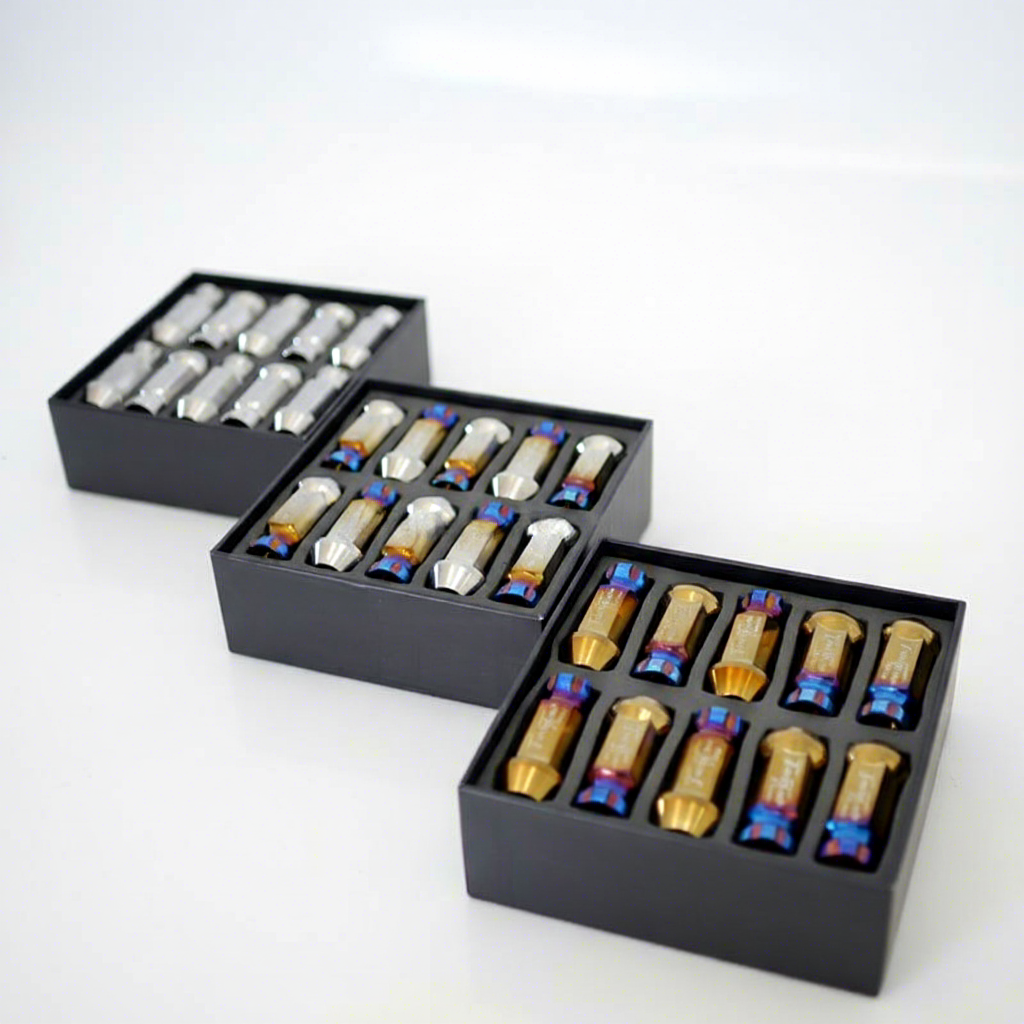
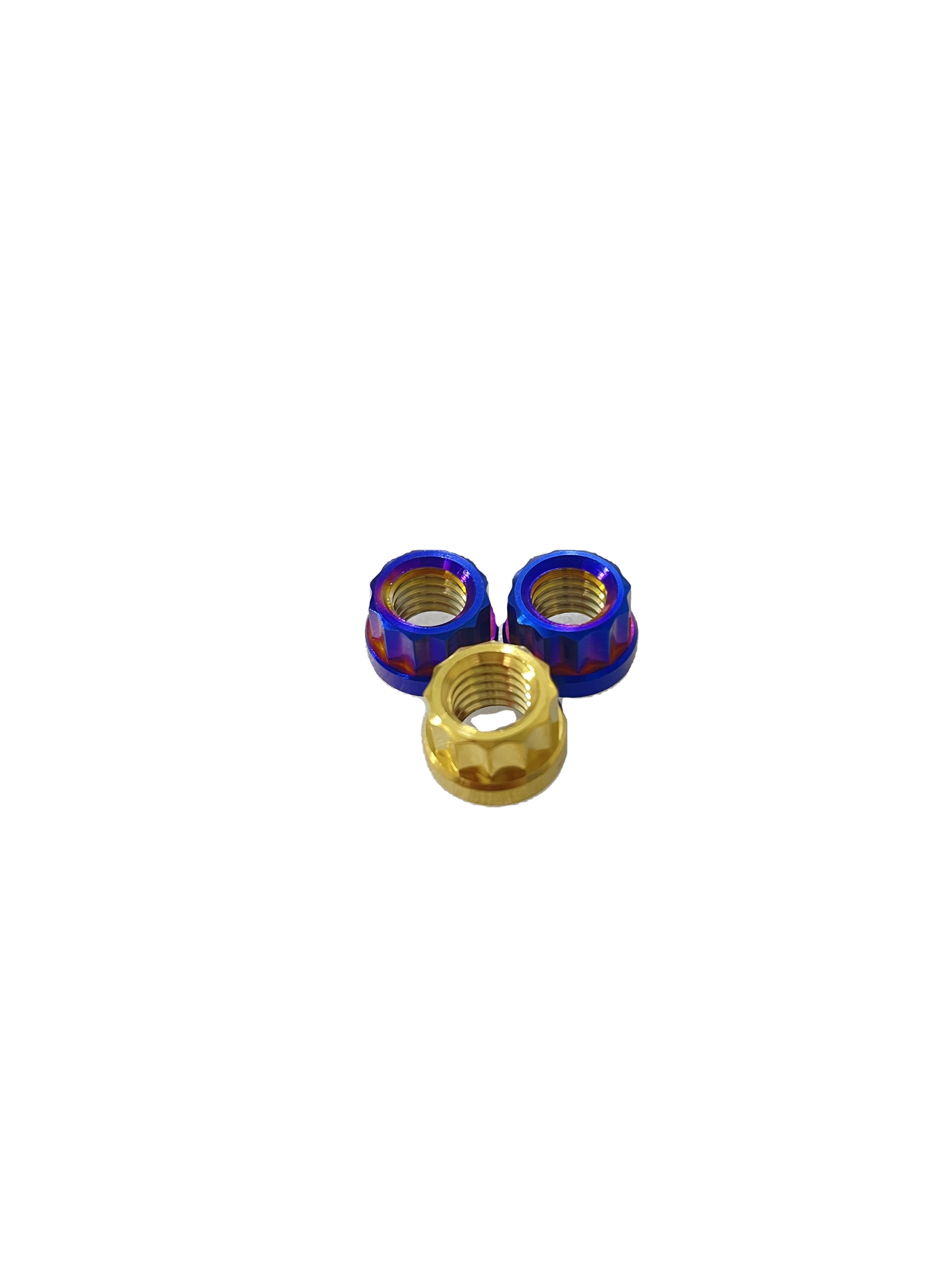
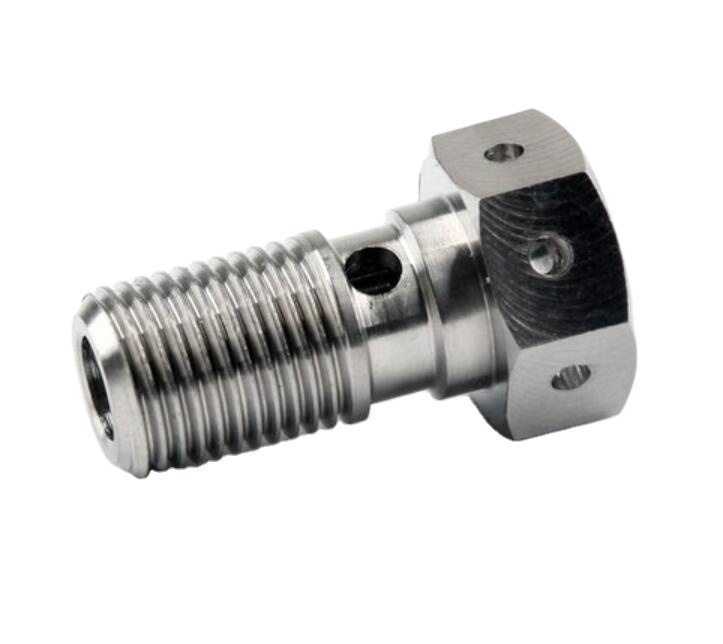
Factory Supply Gr5 Ti6Al4V M14 x 1.5 Hex Anodized Racing Wheel Nuts
Optimized with an 8mm weight-saving lightening hole and precision rolled right-hand threads. Engineered for high-speed pit stops and unsprung rotational mass mitigation.
Manufactured in China's Titanium Valley using virgin grade aerospace titanium sponge, multi-axis CNC Swiss turning centers, and cold rolled thread forming. Available for high-mix, custom contract manufacturing for Charlotte regional distributors and race facilities.
Optimized with an 8mm weight-saving lightening hole and precision rolled right-hand threads. Engineered for high-speed pit stops and unsprung rotational mass mitigation.
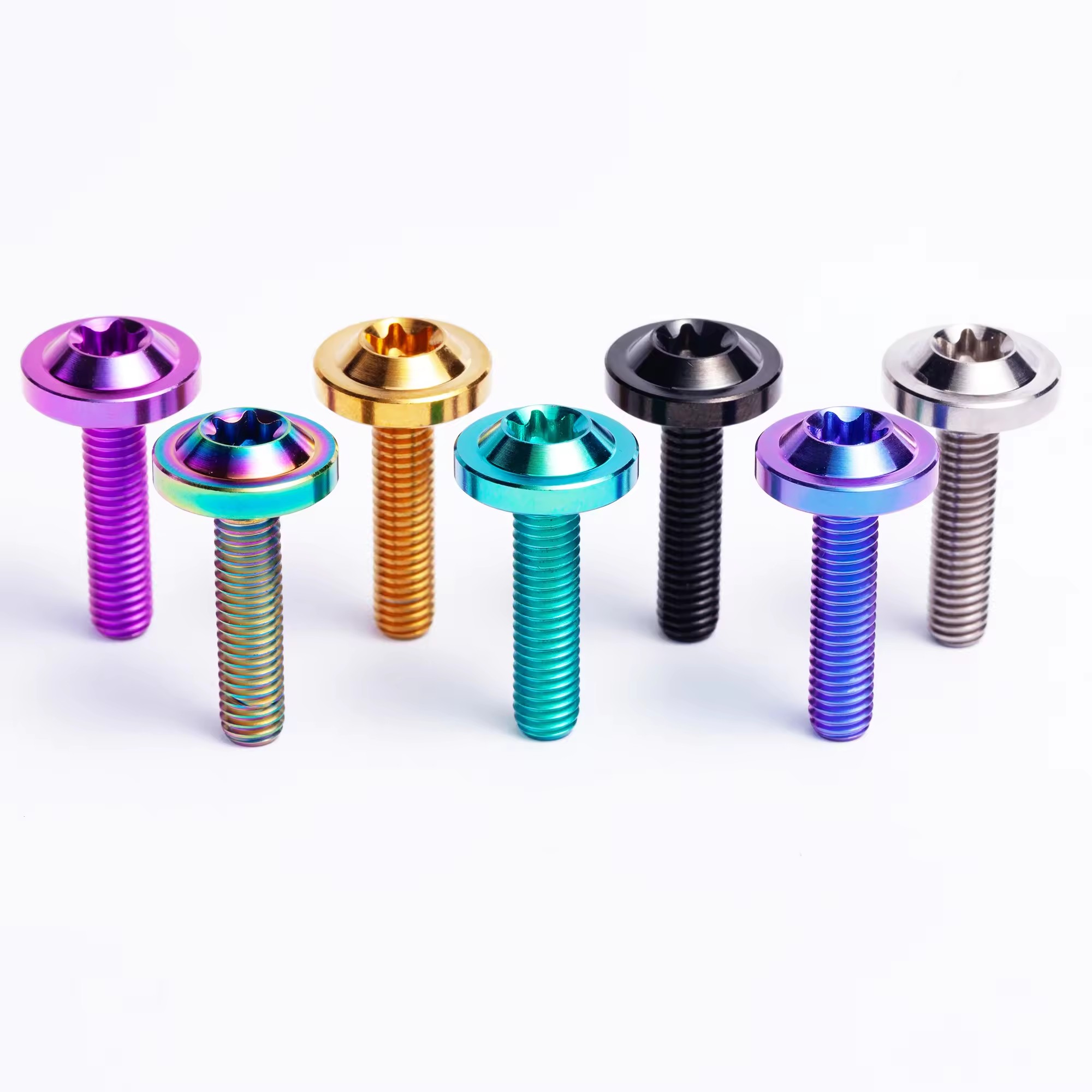
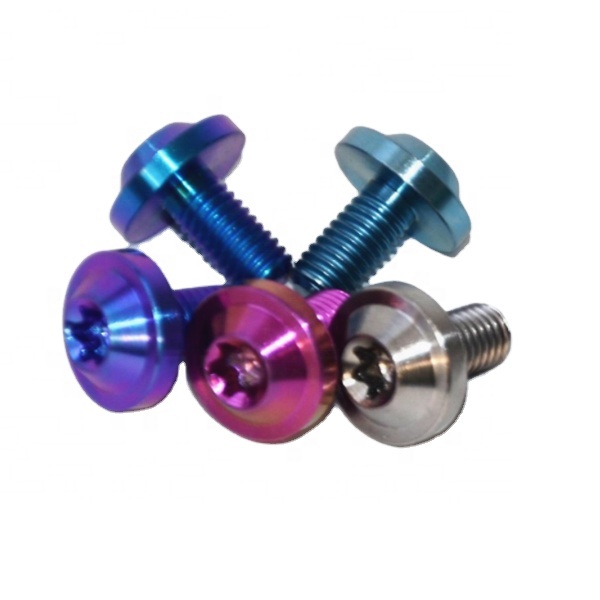
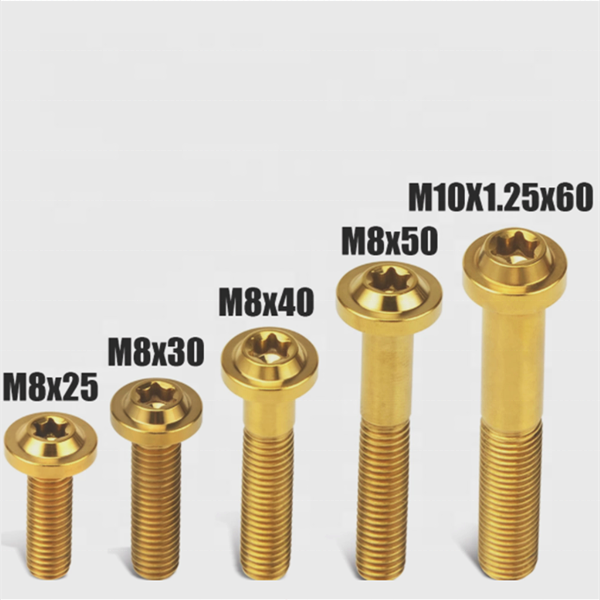
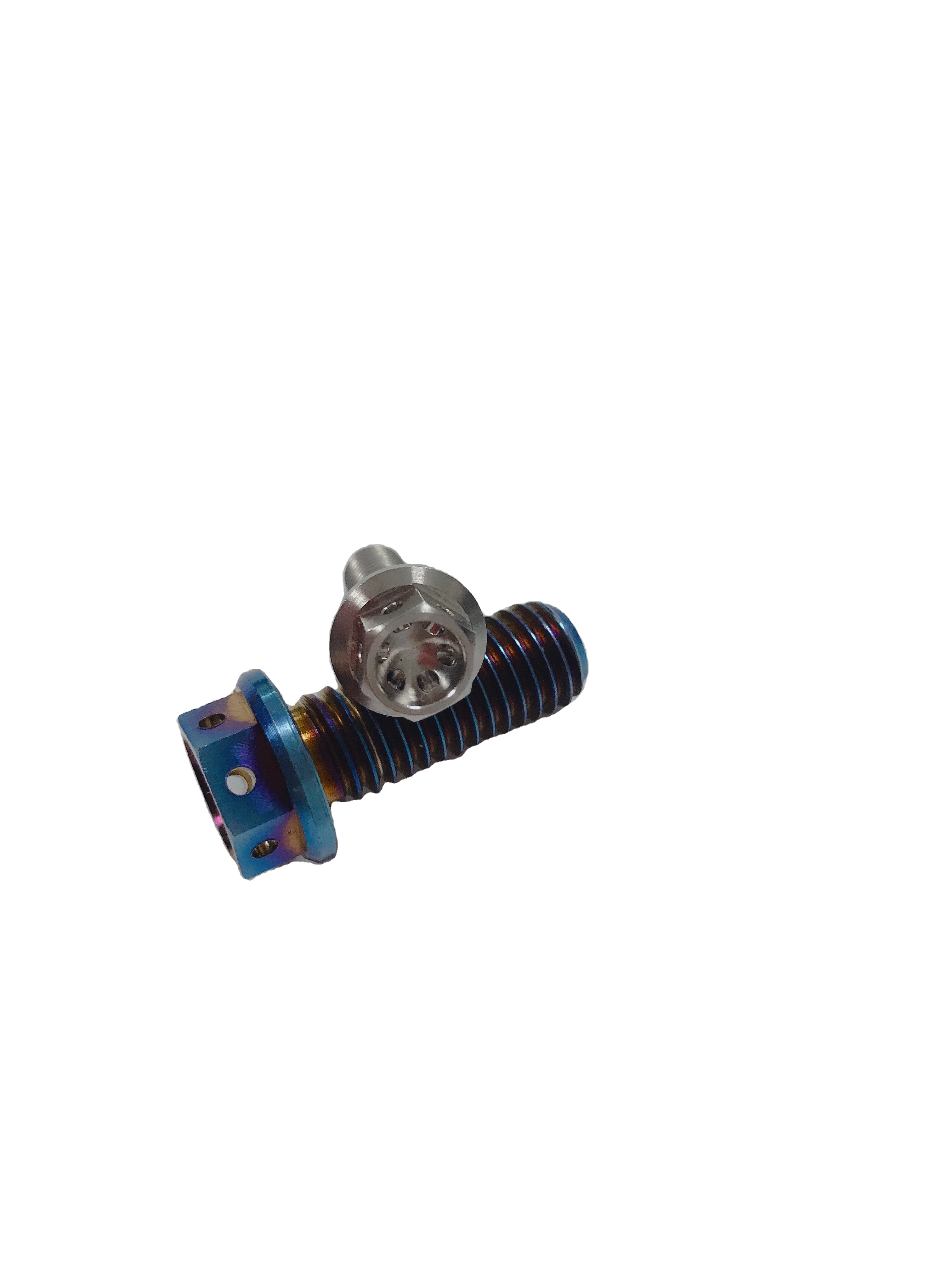
Ultra-low profile head geometry featuring anti-cam-out Torx star drives. Complete size coverage from M4 through M10 for sleek aerodynamic assemblies.
Multi-spectrum vacuum PVD and electrolytic color anodizing. Exceptional surface hardness and chemical oxidation resistance for bespoke racing applications.
Precision ground shank with T40 drive capability. Provides high clamping force without socket deformation during rapid impact wrench engagement.
Conforms to DIN/GB aerospace specifications. Engineered for extreme clearance restrictions around engine cylinder heads, exhaust manifolds, and turbo runners.
High tensile strength rating exceeding 950 MPa. Replaces heavy Grade 10.9 and Grade 12.9 alloy steel hardware across structural automotive chassis links.
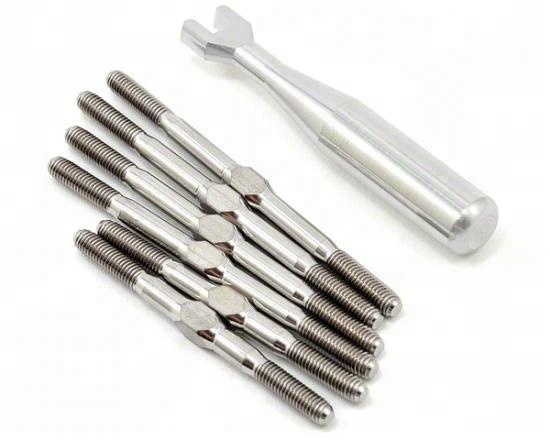
Dual-threaded left and right hand adjusters with mirror-finished shanks. Tailored for suspension toe-links, tie rods, and aeronautic control surface linkages.
Integrated bearing flange disperses high clamping torque across softer magnesium and aluminum engine castings, preventing point stress cracks.
Within demanding mechanical engineering ecosystems, the fastener is rarely a passive component; it represents a primary vector of joint integrity, fatigue transfer, and dynamic mass distribution. Socket head cap screws (SHCS) manufactured from Grade 5 Ti-6Al-4V (UNS R56400) deliver a specific strength-to-weight ratio unattainable by either quenched-and-tempered alloy steels or austenitic stainless alloys. In critical industrial epicenters like the Greater Charlotte metropolitan region, which encompasses North Carolina’s premier motorsports valley and advanced defense contracting nodes, shifting to titanium cap screws addresses two distinct operational hurdles: reducing unsprung rotational weight and eliminating chloride-induced stress corrosion cracking.
Fundamental Mechanical Premise: Ti6Al4V Grade 5 possesses an alpha-beta crystal structure characterized by a density of 4.43 g/cm³ compared to 7.85 g/cm³ for 4140 chrome-moly steel. When engineered with precision cold-formed or CNC-rolled root radii, Grade 5 titanium cap screws offer ultimate tensile strengths exceeding 950 MPa (138,000 psi) with a yield point above 880 MPa, shedding approximately 44% of mass while matching the functional load carrying capacity of ASTM A574 / ISO 898-1 Class 10.9 structural bolts.
A prevalent failure mode in dynamic cap screws subjected to violent cyclic vibration—such as reciprocating valvetrains, unsprung brake rotor bobbins, and transmission bellhousings—is fatigue notch failure at the first engaged thread root. Traditional low-cost machining involves single-point thread turning or thread milling, which severs the longitudinal grain boundary flow of the titanium bar stock. This introduces micro-grooves and notch stress concentrations that sharply drop the bolt's endurance limit.
At our Baoji production facility, every precision titanium cap screw destined for the Charlotte industrial market undergoes cold thread rolling on multi-axis circular roll dies. Rolling plastically deforms the titanium crystal matrix, directing dense continuous grain streamlines along the thread crests and root contours while imparting deep compressive residual stresses. This mechanical burnishing action eliminates micro-fissures and enhances dynamic fatigue life by over 300% under high-frequency harmonics.
A critical engineering consideration when implementing titanium socket cap screws is the material's relatively low modulus of elasticity (114 GPa versus 205 GPa for steel) paired with its high coefficient of friction when brought into metal-to-metal contact with mating aluminum, stainless, or titanium internal threads. Uncoated titanium fasteners are prone to galling and cold-welding under aggressive clamp torques.
To overcome this, our contract OEM manufacturing integrates proprietary surface conditioning processes: (a) Micro-arc oxidation and physical vapor deposition (PVD) titanium nitride/diamond-like carbon coatings to generate an ultra-hard sliding layer; (b) Molybdenum disulfide (MoS2) dry film lubricant baking that stabilizes the nut factor (torque coefficient K) consistently between 0.12 and 0.15; and (c) Controlled head-to-shank transitions with generous runout fillets (per DIN 912 and DIN EN ISO 4762 standards) to prevent under-head stress shearing under non-axial bending moments.
| Mechanical / Physical Property | Grade 5 Ti-6Al-4V (Vunza OEM) | AISI 4140 (Grade 10.9 Steel) | 17-4 PH Stainless (H900) | 7075-T6 Aerospace Aluminum |
|---|---|---|---|---|
| Density (g/cm³) | 4.43 | 7.85 | 7.78 | 2.81 |
| Ultimate Tensile Strength (MPa) | 950 - 1050 | 1040 | 1310 | 572 |
| Tensile Yield Strength (MPa) | 880 - 920 | 940 | 1170 | 503 |
| Strength-to-Weight Ratio (kN·m/kg) | 214 | 132 | 168 | 204 |
| Modulus of Elasticity (GPa) | 114 | 205 | 196 | 71.7 |
| Fatigue Limit / Endurance Ratio | 0.50 - 0.55 | 0.40 - 0.45 | 0.35 - 0.40 | 0.28 - 0.32 |
| Corrosion Resistance (Chloride Environment) | Immune (Passivated TiO₂ Layer) | Poor (Requires Plating) | Moderate to High | Susceptible to Pitting |
For high-density assemblies across Charlotte race shops and aerospace jigs, head geometry directly influences wrench clearance and torque transmission efficiency:
Charlotte, North Carolina serves as the capital of North American stock car racing, alongside rapidly expanding corridors for aeronautics, electrical power generation, and precision robotics. Here is how our OEM/ODM titanium cap screws are deployed locally.
Situated within the Lake Norman, Mooresville ("Race City USA"), Concord, and Huntersville tech corridors, elite Cup Series and IMSA sports car teams demand zero-defect lightweight hardware.
The Carolinas industrial supply base feeds major commercial aviation airframe structures, propulsion programs, and drone defense technologies requiring AS9100-aligned fastener traceability.
Anchored by major energy power engineering hubs and advanced generator manufacturers in Mecklenburg County, critical equipment requires non-magnetic, corrosion-immune fasteners.
Piedmont automation builders developing high-speed delta pick-and-place robots, packaging machines, and semiconductor equipment leverage titanium cap screws for end-effector inertia reduction.
From freshwater race boats on Lake Norman to coastal marine fabricators across the Carolinas, high-salinity atmospheres aggressively destroy conventional zinc-coated fasteners.
Charlotte's burgeoning healthcare networks and research laboratories employ titanium cap screws in specialized surgical instrumentation, MRI cages, and cleanroom handling systems.
Strategic supply chain dynamics observed across North Carolina’s Tier-1 motorsport fabricators, contract machine shops, and procurement specialists over the 2024–2026 economic cycle.
Historically, engine builders and chassis engineers relied upon black-oxide or zinc-nickel Class 12.9 alloy steel cap screws when clamping loads dictated high tensile performance. However, in modern competitive motorsport—governed by tight weight minimums and center-of-gravity mandates—every gram placed above the chassis centerline compromises cornering velocity. Race shops across Concord, Mooresville, and Statesville have systematically transitioned non-drivetrain structural joints to Grade 5 titanium cap screws. Doing so delivers direct mass savings of 42% to 45% per bolt location while eliminating corrosion bleeding that can weld steel screws into aluminum engine housings.
Cam-out damage is one of the most frustrating bottlenecks in high-speed chassis maintenance and sub-assembly servicing. Standard internal hex drive screws are vulnerable to corner stripping when torqued with pneumatic or battery-powered impact drivers under time pressure. The Charlotte procurement sector has driven a significant surge in custom Torx (T-Drive) and internal star head cap screws. By dispersing shear stress across a 15-degree drive angle, technicians achieve repeatable torque retention and significantly longer tool bit life.
Charlotte machine shops often encounter severe margin erosion when purchasing re-branded titanium hardware from domestic middlemen who markup overseas products by 300% to 500%. Consequently, procurement managers are increasingly bypassing traditional catalog distributors to forge direct OEM/ODM contractual partnerships with accredited manufacturers situated in Baoji—known globally as "China’s Titanium Valley." By pairing Baoji's integrated sponge-to-part supply chain with direct air-freight logistics into Charlotte Douglas International Airport (CLT), procurement directors acquire fully certified, customized titanium fasteners at real factory-direct economies of scale.
Expedited door-to-door air freight reaching CLT Douglas Airport in 5 to 7 business days for urgent racing turnaround.
Barcoded, laser-etched lot numbers, and customized kit bagging matched directly to assembly line bill-of-materials (BOM).
Every shipment includes chemical spectral analysis, hardness reports, and physical yield certification.
Founded in 2008 immediately adjacent to the Baoti Group Industrial Park in Baoji, China, Vunza Titanium combines direct raw-material vertical integration with world-class multi-axis CNC machining.
Situated directly inside China’s central titanium industrial cluster, we control the entire lifecycle from raw titanium sponge ingot melting, forging, and wire drawing through to final Swiss CNC precision machining.
Whether you require standard DIN 912 cap screws, reverse-engineered sample reproduction, or complex non-standard geometries with internal cooling passages, our senior engineering R&D group converts prints to prototypes rapidly.
We pride ourselves on transparent communication, maintaining an average drawing review turnaround under 9 hours, full PPAP documentation upon request, and a verified 5.0/5.0 supplier rating over 13+ continuous export years.
Direct technical, commercial, and metallurgical answers addressing the concerns of race engineers, machine shop owners, and purchasing managers.
Serving race shops, aerospace contractors, and machine facilities across Greater Charlotte, Lake Norman, and Piedmont North Carolina. Submit your technical blueprints or RFQ today for direct engineering feedback and factory pricing.