Engineered Titanium Hardware for Bicycle & Racing Applications
Precision-machined from certified Baoji aerospace-grade titanium ingot. Every batch delivers 100% thread concentricity, rolled thread fatigue resistance, and micro-tolerance accuracy down to 0.005 mm.
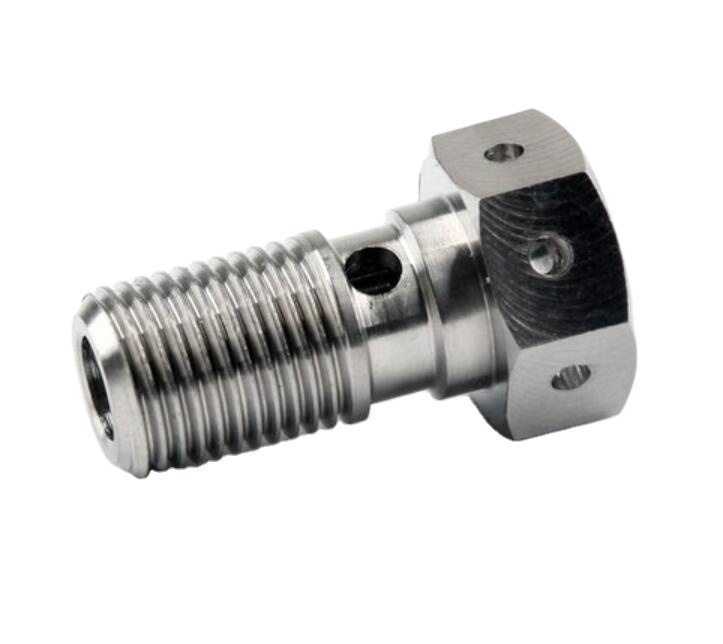
M8 M10 M12 Gr5 Titanium Hex Head Racing Bolt DIN Standard
- Material: Ti-6Al-4V Gr5
- Standard: DIN 933 / GB5783
- Application: Suspension Linkage / Axles
- Tensile: ≥ 950 MPa
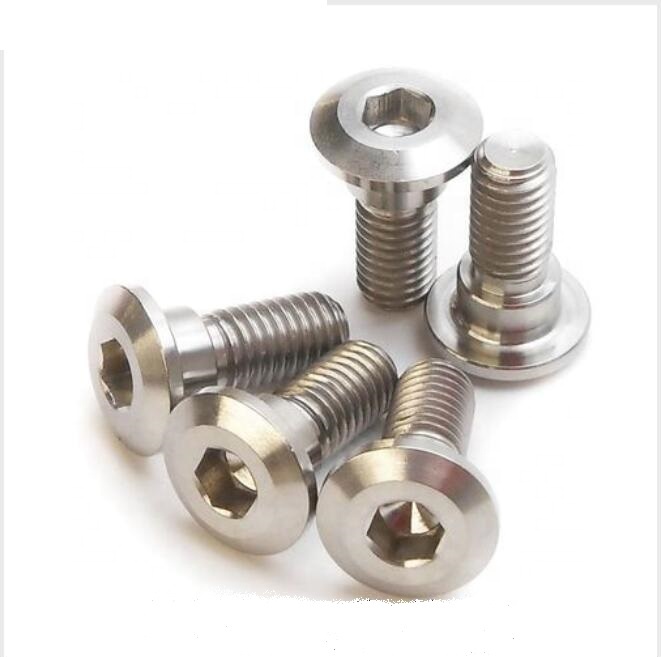
Titanium Disc Head Torx Flange Bolt with CNC Precision for Bicycle Parts
- Drive Style: Torx T25 Drive
- Tolerance: ±0.005 mm
- Application: Disc Brake Rotors / Stems
- Finish: PVD Vacuum Nitride
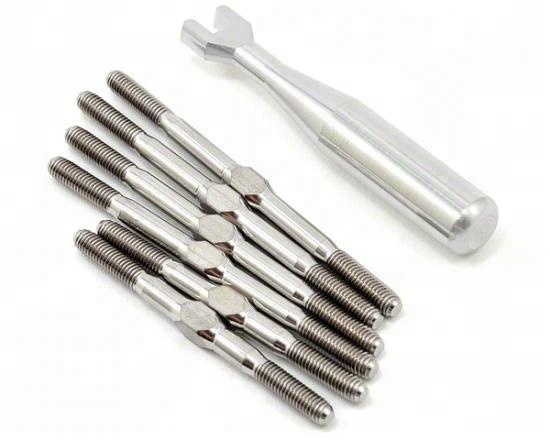
Titanium CNC Machined Hex Nut Turnbuckles Screws M14x1.5 DIN Standard
- Threading: Metric & Left/Right Hand
- Feature: Silver Plated / Anti-Galling
- Application: Derailleur & Steering Pivot
- Brand: Minghai MH-screw-013
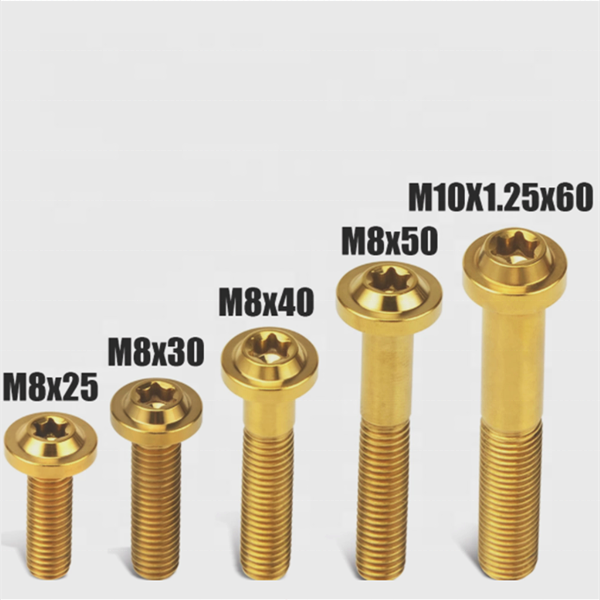
Titanium Grade 5 M8 x 1.25 Low Profile Fine Polished Torx T40 Bolts
- Profile: Ultra-Low Clearance Head
- Material: Ti-6Al-4V Annealed
- Application: Crank Pinch / Seatpost Mast
- Process: Cold Forged + CNC Finish
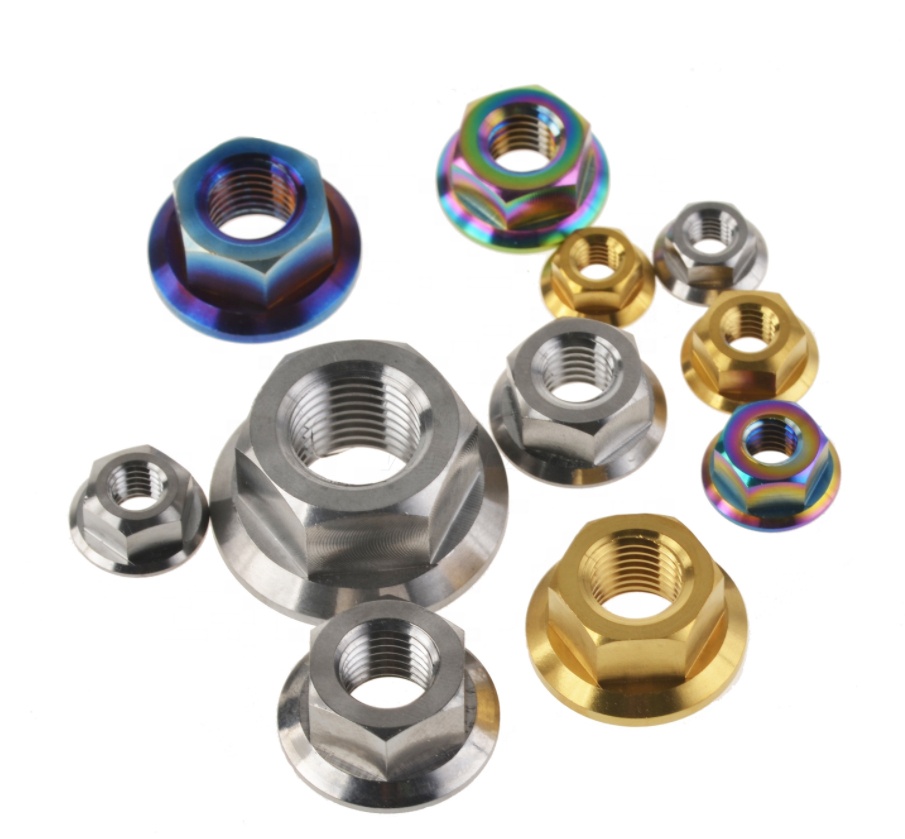
M6-M12 GR5 CNC Serrated Hexagonal Flange Nut DIN6923 Titanium
- Flange: Integrated Serrated Base
- Standard: DIN 6923 Flange Metric
- Application: Dropout / Axle Clamping
- Finish: Nitride Gold / Rainbow
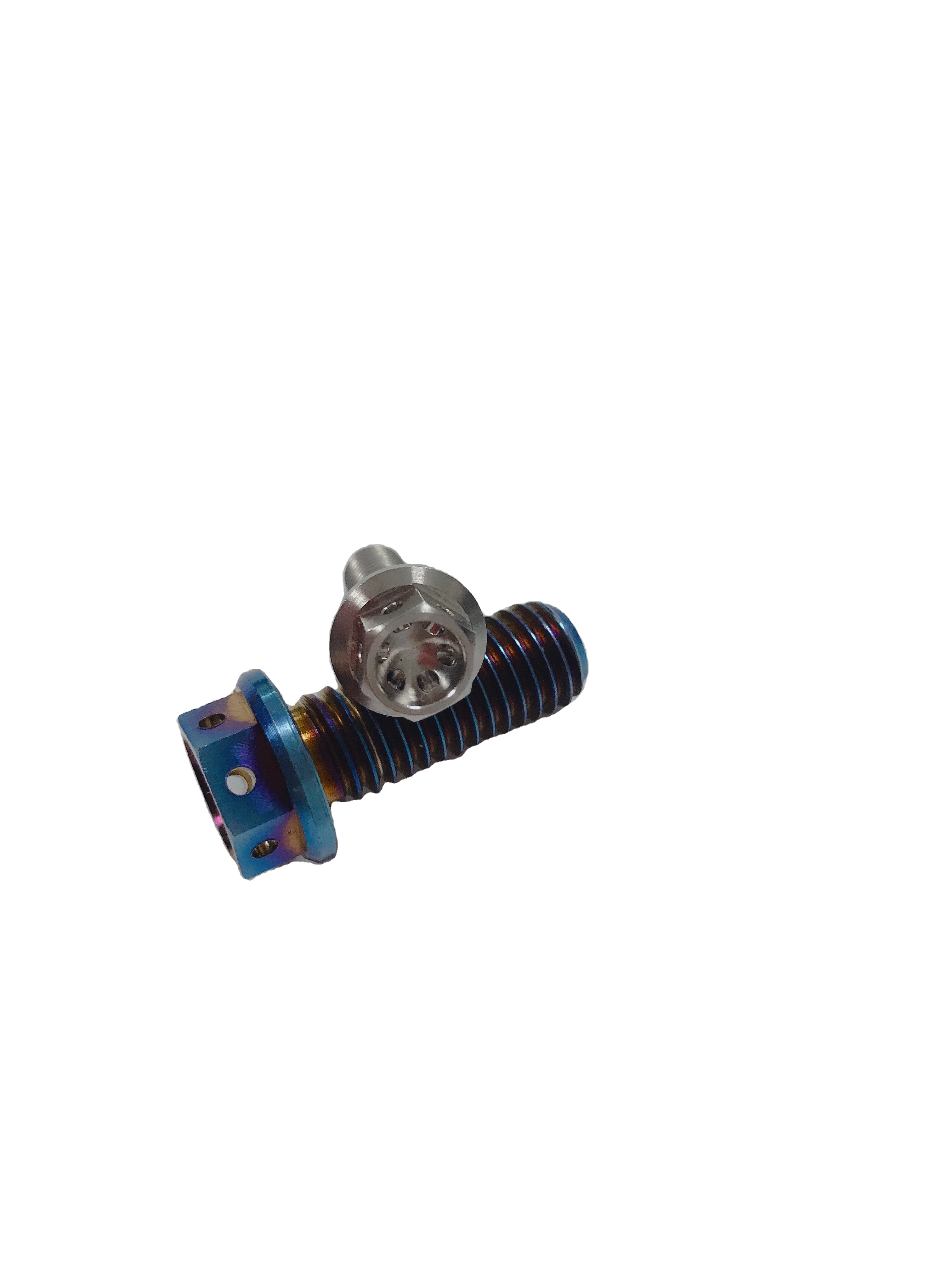
M6x30 M6x35 GR5 Hex Head Titanium Wheel & Hub Flange Bolts
- Shank Thread: Rolled M6 Metric Fine
- Flange Type: Broad Load Distribution
- Application: Disc Brake Caliper Adaptor
- Strength: Class 10.9 Equivalent
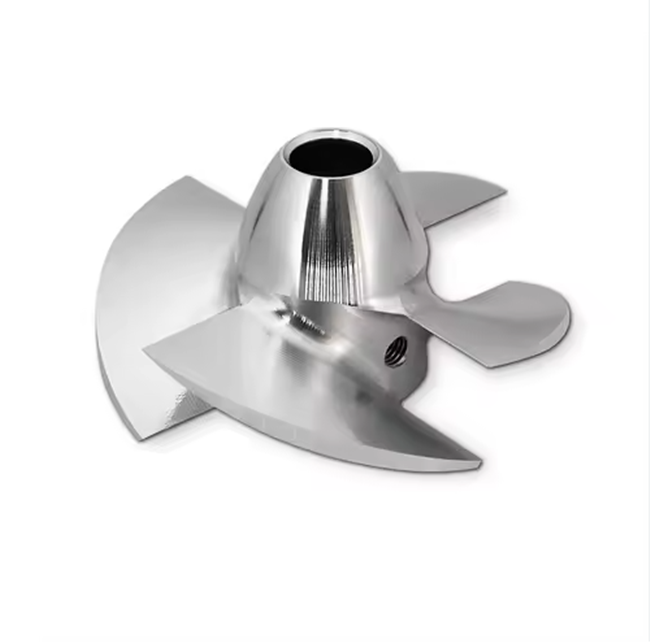
Precision Titanium Custom OEM/ODM 3/4/5-Axis CNC Machining Service
- Machining: 5-Axis Simultaneous Mill
- Tolerance: Up to 0.005 mm
- Application: Custom Frame Droplets / Cranks
- Certification: Full Mill Chemical Review
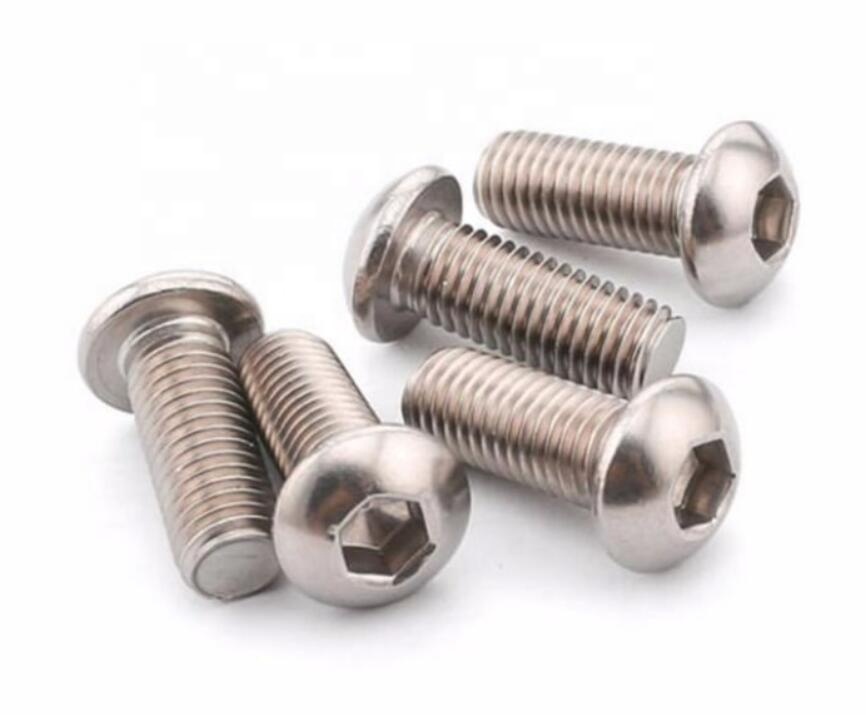
1/4-20 x 5/8" GR5 Titanium Alloy TORX Caliper Mount Bolts PVD Finish
- Imperial Thread: 1/4-20 UNC Rolled
- Socket: T30 High-Torque Torx
- Application: Hydraulic Brake Mounts
- Surface: PVD Hard Multi-Color
Technical White Paper: The Structural Dynamics of Titanium Fasteners in Elite Cycling
Prepared specifically for David, OEM Bicycle Project Managers, and Custom Framebuilders seeking zero-defect hardware integration. In performance bicycle manufacturing, fasteners are never mere accessories; they are critical load-path nodes sustaining severe dynamic torque, shear stresses, and high-frequency cyclical vibrations.
Tensile Efficiency & Rotating Mass Optimization
Every gram eliminated from a bicycle's peripheral and rotating assemblies—such as disc rotor bolts (M5x10mm), cassette lockrings, and crankset pinch hardware—reduces angular momentum and improves acceleration response. Ti-6Al-4V (Grade 5) provides an optimal strength-to-weight ratio: with a density of 4.43 g/cm³ compared to alloy steel's 7.85 g/cm³, our fasteners deliver an immediate 43.6% weight reduction without compromising ultimate tensile strength (≥ 895–1000 MPa). Unlike 7075-T6 aluminum bolts which suffer from catastrophic brittle failure under cyclic shear loads, titanium fasteners provide safe, predictable elongation properties (elongation ≥ 10%).
Continuous Grain Flow via Precision Thread Rolling
A common procurement hazard David faces with low-cost suppliers is thread failure caused by thread cutting or lathe chasing. At Vunza Titanium, all bicycle bolt threads are manufactured through cylindrical die cold thread rolling. This cold-work process compresses the crystalline structure of the Ti-6Al-4V alloy, creating continuous, unbroken grain flow lines conforming to the thread root and crest profiles. Thread rolling increases root hardness by 15–20% and boosts high-cycle fatigue life under cyclic vibration by over 300% compared to machined threads, eliminating catastrophic shearing during aggressive braking or high-wattage sprints.
| Alloy Specification | Yield Strength (MPa) | Tensile Strength (MPa) | Density (g/cm³) | Fatigue Limit (10⁷ Cycles) | Corrosion Resistance | Cycling Application Suitability |
|---|---|---|---|---|---|---|
| Ti-6Al-4V (Grade 5 Titanium) | 828 – 910 | 895 – 1050 | 4.43 | 510 MPa | Exceptional (Passivated TiO₂) | Disc Rotors, Stems, Brake Mounts, Linkages |
| Ti-3Al-2.5V (Grade 9 Titanium) | 483 | 620 | 4.48 | 340 MPa | Exceptional (Immune to Salt) | Bicycle Tubing, Bottle Cages, Low-Torque Acc. |
| Alloy Steel Grade 10.9 | 900 | 1040 | 7.85 | 420 MPa | Poor (Susceptible to Rust) | Heavy Industrial, Stock Heavy Hardware |
| Aluminum 7075-T6 | 503 | 572 | 2.81 | 160 MPa | Moderate (Prone to Galling) | Chainring Bolts, Bottle Cage Screws (Non-Safety) |
| Stainless Steel 316L (A4) | 290 | 620 | 8.00 | 240 MPa | High (Marine Grade) | Corrosive Commuter, High Weight Penalty |
Localized Critical Application Scenarios
From UCI WorldTour tarmac to rugged downhill alpine tracks, titanium hardware is subjected to distinct stress vectors. Explore how our Grade 5 components are engineered for specific bicycle assemblies.
Disc Brake Rotor Interface (M5 x 10mm T25)
Bicycle disc rotors encounter severe torsional shear loads and thermal spikes exceeding 300°C under repeated downhill braking. Steel bolts transfer excess heat to alloy hubs and risk shearing if overtorqued. Our M5x10 Torx T25 rotor bolts feature cold-forged low-profile heads and micro-radiused shank transitions, handling up to 6.2 N·m tightening torque while resisting thermal stress relaxation and galvanic bonding.
Cockpit Integration: Stem & Faceplate (M5 x 16/18mm)
Handlebar clamping setups experience continuous alternating flexural stress from sprint pulls and road chatter. A failed faceplate bolt causes immediate catastrophic steering loss. Our DIN 912 socket head and Torx flange bolts undergo 100% magnetic particle and ultrasonic inspection to guarantee zero subsurface micro-voids, delivering absolute structural security on ultra-lightweight carbon cockpits.
Full Suspension MTB Pivot Bearings (M8/M10/M12)
Enduro and downhill mountain bikes subject rear triangle pivot hardware to intense lateral torsional loads and harsh mud, pressure washing, and grit contamination. Standard alloy fasteners bend or seize, destroying expensive carbon frames. Our custom CNC-turned titanium pivot axles and serrated DIN 6923 flange nuts ensure zero thread galling, impervious corrosion defense, and massive axial clamp force.
Gravel & Bikepacking Expedition Bosses (M5 x 12mm)
Loaded gravel forks and downtube bottle mounts suffer from high cantilever vibration when carrying cargo over washboard gravel roads. Stainless screws rust in wet panniers, and aluminum screws shear off inside the frame's rivnuts. Grade 5 titanium cage bolts offer the fatigue endurance necessary to withstand thousands of kilometers of punishing off-road cargo oscillation.
E-Bike Motor & High-Torque Drivetrain Mounting
Modern mid-drive electric bicycles generate motor assist torques exceeding 90–120 N·m, creating severe cyclical torque reversals across motor casing mounts. Standard OEM hardware frequently works loose under thermal cycling and harmonic resonance. Our custom titanium motor mounting studs and locking flange nuts maintain stable clamping preload across all operating temperature ranges.
Artisan Bespoke Titanium & Stainless Framebuilders
For boutique titanium bicycle brands (Moots, Seven, Firefly style ateliers), mismatched steel hardware ruins frame aesthetics and invites galvanic corrosion. We provide hand-polished, color-anodized (burnt bronze, spectrum rainbow, stealth black DLC) titanium seat collars, dropout sliders, and cable port hardware tailored precisely to custom 2D/3D customer geometry.
Technical Trends Shaping the Titanium Bicycle Fastener Market
How metallurgical engineering, surface physics, and automated precision manufacturing are redefining bicycle assembly standards globally.
Mass Reduction vs. Steel
Machining Precision Limit
Rolled Thread Fatigue Life
Diamond-Like Carbon Hardness
1. PVD Physical Vapor Deposition vs. Anodization
While electrochemical anodization is popular for hobbyist color customization, it forms a microscopic oxide layer that can degrade under UV exposure and friction. The professional bicycle industry is migrating to PVD (Physical Vapor Deposition) titanium coatings (TiN Gold, TiAlN Black, DLC Diamond-Like Carbon). Deposited in high-vacuum plasma chambers at 450°C, PVD creates a molecularly bonded ceramic finish with surface hardness reaching up to 3500 Vickers (HV). This layer provides extreme anti-scratch protection, prevents galling with aluminum frame threads, and eliminates tool slippage inside Torx drives.
2. Galvanic Isolation at Carbon Fiber Interfaces
Carbon fiber reinforced polymer (CFRP) is electrically conductive and possesses a highly cathodic galvanic potential (+0.20V to +0.30V). When conventional aluminum bolts contact carbon fiber in the presence of moisture and sweat electrolytes, the aluminum suffers aggressive galvanic pitting corrosion, causing bolts to fuse or shear. Titanium Grade 5 sits adjacent to carbon on the galvanic series chart, exhibiting negligible galvanic potential difference. Specifying titanium fasteners for bottle bosses, seat clamps, and derailleur hangers prevents galvanic degradation in carbon composite frames.
3. Hybrid Cold Heading & CNC Multi-Axis Finishing
Traditional boutique manufacturing relied purely on subtractive CNC bar turning, which yields high material waste (up to 70% scrap chips) and higher per-unit costs for high-volume bicycle brands. Modern tier-1 bicycle fastener production combines multi-station cold heading (to forge the head and rough blank while preserving molecular grain structures) followed by 5-axis CNC precision turning for weight-relief pockets, aesthetic chamfers, and precise rolled threading. This hybrid workflow slashes production cycle times and unit costs while providing OEM partners with aerospace-level consistency.
4. Torx & Internal Hex Anti-Camout Geometries
Mechanics frequently strip shallow 3mm and 4mm internal hex (Allen) bolt heads on bike stems and levers. Because titanium's shear modulus is roughly half that of alloy steel (40–45 GPa vs 80 GPa), tightening a damaged hex key can deform an imprecise internal socket. The international trend demands Torx (T20, T25, T30) drive profiles or cold-forged precision DIN sockets with strictly radiused internal vertices. Torx drives distribute tightening torque tangentially over six lobular contact surfaces, completely eliminating cam-out forces and tool slippage.
Direct Manufacturing Infrastructure in China's Titanium Valley
Headquartered in the Gaoya Village Industrial Zone of Baoji, adjacent to the Baoti Group industrial cluster, Vunza Titanium integrates raw ingot metallurgy, precision machining, and comprehensive lab verification under one roof.
34 Multi-Axis CNC Machine Centers
Our workshop is equipped with 34 high-speed multi-axis (3/4/5-axis) CNC machining centers, automated Swiss lathes, and specialized cylindrical thread rollers. We maintain continuous operational tolerances down to 0.005 mm, ensuring unyielding dimensional consistency across 10,000-piece production runs.
Sponge-to-Part Traceability & ASTM Standards
We control every processing phase from titanium sponge smelting to final passivation. All fasteners comply strictly with ASTM B348, ASTM F136, DIN, and ISO standards. Full chemical composition certificates (ICP-AES spectrometry) and mechanical test reports are archived and supplied with every single shipment.
15+ Years Track Record & Veteran Engineers
Established in 2008, Vunza has over 15 years of focused titanium fabrication heritage. Over 50% of our technical workforce possesses more than 13 years of hands-on titanium machining experience. We hold a continuous 5.0/5.0 supplier rating, with fast engineering reviews delivered within 9 business hours.
Zero-Defect Quality Assurance Architecture for David's Supply Line
Optical emission spectroscopy verifies 6% Al, 4% V, and interstitial elements (O ≤ 0.20%, Fe ≤ 0.30%).
Coordinate Measuring Machines (CMM) and optical profile projectors verify pitch diameter and root radii.
100% thread sampling with class 6g thread ring gauges guarantees effortless, bind-free hand engagement.
Destructive batch testing ensures shear limits exceed international ISO 4210 bicycle safety mandates.
Frequently Asked Technical & Sourcing Questions
Detailed answers covering metallurgical properties, anti-galling lubrication, torque specifications, minimum orders, and custom OEM manufacturing.
Why should David specify Grade 5 (Ti-6Al-4V) rather than commercially pure Grade 2 for bicycle bolts?
How can thread galling (cold welding) be eliminated during bicycle assembly?
1. Anti-Seize Lubricant: Always apply high-grade copper anti-seize paste, moly grease, or specialized synthetic titanium assembly compound to bolt threads before torquing into aluminum or titanium frame sockets.
2. Thread Rolling Precision: Our rolled threads have an ultra-smooth surface finish (Ra ≤ 0.4 µm), vastly minimizing microscopic frictional friction compared to torn, cut threads.
3. PVD & Anti-Friction Coatings: We provide micro-thin PVD ceramic coatings or dry-film MoS2 lubricants that serve as physical barriers, completely stopping metallic atomic migration.
What torque values should be applied to titanium bicycle fasteners?
• M5 Disc Rotor Bolts (T25): 4.5 – 5.5 N·m (Never exceed 6.2 N·m)
• M5 Stem Faceplate / Steerer Pinch: 5.0 – 5.8 N·m
• M6 Disc Brake Caliper Mount: 7.5 – 9.0 N·m
• M6 Seatpost Clamp Collar: 5.5 – 7.0 N·m (Respect carbon seatpost frame limits)
• M8 Crank Pinch / Suspension Pivot: 12.0 – 16.0 N·m
We always recommend using a calibrated click-type or digital torque wrench and checking carbon component manufacturer clamping limits.
What are your Minimum Order Quantities (MOQ) and production lead times?
Can David supply proprietary 2D/3D CAD drawings for custom OEM production?
What surface finishes, anodizing colors, and custom laser branding can you deliver?
• Polishing & Bead Blasting: High-luster mirror polish (Ra < 0.2 µm) or matte satin bead-blasted industrial finishes.
• Electric Anodizing: Vibrant spectrum colors including Burnt Bronze, Deep Blue, Purple, Gold, Emerald Green, and Oil-Slick/Rainbow.
• Hard PVD Coatings: Extreme-wear DLC Deep Black, Titanium Nitride (TiN) Gold, and Neo-Chrome Rainbow.
• Custom Laser Etching: High-precision fiber laser marking for your company logo, torque specifications (e.g., "Max 5.2 N·m"), and batch traceability codes on bolt heads.
Initiate Direct Factory Collaboration with Vunza Titanium
Accelerate your bicycle manufacturing line with China’s leading titanium hardware facility. Upload your technical CAD drawings, specify your thread standards and target quantities, and connect directly with our Baoji engineering directors.