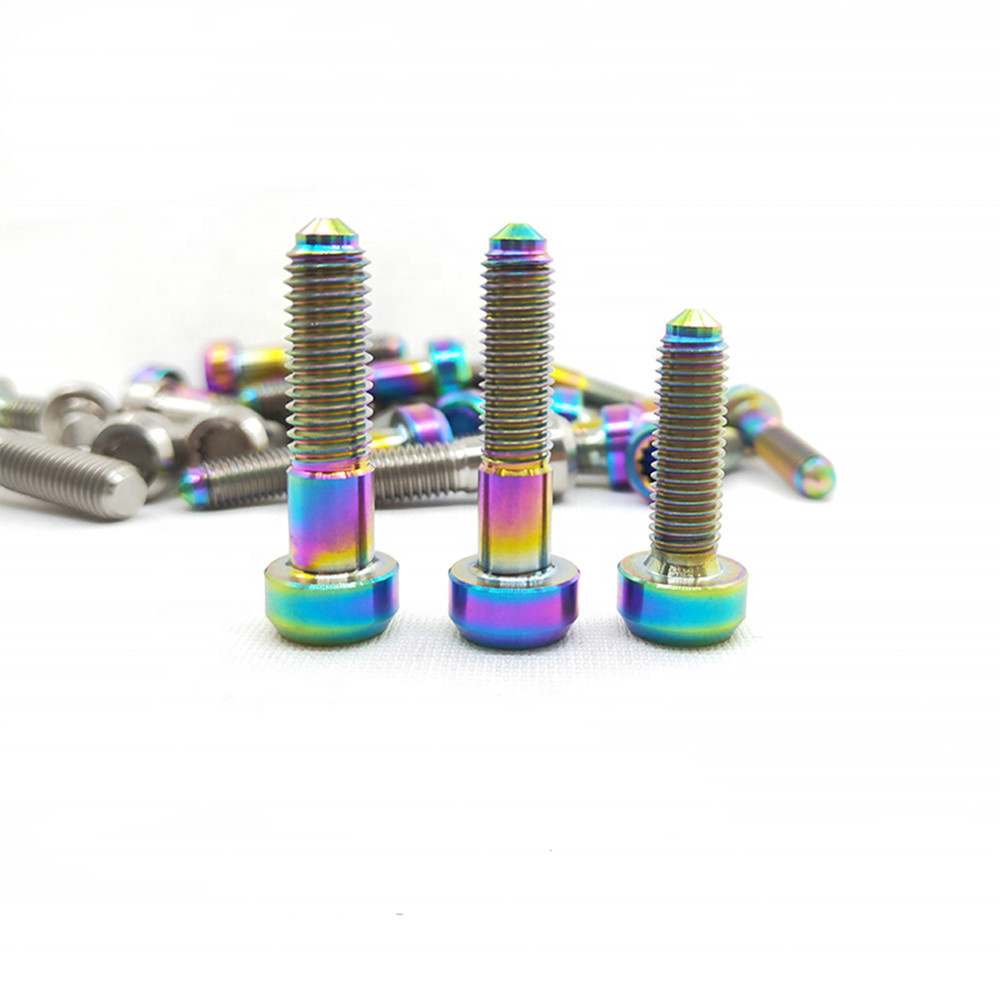
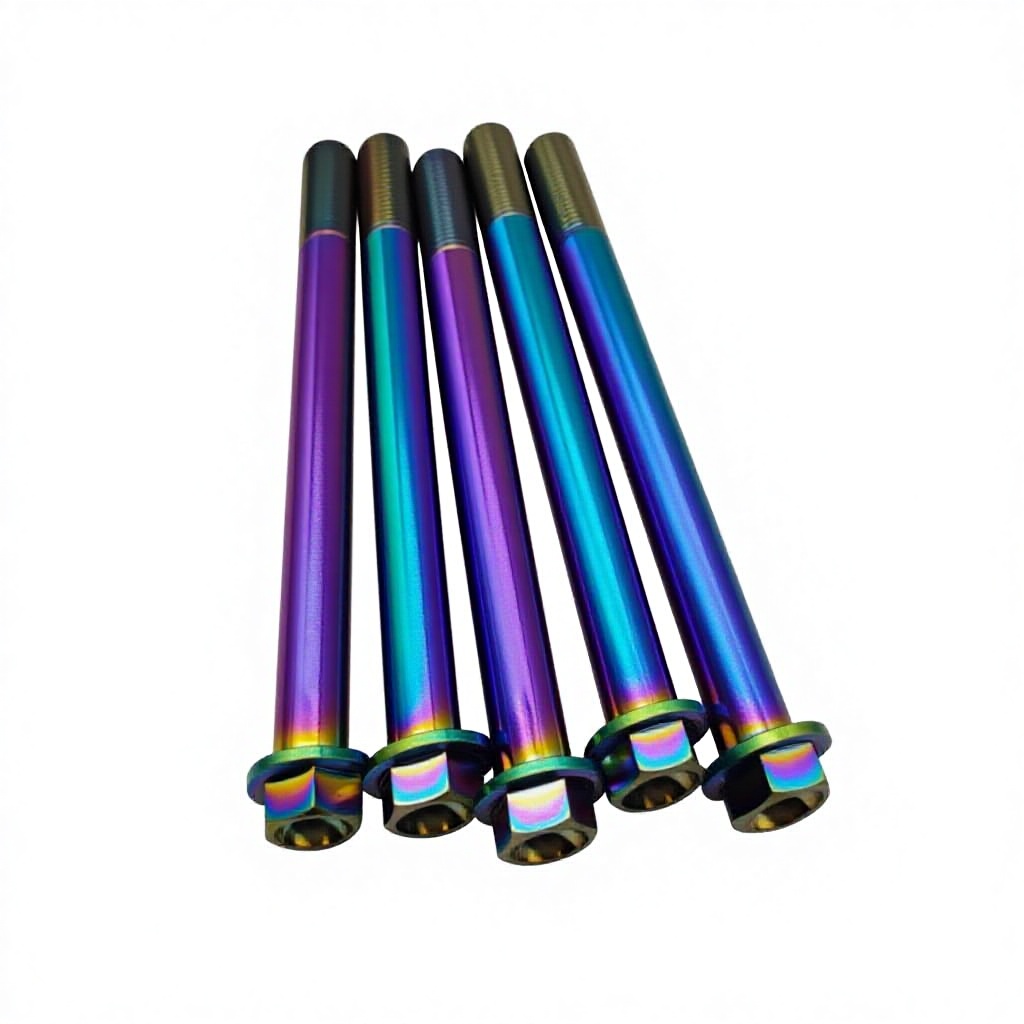
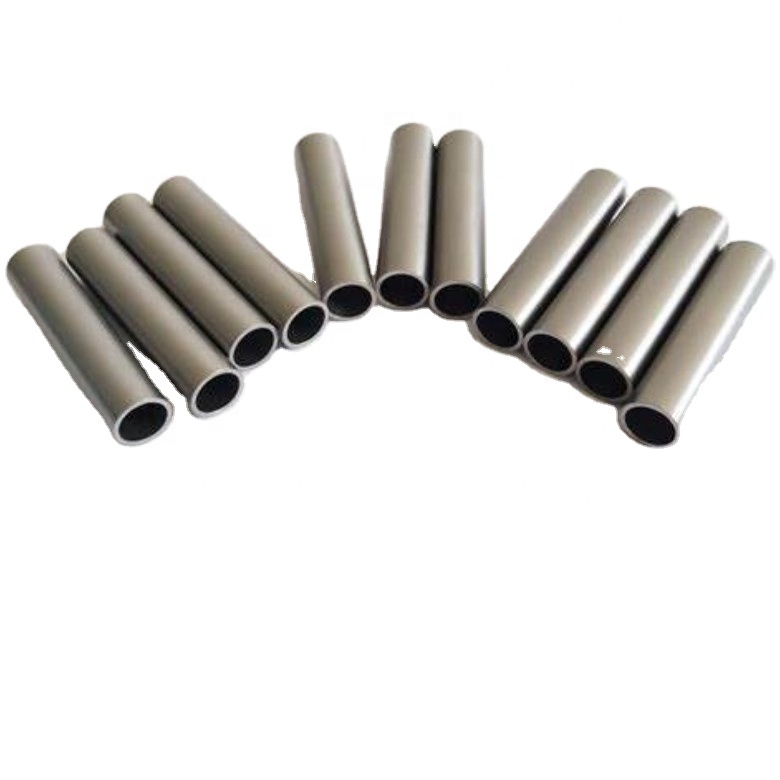
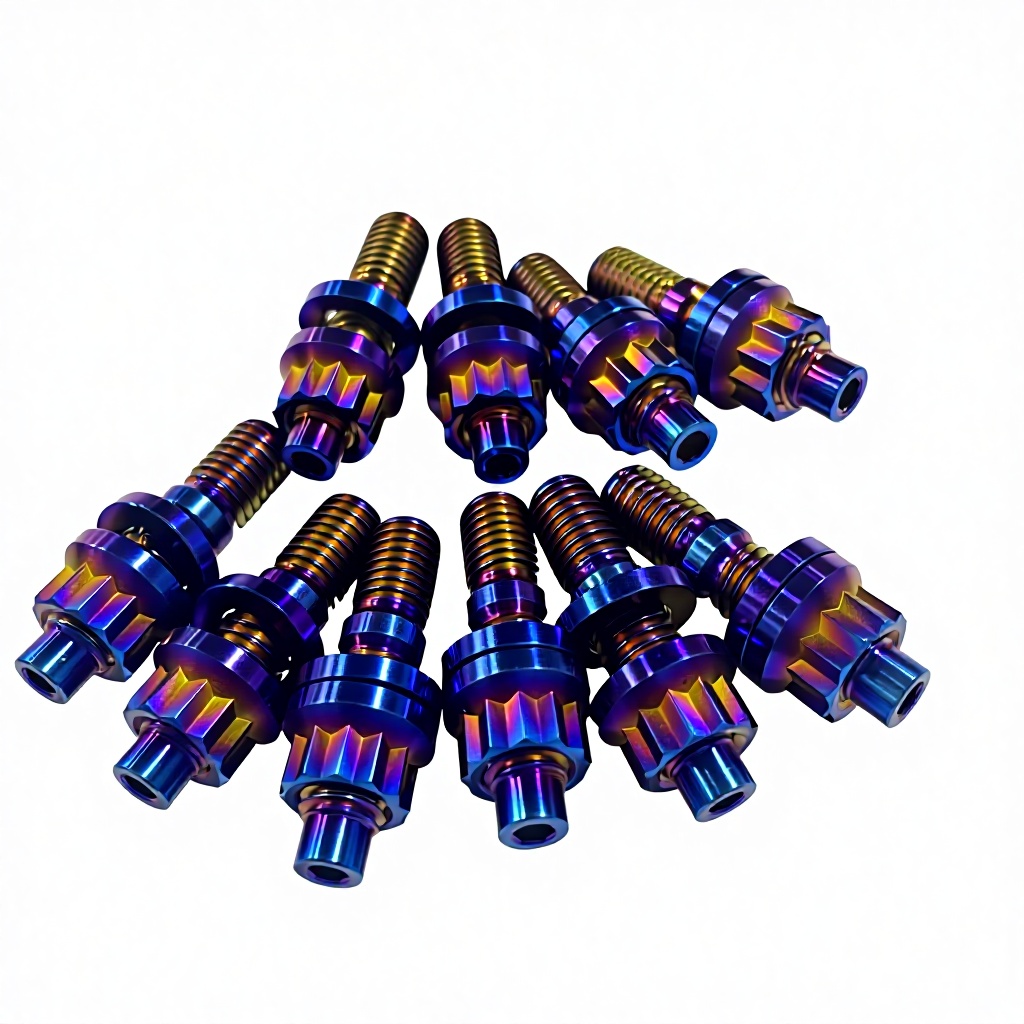
High-Integrity Titanium Grub Screws for Rogaland's Maritime & Subsea Sector
In the challenging waters of the Norwegian Continental Shelf (NCS), subsea control pods, downhole tools, and offshore structures cannot afford single-point mechanical failures caused by crevice corrosion, hydrogen embrittlement, or chloride pitting.
Zero Pitting & Crevice Corrosion
Offshore Stavanger, ambient seawater contains elevated salinity and dissolved oxygen levels that degrade traditional 316L and duplex stainless fasteners. Our Grade 5 (Ti-6Al-4V) and Grade 2 titanium grub screws generate an instantaneous, self-healing rutile (TiO₂) passive film that provides complete immunity to North Sea chloride-induced pitting at depths up to 3,000 meters.
Precision Internal Hex Broaching
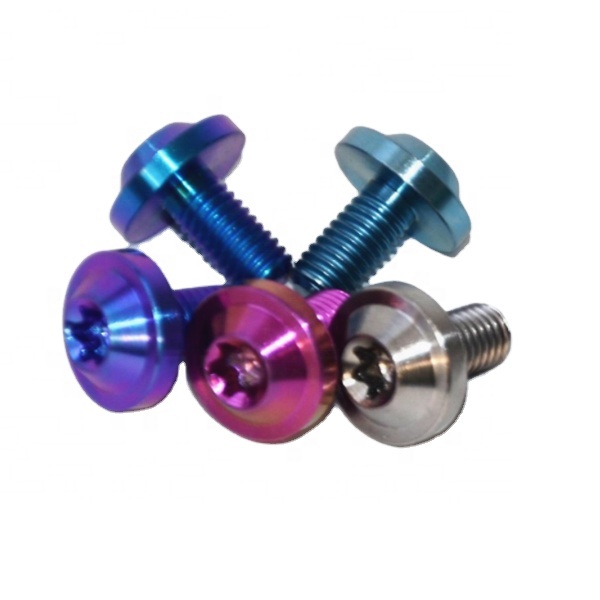
Grub screws require reliable torque transfer during deep-sea assembly by divers or Remotely Operated Vehicles (ROVs). Using advanced multi-axis CNC machining, our hex and Torx sockets are rotary broached with ultra-tight class 6g/6H thread fit tolerances down to ±0.005 mm, completely eliminating socket stripping and head shearing in high-vibration subsea manifolds.
Total Raw Material Traceability
Operating from China's Titanium Valley in Baoji, right beside the Baoti Group Industrial Park, Vunza Titanium maintains an unbroken chain of custody from raw titanium sponge to final machined fasteners. Every batch exported to Stavanger bases such as Tananger and Dusavik includes comprehensive 3.1 Mill Test Certificates detailing mechanical, elongation, and chemical analysis.
Procurement Insight: Why Stavanger Subsea Systems Are Replacing High-Nickel Alloys with Ti-6Al-4V
While superalloys like Inconel 718 and Monel 400 offer corrosion resistance, their high density (8.19 g/cm³) severely penalizes buoyancy payloads in ROVs, AUVs, and deepwater instrumentation. Grade 5 titanium boasts a density of just 4.43 g/cm³ with a tensile yield exceeding 828 MPa—delivering superior specific strength, eliminating galvanic incompatibility when paired with carbon composite shells, and drastically reducing topside payload limits during offshore mobilization.
Mission-Critical Deployment Scenarios in the Stavanger Maritime Cluster
From the deep trenches of the Norwegian Trench (Norskerenna) to topside installations on Johan Sverdrup and Sleipner, our titanium grub screws ensure rigid mechanical locking under extreme cyclic pressure and sub-zero Arctic temperatures.
ROV & AUV Subsea Robotic Thrusters
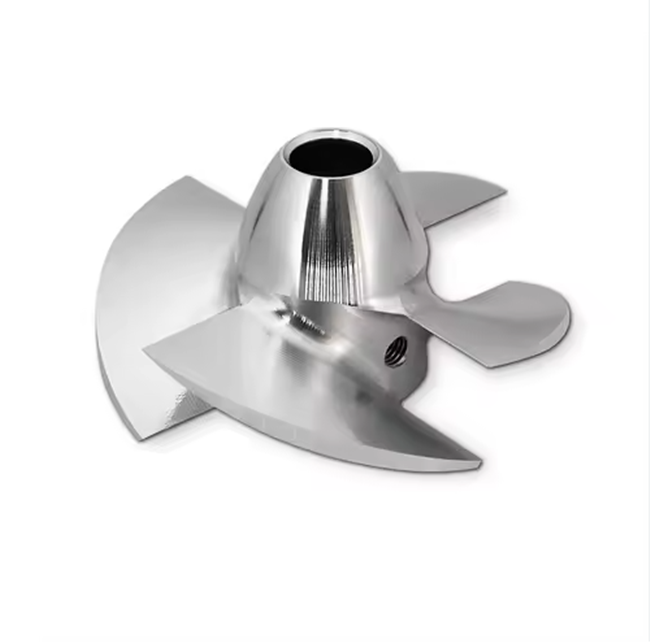
Autonomous underwater vehicles deployed from Tananger supply bases rely on DIN 916 cup-point titanium grub screws to lock impellers, sensor arrays, and hydrodynamic control fins without adding deadweight to buoyant foam structures.
Subsea Tree Actuator & Valve Trims
In subsea production trees (Christmas trees) operating under sour gas (H₂S) conditions, DIN 913 flat-point screws anchor internal collar assemblies, completely immune to sulfide stress cracking (SSC) per ISO 15156 / NACE MR0175 standards.
Offshore Floating Wind Turbine Housings
For installations in the Hywind Tampen and Utsira Nord offshore wind zones, cone-point DIN 914 titanium set screws secure delicate optical yaw encoders and nacelle pitch sensors against coastal sea-spray fog and extreme harmonic vibrations.
Acoustic Positioning & Oceanographic Sensors
Subsea transponders and bathymetric sonar transceivers utilize dog-point DIN 915 titanium set screws to anchor sensitive transducer elements without interfering with acoustic magnetic resonance, preserving signal precision.
Engineering Geometry & Chemical Properties for North Sea Specifications
Vunza Titanium supplies standard DIN/ISO headless screws as well as custom-machined locking hardware built to client 2D/3D CAD drawings.
| Standard Type | Point Profile | Available Titanium Grades | Size Envelope (Metric & Imperial) | Primary Subsea Mechanism |
|---|---|---|---|---|
| DIN 913 / ISO 4026 | Flat Point (Chamfered) | Gr2, Gr5 (Ti-6Al-4V), Gr7 (Ti-0.15Pd) | M2.5 – M24 | #4-40 to 1"-8 UNC | Non-marring lock against shafts, hardened collars & electrical contacts |
| DIN 914 / ISO 4027 | Cone Point (90° / 120°) | Gr5 Ti-6Al-4V Annealed / Solution Treated | M3 – M20 | #6-32 to 3/4"-10 UNC | Permanent, high-shear locking into pilot dimples and pivot pins |
| DIN 915 / ISO 4028 | Dog Point (Full / Half) | Gr5 (TC4), Gr23 (Ti-6Al-4V ELI) | M4 – M20 | 1/4"-20 to 3/4"-16 UNF | Location pin in slotted shafts, allowing axial sliding with radial hold |
| DIN 916 / ISO 4029 | Cup Point (Serrated option) | Gr5 (Ti6Al4V), Grade 5 Cold-Drawn | M3 – M16 | #8-32 to 5/8"-11 UNC | High resistance to cyclic backout in high-vibration thrusters & gearboxes |
| Titanium Grade | Nominal Chemical Composition | Tensile Strength (Min) | Yield Strength (0.2% Proof) | Corrosion Mechanism Performance |
|---|---|---|---|---|
| Grade 2 (UNS R50400) | Commercially Pure Ti (Fe 0.30, O 0.25 max) | ≥ 345 MPa | ≥ 275 MPa | Outstanding seawater ductile resistance, excellent weldability |
| Grade 5 (UNS R56400) | Ti-6Al-4V (TC4) Alpha-Beta Alloy | ≥ 895 MPa | ≥ 828 MPa | High structural strength, high fatigue endurance in subsea dynamic loading |
| Grade 7 (UNS R52400) | CP Ti + 0.12–0.25% Palladium | ≥ 345 MPa | ≥ 275 MPa | Unrivaled crevice corrosion resistance in low-pH high-temperature brines |
| Grade 23 (UNS R56401) | Ti-6Al-4V ELI (Extra Low Interstitial) | ≥ 860 MPa | ≥ 795 MPa | Superior fracture toughness and impact strength at Arctic temperatures (−40°C) |
Macro Dynamics Driving Titanium Grub Screw Demand in Western Norway
Stavanger's ongoing structural transformation from traditional oil extraction toward low-carbon offshore energy and deepwater autonomous exploration has fundamentally shifted hardware procurement criteria.
Life-Extension of North Sea Brownfield Assets
With major operators prioritizing the extension of platform production lifespans from 20 to 40+ years, routine fastener replacements now demand permanent corrosion-free materials. Replacing 316L grub screws with Grade 5 titanium eliminates catastrophic galling and frozen threads inside expensive subsea manifold blocks during maintenance turnarounds.
Carbon Capture and Subsea Storage (CCS)
The Northern Lights CCS initiative off the coast of Rogaland exposes downhole and subsea wellheads to dense-phase, wet supercritical CO₂. In these acidic, carbonic environments, conventional fasteners suffer aggressive localized attack. Titanium fasteners remain completely inert, providing structural security for monitoring sensors and umbilical lines.
Electrification & Subsea Power Distribution
The massive electrification of offshore hubs like Troll and Johan Sverdrup involves vast underwater substations and subsea power cabling. Non-magnetic Grade 2 and Grade 5 titanium grub screws prevent unwanted electromagnetic eddy currents and inductive heating near high-voltage subsea connectors.
Integrated Manufacturing Power From China’s Titanium Valley
Headquartered in Baoji since 2008, Vunza Titanium Industry Co., Ltd. combines advanced Japanese multi-axis machining technology with direct access to Baoti Group's raw metallurgical supply chain.
In-House Tooling & Cold Thread Rolling
Unlike standard machine shops that cut threads onto soft bar stock, Vunza uses specialized cold thread-rolling dies for external threads. This produces continuous, unbroken grain flow along the screw root, increasing cyclic shear and fatigue strength by up to 35% compared to cut-thread fasteners.
Advanced Surface Treatments Against Galling
Titanium-to-titanium threads are notoriously susceptible to galling under high pre-load torque. We offer proprietary anti-galling treatments tailored to subsea installation, including specialized Micro-Arc Oxidation (MAO), PVD Diamond-Like Carbon (DLC), and dry-film molybdenum disulfide (MoS₂) coating.
Strict Quality Assurance Protocol
Our quality lab performs full-spectrum chemical analysis using optical emission spectrometry, optical projector dimension verification, Rockwell hardness testing, and pneumatic pressure checks. Every export shipment includes serialized EN 10204 3.1 test documentation.
Frequently Asked Questions by Norwegian Offshore Buyers
Detailed technical answers for supply chain managers, subsea project engineers, and QA directors operating across the Rogaland region.
How does Vunza prevent thread galling on titanium grub screws during offshore subsea assembly?
Can Vunza provide EN 10204 Type 3.1 inspection certification aligned with NORSOK M-650 requirements?
What is the difference between Grade 5 and Grade 23 (ELI) for subsea operations in the Norwegian Trench?
What typical shipping lead times can offshore fabricators in Stavanger expect?
Are titanium set screws prone to galvanic corrosion when installed into 25Cr Super Duplex or marine bronze bodies?
What is Vunza’s Minimum Order Quantity (MOQ) for custom-dimensioned titanium grub screws?
How does Vunza guarantee internal socket drive integrity under diver or ROV manipulation?
Connect Directly With Our Subsea Fastener Engineering Team
Whether you require standard DIN 913/914/916 Grade 5 stock or custom CNC-machined titanium grub screws according to your engineering drawings, our engineering team will provide design-for-manufacturing (DFM) feedback and quotation within 9 hours.