Precision Titanium Fasteners & Engineering Components
Engineered in China's Titanium Valley with tight CNC tolerances (up to 0.005 mm) and dispatched under certified inspection standards to European and Western Balkan destinations.
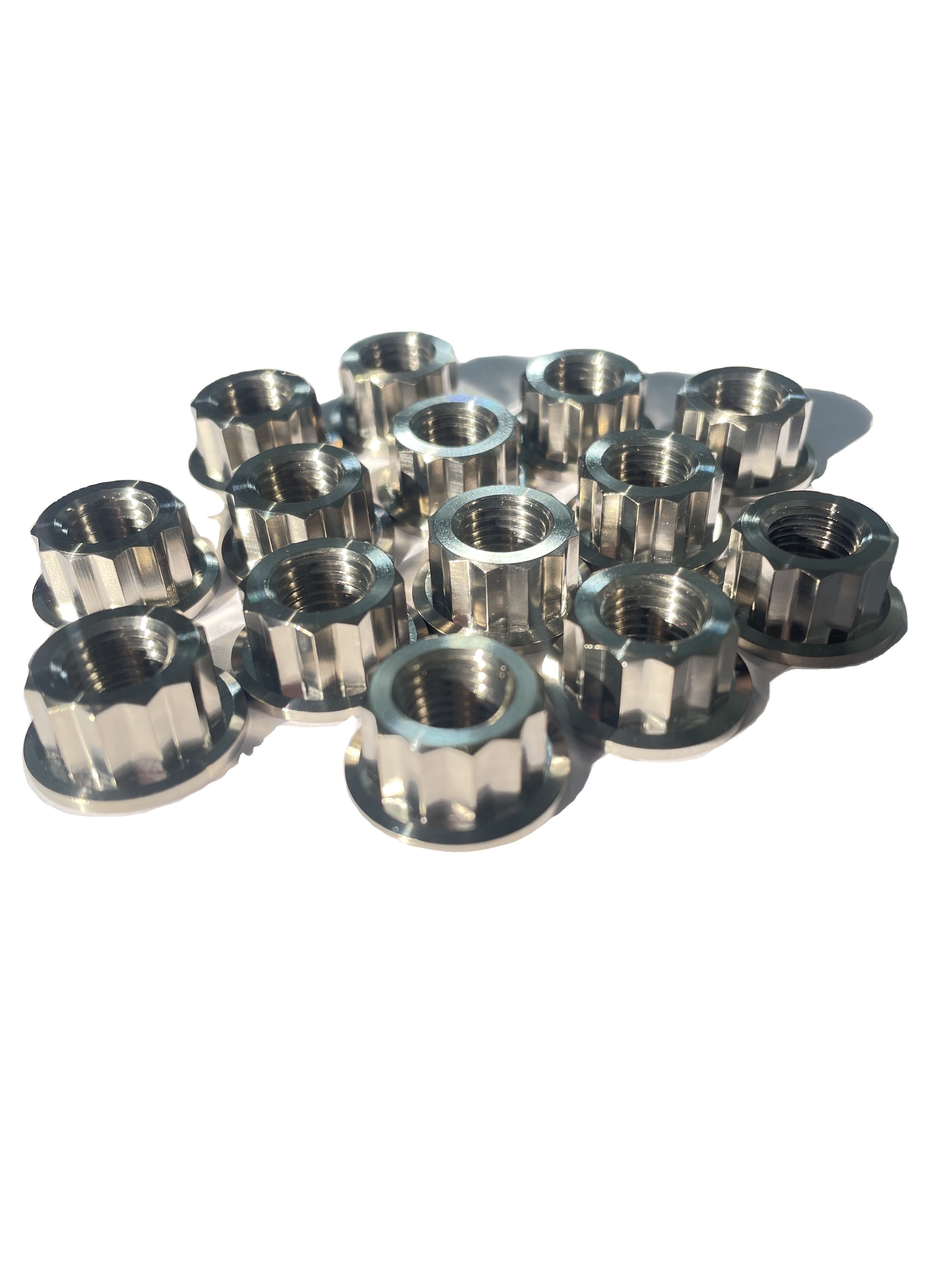
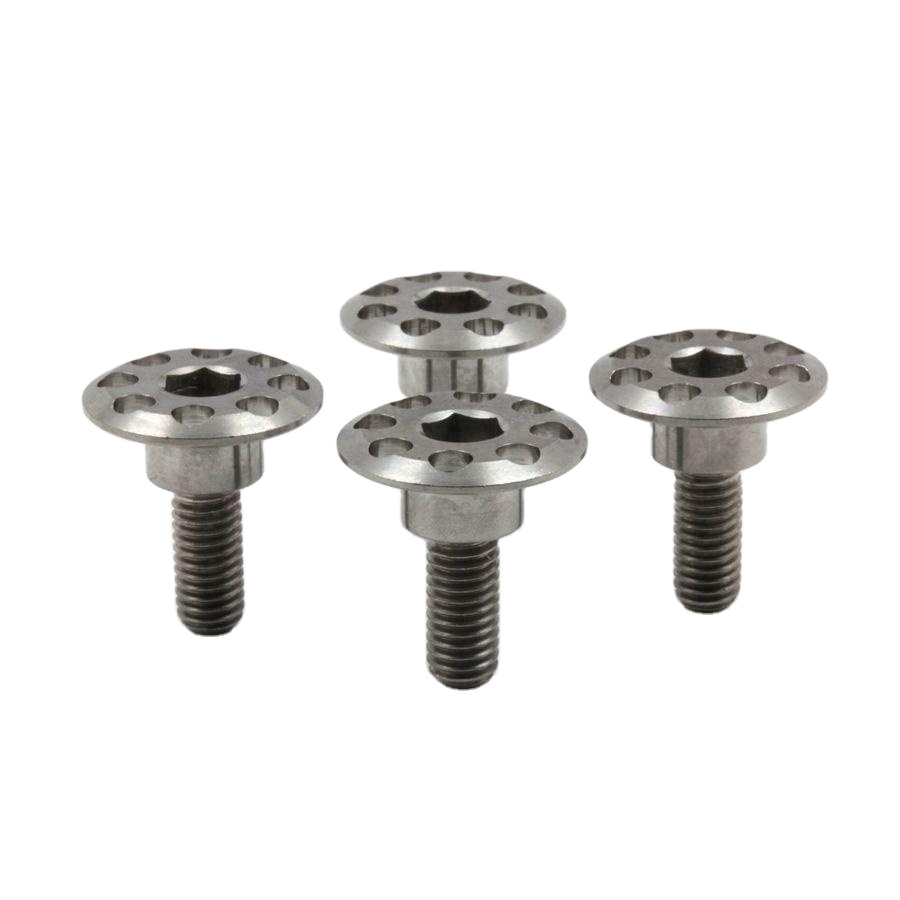
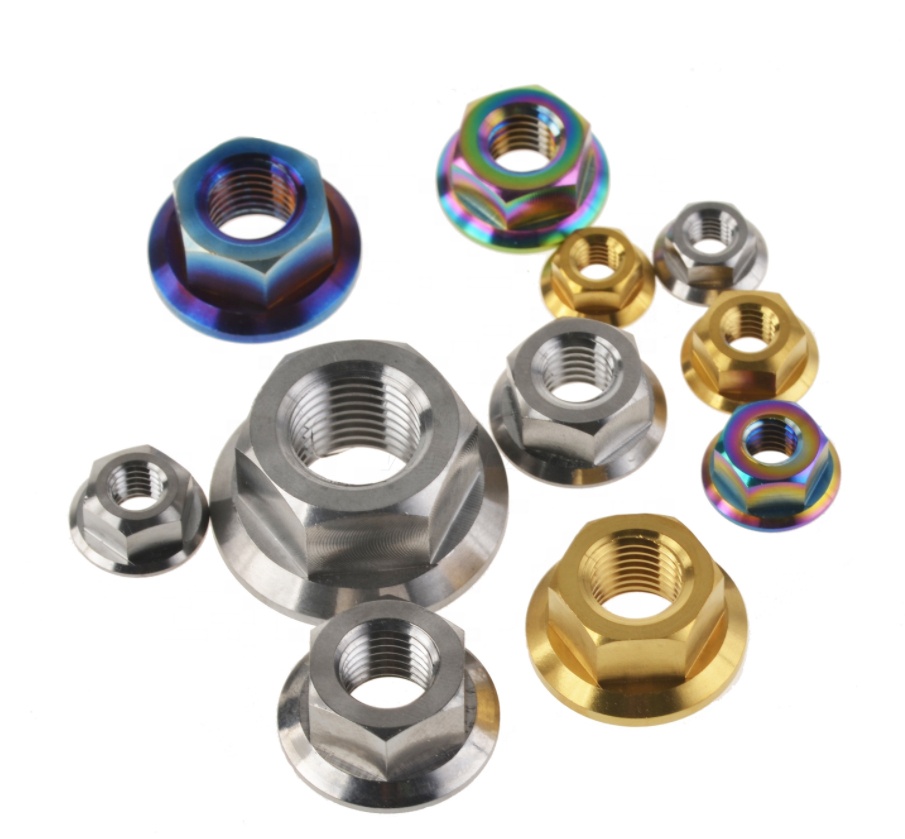
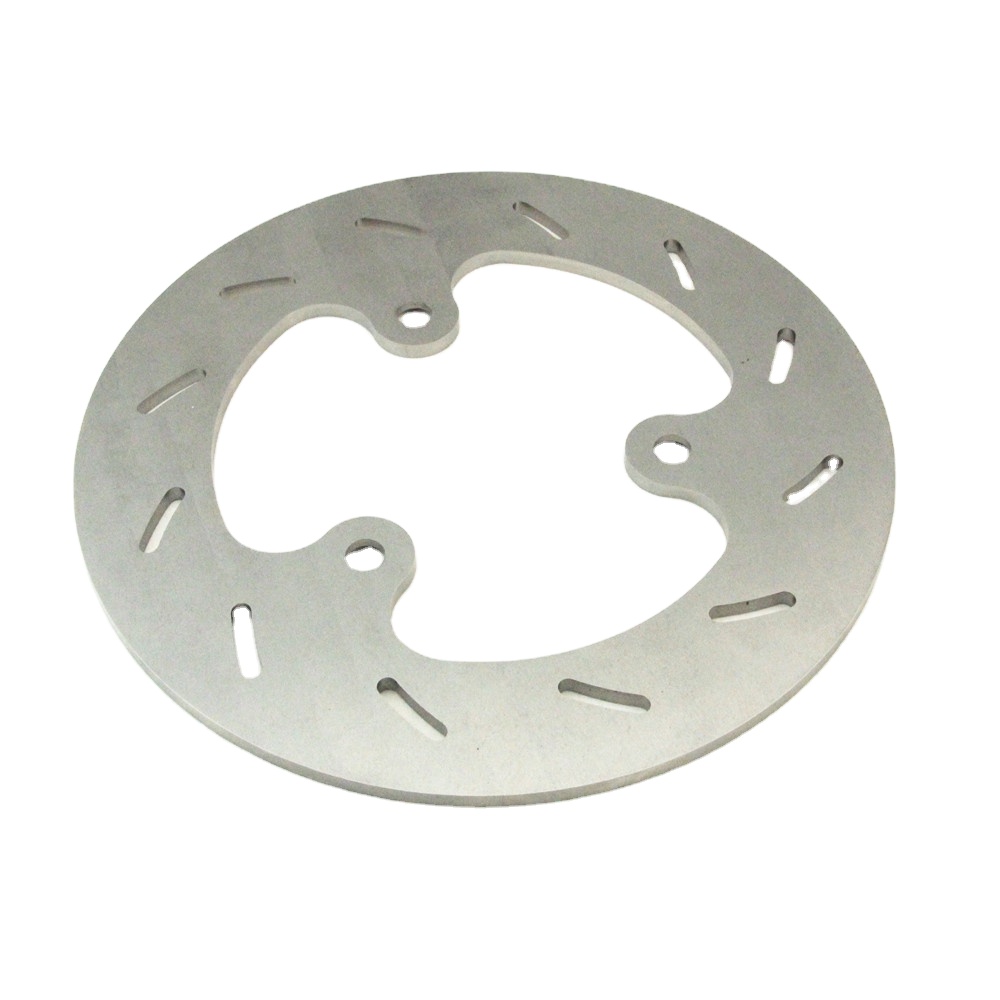
The Mechanics & Metallurgy of Titanium Jam Nuts
In-depth breakdown of thread geometry, clamping force distribution, and material advantages in extreme mechanical assemblies.
A jam nut (also referred to as a half-nut or thin nut under standards DIN 439B, ISO 4035, and ASME B18.2.2) features a profile height roughly half that of a standard ISO 4032 hex nut. When utilized independently, it acts as a lightweight retaining fastener in space-restricted assemblies; when deployed in a two-nut locking system, it provides a vibration-proof mechanical lock that outperforms chemical threadlockers under severe thermal cycling and dynamic oscillation.
In high-vibration environments, single-nut assemblies frequently experience pre-load decay due to cyclic transverse displacement. When an engineer specifies a titanium jam nut alongside a primary nut, the torque sequence generates an internal axial tensile load between the threads of the two nuts. The jam nut is tightened first (typically to 25%–50% of the full joint torque) and held stationary while the primary full-thickness nut is torqued over it. This action forces the flank contact surfaces of the two nuts against opposing sides of the mating bolt threads, eliminating thread backlash and guaranteeing continuous clamping force even under resonance conditions.
Fabricated from aerospace-grade Ti-6Al-4V (Grade 5, TC4), titanium jam nuts possess a minimum tensile strength of 895 MPa, a yield strength exceeding 828 MPa, and an exceptionally low density of 4.43 g/cm³. Compared to standard class 8.8 or 10.9 zinc-plated carbon steel fasteners, titanium jam nuts deliver a 44% mass reduction while remaining entirely immune to atmospheric rust, chloride pitting, and industrial sulfur compounds.
| Nominal Size | Thread Pitch (Metric) | DIN 439B Thickness (m) | Across Flats (s) | Grade 5 Proof Load (kN) | Weight (g / unit) |
|---|---|---|---|---|---|
| M6 | 1.00 mm | 3.20 mm | 10.00 mm | 18.2 kN | 0.85 g |
| M8 | 1.25 mm | 4.00 mm | 13.00 mm | 33.1 kN | 1.75 g |
| M10 | 1.50 mm (or 1.25 fine) | 5.00 mm | 17.00 mm | 52.4 kN | 3.60 g |
| M12 | 1.75 mm (or 1.25 / 1.5 fine) | 6.00 mm | 19.00 mm | 76.0 kN | 5.50 g |
| M14 | 2.00 mm (or 1.5 fine) | 7.00 mm | 22.00 mm | 104.5 kN | 8.70 g |
| M16 | 2.00 mm (or 1.5 fine) | 8.00 mm | 24.00 mm | 142.8 kN | 11.90 g |
| M20 | 2.50 mm (or 1.5 fine) | 10.00 mm | 30.00 mm | 223.0 kN | 23.40 g |
Industrial Applications in Mitrovica & Kosovo
Strategic deployment of non-corrosive, fatigue-resistant titanium fasteners in regional extraction, heavy processing, and infrastructural machinery.
Mining & Trepča Extraction Corridor
Mitrovica is historically tied to one of the largest lead-zinc and silver mineral basins in Southeastern Europe. In underground extraction rigs, slurry pipelines, and deep-shaft ventilation blowers, high-humidity subterranean atmospheres saturated with sulfur dioxide rapidly erode electroplated steel. Titanium Grade 5 jam nuts prevent seizure, resist acid-mine drainage, and preserve clamping integrity on vibrating drill assemblies.
Aggregate Processing & Vibrating Screens
The quarrying and mineral processing plants across the Mitrovica District utilize heavy eccentric vibratory screens and hydrocyclones. Standard nuts regularly back off due to constant multi-directional harmonic vibration. Deploying dual titanium jam nut sets on pivot shafts, tension rods, and screen clamping bolts eliminates unscheduled maintenance stoppages and joint slippage.
Commercial Transport & Heavy Fleet Maintenance
Haulage vehicles operating along the R-107 and connecting routes to Pristina endure steep gradients and heavy payloads. Titanium Grade 5 jam nuts serve as essential locking secondary nuts on suspension turnbuckles, steering tierod ends, and exhaust manifold studs, handling exhaust gas temperatures up to 450°C without thermal oxidation or thread deformation.
Infrastructure Modernization & Water Plants
Regional water treatment facilities and civil bridges crossing the Ibar River demand long-lifespan components that eliminate galvanic maintenance. Grade 2 and Grade 5 titanium jam nuts provide zero-corrosion service lives exceeding 30 years in wastewater sluice gates, automated metering equipment, and outdoor structural anchor tensioners.
Procurement Trends & Lifecycle Economics in Kosovo
Why regional engineering managers are switching from galvanized steel and stainless fasteners to titanium Grade 5 hardware.
Throughout the Western Balkans, industrial modernization initiatives are actively replacing obsolete post-industrial infrastructure with precision European-standard machinery. A central challenge encountered by procurement teams in Mitrovica, Zvečan, and Leposavić is the high total cost of ownership (TCO) associated with conventional fasteners in corrosive mineral environments.
In standard installations, zinc-plated grade 8.8 bolts and nuts require scheduled maintenance or replacement every 12 to 18 months due to hydrogen embrittlement, atmospheric sulfide scaling, and thread galling. While austenitic stainless steel (such as A2-70 or A4-80) offers improved chemical resistance, its lower yield strength (450–600 MPa) frequently results in thread stripping under extreme dynamic shocks. Furthermore, austenitic stainless steel remains prone to chloride stress corrosion cracking (SCC) at temperatures above 60°C.
By contrast, Ti-6Al-4V Grade 5 titanium jam nuts introduce superior performance metrics: a yield-to-density ratio nearly double that of high-strength alloy steel, exceptional fatigue limits (up to 510 MPa under cyclic testing), and instantaneous passive surface reformation via TiO2 (titanium dioxide). When local maintenance teams factor in downtime reduction, reduced equipment labor, and the avoidance of catastrophic thread failures in processing pumps or crushing circuits, titanium delivers an estimated 62% reduction in multi-year lifecycle costs.
Factory-Direct Prowess from Baoji Titanium Valley
Operating directly within China's primary titanium industrial hub, Vunza Titanium Industry Co., Ltd. guarantees end-to-end quality from certified raw sponge to CNC finished parts.
Full Traceability: Sponge to Part
Every manufacturing run begins with virgin titanium sponge melted under vacuum consumable electric arc furnaces. We supply complete EN 10204 3.1 chemical analysis and mechanical tensile test certificates with every commercial delivery to Mitrovica.
34 Advanced Multi-Axis CNC Centers
Equipped with 3-axis, 4-axis, and 5-axis high-speed CNC turning and milling centers, our machine shop maintains tight tolerances down to 0.005 mm, ensuring concentricity and pristine thread flanks conforming to DIN 13 and ISO 965-1 tolerances.
Custom Geometry & Thread Pitches
Whether you require standard coarse metric threads, extra-fine thread pitches for fine sensory calibration, left-hand threads for counter-rotating shafts, or anodized custom color identification, our technical team manufactures directly to your 2D/3D CAD specifications.
Rapid International Logistics Network
We coordinate air express (DHL/FedEx/UPS) and multimodal rail/sea freight serving Pristina International Airport (PRN) and European distribution hubs, ensuring expedited customs clearance documentation and on-time plant arrival.
Frequently Asked Questions for Buyers in Mitrovica
Clear answers addressing technical specifications, logistics, customs clearance, and joint design.
What are the differences between DIN 439B, ISO 4035, and standard ISO 4032 nuts?
DIN 439B and ISO 4035 specify thin hex nuts (jam nuts) where the height is roughly 0.5d (half of the nominal bolt diameter). In contrast, standard ISO 4032 nuts feature a height of roughly 0.8d. DIN 439B includes chamfered edges, whereas DIN 439A features unchamfered surfaces. Jam nuts are designed specifically for locking mechanisms, tight clearance assemblies, or retaining pins where full tensile proof loading of a thick nut is unnecessary.
Can titanium jam nuts cause galvanic corrosion when paired with steel bolts in moist mining environments?
Titanium is cathodic (noble) relative to carbon steel. If paired with zinc-plated or plain carbon steel in an electrolyte (such as sulfurous mine water in the Mitrovica basin), accelerated galvanic corrosion of the steel fastener can occur. We strongly advise either pairing titanium jam nuts with Grade 5 titanium bolts or applying anti-seize insulating pastes (such as nickel-based or ceramic assembly paste) or non-conductive PTFE washers to electrically isolate dissimilar metals.
What is the recommended installation torque sequence for a dual-nut locking assembly?
Under best engineering practice: 1) Install the thin titanium jam nut first; 2) Tighten it to approximately 25%–50% of the joint's target design torque; 3) Thread the full-thickness primary nut directly on top until it seats against the jam nut; 4) Hold the jam nut stationary with a wrench while torquing the primary nut to 100% of specified torque. This wedges the thread flanks in opposite directions, creating a dependable mechanical lock.
How are shipments handled for delivery to Mitrovica and the Kosovo market?
Orders are dispatched directly from our Baoji manufacturing complex. Urgent sample batches and high-priority maintenance components are delivered via air express (DHL Express or FedEx) to Pristina within 4 to 7 business days, followed by inland transit to Mitrovica. Commercial volume shipments can be routed through European container ports (such as Thessaloniki, Durrës, or Bar) with comprehensive commercial invoices, packing lists, and Certificates of Origin.
Do you manufacture custom thin nuts with fine pitches (e.g., M10x1.25 or M12x1.5)?
Yes. In addition to standard coarse DIN metric series, our multi-axis CNC machines produce metric fine, metric extra-fine, and imperial UNF/UNC thread configurations. Fine pitches are particularly recommended in positioning linkages and rod ends because they provide higher vibration resistance and allow finer axial adjustments.
What quality documentation and testing reports accompany each delivery?
Every commercial batch is supplied with an EN 10204 3.1 Inspection Certificate documenting the chemical composition (Titanium balance, Aluminum, Vanadium, Iron, Oxygen, Carbon, Nitrogen, and Hydrogen) and mechanical tensile testing. Dimensional reports verified via digital optical comparators and Go/No-Go thread gauges are also available upon request.
Request Technical Consultation & Factory-Direct Quotation
Whether you require standard DIN 439B Grade 5 jam nuts in volume or custom CNC-machined titanium locking components built to technical drawings, our engineering team in Baoji provides DFM reviews and commercial quotations within 9 hours.