Engineered Titanium Fasteners & CNC Precision Components
Factory-direct micro-screws, high-strength bolts, and precision CNC components produced from certified aerospace-grade titanium sponge to finished hardware. Optimized for assembly operations in Hanoi, Bac Ninh, and Vinh Phuc.
Metallurgical Engineering & Micro-Machining of Titanium Fasteners
An authoritative engineering analysis for procurement officers, lead mechanical designers, and quality assurance directors across Northern Vietnam's precision industrial parks.
Micro-Scale Titanium Machining: Physics, Metallurgy, and Tooling Challenges
Miniaturization in modern electronics, telecommunication optical receivers, and wearable biosensors has driven demand for thread profiles from M0.6 to M3.0. While titanium alloys are renowned for their exceptional strength-to-weight ratio and immune-level corrosion resistance, machining titanium at microscopic scales introduces severe manufacturing hurdles. Titanium possesses a very low modulus of elasticity (approximately 110 GPa for Grade 5 Ti6Al4V, roughly half that of structural alloy steel), meaning micro-sized screw blanks deflect significantly under radial cutting pressure.
Furthermore, titanium's poor thermal conductivity (6.7 W/m·K for Gr5) prevents machining heat from dissipating through the chips. Instead, localized cutting temperatures at the tool-workpiece interface rapidly spike past 800°C. In micro-Swiss turning operations, this thermal concentration causes rapid work hardening, tool notch wear, micro-burr generation, and dimensional drift. At Vunza Titanium's Baoji facility, our multi-axis CNC centers overcome this using specialized polycrystalline diamond (PCD) and ultra-fine micro-grain carbide tooling, high-pressure through-spindle synthetic coolant, and optimized trochoidal thread-milling and cold thread-rolling methods. This eliminates galling, preserves grain boundary integrity, and consistently achieves a true machining tolerance of ±0.005 mm.
Material Selection Matrix: Gr2, Gr5 (Ti6Al4V), and Gr23 (ELI)
Selecting the optimal titanium grade is essential for balancing tensile yield strength, magnetic permeability, ductility, and unit cost. The following engineering comparison outlines the key metallurgical metrics verified under ASTM B348, ASTM F136, and DIN GB inspection protocols:
| Titanium Grade | Chemical Composition | Tensile Strength (MPa) | Yield Strength (MPa) | Density (g/cm³) | Primary Industrial Sector in Hanoi |
|---|---|---|---|---|---|
| Grade 2 (CP-Ti) | Pure Ti (Fe ≤ 0.30%, O ≤ 0.25%) | ≥ 345 | ≥ 275 | 4.51 | Chemical sensors, marine monitoring instruments, plating racks |
| Grade 5 (Ti6Al4V / TC4) | Ti-6Al-4V (Fe ≤ 0.40%, O ≤ 0.20%) | ≥ 895 | ≥ 828 | 4.43 | High-stress electronics, EV robotics, drone payloads, motorcycle racing |
| Grade 23 (Ti6Al4V ELI) | Ti-6Al-4V Extra Low Interstitial (O ≤ 0.13%) | ≥ 860 | ≥ 795 | 4.43 | Surgical orthopedics, dental implants, implantable micro-pumps |
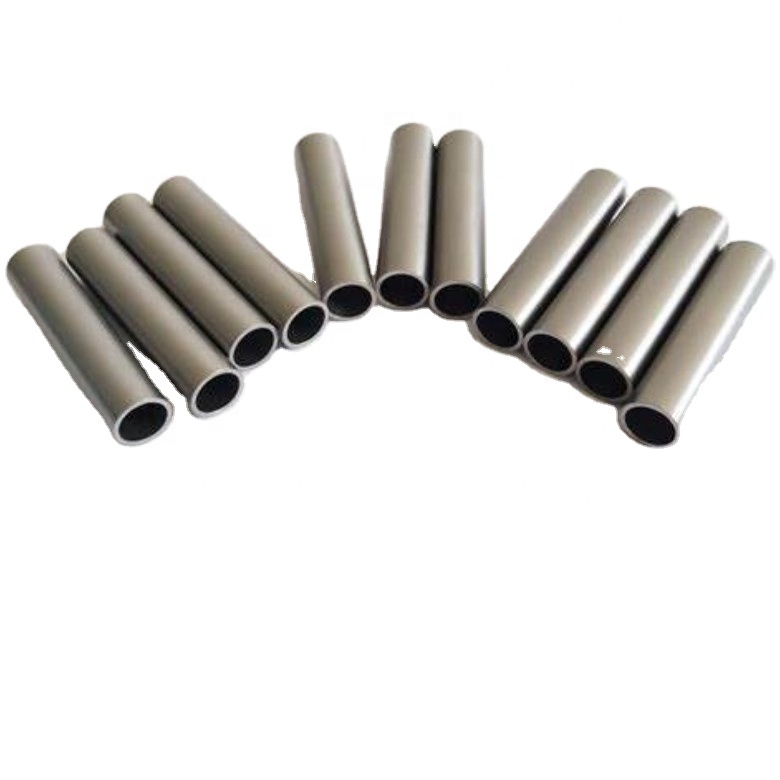
| Grade 9 (Ti-3Al-2.5V) | Ti-3Al-2.5V (Near-alpha alloy) | ≥ 620 | ≥ 483 | 4.48 | Precision hydraulic tubing, lightweight aerospace structural sleeves |
Non-Magnetic Properties & Galvanic Compatibility
In advanced electronics manufacturing throughout Hanoi's industrial clusters (such as Bac Ninh, Vinh Phuc, and Hoa Lac Hi-Tech Park), ferromagnetic contamination can distort high-frequency RF signals, degrade optical image stabilization (OIS) in mobile cameras, and cause erratic hall-sensor readings in brushless electric motors. Titanium Grade 5 possesses magnetic susceptibility below χm ≈ 3.2 × 10⁻⁶ cm³/g (essentially non-magnetic, μ < 1.00005), making it an ideal fastening solution where magnetic interference must be completely eliminated.
Moreover, titanium develops an instantaneous, self-healing oxide passivation layer (primarily TiO2) when exposed to oxygen. When joined to carbon-fiber-reinforced polymers (CFRP) in high-end drone frames or aerospace chassis, titanium avoids the severe galvanic degradation that plagues aluminum or zinc-coated carbon steel hardware, preventing costly assembly breakdowns in humid sub-tropical climates.
Localized Application Scenarios in Hanoi's Industrial Corridor
Matching high-precision titanium fasteners to the exact requirements of Northern Vietnam's fastest-growing high-tech manufacturing parks.
Electronics & Smart Sensors
Supplying M0.8 to M2.0 non-magnetic micro-screws for smartphone camera voice-coil motors (VCM), optical lens barrels, and edge-computing micro-housings in Thang Long Industrial Park and Bac Ninh production hubs.
MedTech & Surgical Robotics
Biocompatible Grade 23 ELI micro-screws and custom turned titanium sleeves engineered for endoscopic robotic effectors, surgical instruments, and orthopedic fixtures used by medical assembly plants near Hanoi.
UAVs & Aerospace Payloads
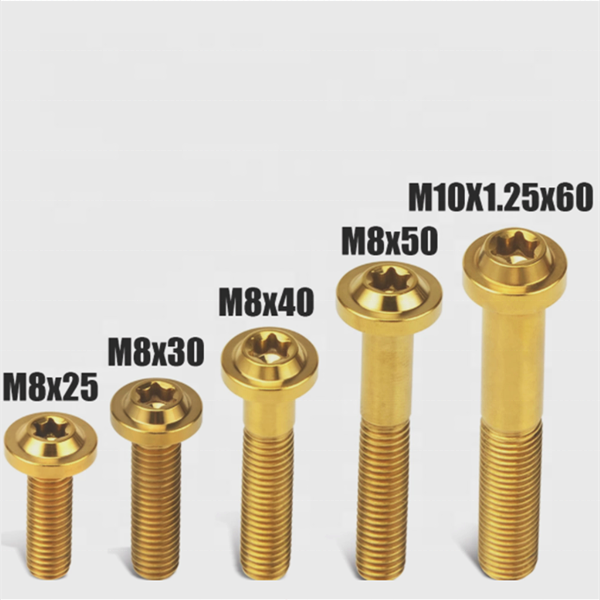
High-tensile Grade 5 Torx flange bolts and weight-saving hollowed studs utilized in commercial inspection drones, LiDAR gimbal stabilizers, and surveillance camera assemblies around Noi Bai airport logistics zones.
Automotive & EV Power Electronics
Heat-dissipating, non-magnetic titanium fasteners securing battery management systems (BMS), inverter electronics, and lightweight chassis subsystems for northern automotive manufacturing supply chains.
Emerging Trends Driving Titanium Micro Fastener Adoption in Hanoi
Strategic market analysis of Northern Vietnam's evolving advanced manufacturing ecosystem between 2025 and 2030.
Shift Toward Ultra-Miniaturized Sub-Assemblies
As Hanoi solidifies its position as a global center for electronics assembly, OEMs are moving away from traditional plastic clip-fitting and bulky steel screws. Miniaturized titanium micro-screws (M1.2–M2.0) provide the high clamp preloads necessary for ultra-slim mobile architectures, IP68 water-resistant sealing gaskets, and vibration-proof sensor mounts without adding chassis weight.
Tropical Humidity & Galvanic Resistance
Northern Vietnam's climate features relative humidity frequently exceeding 80%, combined with industrial air contaminants. In automotive electronics and outdoor telecommunications hardware, zinc-plated carbon steel fasteners show accelerated galvanic oxidation and red rust. Titanium fasteners maintain complete passivity, drastically lowering field return rates and warranty overhead.
Cross-Border Just-In-Time (JIT) Supply Chain Integration
Procuring directly from Baoji via our dedicated southern export corridor enables land freight transport directly through Pingxiang/Lang Son border customs to Hanoi within 48 to 72 hours. This provides Vietnamese production plants with factory-direct pricing from "China's Titanium Valley" without the lead times or inventory risks of trans-oceanic shipping.
Direct Source Authority: Vunza Titanium Industry Co., Ltd.
Headquartered in Gaoya Village Industrial Zone, Baoji (China's Titanium Valley), adjacent to the Baoti Group Industrial Park, delivering unmatched material purity and engineering precision.
Years of Direct Manufacturing
Founded in 2008, combining internal R&D, precision toolmaking, multi-axis CNC machining, and comprehensive after-sales engineering under one roof.
Multi-Axis CNC Centers
Equipped with 3-axis, 4-axis, and 5-axis high-speed CNC machining centers capable of maintaining 0.005 mm micro-tolerances across complex geometric components.
Sponge-to-Part Traceability
Complete batch control starting from virgin titanium sponge melting to vacuum arc remelting (VAR), bar rolling, and optical multi-sensor dimensional inspection.
Verified Supplier Rating
Continuous 13-year export history with verified 5.0 customer ratings, a rapid ≤9 hour engineering turnaround, and comprehensive material test certifications (MTC).
Hanoi Buyer FAQ: Technical & Sourcing Answers
Crucial answers addressing import logistics, customs tariffs, metallurgical verification, and technical integration for engineering teams in Vietnam.
How are customs clearance and import duties handled for titanium screws entering Hanoi?
What machining tolerances can you hold on custom titanium micro-screws below M2.0?
How do you prevent galling and thread seizing when screwing titanium into titanium or aluminum?
- Type II Anodization (AMS 2488): Produces a high-density, anti-galling conversion film that dramatically reduces the friction coefficient.
- Physical Vapor Deposition (PVD): Micro-thin TiN (Titanium Nitride), TiAlN, or Diamond-Like Carbon (DLC) coatings providing surface hardness up to 2500-3000 HV.
- Micro-encapsulated dry lubricants: Applied directly to threads for cleanroom and automated robotic screwdriver assembly.
What is your minimum order quantity (MOQ) for custom-machined micro components?
- Prototyping & R&D Validation: 50 to 100 pieces for engineering testing and design verification.
- Standard Titanium Fasteners (M3–M12): Typically 100 to 500 pieces per batch.
- Custom High-Volume Micro Screws (<M2.0): Production runs starting at 1,000 to 5,000 pieces with tiered volume pricing for recurring JIT deliveries to Vietnamese factories.
Can you supply raw material test reports (MTC) and RoHS/REACH compliance documentation?
How does titanium Grade 5 compare to SUS304 or SUS316 micro-screws in electronics?
- Weight Reduction: Titanium is roughly 44% lighter than stainless steel (4.43 g/cm³ vs 7.93 g/cm³), which is vital for drones, handheld medical monitors, and mobile devices.
- Specific Strength: Gr5 titanium boasts a tensile yield strength (≥828 MPa) far surpassing annealed SUS304 (~205 MPa) and cold-drawn SUS316 (~450 MPa).
- Non-Magnetic Interference: Cold-worked stainless micro-screws frequently exhibit residual ferromagnetism, which interferes with miniature magnetometers, wireless charging coils, and high-frequency RF modules. Titanium remains completely non-magnetic regardless of cold deformation.
What head and drive styles can you produce for automated robotic assembly?
What is the standard lead time for custom samples versus mass production deliveries to Hanoi?
Request Engineering Review & Rapid Quotation for Hanoi Projects
Submit your 2D/3D part drawings (.STP, .IGS, .DWG, or .PDF) and volume requirements. Our senior engineering staff in China's Titanium Valley will evaluate manufacturability, recommend optimal titanium grades, and return a comprehensive quotation within 9 business hours.