Industrial Pure
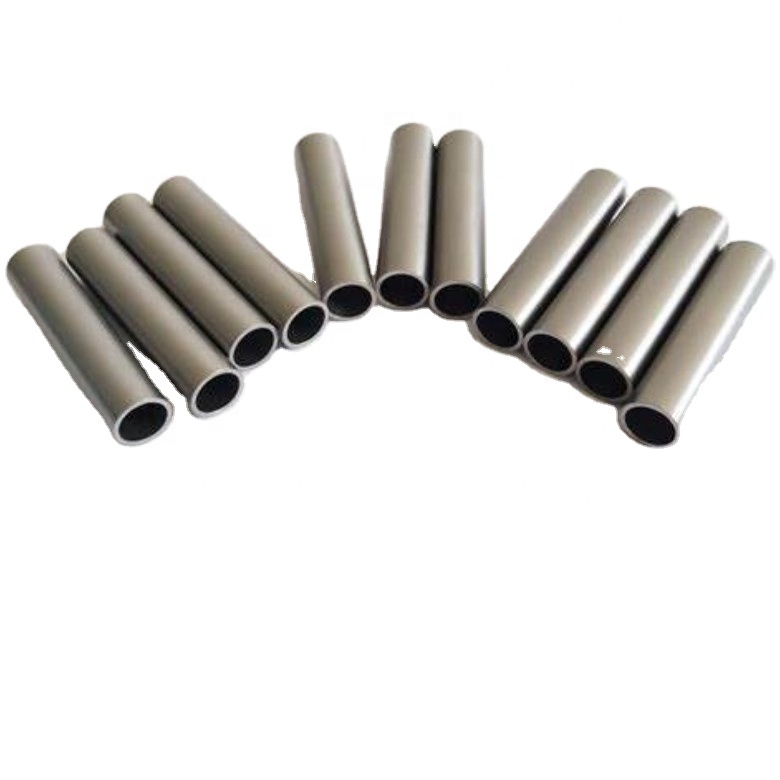
Engineered specifically for extreme torsional rigidity, non-magnetic performance, and zero-corrosion industrial environments in South Jeolla.
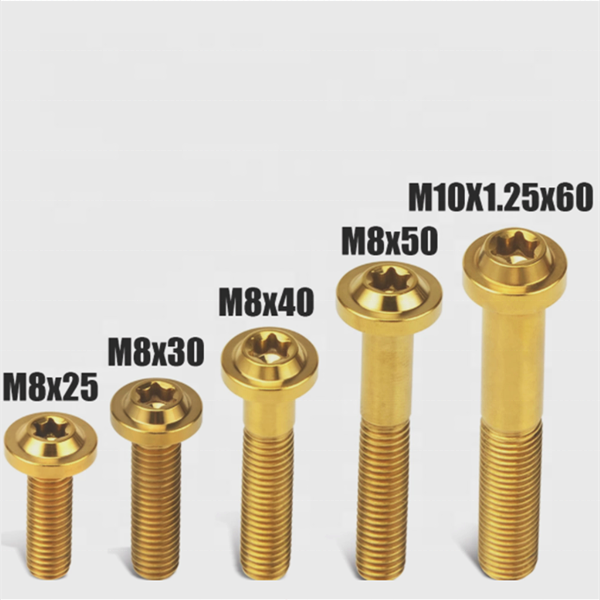
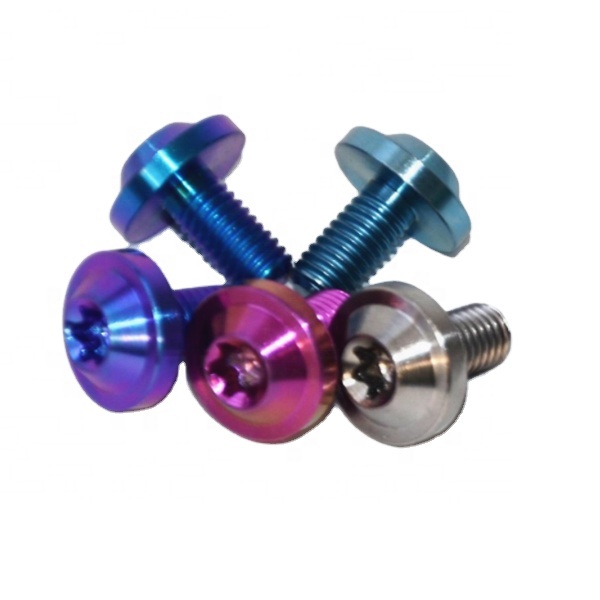
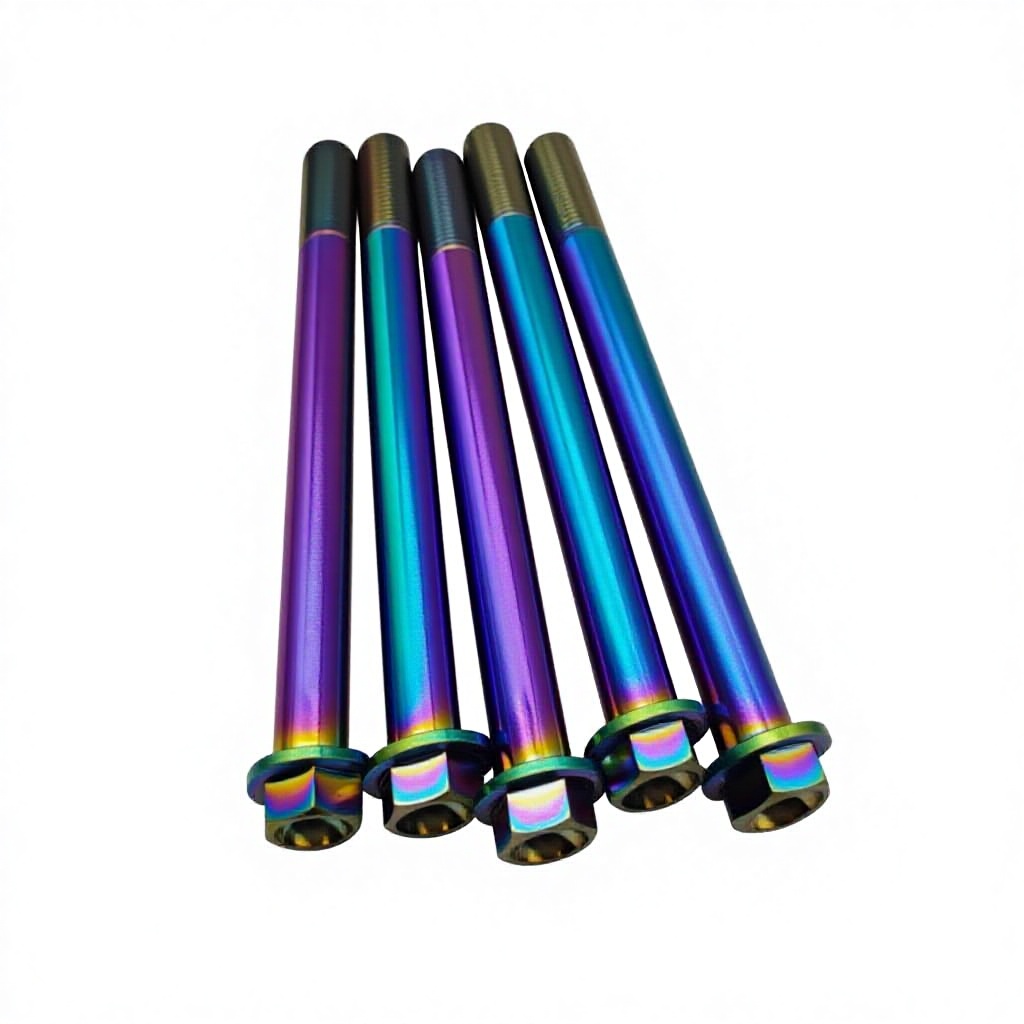
An authoritative analysis of headless locking mechanics, metallurgy, and shear-torque performance for South Korean precision assemblies.
Commercial set screws rely on headless configurations (DIN 913, DIN 914, DIN 915, DIN 916) driven by internal hex or Torx (six-lobe) sockets. In the Gwangju engineering sector, Grade 5 (Ti-6Al-4V) is the preferred choice where dynamic shear forces occur. With a minimum tensile yield strength of 828 MPa and an ultimate strength exceeding 895 MPa, Grade 5 matches class 8.8 and 10.9 structural steels while reducing rotating mass by 44% (density: 4.43 g/cm³).
Conversely, for optical instrumentation, medical laboratory machinery, and non-magnetic sensory modules, Commercially Pure Grade 2 titanium is supplied to ensure complete antimagnetic neutrality and immunity against galvanic cell corrosion.
Our CNC-turned titanium set screws feature specialized contact points calibrated for specific shaft retention demands:
Unlike standard die cutting which tears the crystalline grains of Grade 5 titanium, our fasteners undergo controlled thread rolling for standard sizes (M3 to M14). Thread rolling compresses the metallurgical grain structure along the root contour, increasing fatigue resistance by up to 35% and mitigating the risk of notch-sensitivity failure in high-cycle vibration environments.
For custom non-standard pitches or ultra-short miniature set screws used in photonics, our multi-axis Swiss-lathe turning centers execute thread whirling with cryogenic cooling, achieving pitch circle runout within 0.005 mm and clean socket broaching that eliminates driver slippage.
| Standard Specification | Material Grade | Thread Sizes Available | Point Types | Tensile Strength (Yield) | Drive Options |
|---|---|---|---|---|---|
| DIN 913 / ISO 4026 | Ti-6Al-4V (Gr5) / Pure Gr2 | M2.5 – M16 (Custom Pitch) | Flat Point | ≥ 828 MPa (Gr5) | Hex Socket / Torx (T6–T50) |
| DIN 914 / ISO 4027 | Grade 5 (TC4) Annealed | M3 – M14 (UNC/UNF Option) | Cone Point (90° / 120°) | ≥ 895 MPa (Tensile) | Hexagon Socket |
| DIN 915 / ISO 4028 | Grade 5 / Grade 23 (ELI) | M3 – M12 | Full Dog / Half Dog | ≥ 860 MPa | Hex Socket |
| DIN 916 / ISO 4029 | Grade 5 Ti-6Al-4V | M2 – M16 | Knurled Cup / Plain Cup | ≥ 895 MPa | Internal Hex / Six-Lobe Torx |
Bridging China's Titanium Valley material supply chain with South Korea's high-tech manufacturing capital.
Gwangju's Bitgreen National Industrial Complex has emerged as an engine of South Korea's eco-friendly electric mobility transition. In battery electric vehicles (BEVs) and advanced driver-assistance systems (ADAS), our titanium set screws serve critical functions. Grade 5 titanium set screws secure high-speed lidar sensor brackets, steering rack adjusters, and brushless motor rotors where rotational inertia must be minimized. The non-corrosive nature of titanium ensures zero galvanic corrosion when mated with carbon fiber reinforced composites or aluminum castings.
Regarded as the "Photonics City of Korea", Gwangju hosts a high density of optical fiber, laser transceiver, and optoelectronic equipment manufacturers. In optical collimators, laser beam splitters, and microscope stages, even minute thermal expansion or magnetic interference degrades micro-radian accuracy. Vunza's Grade 2 and Grade 5 micro set screws (sizes M1.6, M2, M2.5, M3) provide absolute antimagnetic security and a thermal expansion coefficient (8.6 × 10⁻⁶/K) nearly half that of austenitic stainless steel, guaranteeing permanent focal stability.
Inside the Hanam and Cheomdan Industrial Complexes, high-speed pick-and-place delta robots and automated packaging machinery require hardware that withstands continuous high-cycle accelerations. Our DIN 916 knurled cup-point set screws deliver locking torque retention that prevents pulley and timing gear displacement during emergency deceleration stops, eliminating downtime for local manufacturing lines.
Procurement managers and lead design engineers across the Honam region are systematically transitioning from imported nickel-plated stainless steel fasteners to titanium alloys. Key market drivers include:
Reducing un-sprung mass and rotational inertia allows servo-driven actuator systems in Gwangju's automated plants to achieve higher cycle rates without motor overheating.
South Korean tier-1 automotive suppliers require origin certification from titanium sponge to bar stock, avoiding gray-market secondary remelts through certified EN 10204 3.1 mill test certificates.
Adoption of specialized micro-arc oxidation (MAO) and physical vapor deposition (PVD) titanium coatings to prevent galling when set screws are repeatedly torqued into female aluminum threads.
Operating at the epicenter of China Titanium Valley with end-to-end quality control.
Established in 2008 adjacent to the Baoti Group Industrial Park, our plant commands direct access to premium titanium sponge and domestic melt resources, securing lower baseline material costs and total raw billet traceability.
More than 50% of our production team members possess over 13 years of hands-on titanium machining experience. We understand the specific feed, speed, and chip-breaking characteristics necessary to prevent work-hardening of titanium.
Equipped with 3-, 4-, and 5-axis CNC machining centers, automated Swiss lathes, and high-precision thread rollers capable of holding dimensional tolerances to 0.005 mm across high-volume production batches.
Stringent internal QC protocol covering incoming ultrasonic testing, chemical spectral analysis, first-article dimensional verification, and optical go/no-go thread inspection prior to vacuum packaging.
Consistent 5.0/5.0 supplier rating over 13+ years of international export, with an average response time under 9 hours and full logistics integration to Incheon, Busan, and Gwangju via express air and sea freight.
From CAD drawing review (DWG, STEP, IGES) to sample delivery in as few as 7 business days, including custom point angles, left-hand threads, internal Torx broaching, and electrolytic laser marking.
Everything you need to know about lead times, import clearance, mechanical standards, and custom drawings.